
I’ve worked on more than a few home builds and furniture repairs over the years, and the choice between particle board and plywood keeps coming up every single time.
This article lays out a clear, side-by-side breakdown of both materials so you can decide which one actually matches the demands of your project, whether you’re building cabinets, shelves, or flooring underlayment.
| Feature | Particle Board | Plywood |
| Base Material | Wood chips, sawdust, resin | Thin wood veneers layered cross-grain |
| Typical Cost | Lower | Higher |
| Strength & Rigidity | Moderate, weaker under point loads | High, strong in multiple directions |
| Moisture Resistance | Poor unless treated | Better, especially exterior grades |
| Weight | Heavier for thickness | Lighter relative to strength |
| Screw & Nail Holding | Weak, prone to stripping | Strong, holds fasteners well |
| Surface Finish | Smooth but needs edge banding | Can show attractive grain or be sanded smooth |
| Common Thickness Range | ⅜” to ¾” | ⅛” to 1¼” |
| Environmental Footprint | Uses waste wood | Uses more solid wood resources |
| Lifespan in Dry Use | 5–10 years average | 20–30+ years with care |
Key Differences Between Particle Board and Plywood
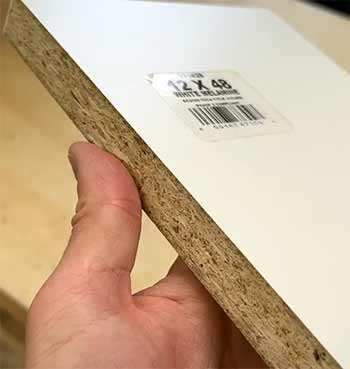
- Composition And How Each Panel Is Built Particle board starts as scraps. Manufacturers take wood chips, shavings, and sawdust, mix them with synthetic resin, then press the blend under heat and high pressure into flat sheets. The result is a uniform, dense panel with no natural grain direction. Plywood takes a completely different route. Thin sheets of wood veneer are peeled from logs, then stacked with the grain of each layer running at right angles to the one below it. The cross-grain construction is what gives plywood its reputation for strength. When I hold a piece of each material side by side, the difference in feel is immediate—particle board feels denser and more brittle, while plywood has a springy, layered toughness that resists splitting.
- Density And Structural Behavior Particle board packs a lot of mass into a given thickness because the particles are compressed tightly. That density makes it feel solid, yet the lack of continuous wood fiber means it breaks more easily under concentrated stress. Plywood spreads loads across its layered veneers, so a sheet of the same thickness can usually support more weight without sagging. In my own shop tests, a ¾-inch particle-board shelf loaded in the middle started to deflect sooner than a matching plywood shelf. The plywood also recovered better once the weight came off.
- Edge And Surface Characteristics Cut an edge on particle board and you get a porous, crumbly line that needs covering with edge banding or solid wood trim if you want a finished look. Plywood edges show the stacked veneers, which can look industrial or, with careful sanding and filling, become part of a design feature. The face of particle board is usually very smooth and ready for laminate or veneer, while plywood faces range from utility-grade rough patches to clear, furniture-grade surfaces that take stain beautifully.
- Response To Fasteners And Hardware Driving screws into particle board often feels like pushing into dense foam— the material compresses, then the threads lose grip if you overtighten or remove and reinsert the screw. Plywood grips fasteners the way solid wood does. Hinges, drawer slides, and shelf pins stay put longer in plywood, which is why I reach for it whenever a piece will see repeated use or heavy loads.
- Moisture And Dimensional Stability Both materials expand and contract with humidity, but particle board suffers more. Once water soaks in, the particles swell and the resin bonds weaken; the panel can permanently thicken and lose strength. Plywood, especially exterior or marine grades with waterproof glue, handles occasional wetting far better. Interior plywood still needs protection, yet it recovers from brief moisture exposure more gracefully than particle board ever does.
Also Read: Differences Between Hardie Board And Cement Board.
Key Features of Particle Board
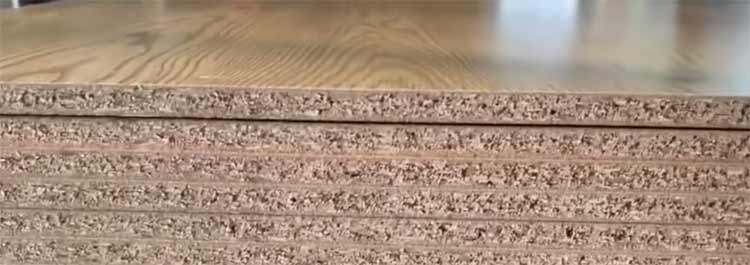
- Uniform density throughout the sheet Because the particles are mixed and pressed in one go, particle board has no soft spots or hard knots. That consistency makes it predictable when you’re cutting large panels for closet systems or kitchen carcasses. You can count on the same thickness and surface quality from one end of the sheet to the other.
- Excellent base for laminates and veneers The smooth, non-directional surface accepts glue evenly. High-pressure laminates bond tightly without telegraphing any underlying grain. Many ready-to-assemble furniture makers rely on this trait so the finished piece looks clean and modern under a thin decorative layer.
- Lower price point that stretches budgets When a project calls for dozens of square feet of paneling, the cost difference adds up fast. Particle board lets you cover more area for the same money, which is useful in rental properties, temporary fixtures, or large storage systems where the material stays hidden.
- Available in large, consistent sheet sizes Most suppliers stock 4×8-foot sheets in standard thicknesses, and the material cuts cleanly with a sharp blade. You waste less time hunting for matching pieces compared with some natural wood products that vary in color and grain.
- Accepts paint and edge treatments reasonably well With proper priming, particle board takes a smooth painted finish. Edge banding irons on quickly and hides the raw particle core, giving an appearance close to solid wood or plywood at a fraction of the material cost.
Pros of Particle Board
- Cost savings that free up money for other parts of the project The lower price means you can afford better hardware, nicer finishes, or simply complete a larger scope of work without stretching the budget. In my experience building closet organizers for clients who wanted maximum storage at minimum cost, particle board delivered the volume they needed while leaving room for quality hanging rods and drawer slides.
- Smooth surface ideal for contemporary looks Modern kitchens and offices often favor clean, flat planes with no visible wood grain. Particle board under laminate or thermofoil gives exactly that aesthetic. The uniform core also prevents the telegraphing of knots or voids that can show through thin coverings on lower-grade plywood.
- Lightweight relative to its thickness in certain formulations Some medium-density versions are easier to handle alone than equivalent solid-wood panels. When I’m installing upper cabinets or ceiling-mounted storage, the reduced weight makes a real difference in how tired my arms feel at the end of the day.
- Efficient use of wood waste Manufacturers turn scraps that would otherwise be discarded into usable panels. For anyone who prefers materials with a lower demand on virgin timber, this recycling aspect carries weight.
- Easy to machine with basic tools A sharp circular saw or router cuts particle board cleanly if you support the sheet well and use a fine-tooth blade. The lack of grain direction means tear-out is minimal compared with solid wood or even some plywoods.
Also Read: Differences Between Drywall And Cement Board.
Cons of Particle Board
- Weak resistance to moisture and humidity Spill a glass of water or place the material in a damp basement and the panel can swell within hours. Once swollen, it rarely returns to its original thickness, and the surface finish often bubbles or peels. I learned this the hard way on an early bathroom vanity project that needed complete replacement after a minor leak.
- Poor long-term fastener retention Screws strip out more easily, especially if the piece is taken apart for moving or modification. Over time, hinges can loosen and shelves can sag at the mounting points. Adding solid-wood cleats or using specialized particle-board screws helps, yet the underlying weakness remains.
- Heavier weight for the strength it provides Although some formulations feel manageable, many particle-board sheets weigh more than plywood of similar thickness while delivering less structural performance. Carrying full sheets up stairs becomes a real chore.
- Limited lifespan in high-use or high-stress situations Under daily loads or in environments with temperature swings, particle board can start to show wear within a few years. Edges chip, surfaces dent, and joints loosen. For anything expected to last decades, the material often falls short.
- Difficulty achieving a high-end solid-wood appearance without additional work Even with edge banding and careful finishing, the core material remains visible if the banding ever peels. The finished piece can look convincing from a distance, yet close inspection or future repairs reveal the composite nature.
Key Features of Plywood

- Cross-laminated strength that resists warping Each veneer layer runs perpendicular to the next, locking the panel against cupping and twisting. I’ve used plywood for tabletops and cabinet doors that stayed flat for years in rooms with seasonal humidity swings.
- Superior screw-holding power The continuous wood fibers grab threads and keep hardware secure. This matters for anything that gets assembled, disassembled, or adjusted—think adjustable shelves, hinged doors, or furniture that might move with you.
- Range of grades for different appearances and uses From construction-grade CDX to furniture-grade birch or maple, plywood offers options. You can choose a cheap utility sheet for hidden framing or a clear-faced panel that becomes the finished surface after light sanding and oil.
- Better performance in structural applications Builders use plywood for subfloors, wall sheathing, and roof decking because it spans joists and studs without excessive flex. The same structural integrity carries over into furniture and built-ins that need to support real weight.
- Repairability and reusability A damaged plywood panel can often be patched, sanded, and refinished. Particle board that gets water-damaged or chipped usually ends up in the scrap pile. Over the life of a project, that difference affects both cost and waste.
Pros of Plywood
- Outstanding strength-to-weight ratio The cross-grain construction lets a relatively thin sheet carry substantial loads without excessive thickness or mass. I’ve built workbenches and platform beds from plywood that feel rock-solid yet remain light enough to move when needed.
- Reliable performance across changing conditions Interior plywood handles normal household humidity swings without dramatic swelling or shrinking. Exterior and marine grades go further, surviving rain and outdoor exposure when properly sealed. That versatility opens up projects particle board simply cannot handle.
- Strong, consistent grip on screws, nails, and fasteners Hardware stays put through repeated cycles of use. Drawer slides operate smoothly for years, door hinges remain tight, and shelf pins do not enlarge their holes. The difference becomes obvious the first time you compare a particle-board cabinet to a plywood one after five years of daily opening and closing.
- Attractive natural surfaces available in many species When you want the look of wood, plywood delivers real veneers of oak, walnut, birch, or maple. A clear finish brings out the grain, and the layered edges can be celebrated rather than hidden. The material elevates a project from purely functional to something with visual interest.
- Longer service life that reduces replacement cycles Well-built plywood furniture and built-ins commonly last decades with only minor maintenance. The initial higher cost spreads over a much longer period, often making it the more economical choice in the end.
Also Read: Differences Between Plasterboard And Drywall.
Cons of Plywood

- Higher upfront material cost A sheet of quality plywood can cost two to three times as much as particle board of the same size. For large projects or tight budgets, that difference forces careful prioritization or a hybrid approach that uses plywood only where strength is critical.
- Potential for voids and core gaps in lower grades Inexpensive plywood sometimes contains empty spaces between veneers. These voids weaken the panel locally and can cause problems when cutting or fastening. Checking grade stamps and inspecting edges before purchase helps avoid the worst sheets.
- Surface can require more preparation for certain finishes Utility grades show patches, knots, and glue lines that need filling and sanding before paint or clear coat. Even higher grades may need light sanding to remove mill marks. Particle board’s factory-smooth face often needs less work under laminate.
- Heavier in thicker structural sheets While the strength-to-weight ratio is favorable, a full ¾-inch or 1-inch plywood sheet still demands careful handling. Solo installation of large panels can strain backs and shoulders.
- Environmental impact tied to higher wood consumption Producing plywood requires more solid timber than particle board, which relies heavily on waste. For buyers focused strictly on resource efficiency, this aspect can tip the scale toward the composite alternative.
Choosing The Right Material for Common Projects
When I plan a new build, I start by listing the stresses the piece will face. A set of garage storage shelves that will hold paint cans and toolboxes needs the spanning strength of plywood.
A temporary desk for a home office that might move in two years can live happily with particle board under a durable laminate. Kitchen cabinets that see daily moisture and heavy use almost always get plywood boxes with particle-board or MDF doors if budget is tight.
Closet systems often mix both—particle board for the vertical panels and plywood for the shelves that carry clothing weight.
Weight also plays a role. Upper cabinets benefit from lighter materials so the wall anchors have less to support. Floor-standing units can accept the extra mass of particle board without issue. Appearance matters too.
If the edges will be visible and I want a wood look, plywood wins. If everything disappears under paint or laminate, particle board keeps costs down without sacrificing the finished appearance.
Practical Tips from Real Builds
Always seal the edges of particle board immediately after cutting. A thin coat of glue, paint, or edge banding slows moisture absorption dramatically. For plywood, I still seal end grain, but the priority is lower.
When fastening into particle board, I pre-drill and use coarse-thread screws designed for the material; standard wood screws often fail. Plywood accepts almost any fastener with confidence.
Support long spans of either material with solid cleats or additional framing—neither panel is magic, and both will sag if asked to bridge too far without help.
In humid climates or rooms with poor ventilation, I lean heavily toward plywood or add a vapor barrier and good airflow around particle-board installations. For outdoor or semi-outdoor projects, only exterior-rated plywood belongs in the conversation.
Also Read: Differences Between Hardie Board And LP SmartSide.
Frequently Asked Questions (FAQ)
It swells and weakens with moisture, holds screws poorly over time, and generally lasts fewer years under heavy use than plywood.
No. Particle board usually costs less per sheet than plywood of comparable size and thickness.
No. Standard particle board absorbs water readily and is not considered waterproof. Special moisture-resistant versions exist but still lag behind exterior plywood.
In dry indoor conditions with light use, five to ten years is common. Heavy use or any moisture exposure can shorten that period significantly.
Wrapping Up
After comparing these two materials across cost, strength, moisture behavior, and real-world longevity, I keep both in my shop and choose according to the job. You now have the same side-by-side view I rely on when deciding what to buy.
Match the material to the demands of your project, protect the edges, use the right fasteners, and either panel can serve you well. The clearer you are about how the finished piece will be used, the easier the choice becomes.