
I have hung hundreds of sheets of wall material over the years in everything from quick bedroom refreshes to full bathroom gut jobs, and the choice between drywall and cement board always sits at the center of my planning.
My main intent with this article is to walk you through every practical angle so you can decide which one fits your project without second-guessing later.
I share what actually happens on the job site, the real costs, the surprises that pop up, and the long-term results I have seen in homes I worked on five or ten years ago. By the end you will know exactly when one beats the other and why your specific room matters more than any generic advice.
| Feature | Drywall | Cement Board |
| Material makeup | Gypsum core between two paper layers | Portland cement mixed with fiberglass mesh |
| Typical sheet weight | 35–55 pounds | 60–90 pounds |
| Cost per square foot | $0.40–$0.80 | $1.20–$2.50 |
| Moisture resistance | Low (standard) to moderate (green board) | Excellent |
| Fire resistance | Good (30–60 minutes) | Superior (non-combustible) |
| Ease of cutting | Very easy with utility knife | Requires special blade or score-and-snap |
| Best for | Living rooms, bedrooms, ceilings | Showers, tubs, kitchens, floors |
| Surface finish | Smooth and paint-ready | Rough; needs thinset or skim coat for tile |
| Installation speed | Fast for one person | Slower; needs two people for heavy sheets |
| Long-term durability | Prone to dents and water damage | Holds up to impacts and constant moisture |
| Sound insulation | Basic with added batts | Slightly better density |
| Mold growth risk | High if exposed to prolonged dampness | Very low |
Key Differences Between Drywall And Cement Board
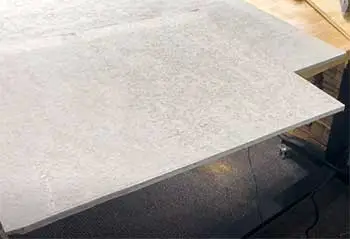
- The core material sets the tone for everything else that follows. Drywall relies on a soft gypsum plaster that feels almost chalky when you snap it, which is why it cuts in seconds with a simple knife. Cement board uses real Portland cement and embedded fiberglass that turns the whole sheet into something closer to a thin concrete panel, so it laughs at water but fights back when you try to shape it.
- Weight changes how the whole job feels from the first minute. I can carry a full sheet of drywall up a flight of stairs by myself on most days, but cement board forces me to grab a helper or risk a strained back. That extra heft means stronger screws and tighter framing in some cases, yet it also gives the finished wall a solid, quiet feel that standard drywall never quite matches.
- Cost hits your wallet differently at every stage. Drywall keeps the initial budget low, letting me finish a 12-by-12 room for a couple hundred bucks in material alone. Cement board doubles or triples that line item, but I have watched clients save money later because they never had to rip out swollen, moldy walls after a minor leak.
- Moisture behavior separates the two more than any other factor. Standard drywall soaks up water like a sponge and swells within hours, leading to soft spots and eventual replacement. Cement board shrugs off splashes, steam, and even standing water for days without losing strength, which is why I never second-guess it behind tile in a shower.
- Fire performance matters more than most homeowners realize until the unexpected happens. Drywall slows flames for a decent window thanks to the gypsum releasing water vapor, but cement board simply will not burn. In a garage or utility room where heat sources sit close to walls, that difference gives real peace of mind.
- Cutting and shaping reveal the personality of each product fast. Drywall lets me score, snap, and drop a perfect piece in under a minute. Cement board demands a diamond blade or a specialized scoring tool, and the dust is finer and more persistent, so I always wear a respirator and plan extra cleanup time.
- Surface texture dictates what finishes you can use right away. Drywall comes off the truck ready for joint compound and paint the same week. Cement board leaves a gritty face that tile loves but paint hates unless you add a skim coat, adding one more step to the schedule.
- Long-term maintenance tells the real story years later. I still walk into houses where I hung drywall in 2018 and see the occasional ding from moved furniture. The cement board walls I finished in the same era look exactly the same, no cracks, no soft spots, even after kids, dogs, and daily showers.
- Sound transmission behaves differently because of density. Drywall needs extra insulation layers to quiet a noisy hallway. Cement board’s natural weight cuts down on vibration without extra help, making it a quiet choice behind a home theater or laundry room wall.
- Environmental impact shows up in production and disposal. Drywall manufacturing uses less energy per sheet and the scraps break down easier at the landfill. Cement board production is more carbon-heavy, yet its extreme longevity means fewer replacements over decades, balancing the equation in my book for high-moisture zones.
Also Read: Comparison of Drywall Tape And Drywall Mesh.
Key Features of Drywall
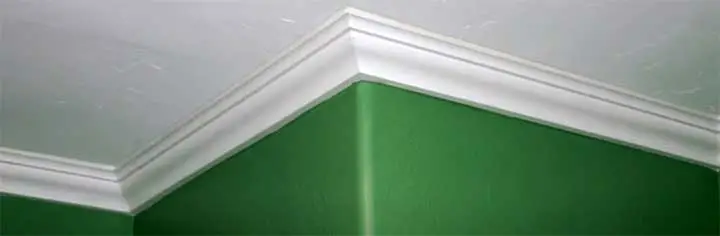
- Standard ½-inch thickness gives the perfect balance of strength and weight for most interior walls, letting me frame rooms quickly without overloading joists.
- Tapered edges on every sheet create seamless joints that disappear under a couple coats of mud, producing that flawless flat look homeowners expect.
- Fire-rated versions with glass fibers inside push the protection higher for garages or furnace rooms without changing the install process much.
- Pre-finished options with textured faces save an entire finishing step when speed is the priority on a tight timeline.
- Green board variant adds a water-resistant coating that handles occasional bathroom humidity better than regular sheets, though I still treat it as a backup plan only.
- Sound-dampening types with special cores cut noise between floors, a feature I recommend when kids’ bedrooms sit above the living room.
- Large 12-foot sheets reduce the number of seams in tall rooms, speeding up taping and finishing for big open-concept spaces.
Also Read: Is Continental Siding Worth It?
Pros of Drywall
- The low price tag opens up bigger budgets for other parts of the project like lighting or flooring that homeowners notice immediately. On a typical 12×12 bedroom, I can save several hundred dollars compared to cement board, money that often goes toward better paint, nicer trim, or even upgraded electrical fixtures.
- One-person installation is realistic for most sheets, which means I finish a room faster and keep labor costs down on small jobs. I have hung an entire master bedroom by myself in a single afternoon, something that feels satisfying and keeps the project moving when help is hard to find.
- Smooth surface accepts paint beautifully after minimal prep, giving that crisp, modern look homeowners expect. After taping and a couple of coats of mud, the wall feels like a blank canvas ready for any color or texture without extra steps.
- Wide availability at every big-box store means I never wait on special orders when a Saturday morning project pops up. I can grab what I need at 8 a.m. and be back at the job site before lunch.
- Lightweight nature reduces strain on framing members, letting me use standard 2×4 walls without upgrades in many cases. This keeps the structure simple and avoids extra lumber costs on larger walls or ceilings.
- Easy repair process involves a simple patch kit and some sanding, so minor damage never turns into a weekend-long headache. A small dent from moving furniture can be fixed in under an hour with a bit of compound and touch-up paint.
- Good thermal insulation when paired with fiberglass batts keeps energy bills lower in finished living spaces. I notice the difference in winter rooms where drywall helps hold heat better than denser materials in some setups.
- Recyclability of scraps helps me feel better about the waste I create on every job. Many local centers accept clean drywall pieces, turning potential landfill material into something useful again.
- Versatility across the house makes it the default choice for most interior walls. From ceilings to closet interiors, drywall handles almost any dry area with ease and consistency.
- Fast overall project timeline because cutting, hanging, taping, and painting flow together smoothly. I can deliver a finished, painted room in days rather than weeks.
Cons of Drywall
- Moisture turns it into a soft mess faster than most people expect, forcing complete wall replacement after even a small pipe leak.
- Dents and dings appear from everyday life, especially in high-traffic hallways where furniture scrapes the surface.
- Mold can hide behind paint and baseboards, creating health concerns years after the install if humidity spikes.
- Standard sheets sag over time on ceilings longer than eight feet unless I add extra screws or blocking.
- Sound travels through it easily unless I spend extra on resilient channels and insulation layers.
- Paper facing tears during transport or handling, creating weak spots that show up after the first coat of mud.
- Fire resistance drops once the paper chars, limiting its use near high-heat appliances without upgrades.
Key Features of Cement Board
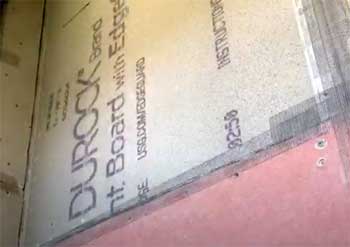
- Fiberglass mesh on both faces locks the cement matrix together so the board stays rigid even when flexed slightly during install.
- Uniform ¼-inch or ½-inch thickness options let me match the exact buildup needed for tile floors or shower walls without guesswork.
- Built-in mold resistance comes from the inorganic makeup that simply gives nothing for spores to eat, a detail I lean on heavily in coastal or humid climates.
- High compressive strength means it supports heavy tile and stone without flexing or cracking over time.
- Pre-scored lines on some brands guide straight cuts even when I am working alone late at night.
- Compatible with thinset mortar and most waterproofing membranes, making it the go-to substrate for every wet-area tile project I tackle.
- Impact resistance stands out when kids or pets test the walls daily; I have seen cement board shrug off soccer balls and tool drops that would dent drywall instantly.
Also Read: Is James Hardie Siding Worth It?
Pros of Cement Board
- Total water resistance lets me tile right over it in showers without worrying about hidden leaks ruining the wall later. I have installed cement board in master bathrooms that see daily showers for years, and the walls still feel rock-solid with no signs of softening.
- Extreme durability stands up to daily abuse in kitchens and bathrooms where drywall would need constant patching. Tile walls stay flat and crack-free even when heavy pots or cleaning tools bang against them.
- Non-combustible core adds a safety layer that code officials appreciate in garages and utility spaces. The peace of mind is real when working near water heaters, furnaces, or electrical panels.
- Long lifespan means the walls stay looking new for decades, protecting the investment in expensive tile or stone finishes. I have checked back on projects from ten years ago and the cement board areas still look as good as the day I finished them.
- Mold resistance keeps indoor air healthier without the constant battle against hidden growth. In humid climates or homes with teenagers who take long showers, this feature alone prevents future problems.
- High density reduces sound transmission between rooms, creating quieter living environments. I notice the difference immediately in homes where cement board separates a laundry room from the main living area.
- Tile adhesion is excellent straight from the factory texture, saving time and thinset compared to skim-coating other substrates. The built-in roughness grabs mortar perfectly, reducing the chance of tiles popping loose later.
- Impact resistance protects against accidental bumps from appliances or kids, keeping repairs minimal. A dropped hammer or soccer ball barely leaves a mark compared to the crater it would create in drywall.
- Structural stability under heavy loads makes it ideal for floor applications or large-format tile walls. It does not flex or bow even when supporting substantial weight over time.
- Compatibility with modern waterproofing systems allows me to create truly watertight assemblies in wet zones. When paired with the right membranes, it becomes part of a system that handles real-world flooding better than expected.
Cons of Cement Board
- Higher upfront cost adds hundreds to even a modest bathroom project, which can stretch tight renovation budgets.
- Heavy sheets require extra hands or special lifts, slowing the job and raising the chance of back strain.
- Cutting creates fine dust that lingers in the air and on every surface, demanding full containment and cleanup time.
- Rough surface needs additional prep before painting, adding a skim-coat step that drywall skips entirely.
- Limited color or texture choices mean most projects still require tile or a separate finish layer.
- Screw heads can snap if I drive them too hard, forcing me to back out and start over with care.
- Disposal is heavier and bulkier, increasing dumpster fees on larger jobs.
- Thermal bridging can feel colder in winter rooms unless I add insulation behind it.
Also Read: Is Diamond Kote Siding Worth It?
Frequently Asked Questions (FAQ)
It is heavier, more expensive, harder to cut, and creates more dust than drywall.
No, cement board costs roughly two to three times more per square foot.
It is highly resistant because mold cannot grow on the inorganic cement, but proper installation still matters.
No, it is designed to handle moisture and stays structurally sound even after repeated wetting.
Wrapping Up
After weighing every angle on dozens of jobs, I look at three questions: Will water touch this wall regularly?
How much abuse will it take?
What does the budget actually allow? If water is involved, cement board becomes the clear winner. If the room stays dry and you want speed and savings, drywall does the job beautifully. Hybrid approaches work too. I often combine both in the same house to get the best of each world without overspending.
I have watched homeowners stress over this choice for weeks, only to feel relieved once the walls are up and the room starts to take shape. You now have the same details I use when quoting jobs.
Trust your gut on the room’s needs, factor in the long game, and pick the material that matches how you actually live in the space. Your future self will thank you every time you walk past those walls and see them still standing strong.