
I have spent plenty of time on job sites and in workshops comparing OSB board and particle board for everything from subfloors to basic shelving.
The main purpose of this piece is to give you a clear, practical breakdown of how these two engineered wood products stack up in strength, moisture handling, cost, and real-world performance so you can pick the one that matches your project without second-guessing later.
| Aspect | OSB Board | Particle Board |
| Composition | Large oriented wood strands in cross layers | Small wood chips, particles, and sawdust |
| Strength | High structural strength and load-bearing | Low to moderate, limited load capacity |
| Surface | Rough, textured, uneven | Smooth and uniform |
| Moisture Resistance | Moderate (better than particle board) | Poor, swells and breaks down easily |
| Cost | Moderate | Lowest among engineered panels |
| Weight | Medium to heavy | Lightweight |
| Screw Holding | Fair to good | Poor, strips easily |
| Common Uses | Wall/roof sheathing, subfloors, structural | Furniture cores, cabinets, laminate surfaces |
| Lifespan in Dry Use | Long (decades with proper protection) | Shorter under stress or humidity |
| Appearance | Industrial, visible strands | Clean when covered or laminated |
Key Differences Between OSB Board And Particle Board
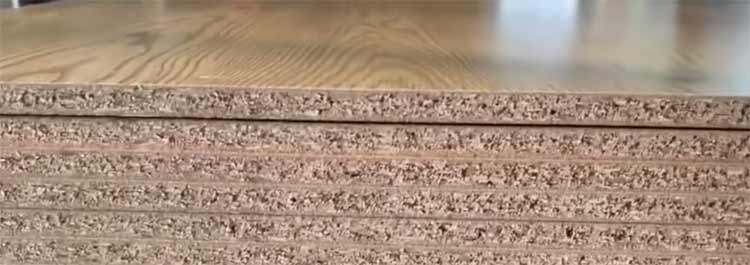
- Composition And How Each Board Comes Together OSB starts with longer, thinner wood strands that get aligned in specific directions across multiple layers. Those strands sit roughly parallel on the faces and cross or random in the core, then get pressed with waterproof resins under heat. The result feels solid and layered when you cut into it. Particle board takes much smaller pieces—chips, shavings, even sawdust—mixes them with resin, and compresses everything into a more random, dense mat. When I slice a piece of particle board, the particles look scattered with finer material near the faces for a smoother finish. That basic difference in particle size and orientation drives almost every other performance gap I have seen on site.
- Strength And Ability To Carry Weight The oriented strands in OSB create a panel that resists bending and holds up under distributed loads far better. I have used it for roof decking and subfloors where people walk and furniture sits for years. Particle board can support light static loads but sags or fails when spans get wide or weight concentrates. In my experience, particle board shelves often need extra supports or thicker stock just to stay level, while OSB handles the same job with less fuss.
- Surface Texture And Finishing Needs OSB shows its strands clearly—a rough, flaky look that most people cover with drywall, underlayment, or siding. You cannot paint or laminate it cleanly without a lot of prep. Particle board offers a flatter face that accepts melamine, veneer, or laminate almost immediately. That is why most ready-to-assemble furniture starts with particle board cores.
- Moisture Behavior In Everyday Conditions Neither board loves water, yet OSB holds up longer because of the larger strands and exterior-grade resins used in structural grades. Short rain exposure during framing usually dries out without total failure if the board gets airflow. Particle board absorbs water fast, swells at the edges, and can crumble once the resin bonds weaken. I have watched particle board cabinet bottoms turn soft after a single plumbing leak.
- Cost And Value Over Time Particle board wins on pure purchase price. Sheets cost noticeably less, which matters when you need many panels for closets or temporary fixtures. OSB sits in the middle—cheaper than plywood yet more expensive than particle board—and delivers longer service in structural roles, so the higher upfront cost often pays back through fewer replacements.
- Workability And Tool Impact Cutting OSB dulls blades faster because of the dense, resin-soaked strands. Edges can fray if you rush. Particle board cuts cleaner and lighter, though the fine dust gets everywhere and the material chips if you force fasteners too close to the edge.
- Environmental Footprint From Production Both use wood residues and fast-growing trees, but particle board leans heavier on mill waste and sawdust. OSB relies more on dedicated strand production from smaller logs. In practice I treat both as efficient uses of wood resources compared with solid lumber.
- Typical Service Life Under Normal Indoor Conditions Protected OSB in walls or floors routinely lasts the life of a building. Particle board in furniture often shows wear—loose screws, edge swelling—within a decade if the environment is not perfectly dry and loads stay light.
Key Features of OSB Board
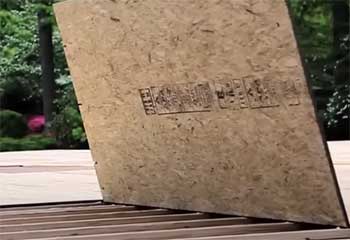
- Oriented strand layers that deliver directional strength The face strands run lengthwise while core strands cross them. That arrangement gives higher bending strength in the long direction of the panel, something I rely on when spanning joists or studs.
- Consistent density without internal voids Unlike some plywood that can hide gaps, OSB feels uniform from edge to edge. I rarely find soft spots that weaken a nailing pattern.
- Available in structural grades with moisture-resistant resins Exterior and sheathing grades use phenol-formaldehyde or similar binders that tolerate temporary site moisture better than interior-only products.
- Larger panel sizes possible Manufacturers can produce longer sheets than traditional plywood limits, which reduces seams on big roofs or floors and speeds installation.
- Textured surface that provides grip On roof work the rough face helps footing in dry conditions, a small but real safety plus I notice every time I walk an OSB deck.
- Good shear resistance for wall bracing When nailed properly, OSB contributes solid racking strength to framed walls, meeting code requirements in most residential builds.
- Made from smaller-diameter trees and thinnings This supports more efficient forest management compared with products that need large clear logs.
- Pre-marked nailing lines on many sheets Factory lines at 16- and 24-inch centers make fastening faster and more accurate on studs or joists.
Pros of OSB Board
- Superior structural performance for load-bearing jobs I reach for OSB whenever the panel must support floors, roofs, or walls because the oriented strands resist deflection better than particle board ever could. On multi-story projects the difference in stiffness shows up immediately.
- Better resistance to short-term moisture than particle board Rain during framing or high humidity in a crawl space rarely ruins a properly graded OSB panel if it dries afterward. The larger strands and stronger resins buy time that particle board simply does not have.
- Cost savings versus plywood in large-area applications Across an entire roof or floor system the price difference adds up quickly, yet structural ratings remain comparable in most codes. That combination keeps projects on budget without sacrificing safety.
- Consistent quality from panel to panel Factory control eliminates the soft spots or voids that occasionally appear in other sheet goods, giving me predictable nailing and fewer callbacks.
- Versatility across sheathing, subflooring, and temporary structures The same material works for walls one day and roof decks the next, simplifying material orders and reducing leftover stock.
- Improved shear values for braced walls When codes demand lateral resistance, OSB delivers reliable numbers that help pass inspections without extra engineering.
- Longer service life in protected structural roles Once the building envelope closes, OSB continues performing for decades with minimal maintenance beyond normal building care.
- Availability of specialized grades for different exposure levels From interior dry-use panels to more moisture-tolerant exterior grades, I can match the product to the exact site conditions.
Also Read: Differences Between Drywall And Gypsum Board.
Cons of OSB Board
- Rough, unattractive surface that needs covering The visible strands make OSB unsuitable for any visible finish work. I always plan an extra layer of drywall, underlayment, or siding, which adds labor and material.
- Edge swelling risk if water sits for long periods Prolonged saturation, especially at panel edges or fastener holes, causes permanent thickness increase and strength loss. Once that happens, replacement becomes the safer option.
- Heavier feel and more tool wear during cutting The dense strands dull saw blades and router bits faster than particle board. On big jobs I budget extra blades and slower feed rates.
- Limited screw-holding power compared with plywood While better than particle board, OSB still benefits from construction adhesive and careful fastener spacing to keep connections tight over time.
- Not ideal for fine furniture or exposed interior panels The industrial look and surface texture rule it out for cabinets, desks, or any project where appearance matters.
- Potential for greater deflection under heavy point loads in some flooring setups In certain tile or stone installations, builders still prefer plywood for its slightly higher stiffness.
- Dust and resin content that require good dust collection Cutting releases fine particles and resin dust that demand proper masks and vacuum systems for health and cleanliness.
- Performance drop if installed while still wet Wet panels can sag under load and retain that deflection after drying, so I always check moisture content before permanent fastening.
Key Features of Particle Board
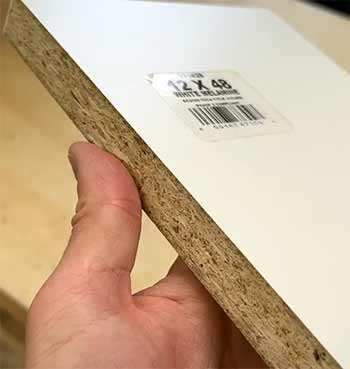
- Smooth faces ideal for laminates and veneers The fine surface particles create a flat canvas that accepts decorative overlays without telegraphing texture underneath.
- Low material cost that keeps projects affordable When budget drives the decision, particle board lets me stretch resources across more cabinets or shelving runs.
- Uniform thickness and density for predictable machining Sheets stay consistent, so cuts and edge banding line up cleanly in furniture production.
- Lightweight panels that ease handling One person can often move a full sheet without strain, useful in tight workshops or upper-floor installs.
- Ability to incorporate recycled wood content Many mills feed sawdust and planer shavings straight into the process, reducing waste streams.
- Accepts a wide range of surface treatments Melamine, vinyl, wood veneer, or paint all bond well once the surface is clean and sealed.
- Available in multiple density grades Higher-density versions improve screw holding a bit, though they still lag behind OSB or plywood.
- Easy to edge-band for finished looks PVC or wood banding hides the particle core and gives furniture a more polished appearance.
Pros of Particle Board
- Lowest purchase price among common sheet goods For large runs of cabinets or closet systems the savings are immediate and significant, letting me stay within tight budgets.
- Excellent surface for decorative finishes Laminates and veneers bond cleanly, producing the smooth, modern look customers expect in furniture and built-ins.
- Lightweight nature that simplifies transport and installation Crews move more sheets per trip and install faster in finished spaces where heavy panels would be awkward.
- Good dimensional stability in dry, climate-controlled rooms Indoors with steady humidity, particle board stays flat and true for years when loads remain light.
- Efficient use of wood residues Turning sawdust and chips into usable panels reduces landfill volume and supports circular manufacturing.
- Wide availability in furniture-grade thicknesses and sizes Standard sheets match common cabinet dimensions, cutting waste during layout.
- Easy machining with standard woodworking tools Clean cuts and minimal tear-out keep production simple for shops focused on volume furniture.
- Compatibility with edge banding and hardware designed for it Most ready-to-assemble systems and European hinges are engineered around particle board cores.
Also Read: Differences Between Backer Board And Drywall.
Cons of Particle Board
- Weak structural strength that limits applications I never use it for floors, roofs, or any span that carries real weight. Sagging and failure appear quickly under moderate loads.
- Extremely poor moisture tolerance Even minor leaks or high humidity cause swelling, edge breakdown, and loss of integrity. Once water reaches the core, the board rarely recovers fully.
- Inferior screw and nail holding Fasteners strip out after a few cycles of removal or under vibration. Hardware often needs reinforcement or specialized inserts.
- Shorter overall lifespan in demanding settings Furniture made from particle board frequently shows wear—loose joints, swollen edges—within several years of normal use.
- Susceptibility to chipping and edge damage during handling Rough transport or careless cutting leaves ragged edges that require extra filling or banding.
- Higher formaldehyde emissions in some older or lower-grade products While modern low-emission resins improve the situation, ventilation during cutting and finishing remains important.
- Limited repair options once damaged Unlike solid wood, a swollen or crushed section usually means full panel replacement rather than simple patching.
- Heavier density grades still lack the toughness of oriented strand products Even the best particle board cannot match OSB for impact resistance or long-term load capacity.
Practical Uses and Real Project Lessons
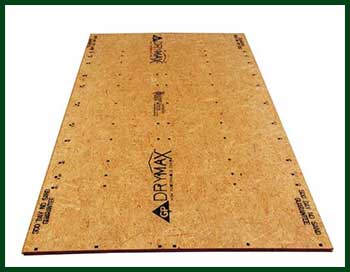
In structural framing I specify OSB for wall sheathing and roof decks almost every time the budget allows.
The panels go up fast, accept house wrap or felt cleanly, and deliver the shear values inspectors expect.
For subfloors the same material works well under carpet or floating floors, though I still prefer a thin underlayment over the rough surface. Particle board shines inside finished rooms.
Kitchen cabinet boxes, closet organizers, and office desks built with laminated particle board cores stay affordable and look polished.
I avoid it near sinks, dishwashers, or exterior walls where humidity fluctuates.
When clients ask about longevity I explain that protected OSB becomes part of the building skeleton and rarely needs attention. Particle board furniture, by contrast, benefits from careful placement away from moisture sources and occasional hardware tightening.
On renovation jobs I have replaced particle board shelves that sagged under books while the OSB subfloor beneath remained solid after twenty years.
Cost calculations often tip the scale. A full house sheathing package in OSB saves enough versus higher-priced alternatives to fund better windows or insulation. For a single closet system the particle board route keeps the total under control without visible compromise once the laminate goes on.
Also Read: Differences Between Sheetrock And Blue Board.
Frequently Asked Questions (FAQ)
Builders choose OSB mainly for lower cost on large structural areas while still meeting strength and shear requirements. Consistency and availability in longer lengths also help.
Particle board is still widely known as particle board or chipboard; some markets also use the term low-density fiberboard for certain grades.
Short-term wetting during construction usually does not ruin OSB if the panels dry thoroughly afterward. Prolonged saturation can cause permanent swelling and strength loss.
The main drawbacks are its rough surface that needs covering, vulnerability to edge swelling with long water exposure, faster tool wear, and limited suitability for finished or furniture applications.
Wrapping Up
I have laid out the differences, strengths, and limits of both materials so you can match them to your specific needs. Whether you are framing a new addition or building simple storage, the right choice now will save you time, money, and frustration later.
You now have the practical details to decide with confidence and move forward on your next project.