
I’ve spent enough time on job sites and in hardware store aisles to know that choosing between sheetrock and blue board isn’t always as simple as grabbing whatever’s stacked closest to the door.
Both products are wallboard panels, both hang from studs, and both get covered up eventually — but how they get there, what they cost, and where they belong are entirely different conversations.
In this article, I’m breaking down everything you need to know about sheetrock vs. blue board so you can walk into your next project with total confidence.
| Feature | Sheetrock (Drywall) | Blue Board |
| Primary Use | General interior walls and ceilings | Veneer plaster base |
| Finish Type | Joint compound + tape + paint | Plaster skim coat |
| Surface Color | White/grey paper face | Blue paper face |
| Paintable Directly? | Yes (with primer) | No |
| Moisture Resistance | Standard or moisture-resistant variants | High absorption for plaster bonding |
| Cost | Lower (material + labor) | Higher (material + skilled labor) |
| DIY Friendly | Very | Limited |
| Durability | Good | Excellent (with plaster finish) |
| Noise Reduction | Moderate | Better (with plaster) |
| Ideal For | Most residential/commercial spaces | Historic renovations, high-end finishes |
Key Differences Between Sheetrock And Blue Board
Understanding the core differences between these two products goes well beyond looking at their colors. The decision to use one over the other cascades through your entire project timeline, budget, and the skill set required on your job site.
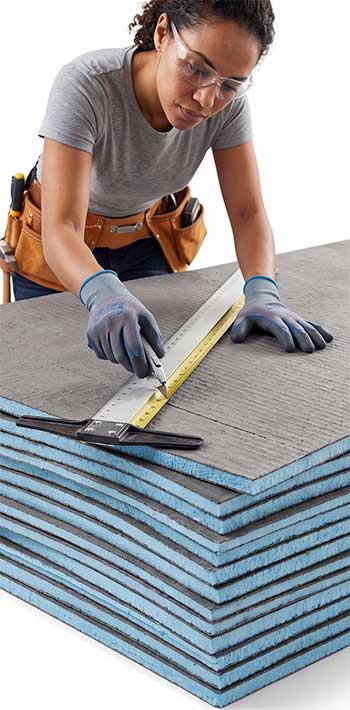
- Sheetrock is designed as a finished substrate that receives joint compound, tape, primer, and paint, while blue board is an intermediate substrate that requires a veneer plaster skim coat applied by a trained plasterer before any decorative finish can be considered
- The surface paper on sheetrock is formulated to bond with joint compound, whereas blue board’s blue paper is specifically engineered to absorb and chemically react with finish plaster — using the wrong product for the wrong finish system will cause adhesion failures, bubbling, and cracking
- Sheetrock projects can be completed entirely by a skilled DIYer with patience and the right tools, but blue board finishing demands a professional plasterer — a trade skill that takes years to develop and is increasingly rare in many markets
- The labor cost differential is significant: drywall finishing requires a taper/finisher, while blue board requires a plasterer, and plasterers typically charge more per square foot due to the specialized nature of their work
- Sheetrock walls, when finished properly, produce a surface that is smooth and paintable but relatively soft — subject to dents and dings from furniture, doorknobs, and daily life — while blue board walls finished with veneer plaster cure into a surface that is significantly harder and more durable
- Moisture response is handled differently between the two: sheetrock has standard, moisture-resistant, and mold-resistant variants you can select from, while blue board’s inherent plaster finish actually creates a more moisture-tolerant wall system in many applications, though it’s not categorically waterproof
- Sheetrock is the default choice for most new construction residential projects in North America due to its lower cost and broader contractor availability, while blue board is more commonly found in historic renovations, high-end custom homes, and regions where plastering tradition remains strong
- The acoustic properties of the finished wall differ: a plaster-finished blue board wall provides better sound dampening than a standard painted drywall wall, largely because the plaster mass adds density to the assembly
- Sheetrock wall repairs are straightforward — patch compounds and mesh tape make fixing holes a weekend DIY task — while repairing a plaster-finished blue board wall requires matching the plaster skim coat, which is a skill most homeowners and even many contractors don’t possess
Key Features of Sheetrock
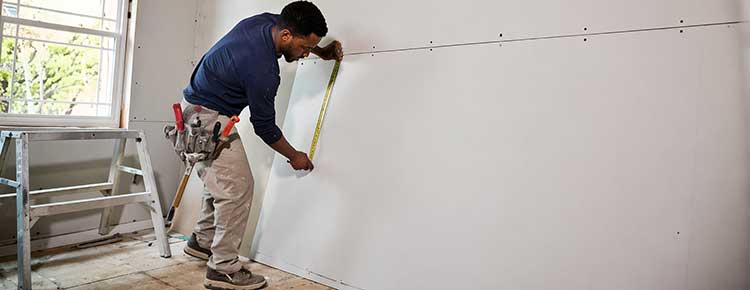
- Available in multiple specialty variants including moisture-resistant (greenboard), mold-resistant, fire-rated (Type X), and soundproof panels, giving you a targeted solution for virtually every room condition
- Easy to cut with just a utility knife and a straight edge — you score, snap, and cut the back paper, and you’re done, making it one of the most accessible building materials for both professionals and enthusiastic DIYers
- Accepts joint compound (mud) smoothly, which means you can tape seams, fill fastener dimples, and finish the surface to a paint-ready state without specialized plastering skills
- Widely available at every home improvement store, lumber yard, and building supply warehouse across North America, making it the most accessible wallboard on the market
- Comes in longer sheet formats — 10-foot and 12-foot panels — to reduce seam lines on taller walls, which is a huge win for finish quality on higher ceilings
- Compatible with virtually all paint types and primers straight out of the box, meaning once it’s mudded, taped, and sanded, it’s ready for your roller within a day or two
Pros of Sheetrock (Drywall)
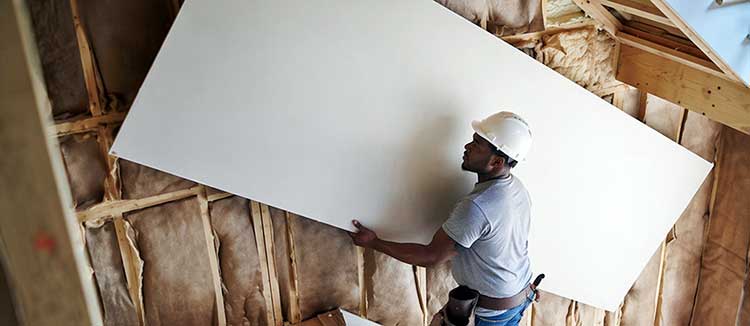
- Budget-friendly on both material and labor costs, making it the most economical choice for large-scale residential and commercial projects where wall coverage is measured in thousands of square feet
- Universally available at every building supply outlet, which means you’re never waiting on specialty orders or dealing with supply chain issues for a standard project
- Repair-friendly in a way that no other wall system matches — small holes, cracks, and damaged sections can be patched with readily available compounds and basic tools, and the repair can be invisible after proper finishing
- The sheer variety of specialty sheetrock products — fire-rated, soundproof, moisture-resistant, ultra-light — means you can select a panel engineered for your exact environmental conditions without switching wall systems
- DIY-accessible to a degree that makes it the go-to choice for homeowners tackling basement finishing, garage conversions, or renovation projects without professional crews
- Faster project completion timelines when compared to plaster systems, since compound drying time is the main limiter and modern quick-set products can dramatically compress that schedule
- Integrates seamlessly with modern building systems — electrical boxes, HVAC grilles, plumbing penetrations, and insulation all work with standard drywall framing and installation practices without modification
Cons of Sheetrock (Drywall)
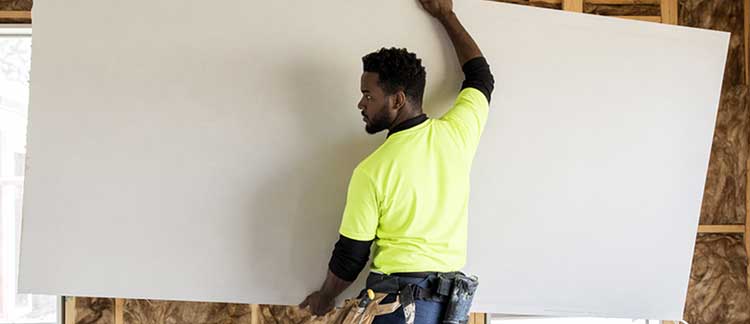
- The finished surface, while smooth and attractive, is relatively soft and susceptible to impact damage — a doorknob swing, a moving furniture corner, or even a firm bump can dent or gouge painted drywall
- Achieving a truly flat, blemish-free Level 5 finish on sheetrock requires multiple coats of joint compound, extensive sanding, and a skilled finisher — most residential work lands at Level 4, which can show imperfections under raking light
- Standard sheetrock is not moisture-tolerant and will swell, sag, and grow mold if exposed to water intrusion — even moisture-resistant variants have limits that plaster-finished walls typically surpass
- Seams and fastener dimples are inherent weaknesses in the drywall system — they require taping and multiple mud coats, and over time, thermal movement and structural settling can cause taped seams to crack and show through paint
- The dust generated during sanding is a significant health and cleanup concern, producing fine gypsum particles that infiltrate every crevice and surface in the work area
- Long-term aesthetics can suffer as the wall shows its age through paint buildup, nail pops, and hairline cracks that require periodic maintenance and repainting to keep walls looking fresh
Also Read: Comparison of Hardie Board And Cement Board.
Key Features of Blue Board
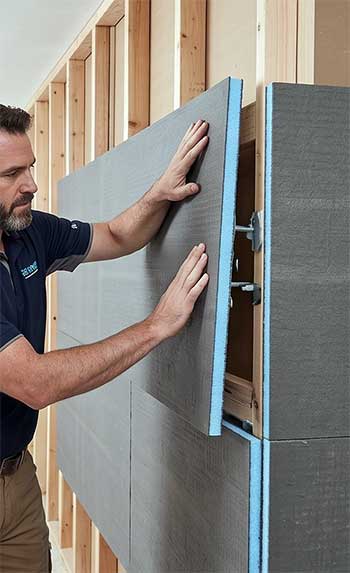
- The specially formulated blue paper facing creates a mechanical and chemical bond with finish plaster, preventing the delamination and cracking that would occur if you tried to apply veneer plaster over standard drywall
- Panels are typically manufactured in 1/2″ and 5/8″ thicknesses and in the same standard sheet dimensions as regular drywall, so hanging blue board is procedurally identical to hanging sheetrock — no special fasteners or framing modifications needed
- The gypsum core in blue board is denser and more uniform than standard drywall, which contributes to a harder, more impact-resistant finished wall once the plaster skim coat cures
- Blue board installation eliminates the lengthy taping, mudding, and sanding process — because the plaster skim coat covers seams and fastener heads in a single application, wall completion can actually happen faster in skilled hands
- The resulting plaster-finished surface is naturally harder than a painted drywall wall, which means it resists dents, dings, and surface damage from everyday contact significantly better
- Blue board is the preferred substrate for authentic venetian plaster and decorative plaster finishes, making it the go-to choice for high-end architectural projects where wall texture and quality are a priority
Pros of Blue Board
- The veneer plaster finish system produces walls of exceptional hardness and durability that outlast standard drywall finishes by decades — plaster walls from the early 20th century are still standing and looking great in countless older homes
- The elimination of taping and mudding in the traditional sense means fewer steps where human error can introduce visible flaws — the plaster skim coat bonds seamlessly over seams and fastener heads without the layered mud coats that can crack over time
- Acoustically superior finished walls, since plaster mass adds real density to the partition assembly, reducing airborne sound transmission in a way that painted drywall simply cannot match
- Ideal for historic renovation work where authenticity and material compatibility matter — replacing deteriorated plaster walls with a blue board and veneer plaster system preserves the original wall character and feel
- The smooth, hard plaster surface holds paint differently than drywall — it’s less porous, holds color more evenly, and requires fewer coats for solid coverage
- Creates the ideal foundation for specialty decorative finishes like venetian plaster, marmorino, and other artisan plaster coatings that cannot adhere properly to standard drywall
Cons of Blue Board
- Requires a skilled plasterer for finishing, and in many North American markets, finding a qualified plasterer is genuinely difficult — the trade has become less common as drywall dominated construction over the past 50 years
- Total project cost runs higher than standard drywall systems when you factor in the specialty material cost plus the premium labor rate that skilled plasterers command
- Not a DIY-friendly system for most homeowners — applying a veneer plaster skim coat properly requires significant training, specific tools, and hands-on experience to avoid roller marks, trowel lines, and uneven thickness
- Repairs to plaster-finished walls are more complex and potentially conspicuous — matching the plaster texture and color over a patch requires skill, and patches can be visible even after painting if not done properly
- Blue board must not be mistakenly treated as standard drywall — applying joint compound over it or painting it directly without the plaster finish will result in a substandard surface with adhesion problems
- Limited availability compared to standard drywall in some markets, meaning you may need to order ahead or source from specialty suppliers rather than picking up panels at your nearest home improvement store
Also Read: Comparison of Sheetrock And Cement Board.
Which One Should You Actually Use?
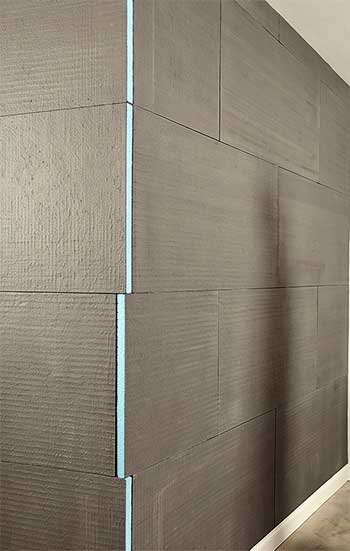
Here’s where I get analytical, because the answer depends almost entirely on your project specifics rather than on any inherent superiority of one product over the other.
If you’re finishing a basement, building out a new addition, or renovating bedrooms and common spaces in a typical residential home — sheetrock is your answer.
It’s cost-effective, widely available, and the finishing process can be handled by most experienced contractors or ambitious DIYers.
The trade-offs in hardness and acoustics simply don’t matter enough in standard residential applications to justify the premium of a plaster system.
If you’re working on a high-end custom home where wall quality is part of the value proposition, restoring a historic property where plaster is an authentic and appropriate material, or creating a space where sound control and wall durability are genuinely critical — blue board with veneer plaster deserves serious consideration.
The durability, acoustic performance, and finish quality that a plaster system delivers are real and meaningful advantages in the right context.
Budget is also a practical determinant. If your project budget is tight, sheetrock will always win. If you have room in the budget and access to skilled plastering labor, blue board opens up a level of wall quality that sheetrock simply cannot match.
Cost Breakdown: What To Actually Budget?
When comparing sheetrock and blue board, material cost alone tells only half the story. A standard 4×8 sheet of half-inch sheetrock typically runs between $12 and $20 depending on the region and current material markets.
Blue board panels in the same dimensions run slightly higher — often $15 to $25 per sheet — but that difference is minor compared to the labor gap.
Drywall finishing labor — hanging, taping, mudding, and sanding — generally runs $1.50 to $3.50 per square foot of wall area depending on finish level and regional labor rates.
Plastering labor for veneer plaster application over blue board typically runs $3 to $6 per square foot or more in markets where plasterers are available.
For a typical 2,000-square-foot home with roughly 8,000 square feet of wall surface area (accounting for both sides of walls, ceilings, etc.), that labor difference can amount to $12,000 to $20,000 or more on the total project. That’s the real cost conversation — not the per-sheet panel price.
Also Read: Alternatives To Fire Rated Drywall.
Frequently Asked Questions (FAQ)
Blue board delivers a harder, more durable wall surface when finished with veneer plaster. It’s the right pick when wall longevity, acoustic performance, or high-end finish quality is the priority.
Yes. Both material and labor costs run higher with blue board. Plasterers charge more than drywall finishers, and that labor gap is where the real cost difference lives.
It’s commonly called plasterboard or gypsum lath. Some trades also refer to it simply as “plaster base.”
No. Blue board must receive a veneer plaster skim coat first. Painting directly onto the blue paper face will cause adhesion failures and a compromised surface.
Wrapping Up
At the end of the day, sheetrock and blue board are both excellent products — they’re just built for different jobs. If you’re tackling a standard residential build or renovation on a realistic budget, sheetrock is your workhorse. It’s accessible, affordable, and gets the job done well.
But if you want walls that genuinely last longer, feel harder underfoot, and carry a finish quality that turns heads, blue board with veneer plaster is worth every extra dollar — provided you have the right plasterer and the budget to back it up.
You now have everything you need to make that call confidently. Choose based on your project, not habit.