
I’ve hung and finished more drywall than I care to count over the years, from full basement builds to small ceiling patches.
After switching back and forth between paper tape and mesh tape on real jobs, I put this guide together so you can pick the right one for the seams you’re facing today and avoid the rework that comes from choosing wrong.
You’ll see exactly how each product behaves under mud, under tension, and under everyday house movement so your next wall stays smooth.
| Feature | Paper Drywall Tape | Fiberglass Mesh Tape |
| Material | Kraft paper with center crease | Open-weave fiberglass |
| Attachment | Must be embedded in wet compound | Self-adhesive backing |
| Tensile strength | High once fully set | Moderate |
| Ideal joint types | Butt joints, tapered seams, inside corners | Flat seams, minor cracks, quick repairs |
| Compatible mud | Any drying or setting compound | Setting-type preferred |
| Learning curve | Steeper | Gentle |
| Crack resistance over time | Excellent when embedded correctly | Solid if correct compound is used |
| Application speed | Slower | Noticeably faster |
| Corner performance | Outstanding | Limited |
| Typical roll cost | Lower | Slightly higher |
Key Differences Between Drywall Tape and Drywall Mesh
- Embedding Process Versus Peel-And-Stick Convenience
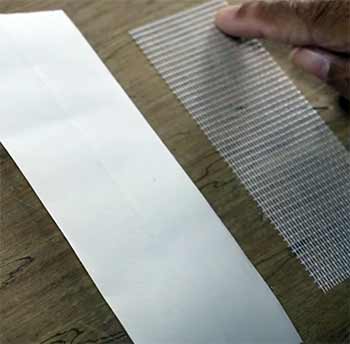
Paper tape demands a thin layer of joint compound first so the paper can soak up moisture and bond permanently.
You press it into that wet bed, squeeze out excess mud, and wipe the surface clean. Mesh tape skips that step entirely.
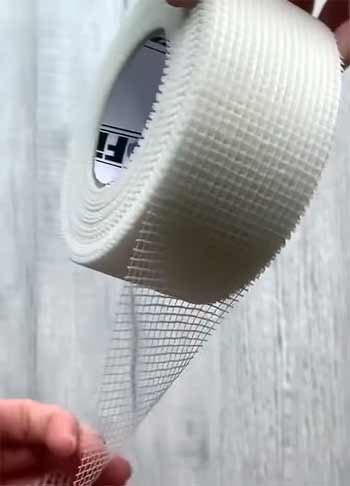
You simply press the sticky side onto the dry seam and you’re ready for the first coat.
That single difference changes the entire workflow.
On a long run of flat seams the mesh version saves several minutes per joint.
On a butt joint that needs maximum strength the paper version forces you to slow down and do the job right the first time.
I’ve watched beginners finish an entire room with mesh in the time it took me to embed paper on half the same room, yet those same beginners often returned later to fix hairline cracks that never appeared when I used paper.
- Strength Under Tension And How The Joint Moves
Paper tape, once embedded and dried, creates a continuous paper-and-mud membrane that resists stretching better than open-weave mesh. House framing expands and contracts with humidity and temperature. Paper handles that movement without opening up as readily.
Mesh relies on the compound filling every tiny square of the weave. If the compound is too soft or applied too thin, the joint can telegraph a crack right through the mesh pattern.
In my own tests on a garage wall that sees big seasonal swings, paper seams stayed invisible after two winters while a few mesh seams showed faint lines that needed a second finish coat.
- Corner Behavior And The Crease Advantage
Paper tape comes with a factory crease down the middle. You fold it, push it into an inside corner, and the paper sits perfectly against both planes.
Mesh has no crease and tends to bridge the corner rather than sit tight in it. You can force mesh into a corner, but the weave often lifts or creates a rounded edge that shows under paint. I stopped using mesh on any inside corner after one living-room job where the corner lines looked soft even after three coats.
- Compound Compatibility And The Risk Of Future Cracking
Paper works with the ready-mix mud most people already own. Mesh performs best with setting-type compound (the kind that hardens chemically rather than by drying). When I used regular drying mud over mesh on a ceiling repair, fine cracks appeared within six months.
Switching to setting compound solved the problem, but it also meant mixing smaller batches and working faster before the mud set. That extra step is invisible on the product label yet shows up clearly in the finished wall.
- Skill Requirement And Forgiveness For Mistakes
Mesh forgives a slightly uneven first coat because the sticky backing holds everything in place. Paper punishes wrinkles, air bubbles, and dry spots. If you leave a bubble under paper tape it will show forever or tear when you try to smooth it.
Mesh lets you peel and reposition for a few seconds, which is why many first-time drywall finishers reach for it. After enough practice I now prefer paper for permanent work and keep mesh only for emergency patches.
- Visibility Of The Tape Under Finish Coats
Mesh weave is thicker than paper. Even after two coats you can sometimes see a faint grid if the mud is applied too thin.
Paper disappears completely once covered. On a wall that will receive a glossy paint or a dark color, that difference becomes obvious under raking light. I learned to apply an extra thin skim over mesh just to hide the pattern, which cancelled some of the time savings I had gained earlier.
Also Read: Differences Between Drywall And Gypsum Board.
Key Features of Paper Drywall Tape

- Center Crease That Folds Cleanly For Corners: The crease is pressed in at the factory so the tape naturally wants to sit in a sharp 90-degree angle. You run your finger or a corner tool down the crease and the paper stays put while you embed it. That single feature turns an awkward corner joint into a predictable step. I’ve used the crease to finish entire hallways of inside corners without a single soft edge.
- High Tensile Strength Once Embedded When the paper soaks up water from the compound it becomes part of the mud layer rather than sitting on top of it. The result is a joint that can handle the slight racking that occurs when a house settles or when someone leans against a wall. On butt joints where two cut edges meet with no tapered recess, that strength matters most. Mesh simply cannot match it without multiple coats and perfect technique.
- Compatibility With Every Common Joint Compound Whether you open a bucket of lightweight all-purpose mud or mix a bag of 90-minute setting compound, paper tape accepts it. You never have to change products mid-job. That flexibility keeps the workflow simple when you’re already juggling sanding, priming, and painting schedules.
- Ability To Span Larger Gaps Without Tearing Paper can bridge a 1/8-inch gap between sheets if you bed it carefully. Mesh will stretch across the same gap but the open weave leaves less material to hold the compound, so the joint remains weaker. On older homes where sheets never line up perfectly, paper has saved me from having to cut and float extra filler strips.
- Thin Profile That Vanishes Under Finish Coats After two or three coats the paper is completely invisible. No grid lines, no raised edges, just a flat plane ready for primer. That thinness also means less sanding overall because you don’t have to feather as aggressively to hide the tape itself.
- Predictable Drying Behavior Because the paper absorbs moisture evenly, the joint dries at a consistent rate. You can schedule the next coat with confidence instead of waiting for thick mesh-filled mud to harden in the middle while the edges dry first.
Also Read: Differences Between Backer Board And Drywall.
Pros of Paper Drywall Tape
- Superior long-term crack resistance on structural joints In my experience paper joints that were properly embedded have stayed closed for more than a decade even on walls that see seasonal movement. The continuous paper membrane simply outlasts the open weave when tension is applied.
- Clean, sharp inside corners every time The factory crease and the way paper sits in the corner produce a crisp line that looks professional under paint. Mesh corners almost always need extra attention to avoid a rounded look.
- Works with the mud already in your garage No special setting compound required. You can open a five-gallon bucket of ready-mix and start finishing immediately. That convenience matters on small weekend projects where you don’t want to mix multiple products.
- Lower material cost for large jobs Paper rolls are consistently cheaper per linear foot. On a whole-house remodel the savings add up without sacrificing performance.
- Invisible under any paint sheen Once covered, paper disappears completely. Even under semi-gloss or dark colors the joint stays hidden. Mesh sometimes needs an extra skim coat to kill the weave pattern.
- Proven performance on butt joints Where two cut edges meet, paper provides the tensile strength needed to keep the joint from opening. I’ve used it exclusively on butt joints for years and never had a callback.
Cons of Paper Drywall Tape
- Steeper learning curve and higher chance of bubbles If the mud bed is too dry or you press unevenly, air pockets form under the paper. Those bubbles must be slit and re-embedded or they will show forever. Beginners often struggle with this step.
- Slower overall application Every joint requires a pre-coat, embedding, and careful wipe-down. On a full room the extra minutes per seam add hours to the schedule.
- Less forgiving of imperfect framing If the sheets are out of plane or the gap is uneven, paper can wrinkle. Mesh stretches across minor imperfections more easily.
- Requires more skill with the knife You must maintain consistent pressure while wiping to avoid thin spots or excess mud ridges. That muscle memory takes practice.
- Potential for mold if the wall stays wet Paper can support mold growth if moisture reaches it and the joint never fully dries. In chronically damp basements this is a real consideration.
- Harder to use overhead Embedding paper on a ceiling while balancing on a ladder is more awkward than simply pressing sticky mesh into place.
Key Features of Drywall Mesh Tape

- Self-Adhesive Backing That Sticks On Contact You peel the release paper or just press the sticky side down and the tape stays. No pre-bedding required. On a vertical wall or overhead ceiling this feature alone cuts application time dramatically. I’ve taped an entire 12-foot ceiling run without once reaching for a pre-coat of mud.
- Open Fiberglass Weave That Locks Into The Compound The squares fill with mud and create a mechanical bond. When the correct setting compound is used, the joint becomes a reinforced composite. The weave also flexes a little, which can help on walls that experience minor movement.
- Speed On Flat Seams And Small Repairs For a hairline crack in an existing wall or a short seam between two sheets, mesh is the fastest option in the toolbox. Stick, mud, feather, done. I’ve fixed half a dozen small cracks in an afternoon that would have taken twice as long with paper.
- Resistance To Mold In Damp Conditions Fiberglass does not feed mold the way paper can if moisture somehow reaches the joint. In bathrooms or basements that see occasional humidity spikes, that property adds a quiet layer of protection.
- Easy Repositioning During The First Few Seconds If the tape lands crooked you can lift and shift it before the adhesive fully grabs. Paper once wetted is committed. That forgiveness makes mesh attractive when you’re working alone and trying to keep a long seam straight.
- Availability In Different Widths And Specialty Rolls You can buy narrow rolls for small cracks or wider rolls for large seams. Some versions come with a heavier weave for extra strength. The product line is designed for quick fixes as much as full installations.
Also Read: Differences Between Lath and Plaster And Drywall.
Pros of Drywall Mesh Tape
- Dramatic time savings on flat seams Stick and mud. No pre-bedding. I can tape a standard bedroom ceiling in roughly half the time paper would require.
- Beginner-friendly application The sticky backing holds the tape while you apply the first coat. Mistakes are easier to correct in the first moments.
- Excellent for quick repairs and crack covering A small roll lives in my tool bag for those sudden hairline cracks that appear after a heavy rain or a foundation shift. The repair is done before the mud even sets.
- Lightweight and easy to handle in long runs The open weave weighs almost nothing, so fatigue is lower when you’re working overhead for hours.
- Good flexibility for minor wall movement The weave can stretch a fraction without tearing, which helps on walls that are not perfectly rigid.
- No need to mix a separate pre-coat You go straight to the finish coats, which simplifies the process when you’re working alone.
Cons of Drywall Mesh Tape
- Lower tensile strength on high-stress joints Butt joints and long seams under tension are more likely to crack later if mesh is used. I reserve mesh for low-stress flat seams only.
- Requires setting-type compound for best results Regular drying mud often leads to cracks over mesh. That means buying and mixing a second product and working against a chemical set time.
- Visible weave if mud is applied too thin The grid pattern can telegraph through the finish, especially under raking light or dark paint. Extra coats become necessary.
- Poor performance in inside corners Without a crease the mesh bridges rather than folds tightly. The resulting corner is softer and harder to keep sharp.
- Higher cost per roll for large projects The price difference is small on a single repair but noticeable when you need dozens of rolls.
- Adhesive can fail on dusty or cold surfaces If the drywall face is not clean or the room is too cold, the sticky backing may not grab well. Paper does not have that limitation once embedded.
Application Tips From My Own Jobs
When I start a new room I walk the seams first and decide tape type joint by joint.
Tapered factory edges get mesh if I’m short on time and the wall will see little movement.
Butt joints and any corner always get paper. I keep both products on the cart so the choice is never delayed.
For paper I run a thin bed with a 6-inch knife, center the tape, and immediately wipe with a 10-inch knife held at a shallow angle. Excess mud is returned to the pan.
The joint should look almost dry on the surface yet still hold the paper firmly. Any bubbles are slit with a utility knife and pressed flat before the mud sets.
For mesh I simply unroll a few feet, press the center of the seam, and smooth outward with my hand.
Then the first coat of setting compound goes on with a 6-inch knife, forcing mud through the weave.
I follow immediately with a wider knife to feather the edges. Because setting compound hardens on a timer I mix only what I can use in twenty minutes.
Sanding is lighter with paper because the profile is thinner.
Mesh often needs a second light sanding to erase any remaining grid texture. I always check the finished joints with a work light held at a low angle before primer. That raking light reveals every ridge and depression that normal room light hides.
Also Read: Differences Between Plasterboard And Drywall.
Frequently Asked Questions (FAQ)
It has lower tensile strength, performs poorly in corners, often needs special setting compound, and can show a weave pattern if the mud is thin.
It is mainly used for flat seams, small crack repairs, and quick patches where speed matters more than maximum strength.
You can force it into a corner but the result is usually softer and less sharp than paper tape with its factory crease.
Regular drying mud does not create a strong enough bond inside the open weave and often leads to cracks over time. Setting-type compound is recommended.
Wrapping Up
I’ve finished enough walls to know that neither product is universally better. Paper tape gives you strength, sharp corners, and long-term reliability when you take the time to embed it correctly. Mesh tape gives you speed and simplicity when the joint is low-stress and you want to finish fast.
You now have the side-by-side details, the real-world behavior, and the practical decision points so you can choose the right tape for every seam you face and walk away with a wall that stays smooth for years.