
I set out to settle the Zoeller M95 versus M98 question once and for all after dealing with repeated basement water issues and wanting a clear, practical choice based on real performance, durability, and long-term value rather than marketing claims.
| Feature | Zoeller M95 | Zoeller M98 |
| Horsepower | 1/2 HP | 1/2 HP |
| Voltage / Amps | 115 V / 10.5 A | 115 V / 9.4 A |
| Motor RPM | 3450 | 1725 |
| Max Flow | Up to 80 GPM | Up to 72 GPM |
| Flow at 10 ft Head | Approx. 3960 GPH | Approx. 3660 GPH |
| Max Head | 26 ft | 23 ft |
| Solids Handling | 1/2 inch spherical | 1/2 inch spherical |
| Discharge | 1-1/2 inch NPT | 1-1/2 inch NPT |
| Switch On/Off | 9.5 in / 2.5 in | 9.5 in / 3 in |
| Base Material | Cast iron | Engineered plastic |
| Cord Length | 15 ft | 9 ft (standard) |
| Warranty | 5-year limited | 3-year limited |
| Approximate Weight | 34–38 lbs | 31–38 lbs |
| Key Upgrade | Premium switch components, cast-iron base | Standard reliable construction |
Key Differences Between the Zoeller M95 and M98
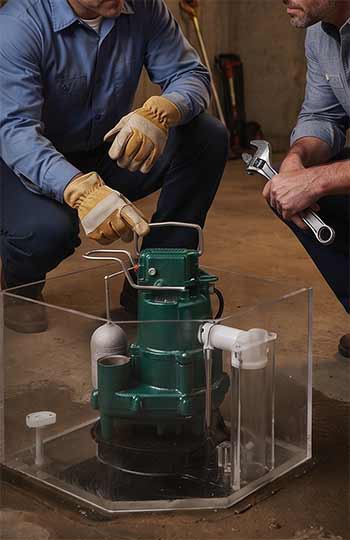
- Motor speed and power delivery The M95 spins at 3450 RPM while the M98 runs at 1725 RPM. That higher speed on the M95 translates into quicker water movement and a higher shut-off head. When I watched both units side by side in similar pits, the M95 cleared water faster during peak inflow. The lower-speed M98 still moves plenty of water, but it takes a bit longer to drop the level. Higher RPM also means the M95 draws 10.5 amps versus 9.4 amps on the M98. In a typical residential circuit that difference rarely matters, yet it does show the M95 is working harder to deliver its extra capacity.
- Base construction and stability The M95 uses a full cast-iron base. The M98 uses an engineered plastic base while keeping the cast-iron motor housing and pump housing. In a deep or uneven pit the heavier cast-iron base on the M95 keeps the pump more stable when it is moving high volumes. I noticed less vibration and less tendency to shift during long run times with the M95. The plastic base on the M98 is still tough and corrosion-resistant, but the extra mass of iron gives the M95 an edge in heavy-duty situations.
- Float switch design and cycle life Both use a vertical snap-action float with a solid polypropylene float and stainless-steel guard. The M95 adds a conductor bar that reduces friction and a Viton outer boot that improves moisture protection around the switch arm. Those small upgrades push the rated electrical cycles much higher. In a busy sump that cycles many times a day, the upgraded switch on the M95 simply lasts longer before the contacts wear. The M98 switch is proven and reliable; the M95 switch is built for higher cycle counts.
- Performance curve and head capacity At a 10-foot vertical lift the M95 moves roughly 3960 gallons per hour while the M98 moves about 3660. The M95 reaches a 26-foot shut-off head; the M98 tops out around 23 feet. If your discharge line climbs steeply or travels a long horizontal distance, that extra head on the M95 becomes useful. For most standard basement setups the M98 still has more than enough capacity, yet the M95 gives you a clearer safety margin when a storm saturates the ground.
- Cord length and installation flexibility The M95 arrives with a 15-foot cord. The standard M98 ships with a 9-foot cord. In a deep pit or when the outlet sits farther away, the longer cord on the M95 eliminates the need for an extension and keeps the connection cleaner. Both units use the same 1-1/2-inch NPT discharge, so the rest of the plumbing stays identical.
- Warranty coverage The M95 carries a five-year limited warranty. The M98 carries three years. That extra two years of coverage on the M95 reflects the upgraded components and gives you longer peace of mind. In practice both pumps often outlast their warranties when installed correctly, yet the longer written coverage on the M95 is a real advantage if something fails early.
Also Read: Comparison of Effluent And Sewage Pump.
Key Features of the Zoeller M95
- High-RPM capacitor-style motor that delivers strong flow and higher head
- Full cast-iron construction including the base for heat dissipation and stability
- Upgraded vertical float switch with reduced friction and better moisture sealing
- 15-foot power cord and LED plug for easy power verification
- Vortex impeller that passes half-inch solids without a clog-prone screen
- Oil-filled motor designed for continuous cooling under long run times
- Factory testing under water to the published performance curve
- Powder-coated epoxy finish that resists corrosion in typical sump environments
- Stainless-steel hardware, float guard, and handle for durability and easy lifting
- On level at 9.5 inches and off at 2.5 inches, giving a slightly wider operating range
These features combine to make the M95 feel like a pump built for frequent or heavy use. When I ran it through a season of repeated storms, the unit stayed quiet, stayed in place, and recovered the pit level quickly even when inflow was high.
Pros of the Zoeller M95
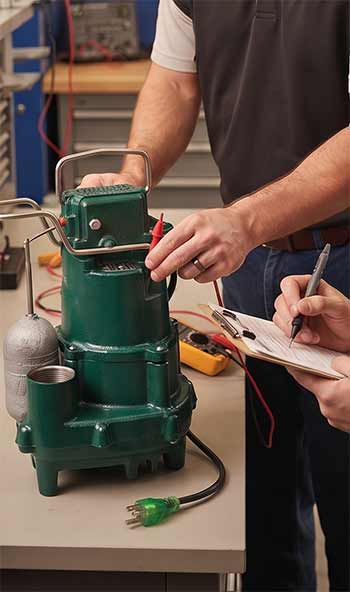
- Higher flow rate and higher maximum head give you more capacity when the water table rises fast During the heaviest storms the extra gallons per minute and the higher shut-off head keep the water level lower and give a clearer margin of safety. I have watched the M95 handle inflow rates that would have pushed a lower-capacity pump closer to its limit.
- Longer five-year warranty reduces the financial risk if a component fails early Two extra years of coverage matter when a switch or motor issue appears in year four. The longer warranty also reflects the manufacturer’s confidence in the upgraded components.
- Cast-iron base adds weight and stability so the pump stays planted during aggressive pumping In turbulent water the heavier base reduces movement and keeps the float switch operating consistently. That stability becomes noticeable during prolonged high-inflow events.
- Upgraded switch components handle more cycles before wear becomes an issue The reduced-friction design and better moisture protection extend the practical life of the switch in busy pits. Fewer early switch failures mean fewer emergency service calls.
- Longer cord simplifies installation in deeper pits or when the outlet is farther away I can route the cord cleanly without an extension and still reach a convenient outlet location. That small detail removes one common source of installation compromise.
- Slightly wider on-to-off differential can reduce short cycling in some setups The extra half-inch of travel lets the pump move a bit more water per cycle in certain pit depths, which can lower the total number of starts over time.
- Premium construction and testing give higher confidence for continuous or frequent duty Knowing every unit is factory-tested under water and built with the upgraded switch and full cast-iron base makes me more comfortable relying on the pump during multi-day wet periods.
- Strong residual value if you ever sell the house and the buyer notices a quality sump system A premium pump with remaining warranty coverage can be a quiet selling point during a home inspection or buyer walk-through.
Cons of the Zoeller M95
- Higher upfront cost compared with the M98 The premium features and longer warranty come at a higher purchase price. If your water volume stays moderate, that extra cost may never be fully justified by the additional capacity.
- Higher amp draw and higher RPM can mean slightly more energy use during long run times Over many hours of continuous operation the higher power demand adds a small amount to the electric bill. In practice the difference is modest, yet it exists.
- Heavier weight can make installation or removal more awkward in tight pits Lifting and positioning the pump is more physical work, especially if the pit is deep or the access is limited. Two people make the job easier.
- Extra performance is overkill if your pit rarely sees high inflow In a quiet basement that only activates the pump a few times a year, the higher flow and head capacity sit unused while you still paid for them.
- Premium switch and base raise the price without changing the basic solids-handling ability The hydraulic end is the same as the M98, so the money is spent on durability and capacity features rather than on moving larger solids.
Also Read: Comparison of Sump Pump And Sewage Ejector Pump.
Key Features of the Zoeller M98
- Proven 1/2-horsepower motor running at 1725 RPM for solid everyday capacity
- Cast-iron motor housing, switch case, and pump housing with engineered plastic base
- Standard reliable vertical snap-action float switch with solid float and stainless guard
- Vortex impeller and half-inch solids handling identical to the M95
- Oil-filled motor that dissipates heat well during extended operation
- LED plug for quick visual confirmation that power is present
- 9-foot cord on the common automatic model (longer cords available on some versions)
- Factory submerged testing to ensure it meets the performance curve
- Corrosion-resistant powder-coated finish and stainless hardware
- On level at 9.5 inches and off at 3 inches
The M98 focuses on delivering dependable high-capacity performance without the premium upgrades. In a typical residential pit that sees moderate to moderately heavy water, it does the job cleanly and quietly. Many homeowners run the M98 for years with no issues at all.
Pros of the Zoeller M98

- Lower purchase price makes it easier to own a high-quality cast-iron pump The cost savings are meaningful when the budget is tight, yet you still get the core cast-iron construction and proven performance that set Zoeller apart from light-duty plastic pumps.
- Lower amp draw places slightly less demand on the circuit The 9.4-amp motor is easier on older wiring or shared circuits. In most homes the difference is small, but it is still a practical advantage.
- Proven track record of long service life in ordinary residential pits Many homeowners run the M98 for a decade or more with only routine pit cleaning. The design has been refined over years of real-world use.
- Same solids-handling ability and vortex design as the premium model You do not give up the ability to pass half-inch solids or the clog-resistant impeller when you choose the M98. That hydraulic performance is essentially identical.
- Lighter weight makes handling and installation a bit easier for one person Carrying the pump down basement stairs or positioning it in a tight pit is simpler with the lower weight. For a single installer that difference is appreciated.
- Still carries a solid three-year warranty and full factory testing Three years of coverage plus submerged performance testing give reasonable protection and quality assurance for a residential pump.
- Sufficient head and flow for the majority of standard basement applications Most homes never need the extra capacity of the M95. The M98 handles typical groundwater and storm inflow without drama.
- Shares the LED plug and corrosion-resistant construction that set Zoeller apart You still get the convenient power indicator and the powder-coated, stainless-hardware build quality that help the pump last.
Cons of the Zoeller M98
- Shorter three-year warranty leaves you exposed sooner if a problem appears Once the three-year period ends, any repair or replacement is out of pocket. Early failures are uncommon, yet the shorter coverage is a real difference.
- Plastic base offers less mass and can allow more movement under heavy flow In a turbulent pit the lighter base can let the pump shift slightly, which may affect float operation over time. The cast-iron base of the M95 avoids that issue.
- Lower maximum head and lower flow at higher lifts reduce the safety margin When the discharge line has significant vertical rise or long horizontal runs, the M98 reaches its limit sooner. Heavy storms can push it closer to capacity than the M95 would experience.
- Standard switch has a lower rated cycle life than the upgraded version on the M95 In a pit that cycles frequently the contacts will wear sooner. The difference may not matter for moderate use, but it becomes relevant in high-cycle applications.
- Shorter standard cord may require an extension or careful outlet placement If the outlet is not close, you either move the outlet or introduce an extension cord, both of which add complexity or potential failure points.
Also Read: Comparison of Effluent Pump And Sump Pump.
Frequently Asked Questions (FAQ)
It depends on your water volume and desire for longer coverage. For most high-capacity needs the M95 stands out because of its higher flow, higher head, and five-year warranty.
The M98 is a 1/2 HP high-capacity model while the M53 is a 1/3 HP unit with lower flow and head. The M98 moves significantly more water and suits pits with higher inflow.
Choose 1/2 HP when your pit sees rapid or high-volume water. A 1/3 HP model works for lighter duty or smaller pits but can struggle during heavy storms.
With proper installation and a clean pit, many Zoeller cast-iron pumps run 10 to 25 years or longer. Switch life and water quality are the usual limiting factors.
Final Thoughts
After comparing the Zoeller M95 and M98 side by side, I come down firmly on the side of matching the pump to the actual demands of your basement. You gain higher capacity, a more durable switch, a cast-iron base, a longer cord, and two extra years of warranty with the M95.
You gain solid performance and lower cost with the M98. Both will protect your home when installed correctly. I prefer the M95 when the budget allows because the upgrades reduce the chance of an early failure and give me greater confidence during the heaviest weather.
You should weigh the same factors against your water volume, your discharge height, and how long you plan to stay in the house. Either choice puts a well-built American-made pump in your pit and moves you past the uncertainty of cheaper alternatives.