
I stood in my hallway last month staring at sample doors, trying to figure out whether solid core or solid wood made more sense for the rooms I use every day.
You probably know that feeling when a renovation decision starts to feel bigger than it should.
This article lays out the real differences, strengths, and weaknesses of both options so you can match the door to your space, budget, and daily life without second-guessing the choice later.
| Feature | Solid Core Doors | Solid Wood Doors |
| Core Material | Dense particleboard, MDF, or composite fill | Solid lumber or joined solid wood pieces |
| Weight | Noticeably heavy | Very heavy |
| Sound Control | Strong, reduces noise between rooms | Excellent, often superior when thick |
| Cost | Mid-range, higher than hollow core | Premium, significantly higher |
| Stability | Resists warping well in normal conditions | Can expand, contract, or warp with humidity |
| Surface | Veneer or laminate over core | Natural wood grain throughout |
| Best Use | Interior rooms needing quiet and solid feel | Feature rooms, exteriors with proper care, high-end interiors |
| Maintenance | Low, mainly surface care | Regular sealing or finishing required |
| Installation | Heavier hinges needed | Even heavier hardware and careful fitting |
Key Differences Between Solid Core And Solid Wood Doors
- Construction and Internal Makeup
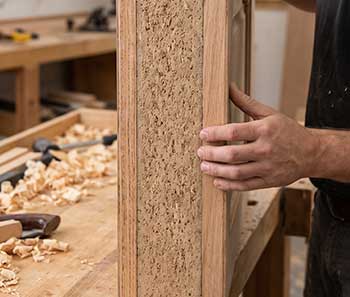
Solid core doors rely on an engineered core that stays dimensionally stable under normal indoor conditions.
The outer skins are thin, usually 1/16 inch or less, bonded to the core with adhesive.
Solid wood doors have no separate core; the lumber itself forms the structure.
Joints are glued and sometimes pinned.
If you cut a solid core door, you see the dense fill. Cut a solid wood door and you see continuous grain.
That difference affects how each door behaves when temperature or humidity shifts and how easily it can be repaired if damaged.
- Weight and Everyday Feel
Both types feel heavy compared with hollow doors, yet solid wood usually tips the scale higher. A standard 30-inch solid core interior door might weigh 60 to 80 pounds. The same size in solid oak can exceed 100 pounds.
You notice the difference when you open the door with one hand or when you hear it close. The solid core version still gives a satisfying thud, while solid wood produces a deeper, denser sound. In my own house the solid core doors made hallways quieter without requiring extra insulation in the walls.
- Sound and Temperature Control
The dense core in a solid core door interrupts sound waves better than air space inside a hollow door. Solid wood does the same job and can outperform it when the door is thicker or made from denser species.
Neither type is a true soundproof barrier on its own; the frame, weatherstripping, and wall construction matter just as much. For temperature, both slow heat transfer better than hollow doors, though solid wood’s natural density gives it a slight edge in extreme climates if the finish remains intact.
- Appearance and Customization
Solid wood shows real grain, knots, and color variation from board to board. You can order matching trim and even book-matched panels. Solid core doors offer consistent color and grain because the veneer is sliced from the same log or printed.
They look clean and uniform, which many people prefer in modern spaces. If you want carved panels or a unique stain that reveals depth, solid wood is the clearer path. If you want every door in the house to match exactly, solid core is simpler.
- Longevity Under Daily Use
Solid core doors resist dents better than hollow doors and hold screws well for hardware. The veneer can chip or peel if struck hard, and once the core is exposed the repair is visible. Solid wood can be sanded and refinished so that minor damage disappears.
Over twenty or thirty years the solid wood door often looks better if it receives occasional care, while the solid core door keeps its original finish or needs replacement of the skin.
Key Features of Solid Core Doors
- Dense Engineered Core: The particleboard or MDF core adds mass without the cost of solid lumber. That mass improves sound blocking and gives the door a rigid feel. Many cores are rated for fire resistance when paired with the right skins and seals. In apartments or homes with shared walls, that rating can matter for code compliance.
- Veneer or Laminate Skins: Thin wood veneers let you choose oak, maple, cherry, or white finish looks. Laminate versions resist scratches better and come in solid colors or wood-grain prints. Both types accept paint. The skins are factory-applied under pressure so the bond stays tight for years under normal indoor humidity.
- Consistent Dimensions: Because the core does not move like solid wood, the door stays square. Gaps at the top and sides remain even. This predictability makes installation faster and reduces callbacks for sticky doors later. Pre-hung units arrive with hinges already set, so the only adjustments are usually minor shimming.
- Hardware Compatibility: Standard hinges and locksets work, though heavier-duty hinges are recommended because of the weight. The solid core holds screws tightly, so the door does not pull away from the hardware over time. Many people add soft-close hinges without extra reinforcement.
Also Read: Comparison of OSB Board And Particle Board.
Pros of Solid Core Doors
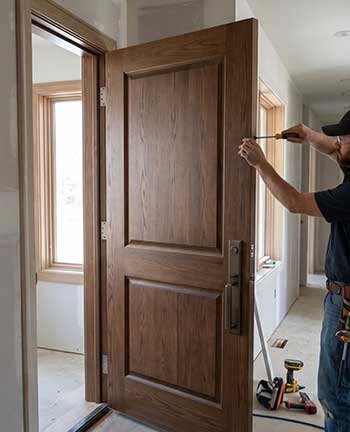
- Better Noise Reduction Than Hollow Doors: The filled core cuts everyday sounds from televisions, conversations, and footsteps. In a home with children or home offices, that reduction makes rooms feel more private. I measured the difference with a simple phone app and saw a clear drop in decibels between rooms after the swap.
- More Affordable Than Solid Wood: You pay more than for hollow core but far less than for solid lumber of comparable size. The savings let you upgrade every interior door instead of only the main ones. Over a whole house the difference can cover other finishes or hardware.
- Stable in Normal Indoor Climates: The engineered core resists the swelling and shrinking that wood experiences. Doors stay true, latches line up, and you spend less time adjusting strikes. In air-conditioned homes with moderate humidity the performance stays consistent year-round.
- Solid Feel and Perceived Quality: People notice the weight and the way the door closes. Guests often assume the doors are solid wood until they look closely at the edges. That impression adds value during resale without the full premium price.
- Easier to Source and Install: Most home centers stock common sizes in solid core. Pre-hung units reduce on-site work. Contractors finish jobs faster, which keeps labor costs lower.
Cons of Solid Core Doors
- Veneer Can Chip or Peel: A hard impact can break the thin skin and expose the core. Repairs are possible but rarely invisible. In high-traffic areas near kids or pets, the edges take the most abuse.
- Limited Natural Beauty: The grain is real but thin. You cannot sand through it and still have wood. Deep stains or clear finishes that highlight figure are harder to achieve. Some people find the uniform look flat compared with solid lumber.
- Still Heavy: Moving and hanging the doors requires two people or a helper. Frames must be solid or the weight pulls screws loose over time. Shipping costs rise because of the mass.
- Not Ideal for Exterior Exposure: Most solid core interior doors lack the weather resistance and edge sealing needed outdoors. Moisture can reach the core and cause swelling or delamination. Exterior-rated solid core doors exist but are less common and more expensive.
Key Features of Solid Wood Doors
- Full Lumber Construction: Every part of the door is wood. Stiles and rails are often solid, and panels can be floating or fixed. You can specify the species, thickness, and even the cut of the lumber. That freedom lets you match existing millwork or create a custom profile that no catalog door offers.
- Natural Grain and Character: Each board carries its own figure, color shifts, and occasional mineral streaks. When stained, those features become part of the room’s design. You can sand the surface years later and apply a new finish that reveals fresh grain underneath.
- Repairability: Scratches, dents, and even small cracks can be filled, sanded, and refinished. The door can be shortened or planed if the floor settles. That ability to work the material extends the useful life far beyond the original factory finish.
- Custom Sizing and Detailing: Mills routinely cut solid wood doors to exact heights and widths. Raised panels, bead board, glass lights, and carved details are straightforward. For older houses with non-standard openings, this flexibility removes the need for extensive frame modifications.
Also Read: Comparison of Particle Board And Plywood.
Pros of Solid Wood Doors
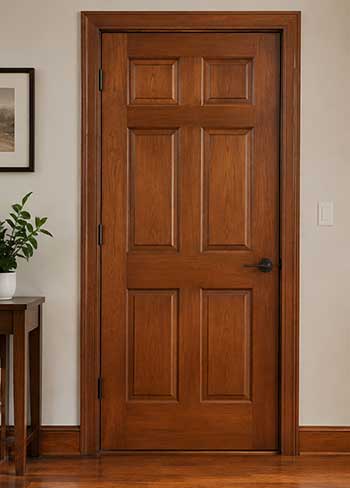
- Timeless Appearance and Character: Real grain, natural color variation, and the ability to refinish keep the door looking intentional for decades. In traditional or high-end homes the doors become part of the architecture rather than just a barrier.
- Long-Term Repair and Refinish Options: You can sand, stain, paint, or even replace a single panel. Minor damage does not force full replacement. That flexibility protects the investment over twenty or thirty years.
- Excellent Sound and Insulation Properties: Dense hardwood blocks sound and slows temperature transfer effectively. When combined with good seals, solid wood doors perform well in both interior and properly protected exterior applications.
- Higher Perceived and Resale Value: Buyers and appraisers notice solid wood. The doors signal quality construction and can support a higher asking price, especially in older or custom homes.
- Full Customization: Any size, any species, any detail is possible. Matching existing doors or creating a signature look is straightforward when you work with a mill.
Cons of Solid Wood Doors
- Higher Purchase Price: Solid lumber costs more than composite cores. Custom sizes and premium species raise the price further. For a whole-house project the total can double or triple compared with solid core.
- Movement With Humidity: Wood expands and contracts. In climates with large seasonal swings the doors can stick or develop gaps unless the finish seals every surface and the frame allows for movement. Regular monitoring helps, but the issue never fully disappears.
- Heavier Weight and Installation Demands: Extra weight requires stronger hinges, longer screws, and sometimes reinforced frames. Hanging the doors takes more time and care. Sagging becomes a risk if the installation is rushed.
- Ongoing Maintenance: The finish must be maintained. Exterior doors need periodic resealing. Interior doors benefit from occasional cleaning and touch-ups. Neglect leads to checking, cracking, or discoloration.
Cost, Installation, and Everyday Use
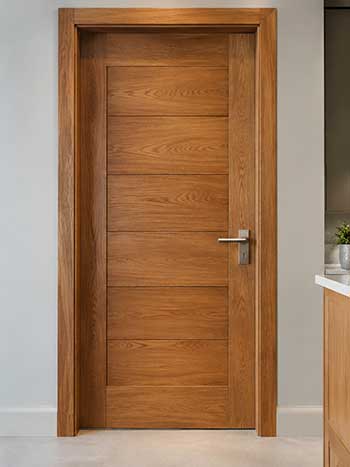
Solid core doors typically cost two to three times more than basic hollow core and roughly half to two-thirds the price of comparable solid wood.
A standard pre-hung solid core interior door often lands in the mid-hundreds, while solid wood can start in the high hundreds and climb past a thousand for custom work.
Installation labor stays similar if the frames are already prepared, though the extra weight of solid wood can add an hour or two per door.
In daily use both types outperform hollow doors. You hear less noise, the doors feel substantial, and they hold hardware securely.
Solid core wins for most interior rooms where consistent performance and moderate cost matter.
Solid wood wins where appearance, the ability to refinish, and long-term character are priorities.
I ended up mixing both in my own house: solid core for bedrooms and the office, solid wood for the front entry and dining room.
The combination kept the budget reasonable while giving the main spaces the look I wanted.
Also Read: Comparison of Chipboard And Plywood Boards.
Frequently Asked Questions (FAQ)
Yes for most interior applications. The improvement in sound control, solid feel, and durability over hollow core justifies the higher price for anyone who notices noise or wants doors that last.
Yes. Mills and specialty shops still produce them in standard and custom sizes. Many traditional and high-end builders continue to specify them.
Generally no. Most solid core doors are designed for interior use. Exterior doors need weather-resistant construction, edge sealing, and materials that handle moisture and temperature swings.
They usually cost noticeably more than hollow core doors and less than solid wood doors of similar size. Expect a clear step up from basic hollow options without reaching the premium of full solid lumber.
Wrapping Up
Choosing between solid core and solid wood comes down to where the door will live and what you value most.
I weighed noise, budget, and appearance for each opening in my house and landed on a mix that works. You can do the same by matching the door’s strengths to the room’s demands.
Both options beat hollow core for everyday comfort, and either one can serve you well once you know the trade-offs.