
I’ve tackled more home projects than I can count, from flipping my first fixer-upper to helping buddies with their bathroom overhauls, and every single time the choice between Sheetrock and cement board comes up I pause.
I want you to walk away from this knowing exactly which material fits your walls, your budget, and your peace of mind. We’re going to compare them side by side so you can decide with confidence instead of second-guessing later.
| Aspect | Sheetrock | Cement Board |
| Core Material | Gypsum plaster core with paper facing | Portland cement reinforced with fiberglass mesh |
| Weight per 4×8 sheet | About 50-60 lbs | 80-100+ lbs |
| Water Resistance | Standard: poor; green board: moderate | Excellent, designed for constant moisture |
| Fire Rating | Good (Type X offers 60+ minutes) | Naturally fire-resistant |
| Mold Resistance | None unless specially treated | Built-in resistance |
| Ease of Cutting | Score and snap with utility knife | Requires carbide blade or score-and-snap tool |
| Cost per 4×8 sheet | $10–18 | $25–45 |
| Best Use | Interior walls, ceilings in dry areas | Tile backer in showers, tubs, floors |
| Installation Speed | Fast for beginners | Slower, needs more muscle |
| Finish Options | Paint, texture, wallpaper | Tile or stone only |
Key Differences Between Sheetrock And Cement Board

- Sheetrock uses a soft gypsum core sandwiched between two layers of paper, which makes the whole panel light and flexible enough for me to carry upstairs alone on most jobs. Cement board swaps that gypsum for a rock-hard mix of Portland cement and fiberglass, so the panel feels like concrete in sheet form and refuses to flex even a little. That single switch in makeup changes everything about how the material behaves once it’s screwed to the studs.
- Weight hits you hard with cement board. I’ve lugged both up ladders, and Sheetrock lets me keep a steady pace without calling for backup. Cement board demands two people or a good lift, and if you’re working solo like I often do, you’ll feel it in your back the next morning.
- Water is the deal breaker. Standard Sheetrock turns to mush if a pipe leaks or steam builds up; even the green version only buys you time. Cement board laughs at water, shrugs off daily splashes, and keeps its shape year after year in the exact spots where moisture lives.
- Cutting tells the real story of user-friendliness. With Sheetrock I score once, snap, and I’m done in seconds. Cement board forces me to use a special scoring tool or a diamond blade, and the dust is finer and nastier, so I always wear a better mask.
- Fire performance is solid on both, but Sheetrock gives me options like Type X for code-required walls, while cement board brings natural fire resistance without needing a special label.
- Cost adds up fast when you compare full rooms. Sheetrock keeps my material budget low so I can splurge on better fixtures. Cement board costs more upfront but saves me from callbacks and repairs down the road in wet zones.
- Finish compatibility is night and day. Sheetrock accepts paint, texture, or even wallpaper straight after taping. Cement board exists only as a backer; you cover it completely with tile or stone or you’ve wasted the panel.
- Long-term movement matters in older homes. Sheetrock can expand and contract with humidity and still look smooth if taped right. Cement board stays rigid, which is perfect behind tile but means any framing flex shows up as cracked grout later if I didn’t brace things properly.
- Sound control leans toward Sheetrock because the softer core absorbs noise better in bedrooms and living rooms. Cement board is denser and transmits sound more readily unless I add extra layers of insulation.
- Environmental footprint feels different in my hands too. Sheetrock is mostly recycled gypsum these days and lighter to ship, cutting down on truck emissions. Cement board’s cement production is energy-heavy, but its extreme durability means fewer replacements over decades.
Key features of Sheetrock And Cement Board
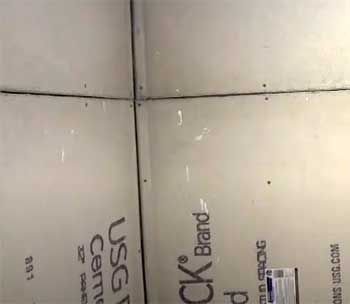
- Sheetrock’s paper facing grips joint compound like glue, letting me create invisible seams that disappear under paint. That same paper also accepts primer evenly so I never fight bubbles or peeling.
- The gypsum core in Sheetrock gives natural fire resistance that buys critical minutes in a house fire, something I think about every time I hang it in a garage or basement.
- Built-in flexibility lets Sheetrock follow slightly bowed studs without cracking, a lifesaver in older houses where framing isn’t perfectly straight.
- Cement board’s fiberglass mesh locks the cement matrix together so the panel won’t crumble even if I drop it during installation.
- The cement core repels water at the molecular level instead of just coating the surface, which means no wicking even after years of steam from hot showers.
- Cement board’s uniform thickness keeps tile perfectly flat, preventing lippage that drives me crazy on other jobs.
- Both materials come in different thicknesses, but Sheetrock offers ¼-inch versions for curved walls while cement board sticks to ½-inch for strength behind tile.
- Pre-scored cement board options now exist that make layout faster when I’m tiling a large shower floor.
- Sheetrock’s factory edges are crisp and straight, making butt joints easier to hide compared to the rougher edges on some cement boards.
- Cement board’s alkaline nature naturally discourages mold growth even before I add any extra treatment.
Pros of Sheetrock
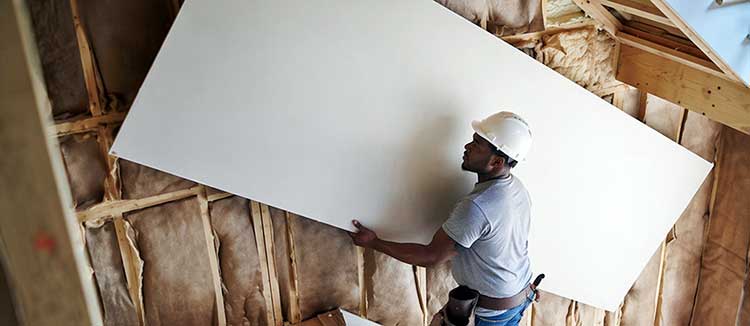
- I can hang an entire room of Sheetrock in a single afternoon because the panels are light and the screw pattern is forgiving, letting me move quickly from framing to finishing without burning through the whole weekend.
- Taping and mudding goes fast once you learn the rhythm, and the final painted wall feels like part of the house instead of an add-on, giving you that smooth, seamless look that makes the whole space feel polished and complete.
- Cost savings let me tackle bigger projects without blowing the budget; I’ve finished whole houses for what cement board would cost in one bathroom, leaving extra cash for nicer faucets, lighting, or even a better vanity.
- Sound deadening is noticeable the first night I sleep in a newly Sheetrocked bedroom; the softer core swallows voices and footsteps better than rigid alternatives, creating quieter rooms that actually help everyone rest easier.
- Easy repairs mean if the kids kick a hole I can patch it in under an hour instead of replacing a whole panel, which keeps small accidents from turning into big weekend disasters.
- Paint adhesion is outstanding right out of the package, so I skip extra primer coats on most walls and get beautiful, even color with just one or two coats of quality paint.
- Availability is never an issue; every big-box store stocks dozens of sizes and types in stock year-round, so I never have to wait on special orders or drive across town when inspiration strikes on a Saturday morning.
- Thermal insulation properties help keep rooms comfortable without extra foam board in many climates, subtly improving energy efficiency and lowering those monthly utility bills just a bit.
- Recycled content is high in modern Sheetrock, which sits better with me when I think about the landfill impact of my projects and lets me feel good about choosing a more sustainable option for dry areas.
- Versatility across the house means I use the same material from living room to hallway and keep my workflow simple, reducing the number of different tools and techniques I need to juggle on the same job.
Cons of Sheetrock

- Water is its kryptonite; even a small leak behind a sink can soften the core and create a spongy mess that needs full replacement, turning a minor plumbing fix into a major tear-out project that eats time and money.
- Mold can take hold fast if humidity spikes, and I’ve torn out entire walls in basements after one wet season, dealing with that musty smell and the worry about air quality for the family.
- Impact resistance is low; a moving dolly or enthusiastic toddler leaves dents that show through paint, forcing me to keep touch-up compound on hand and patch marks more often than I’d like.
- Sag over time on ceilings happens if I don’t use the right thickness or block the joists properly, leading to those annoying waves that become visible under certain lighting and make the room look less professional.
- Dust during sanding is constant and fine, coating every surface in the house unless I tape off rooms like a crime scene, which adds extra cleanup hours I never seem to budget for.
- Sound transmission between floors can be higher unless I add extra layers or resilient channels, meaning footsteps upstairs still echo downstairs more than I want in a family home.
- Termites and pests sometimes tunnel through the paper facing in humid regions, something I learned the hard way once, requiring unexpected pest control treatments on top of the repair.
- Expansion and contraction with seasonal humidity can crack tape joints if the house framing moves even slightly, creating hairline cracks that appear every winter or summer and need periodic fixing.
- Limited use in code-required wet areas means I still need cement board in showers anyway, doubling my material runs and complicating the shopping list when I’m trying to keep things straightforward.
- Painting over minor imperfections shows every flaw, so I spend extra time perfecting the mud work before the final coat, which can stretch a simple wall job into a multi-day effort if I’m not careful.
Also Read: Differences Between Metal Lath And Cement Board.
Pros of Cement Board
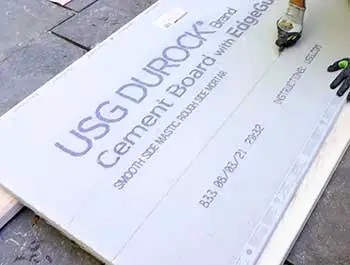
- Water resistance lets me tile right over it without worry, even in steam-filled showers that run twice a day, giving me confidence that the wall behind the tile will stay solid no matter how long or hot the showers get.
- Mold never gets a foothold because the cement base stays inhospitable to spores, saving me from future health headaches and those expensive remediation calls that can disrupt the whole household.
- Tile adhesion is rock-solid; thinset grabs the mesh and never lets go, even after years of foot traffic and temperature swings, so I don’t have to worry about loose tiles or grout failure down the line.
- Fire resistance adds real safety in kitchens and utility rooms where I want extra protection, providing peace of mind that the material won’t contribute to fire spread if something goes wrong with appliances or wiring.
- Longevity means I install once and forget about it; I’ve seen cement board backers still perfect after fifteen years in rental bathrooms, which reduces maintenance calls and keeps properties looking newer longer.
- Stability behind heavy stone or large-format tile keeps everything flat and professional-looking, preventing those frustrating lippage issues that make tile jobs look amateurish.
- Code compliance is straightforward in wet zones, so inspectors sign off without extra questions, speeding up the permit process and letting me focus on the fun parts of the build.
- Impact resistance behind tile protects the wall from accidental bumps with shower doors or toilet paper holders, meaning the structure stays intact even with daily use and occasional clumsiness.
- No swelling or warping even when the house humidity climbs in summer, so the tile surface remains perfectly flat and the grout lines stay tight without constant resealing.
- Versatility in floor applications as an underlayment for heated floors or ceramic tile in entryways gives me reliable performance in high-traffic areas where other materials might crack or shift over time.
Cons of Cement Board
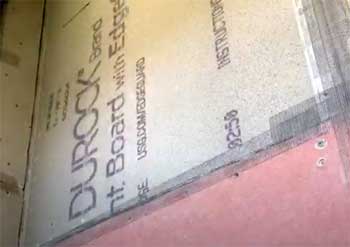
- Weight makes every sheet a workout; I’ve had to rent panel lifts just to get them vertical on tall walls, adding rental fees and extra time to what should be a straightforward hanging day.
- Cutting creates a cloud of irritating dust that lingers longer than Sheetrock dust and requires better ventilation, sometimes forcing me to work outside or wear a full respirator for comfort.
- Higher price tag adds up fast when I’m covering an entire shower enclosure or tub surround, pushing the material budget higher and forcing me to choose between quality and quantity on tighter projects.
- Harder to screw into place because the cement fights the driver; I always pre-drill or use special cement-board screws, which slows down the installation pace and increases the chance of stripped screws if I rush.
- Limited finish options mean I can’t just paint it and walk away; tile or stone is mandatory, locking me into a more permanent and sometimes more expensive finishing plan.
- Cold feel underfoot when used on floors unless I add heat or carpet, which can make bare feet uncomfortable in cooler months and requires planning for radiant heating if I want luxury.
- Heavier load on framing requires me to check studs and sometimes add blocking I wouldn’t need with lighter Sheetrock, adding an extra inspection step before I even start hanging panels.
- Disposal is messier; broken pieces are dense and sharp, and landfills charge more by weight, making cleanup and waste removal a bigger hassle at the end of the job.
- Learning curve for beginners means my first cement board job took twice as long as it should have, with more trial and error until I figured out the right tools and techniques for clean cuts and secure fastening.
- Expansion joints must be planned carefully or grout lines will crack later, adding another step I skip with Sheetrock and requiring precise layout that can intimidate newer DIYers.
Also Read: Differences Between Fiberock And Cement Board.
Frequently Asked Questions (FAQ)
No. Sheetrock is gypsum-based drywall for dry areas while cement board is a cement-and-mesh panel built for wet zones.
It is heavier, more expensive, harder to cut, and requires tile or stone as a finish.
Cement board is better because it handles constant moisture without swelling or growing mold.
It strongly resists mold thanks to its alkaline cement base, though proper ventilation still helps.
Final Thoughts
Now that I’ve walked you through every angle I’ve experienced, I hope you feel ready to pick the material that matches your project and your lifestyle.
Whether you’re tackling a weekend refresh or a full gut remodel, the right choice between Sheetrock and cement board will save you time, money, and frustration for years to come.
You’ve got this—just measure twice, choose once, and enjoy the finished space you built with your own hands.