
I have compared rockwool and spray foam many times while helping friends and neighbors choose insulation for attics, walls, and basements.
In this article I walk you through the real differences so you can decide which product fits your home, budget, and long-term plans without the usual marketing noise.
| Feature | Rockwool | Spray Foam |
| Primary material | Stone and slag fibers | Polyurethane (open or closed cell) |
| R-value per inch | About 3.0–3.3 | Open cell 3.5–3.7; closed cell 6.0–7.0 |
| Air sealing ability | Moderate (needs separate air barrier) | Excellent (fills gaps completely) |
| Fire resistance | Non-combustible, melts only at extreme heat | Combustible; requires thermal barrier in many codes |
| Moisture behavior | Water-repellent, allows drying | Closed cell acts as vapor barrier; open cell can absorb |
| Sound control | Excellent | Good to very good |
| Installation method | Batts, boards, or blown | Sprayed on-site by trained crew |
| Cost range (installed) | Mid-range | Higher, especially closed cell |
| Removability | Easy to cut and pull out | Difficult and messy |
| Typical lifespan | 50+ years if kept dry | 20–30 years with proper install |
Key Differences Between Rockwool And Spray Foam

- Material Origin And Structure Rockwool starts as volcanic rock and blast-furnace slag melted at high temperature and spun into fibers. Those fibers are then formed into batts, boards, or loose-fill. Spray foam begins as two liquid chemicals that react and expand into a rigid or semi-rigid foam. One is plant-based or petroleum-derived polyol, the other is an isocyanate. The finished foam sits in place as a continuous mass rather than separate fibers.
- How They Handle Air Movement Rockwool slows air but does not stop it completely. You still need a dedicated air barrier such as house wrap, drywall, or taped sheathing. Spray foam, especially closed-cell, expands into every crack and forms its own air seal. That single difference often decides which product people choose when they want to cut drafts without adding extra layers.
- Thermal Performance In Real Walls A three-and-a-half-inch stud bay filled with rockwool delivers roughly R-13 to R-15. The same bay filled with closed-cell spray foam can reach R-21 to R-25. Open-cell spray foam lands closer to rockwool at about R-13. In cold climates the higher R-value of closed-cell foam can reduce heating costs more noticeably, yet the difference shrinks once you account for air sealing quality and overall wall assembly.
- Behavior Around Moisture Rockwool fibers repel liquid water while still allowing vapor to pass through. If a pipe leaks or rain finds a way in, the insulation can dry out once the source is fixed. Closed-cell spray foam blocks vapor almost completely. That can be an advantage in humid basements, but it also means any moisture trapped behind the foam stays trapped. Open-cell foam absorbs water and can stay wet for weeks if not dried properly.
- Fire Performance Under Code Rockwool is classified as non-combustible. It will not burn or contribute fuel to a fire. Most building codes treat it kindly and often allow thinner thermal barriers. Spray foam is combustible. Codes require a fifteen-minute thermal barrier (usually half-inch drywall) over it in living spaces. Some jurisdictions demand even more protection in attics and crawl spaces.
- Sound transmission The dense fiber network in rockwool breaks up sound waves effectively. Many people choose it for media rooms or bedrooms that share walls with noisy areas. Spray foam also reduces sound, mainly by sealing air paths that carry noise, yet it does not match rockwool’s mass and fiber structure for pure sound absorption.
- Installation Skill Required Rockwool batts can be cut with a knife and friction-fit by a careful homeowner. Loose-fill rockwool needs a blower but still remains approachable for DIY. Spray foam demands specialized equipment, exact chemical ratios, and temperature control. A poor spray job creates voids, overspray, or incomplete curing that can cost thousands to correct later.
- Long-Term Changeability If you decide to remodel or add wiring, rockwool comes out in chunks. You can cut new openings and stuff the pieces back in. Spray foam must be sawed, chiseled, or scraped. The process generates sticky dust and often damages surrounding surfaces. That permanence is either a selling point or a deal-breaker depending on how often you rework your house.
Also Read: My Experience With Tiger Foam Insulation.
Key Features of Rockwool Insulation
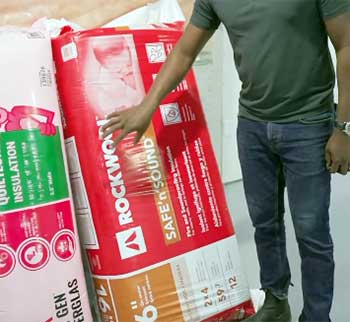
- Non-combustible fiber matrix The melted rock cools into a glassy fiber that simply will not support flame. When firefighters test wall assemblies, rockwool often keeps the fire on one side longer than almost any other common insulation.
- Hydrophobic surface treatment Each fiber receives a water-repellent coating during manufacture. Liquid water beads up and runs off rather than soaking in. At the same time the open structure still lets water vapor escape, so the material can dry if it ever gets damp.
- High density for sound and thermal stability Rockwool batts for walls usually weigh between two and four pounds per cubic foot. That density resists settling over decades and absorbs mid- and high-frequency sound better than lighter fiberglass.
- Dimensional stability across temperature swings Unlike some plastic foams that expand and contract, rockwool holds its shape from sub-zero winters to hot attic summers. Gaps do not open up at the edges as the seasons change.
- Resistance to mold and pests The inorganic fibers offer nothing for mold to feed on. Mice and insects can tunnel through it if they work hard enough, yet they find no food or nesting material inside the product itself.
- Compatibility with most framing systems You can friction-fit batts between studs, staple faced batts, or use rigid boards over continuous exterior insulation. The same material works in wood, steel, or masonry walls with only minor adjustments.
- Recyclability at end of life When a building is eventually demolished, rockwool can be melted again and turned into new insulation. That closed loop is still uncommon among foam products.
Pros of Rockwool Insulation
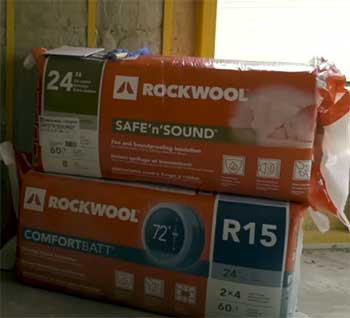
- Fire safety that goes beyond code minimums Because the material itself will not burn, you gain an extra layer of passive protection. In multi-family buildings or homes with wood stoves this feature often outweighs small differences in R-value.
- Predictable long-term performance Once installed correctly, rockwool does not settle, off-gas, or lose R-value. Fifty-year-old installations still test close to their original numbers when kept dry.
- DIY-friendly installation for many projects Homeowners with basic tools can handle batts in accessible walls and attics. That flexibility keeps labor costs down on smaller jobs.
- Excellent acoustic privacy Shared walls, floors, and ceilings quiet down noticeably. People who work from home or live near busy streets frequently mention this benefit first.
- Moisture management that forgives small leaks If a roof leak or plumbing drip occurs, the insulation can dry once the water source is repaired. You avoid the full tear-out that closed-cell foam sometimes requires.
- No chemical curing concerns There is no waiting period for off-gassing or residual isocyanates. The house can be occupied immediately after installation.
- Competitive installed cost in many markets When you compare total project price including labor, rockwool often lands below closed-cell spray foam and close to open-cell foam once air-sealing details are added.
- Easy inspection and repair Future electricians or plumbers can cut neat openings and patch them without special tools. Home inspectors can also verify coverage simply by looking.
Also Read: Differences Between Cellulose And Fiberglass Blown Insulation.
Cons of Rockwool Insulation
- Lower R-value per inch than closed-cell foam In tight spaces such as 2×4 walls or thin roof assemblies you may need additional continuous insulation to meet modern energy codes.
- Air sealing requires extra steps Batts alone leave small gaps at the edges and around penetrations. You must tape, caulk, or use a separate membrane to reach the same airtightness spray foam delivers in one pass.
- Weight and handling effort Dense batts are heavier than fiberglass. Working overhead in an attic becomes tiring, and some installers prefer lighter products for large jobs.
- Potential for fiber irritation during install Although modern rockwool produces fewer airborne fibers than older mineral wool, cutting and stuffing still creates dust that can itch skin and eyes. Proper masks and clothing remain necessary.
- Limited ability to fill very irregular cavities Around complex framing, pipes, and wiring the batts leave small voids unless carefully cut and stuffed. Spray foam simply expands into those spaces.
- Slightly higher material cost than basic fiberglass While competitive with spray foam, rockwool usually costs more per square foot than standard fiberglass batts.
- Requires careful fitting to avoid compression Overstuffing a cavity reduces the effective R-value. Installers must cut pieces accurately so the insulation fills the space without being crushed.
Key Features of Spray Foam Insulation
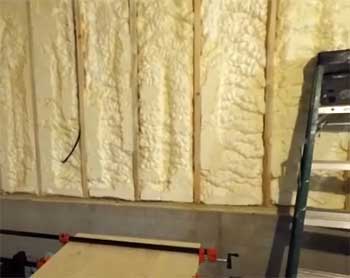
- Expansion that fills irregular cavities The liquid mixture grows thirty to one hundred times its original volume within seconds. It reaches behind pipes, wiring, and oddly shaped framing that batt insulation leaves empty.
- Continuous air and vapor control in one step Closed-cell foam creates both an air barrier and a class-II vapor retarder. Open-cell foam primarily seals air while remaining more vapor-open. Either version can eliminate the need for separate house wrap or poly sheeting in many assemblies.
- Highest R-value per inch among common options Closed-cell foam routinely delivers R-6 to R-7 per inch. In a 2×4 wall you can hit whole-wall R-values that would otherwise require exterior continuous insulation plus cavity fill.
- Structural contribution in some applications When sprayed against sheathing or between studs, closed-cell foam adds racking strength and can reduce the need for additional bracing in certain light-frame designs.
- Adhesion to almost any clean surface Once cured, the foam sticks to wood, concrete, metal, and even plastic. That bond keeps it from sagging or shifting over time.
- Custom density and cell structure Installers can adjust the mix for open-cell (softer, lower R, more sound-absorbent) or closed-cell (harder, higher R, moisture-resistant). The choice depends on climate zone and the specific assembly.
- Rapid installation once the crew is on site A trained two-person team can foam an entire attic or set of exterior walls in a single day. The speed appeals to contractors working on tight schedules.
Pros of Spray Foam Insulation
- Superior air sealing in a single application Drafts disappear from rim joists, top plates, and electrical boxes. Blower-door tests regularly show dramatic improvements after a foam job.
- Highest available R-value in limited thickness Closed-cell foam lets you meet or exceed energy-code requirements in walls that cannot accept thicker insulation.
- Moisture control in below-grade and humid climates Closed-cell foam resists liquid water and slows vapor drive. Many basement and crawl-space contractors rely on it for that reason.
- Adds rigidity to wall and roof assemblies The adhesive foam can stiffen sheathing and reduce movement under wind loads.
- Fast coverage of large or complex areas Once the truck is set up, the crew can finish spaces that would take days with batts.
- Long service life when installed correctly Properly mixed and applied foam remains stable for decades without settling or shrinking.
- Versatility across different building types The same equipment works on new construction, retrofits, metal buildings, and even boats or RVs.
Also Read: Differences Between Rockwool And Fiberglass Insulation.
Cons of Spray Foam Insulation
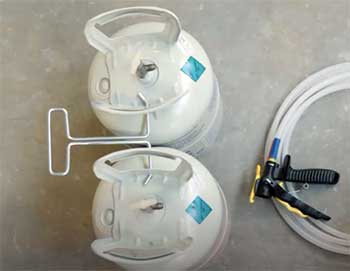
- Higher installed cost, especially for closed-cell Material and specialized labor push the price well above rockwool or fiberglass in most markets.
- Permanent and difficult to remove Any future change to wiring, plumbing, or framing becomes a dusty, time-consuming chore. Some homeowners later regret the lack of access.
- Sensitivity to installation quality Incorrect temperatures, ratios, or thickness create soft spots, voids, or residual chemicals. A bad job can require complete removal.
- Combustibility and code restrictions You must cover the foam with an approved thermal barrier in most living spaces. That adds drywall or intumescent coating cost and labor.
- Potential for trapping moisture if details are wrong In cold climates, closed-cell foam on the interior side of a wall can prevent outward drying. Condensation then forms against the sheathing.
- Off-gassing concerns during and after application Even with modern formulations, some people report lingering odors or sensitivity for days or weeks. Full curing and ventilation remain critical.
- Environmental questions around blowing agents and isocyanates Although many products now use water or low-GWP agents, the chemical origins still matter to some buyers.
- Limited DIY possibility The equipment, safety gear, and skill required keep spray foam almost exclusively in the hands of trained contractors.
Performance and Decision Factors
When I look at finished homes side by side, the spray-foam houses usually feel tighter on the first blower-door test. Rockwool houses catch up once the air-sealing details are done carefully.
Over ten or fifteen years the rockwool homes show fewer complaints about trapped moisture or the need to cut into walls for renovations. Spray-foam homes win on pure heating-bill numbers in very cold climates when the foam is closed-cell and continuous.
Climate zone matters more than most product literature admits. In mixed-humid regions the drying ability of rockwool often outweighs the higher R-value of foam. In heating-dominated zones the air seal and extra R of closed-cell foam can pay for itself faster.
Coastal areas with driving rain favor the water-shedding nature of rockwool or the water-resistant skin of closed-cell foam, depending on the rest of the wall design.
Budget also steers the choice. If the project already strains the wallet, rockwool plus careful air sealing usually delivers most of the comfort gains at lower total cost. If the owner wants maximum performance in a single step and plans to stay in the house for decades, closed-cell spray foam becomes easier to justify.
Making the Choice That Fits Your House
I usually ask three questions. First, how long do you plan to stay and how often might you remodel? Second, what climate and moisture loads does the house face?
Third, what is the realistic budget including all related air-sealing and fire-protection costs? The answers point clearly toward one product or the other more often than a simple R-value chart ever could.
Rockwool rewards careful detailing and keeps options open for the future. Spray foam delivers high performance in one step but commits you to its presence for the life of the building.
Neither is universally better. Both can produce comfortable, efficient homes when matched to the right situation.
Also Read: Differences Between Owens Corning And Johns Manville Insulation.
Frequently Asked Questions (FAQ)
Lower R-value per inch than closed-cell foam, extra work needed for full air sealing, and some fiber irritation during installation.
Poor original installation that left voids or soft spots, moisture trapped behind the foam, or the need to access wiring and framing for renovations.
Mice do not like the dense, inorganic fibers and find no food value, yet determined rodents can still tunnel through if other entry points exist.
No. Modern rockwool is made from rock and slag; it contains no asbestos and has not for many decades.
Wrapping Up
In the end you now have a clear picture of how rockwool and spray foam differ in material, performance, cost, and long-term behavior.
Use that knowledge to match the product to your specific walls, climate, and plans so the insulation serves you for decades rather than creating new problems.