
I’ve spent a lot of time looking at attics, crawl spaces, and wall cavities — and the question I hear most from homeowners trying to tighten up their energy bills is this: should I go with cellulose or fiberglass blown insulation?
It sounds like a simple enough question, but the answer depends on a surprising number of factors. In this article, I’m breaking down both materials in detail — covering performance, cost, installation, health, and long-term value — so you can make a confident, informed decision for your home.
| Feature | Cellulose Blown | Fiberglass Blown |
| R-Value per inch | ~R-3.2 to R-3.8 | ~R-2.2 to R-2.7 |
| Material Source | Recycled paper/cardboard | Spun glass fibers |
| Eco-Friendliness | Very high (80–85% recycled content) | Moderate (some recycled glass) |
| Air Sealing Ability | Excellent | Moderate |
| Moisture Resistance | Lower (can absorb moisture) | Higher (does not absorb water) |
| Fire Resistance | High (due to borate treatment) | High (non-combustible by nature) |
| Cost per sq ft (material) | $0.25–$0.50 | $0.30–$0.60 |
| Settling Over Time | Yes, moderate settling expected | Minimal settling |
| Health/Safety Concerns | Low irritant, dusty during install | Skin/lung irritant during install |
| Best Application | Attics, dense-pack walls | Attics, open cavities |
| Pest Resistance | Excellent (borate treatment) | Moderate |
| Sound Dampening | Excellent | Good |
Key Differences Between Cellulose And Fiberglass Blown Insulation
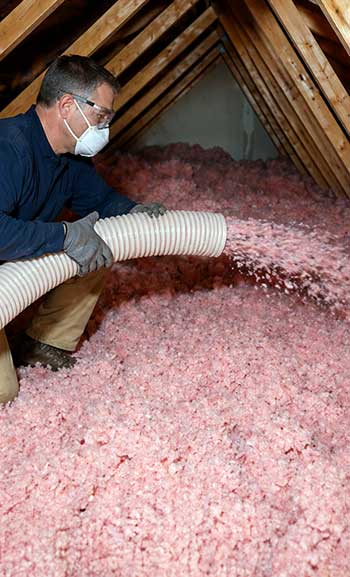
- Thermal performance efficiency: Cellulose delivers meaningfully higher R-value per inch — roughly 30 to 40 percent more thermal resistance per inch of depth than blown fiberglass. In a shallow attic joist bay or a wall cavity with limited space, this difference translates directly into real-world comfort and energy savings. With fiberglass, you simply have to blow more material to reach the same R-value.
- Air infiltration control: This is where the gap between the two materials becomes most dramatic. Cellulose, especially in dense-pack applications, functions almost like a poured solid that fills every void. Fiberglass blown insulation, by contrast, sits loosely in cavities and does little to block air movement through it. If your home has air leakage issues, cellulose addresses two problems at once — insulation and air sealing — while fiberglass insulation alone does not.
- Moisture behavior: These two materials behave in completely opposite ways when water shows up. Fiberglass sheds moisture and dries out without lasting damage. Cellulose absorbs moisture and, if it stays wet, can clump, lose R-value, and create conditions for mold. In a properly detailed building envelope, this rarely matters — but in leaky older homes or humid climates, it’s a critical distinction.
- Environmental impact: If sustainability is part of your decision-making, cellulose wins by a wide margin. Its 80–85 percent post-consumer recycled content and low-energy manufacturing process give it a dramatically smaller environmental footprint compared to fiberglass, which requires energy-intensive glass melting to produce.
- Sound transmission control: The density of cellulose gives it a measurable acoustic advantage. Homeowners who’ve done direct comparisons consistently report that cellulose significantly outperforms blown fiberglass for reducing sound transmission between floors and through walls. If noise control matters to you, this is a clear differentiator.
- Long-term R-value stability: Fiberglass holds its installed thickness better over decades. Cellulose settles and loses depth, particularly in attic applications. While installers compensate for this during initial installation, it’s a factor worth understanding — especially if you’re comparing quotes between contractors using different materials.
- Pest and fire protection chemistry: Cellulose brings active, chemical pest resistance through borate treatment, whereas fiberglass is simply inert to pests. Similarly, fiberglass is non-combustible by material nature, while cellulose achieves fire resistance through chemical treatment — both work, but through fundamentally different mechanisms.
- Installation complexity: Both require professional equipment and technique. However, dense-pack cellulose installation requires precise pressure control and experience to achieve the correct density. Fiberglass blown insulation in open attics is generally more forgiving for installers and easier to verify coverage depth visually with depth markers.
- Cost dynamics: Cellulose typically costs less per bag and achieves target R-values in fewer inches, which can translate to lower material and labor costs on large attic projects. Fiberglass, while competitively priced per bag, requires more material volume to achieve the same R-value, often tipping the cost comparison in cellulose’s favor for whole-house projects.
Also Read: Is Tiger Foam Insulation Worth It?
Key Features of Cellulose Blown Insulation
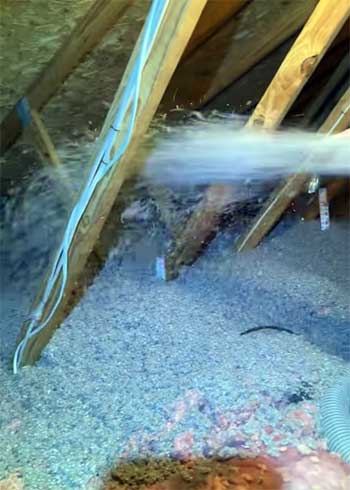
- Impressive R-value density: Cellulose delivers an R-value of approximately 3.2 to 3.8 per inch, which is notably higher than standard fiberglass blown products. This means you get more thermal resistance per inch of depth, which matters enormously in shallow attic spaces or walls where depth is limited.
- Superior air sealing characteristics: One of the most underappreciated qualities of cellulose is how it slumps and settles into every nook and cranny during installation. It doesn’t just sit in a cavity — it conforms to irregular shapes, gaps around wiring, and structural imperfections in ways that fiberglass simply cannot match. This dramatically reduces air infiltration, which is often responsible for 25 to 40 percent of a home’s heat loss.
- Exceptional soundproofing performance: The density of cellulose makes it a standout performer for acoustic insulation. If you’ve ever lived in a house where you can hear every footstep or conversation from adjacent rooms, cellulose in the walls can make a meaningful difference. It absorbs and dampens sound waves far more effectively than light, fluffy fiberglass.
- Strong pest deterrence: The borate treatment isn’t just for fire — borates are toxic to insects and rodents when ingested. This makes cellulose an actively hostile environment for pests, which is a significant advantage in older homes or regions prone to insect activity.
- Excellent fire resistance: Despite being made from paper, treated cellulose performs extremely well in fire-resistance testing. The borate compounds significantly raise the ignition point and slow the spread of flame. It consistently meets or exceeds building code requirements for fire safety.
- Outstanding eco-credentials: For environmentally conscious homeowners, cellulose is hard to beat. The high recycled content means significantly less energy goes into manufacturing it compared to fiberglass, and it keeps paper waste out of landfills.
- Cost-effectiveness at scale: For large attic coverage projects, cellulose tends to come in cheaper per bag and achieves the target R-value in fewer inches, which can reduce both labor time and total material cost.
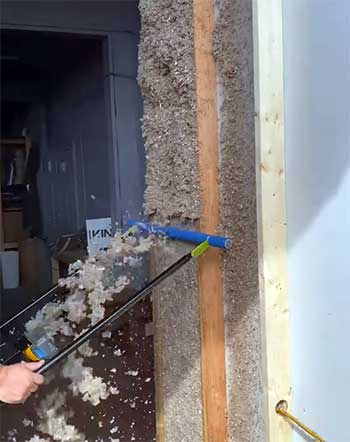
- Dense-pack capability for walls: When cellulose is blown into enclosed wall cavities under pressure using the dense-pack method, it can reach densities of 3.5 pounds per cubic foot or more. At this density, it essentially becomes self-supporting and resists future settling, making it ideal for retrofit wall insulation without opening up the drywall.
Pros of Cellulose Blown Insulation
- Higher R-value per inch compared to standard fiberglass blown, meaning better thermal performance in the same space
- Superior air infiltration control due to the material’s ability to conform tightly around obstructions, wires, and irregular framing
- Outstanding acoustic performance, reducing sound transmission through walls and floors significantly better than loose-fill fiberglass
- Environmentally responsible manufacturing — one of the highest recycled content percentages of any insulation product on the market today
- Active pest resistance from borate treatment, not just a passive barrier but a genuine deterrent
- Excellent fire resistance that meets all major building codes without the need for additional fire-retardant treatments
- Dense-pack application allows it to be retrofitted into closed wall cavities without removing drywall, saving significant renovation costs
- Lower embodied energy in manufacturing means a smaller carbon footprint compared to fiberglass production
- Works well in irregularly shaped spaces — attics with lots of obstructions, uneven framing, or complex geometry are handled well by cellulose
Cons of Cellulose Blown Insulation
- Moisture vulnerability is a real concern — cellulose readily absorbs water, and in high-humidity environments or after a roof leak, it can clump, lose R-value, and become a breeding ground for mold if not properly dried out
- Settling is inevitable — cellulose will settle over time, typically losing 15 to 20 percent of its initial installed depth. Installers must account for this by over-installing to the settled depth R-value, which adds material cost
- Dusty and messy installation — during the blowing process, cellulose generates a significant amount of fine dust that permeates the air. Workers need proper PPE, and homeowners should vacate the area during and immediately after installation
- Heavier than fiberglass — the additional weight can occasionally be a concern in older homes with ceilings that weren’t designed to bear extra load, though this is rarely a structural issue in practice
- Requires specialized equipment — while rental blowing machines are available, cellulose requires the right machine settings to achieve proper density, and improper installation is a common DIY pitfall
- Not entirely water-neutral — even though borate treatment adds some mold resistance, prolonged moisture exposure will eventually compromise the material, unlike fiberglass which is inherently moisture-neutral
- Can be harder to source in rural areas — supply chains for quality cellulose products can be thinner in some regions compared to widely available fiberglass products
Also Read: Comparison of Tiger Foam And Froth-Pak Spray Foam Insulation.
Key Features of Fiberglass Blown Insulation
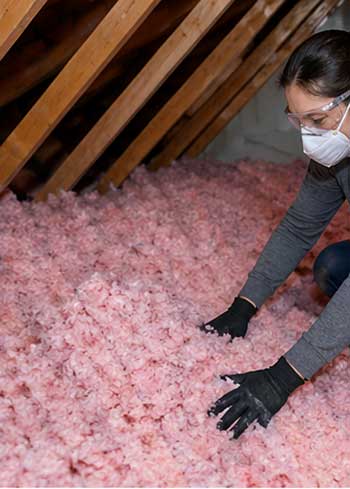
- Moisture resistance: Fiberglass does not absorb water. If it gets wet, it can dry out and largely return to its original performance characteristics without permanent damage. This makes it a safer choice in environments where moisture intrusion is a known risk.
- Dimensional stability over time: Blown fiberglass settles very little compared to cellulose. The loose nodules maintain their loft, which means the installed R-value remains closer to the initial value over time without requiring adjustments or top-up applications.
- Non-combustible by nature: Fiberglass is made of glass — it simply cannot burn. This is an inherent property that requires no chemical treatment to achieve, which appeals to homeowners concerned about the long-term stability of fire-retardant chemicals in cellulose.
- Lightweight installation: Fiberglass blown insulation puts minimal additional weight on ceiling structures, making it appropriate for virtually any existing home regardless of ceiling design or age.
- Wide availability and established supply chain: Fiberglass products are manufactured by numerous companies across North America, and bags are available at virtually every hardware store and building supply warehouse. Getting the product is rarely an issue.
- Hypoallergenic to mold and pests: Because fiberglass doesn’t provide organic nutrients, mold cannot grow on it, and pests have no interest in nesting within it (though they may tunnel through it for passage, they won’t eat or nest in it).
- Faster installation for large open areas: In wide-open attic spaces without many obstructions, fiberglass blown insulation can be installed rapidly, potentially reducing labor costs on straightforward projects.
Pros of Fiberglass Blown Insulation
- Excellent moisture resistance — fiberglass neither absorbs water nor supports mold growth, making it a smart choice in humid climates or homes with known moisture challenges
- Minimal long-term settling — the installed depth and R-value remain more stable over the years, reducing the need for top-up insulation applications
- Inherently non-combustible — no chemical fire retardants needed; the material simply doesn’t burn, which some homeowners find preferable for long-term peace of mind
- Lighter weight on ceiling structures, making it suitable for virtually all homes including older constructions with modest ceiling load capacity
- No dust concerns during blowing in the same degree as cellulose — while fiberglass fibers are an irritant, the dust cloud generated is generally less voluminous
- Widely available nationwide with established manufacturing and distribution networks, so supply is rarely a limiting factor
- Long track record of performance in residential and commercial applications across all climate zones
- Lower maintenance profile — once installed correctly, blown fiberglass in a properly air-sealed attic tends to need very little attention
Cons of Fiberglass Blown Insulation
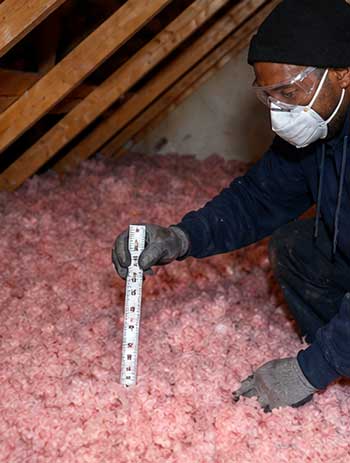
- Lower R-value per inch — at approximately R-2.2 to R-2.7 per inch, you need significantly more depth of fiberglass to achieve the same R-value as cellulose. In depth-constrained applications, this is a meaningful disadvantage
- Poor air sealing capability — loose fiberglass nodules do not conform tightly to gaps the way cellulose does. Air can still move through fiberglass insulation relatively easily, meaning air sealing must be done as a separate step before installation
- Skin and respiratory irritant — fiberglass fibers are notorious for causing skin itching, eye irritation, and respiratory discomfort during installation. While cellulose is dusty, fiberglass fiber irritation is a longer-lasting nuisance
- Not eco-friendly by comparison — fiberglass manufacturing is energy-intensive, and while some products include recycled glass content, the recycled percentage is typically far lower than cellulose
- Can shift and compress in wall cavities — when blown into open wall cavities (as opposed to dense-pack applications), fiberglass blown insulation can settle and shift over time, potentially leaving uninsulated gaps
- Less effective for sound dampening — the lower density and lighter weight of fiberglass blown insulation translate to noticeably weaker acoustic performance compared to cellulose
- Offers no pest resistance — while pests won’t eat fiberglass, they have no aversion to it either. Mice and insects will tunnel through it freely, potentially compromising its coverage
- Higher cost per R-value achieved — when you account for the greater depth of material needed to hit target R-values, the cost per R per square foot often works out higher for fiberglass than for cellulose
Also Read: Comparison of Thermafiber And Rockwool.
Frequently Asked Questions (FAQ)
It absorbs moisture, settles 15–20% over time, and creates a dusty mess during installation. In humid environments without proper vapor control, moisture damage and mold are real risks.
Yes, but modestly. Settling reduces installed depth, which lowers effective R-value. Good installers account for this by over-installing upfront. Once settled — usually within the first few years — performance stabilizes.
Cellulose wins for most homes — better R-value per inch, superior air sealing, and stronger acoustics. Choose fiberglass if moisture intrusion is a known problem in your home.
For R-38, cellulose needs about 22–26 bags per 1,000 sq ft; fiberglass needs roughly 20–24 bags. Always check the coverage chart on your specific product’s packaging for accuracy.
The Bottom Line
You came here trying to figure out which blown insulation is worth your money and your trust. Here’s what I want you to take away: cellulose and fiberglass blown insulation are both legitimate, time-tested products — but they’re not interchangeable.
Cellulose performs better thermally, seals air better, sounds quieter, and treads lighter on the planet. Fiberglass resists moisture better, settles less, and is easier to source virtually anywhere.
Your home’s specific conditions — moisture history, climate zone, attic geometry, and existing air sealing quality — should drive your final choice more than any general preference.
If you work with a knowledgeable insulation contractor who assesses your actual situation, you’ll get a recommendation grounded in your home’s needs rather than a generic answer. Push them on the specifics, ask about both materials, and make the decision with full information in hand. That’s how you insulate smarter, not just cheaper.