
I spent weeks comparing curtain samples before I finally decided between pinch pleat and ripplefold styles for my living room.
The main purpose of this piece is to lay out the real differences in how each style hangs, functions, and fits everyday spaces so you can choose without later regret.
You will find clear details on fabric behavior, hardware needs, and visual impact that match the way most of us actually live with windows.
| Aspect | Pinch Pleat | Ripplefold |
| Overall Look | Tailored, traditional gathers with visible folds | Continuous soft waves, modern and seamless |
| Fabric Fullness | Typically 2 to 2.5 times window width | Usually 2 to 2.2 times with precise spacing |
| Hardware | Rods with rings or tracks with hooks | Dedicated track system with glide carriers |
| When Closed | Stacks to the sides with some gaps possible | Full coverage with even ripples edge to edge |
| When Open | More volume stacked at edges | Neater, flatter stack |
| Light Control | Good but depends on lining and overlap | Excellent uniform coverage |
| Installation Complexity | Moderate, familiar to most installers | Higher, requires precise track mounting |
| Price Range | Often lower for fabric and basic hardware | Higher due to specialized carriers and track |
| Maintenance | Easy to remove for cleaning | Carriers stay on track; fabric detaches more carefully |
| Best For | Formal rooms, classic interiors | Contemporary homes, large windows |
Key Differences Between Pinch Pleat and Ripplefold
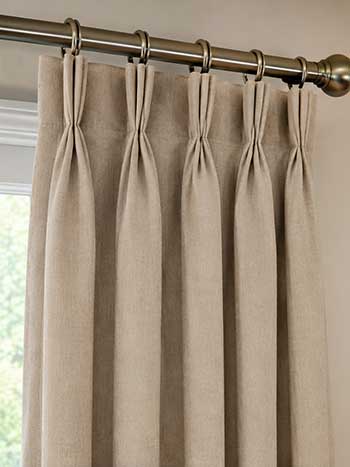
- Heading structure: Pinch pleat relies on hand-formed or machine-sewn gathers that create discrete folds you can see and feel as separate sections, while ripplefold uses evenly spaced carriers that force a continuous undulation so the top edge looks like one unbroken wave from left to right
- Stack-back appearance: Pinch pleat curtains bunch into fuller, more traditional stacks at the sides that take up more wall space and create a soft, layered pile of fabric, whereas ripplefold stacks flatter and more compactly against the wall so more of the window frame stays visible
- Coverage when closed: Pinch pleat can leave small gaps between rings if the overlap is not planned carefully and the fabric is lightweight, while ripplefold maintains full edge-to-edge coverage by design because the carriers keep the material in constant contact across the track
- Hardware visibility: Decorative rods remain part of the look with pinch pleat and can become a design element themselves, while ripplefold tracks can be almost invisible once the fabric is drawn and often disappear into a ceiling recess or valance
- Fabric consumption: Both need similar fullness, yet pinch pleat often requires slightly more material to achieve deep, luxurious folds that hold their shape, which I noticed when the same window measurement produced a heavier order for the pleated version
- Light leakage: Ripplefold’s continuous contact with the track reduces light gaps at the top even on imperfect frames, while pinch pleat depends on the heading tape and any returns you add to keep brightness from sneaking through near the ceiling
- Movement feel: Pinch pleat rings slide with a familiar clink that tells you the panels are moving, while ripplefold carriers glide more quietly and evenly so the motion feels smoother and less mechanical on daily use
- Customization of wave or fold depth: Pinch pleat lets you vary the size of each pinch for a looser or tighter look by adjusting how much fabric you allow between rings, while ripplefold spacing is fixed by the carrier size you choose at the start and stays the same for the life of the installation
- Suitability for tall windows: Ripplefold maintains consistent waves from ceiling to floor more easily on very tall installations because the track controls the entire heading, whereas pinch pleat can develop uneven tension if the fabric is especially long and heavy
- Ease of pattern matching: Pinch pleat requires careful alignment of each fold with the fabric repeat so stripes or motifs land correctly, while ripplefold’s even spacing simplifies matching on large patterns because the waves repeat at regular intervals without manual adjustment
Also Read: Comparison of Roof Window And Skylight.
Key Features of Pinch Pleat Curtains Include:
- Structured top heading that keeps folds consistent from the moment you hang them, so the fabric falls in the same neat pattern every morning even after you have pulled the panels open and closed dozens of times during the week
- Ability to use a wide range of fabrics from lightweight sheers to heavy blackout materials without the heading collapsing, which meant I could switch from a summer linen to a winter velvet on the same hardware without the top edge looking limp or uneven
- Compatibility with both decorative rods and simple tracks so you can match existing hardware, letting me keep the brass rod I already owned in the dining room instead of replacing the entire setup
- Visible depth created by the way the fabric falls away from each pinch, giving the panels a three-dimensional quality that catches afternoon light and makes the room feel more layered than a flat panel ever could
- Option to add lining or interlining that stays hidden behind the outer fabric, so the insulation and light block improve without changing the outward appearance of the folds I had carefully chosen
- Custom spacing of the pleats so the pattern or texture of the fabric lines up attractively, which became important when I chose a subtle stripe and wanted every fold to land on the same part of the design
- Stack-back that can be adjusted by how far the rings travel along the rod, giving me control over how much of the window stays uncovered when I want maximum daylight without removing the curtains entirely
- Traditional charm that works in rooms with crown molding or classic furniture, matching the existing woodwork in my living room so the windows felt finished rather than like an afterthought
- Relatively straightforward measuring process once you know the desired fullness ratio, which let me double-check the fabric order myself before the panels were cut and avoid costly remakes
- Durability of the heading itself, which rarely needs re-pleating if the fabric is quality, holding its shape through two full seasons of daily use and one professional cleaning without any of the pins loosening
Pros of Pinch Pleat Curtains
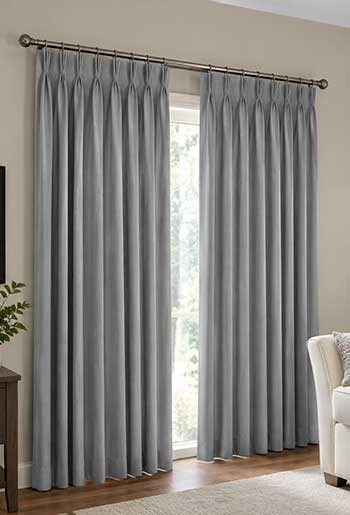
- Timeless visual weight that makes a room feel finished even if the furniture is simple, so the windows carry enough presence to balance a large sofa or dining table without needing extra decorative elements
- Flexibility to hang on existing rods you already own, reducing immediate hardware cost and letting me reuse the iron rod from the previous owner instead of starting over
- Ability to create deeper or shallower folds depending on how much fabric you allow and how you space the rings, which gave me the option to adjust the look after the panels arrived if the room felt too formal or too casual
- Strong structure that holds its shape through repeated opening and closing without the heading stretching out, remaining crisp after months of daily use and one trip to the cleaners
- Easy addition of decorative elements such as tiebacks, holdbacks, or even a matching valance if the room calls for it, so I could dress the panels up for holidays without buying an entirely new treatment
- Broad fabric compatibility, including thick velvet or lined blackout materials that would overwhelm a lighter heading style, letting the heavier cloth drape properly instead of looking stiff or flat
- Familiar installation process that most window-treatment professionals already know well, which meant the installer finished both rooms in one afternoon without special tools or extra visits
- Stack-back that can be adjusted simply by sliding the rings, giving you control over how much of the window stays uncovered and letting me open the panels fully on bright days or only halfway when I wanted filtered light
- Classic drape that photographs well and looks intentional in both formal dining rooms and everyday living spaces, holding up in pictures and in real life without needing constant straightening
- Longevity of the pleated heading itself; quality versions rarely need to be reworked unless the fabric is damaged, so the investment lasts through several years of normal wear
- Option to use either pinch-pleat tape or hand-pleated headings for different price points, allowing a more budget-friendly version in the guest room while still matching the style of the main living area
- Good performance with interlining, which adds insulation and makes the folds look richer without changing the hardware, improving both comfort and the way the fabric hangs in winter
Cons of Pinch Pleat Curtains
- Potential for small light gaps between the rings if the fabric is not overlapped correctly at the center
- More visual bulk when the curtains are fully open, which can make a narrow window feel crowded
- Rings that can occasionally catch or tilt if the rod is not perfectly level
- Slightly higher fabric cost because deeper folds require more material than a flatter style
- Need for periodic straightening of the folds if the fabric is lightweight and the room is drafty
- Limited compatibility with certain modern motorized systems that prefer continuous tracks
- Heading that can look dated in ultra-minimalist interiors where any gather feels out of place
- Cleaning process that sometimes requires removing each ring individually before the fabric can go into the washer or dry cleaner
- Risk of the pin or bar working loose over years if the fabric is very heavy
- Less precise control over the exact wave shape compared with mechanically forced ripples
Also Read: Is Gila Window Film Worth Your Money?
Key Features of Ripplefold Curtains Include:
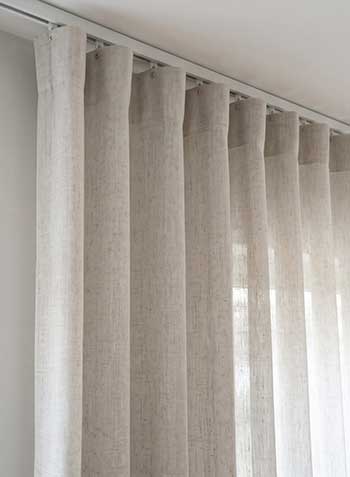
- Continuous wave pattern that never leaves gaps at the center or sides when closed, which solved the thin strips of light I used to see between the panels in my old setup and kept the bedroom darker on weekend mornings
- Dedicated aluminum or steel track that can be ceiling-mounted or wall-mounted with minimal hardware visible, letting the fabric become the main feature instead of competing with a bulky rod and brackets
- Snap-on carriers that make the fabric easy to remove for washing without disturbing the track, so I could take the panels down for seasonal cleaning and snap them back in place in under ten minutes
- Precise fullness built into the carrier spacing so you do not have to calculate pleat width yourself, removing the guesswork that had caused me to order too little fabric on a previous project
- Smooth operation that works well with motorized systems if you want remote or app control, which I later added for the tall windows I could not reach easily from the floor
- Clean stack that sits closer to the wall and takes less visual space when open, freeing up more of the window for daylight and keeping the sides of the room from feeling crowded
- Excellent light blocking when paired with the right lining because the fabric stays taut across the window, creating a more even barrier than styles that rely only on fabric weight and overlap
- Modern silhouette that suits contemporary architecture and large glass areas, matching the clean lines of the new addition where traditional gathers would have looked out of place
- Consistent appearance from every angle because the waves are mechanically controlled, so the curtains look intentional whether you are standing inside the room or looking at the house from the street
- Compatibility with both sheer and opaque fabrics, though heavier materials show the ripple more clearly, giving me the option to start with a light filtering layer and add blackout later without changing the track
Pros of Ripplefold Curtains
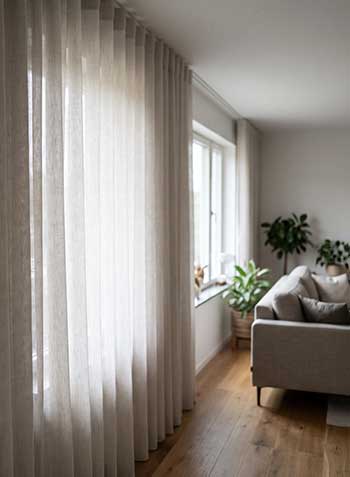
- Seamless coverage that blocks light more uniformly across the entire window width, eliminating the bright seams I used to notice with ring-top panels and making early mornings in the bedroom noticeably darker
- Quiet, smooth gliding that feels modern and refined every time you open or close the panels, so the motion itself became less of a distraction during video calls or late-night reading
- Compact stack that leaves more of the window visible and keeps the fabric from crowding the sides, which opened up the sightline to the backyard and made the room feel larger during the day
- Clean architectural lines that work especially well with floor-to-ceiling glass or large sliding doors, matching the minimal frames in the new addition without adding visual weight
- Easy fabric removal because the carriers simply unsnap, leaving the track in place, so seasonal washing took less time and I could rehang the panels without calling anyone for help
- Consistent appearance from both inside and outside the house, which improves curb appeal on street-facing windows and keeps the exterior looking orderly even when the curtains are only partially open
- Strong compatibility with motorization, so you can schedule open and close times without extra hardware complexity, letting the panels move on their own during the workday when no one is home
- Reduced chance of light leakage at the top because the fabric stays attached along the full track, creating a tighter seal near the ceiling than styles that hang from individual rings
- Predictable wave depth that stays the same for the life of the installation, removing the need to re-train folds after cleaning or after the fabric has been pulled aside for weeks
- Ability to use lighter-weight fabrics while still achieving a full, finished look, which kept the overall weight lower on the wide living-room span and made the motorized system run more quietly
- Minimal hardware visibility once the curtains are drawn, which suits contemporary interiors and keeps attention on the fabric and the view rather than on brackets or rods
- Good performance on very wide spans where individual rings might otherwise bind or tilt, so the long track across the sliding doors moved evenly from end to end without catching
I particularly liked how the ripples stayed even even after the fabric had been washed and rehung.
Cons of Ripplefold Curtains
- Higher upfront cost for the track, carriers, and often the installation labor
- Requirement for a dedicated track that may not match existing decorative rods you already have
- Less flexibility if you later want to change the look; the carriers dictate the wave size
- Installation that demands precise leveling and secure mounting, especially on ceilings
- Potential for the carriers to become stiff or noisy if dust accumulates and they are not cleaned
- Limited options for very heavy fabrics; some systems have weight ratings that exclude dense velvet
- Appearance that can feel too uniform or “mechanical” in rooms that need more organic texture
- Need to order the correct carrier spacing in advance; mistakes are harder to correct after the fabric is made
- Slightly more complicated measuring process because the track projection and return must be calculated exactly
- Fewer decorative finishing options such as tiebacks that work naturally with the continuous wave
Also Read: Is 3M Window Film Worth Your Money?
Frequently Asked Questions (FAQ)
No. They remain a strong choice in traditional and transitional rooms where the structured folds add intentional detail rather than looking dated.
It depends on the room. Pinch pleat suits classic interiors that benefit from tailored volume; ripplefold suits modern spaces that need even coverage and a cleaner stack.
Often yes, because the deeper folds and formal heading create more visual weight and a finished appearance that reads as custom.
No. They continue to appear in both new construction and renovations whenever a room calls for classic elegance rather than minimal waves.
Wrapping Up
After comparing both styles on the same windows and living with each for months, I can see why neither has disappeared. Pinch pleat still offers the tailored presence many rooms need, while ripplefold delivers the seamless coverage and modern operation that larger or more contemporary spaces reward.
The choice comes down to whether you want structured folds that feel classic or continuous waves that feel deliberate. You now have the details on fabric behavior, hardware, light control, and daily use that let you match the style to your actual windows and the way you live in the rooms.
Pick the one whose strengths solve the problems you notice most, and the curtains will feel right every time you walk in.