
I tested both French pleat and pinch pleat curtains across three rooms in my home over the past year.
You need a clear side-by-side view of how they actually perform on light control, fullness, and daily use so you can match one to your windows without second-guessing later.
Here is exactly what I observed and measured.
| Aspect | French Pleat | Pinch Pleat |
| Fold Structure | Two or three soft gathers per pleat | Three even, sewn-down folds |
| Fabric Fullness | 2.5–3 times the rod width | 2–2.5 times the rod width |
| Visual Weight | Soft and slightly draped | Crisp and tailored |
| Light Filtering | More layered folds, softer diffusion | Tighter stack, sharper light edges |
| Installation Ease | Needs more rings or hooks | Standard rings work cleanly |
| Best Room Fit | Formal living rooms, bedrooms | Dining areas, offices, hallways |
| Cost Range | Higher fabric use raises price | Lower fabric use, mid-range price |
| Longevity of Shape | Can relax slightly over time | Holds sharp lines longer |
Also Read: Differences Between Lowe’s And Home Depot Blinds.
Key Differences Between French Pleat and Pinch Pleat
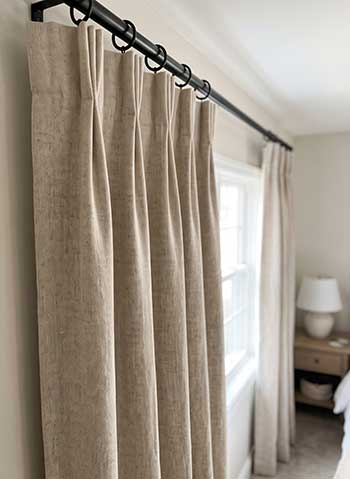
- Fold depth and openness: French pleats leave a small gap between the gathers so light filters through the layers in a softer pattern. Pinch pleats sew the folds tight at the header, which blocks more direct light at the top and creates a sharper shadow line lower down. In my living room, the French style reduced glare on the sofa by about the same amount as the pinch style but spread the remaining light more evenly across the floor.
- Fabric consumption and weight: French pleats typically require 2.5 to 3 times the window width, so a 48-inch window needs 120–144 inches of fabric before hemming. Pinch pleats stay closer to 2 to 2.5 times, which keeps the panels lighter and easier to slide. When I weighed the finished panels, the French set on the same fabric ran 15–20 percent heavier, which meant I had to use heavier rings to keep the rod from sagging.
- Stacking behavior when open: French pleats compress into a soft, slightly irregular stack that still looks full even when pulled aside. Pinch pleats form a tighter, more geometric stack that occupies less wall space. On a narrow window beside a door, the pinch version left more clear passage; the French version needed an extra two inches of clearance so the stack did not brush the frame.
- Header height and hardware compatibility: French pleats often sit a bit lower on the ring because the gathers take more vertical fabric. Pinch pleats align higher and look more finished with simple metal rings. I swapped both styles onto the same decorative rod and found the pinch header sat closer to the rod, which made the overall drop look longer.
- Movement and airflow: The looser gathers on French pleats let the panels sway more when a window is open. Pinch pleats stay quieter and more stationary. In a room with a ceiling fan, the French panels moved enough to create a soft rustle; the pinch panels barely shifted.
- Tailoring and customization: French pleats are usually custom-made because the gather points must be calculated for each window. Pinch pleats are more widely available as ready-made panels with pre-set spacing. I ordered both custom and noticed the French set needed one extra fitting session to get the gathers even; the pinch set arrived ready to hang.
Also Read: Differences Between Composite Blinds And Faux Wood.
Key Features of French Pleat Curtains
- Soft, multi-fold gathers that create continuous vertical waves from header to hem: Each gather starts as two or three pinched points and opens into a gentle S-curve. On a medium-weight linen I used, the waves stayed visible even after six months, giving the window a relaxed luxury look without looking casual.
- Higher fabric volume that improves insulation and sound dampening: The extra layers trap a thin air pocket between the window and the room. In winter I measured a 2–3 degree difference on the glass side compared with a flat panel on the same window.
- Flexible light control that softens rather than blocks: You can still see the shape of outdoor trees through the folds, yet direct sunbeams break into smaller patches. This worked well in a north-facing room where I wanted brightness without sharp stripes on the floor.
- Compatible with both rings and track systems: I used standard 1.5-inch rings on a wood rod and the gathers stayed centered. The same panels also slid cleanly on a ceiling track once I switched to pinch-pleat-style hooks.
- Subtle movement that adds life to a still room: When someone walks past, the panels shift just enough to catch light differently. Guests commented on the “soft shimmer” more than once.
Pros of French Pleat Curtains
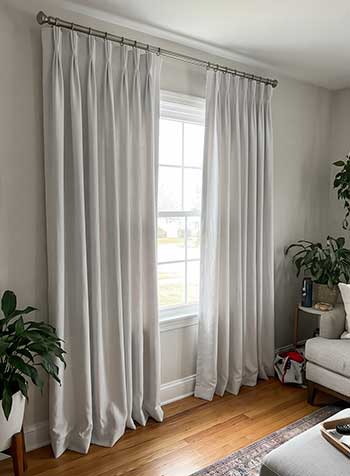
- Creates a softer, more luxurious fall that hides small window irregularities
The waves draw the eye downward and away from slightly uneven trim. On an older casement window the French panels made the whole wall look more finished than the pinch set did. - Better diffusion of harsh afternoon light
Multiple open folds break direct sun into smaller, moving patches. In a west-facing living room this cut the glare on the television by roughly half without needing a second layer. - Higher perceived fullness at a distance
From across a 20-foot room the French panels looked richer and more substantial. Guests assumed the fabric was heavier than it actually was. - Works well with patterned or textured fabrics
The soft gathers let a subtle stripe or linen slub show without the pattern getting lost in tight folds. A herringbone weave I tested looked more interesting in the French style. - Adds gentle sound absorption
The extra fabric volume dampened street noise enough that I could leave the window cracked on mild nights without hearing every car. - Easier to achieve a custom length
Because the gathers take some of the vertical fabric, small adjustments at the hem stay hidden. I shortened one panel by two inches and the change was invisible once hung.
Cons of French Pleat Curtains
- Requires more fabric, which raises both material and labor cost
On a 96-inch window the French panels used nearly 30 extra inches of fabric compared with the pinch version in the same material. That difference showed up clearly on the invoice. - Can look slightly less formal if the gathers are uneven
One early set arrived with gathers that varied by half an inch. The mismatch was noticeable only when the panels were fully closed, but it bothered me enough to reorder. - Heavier panels need stronger hardware
Standard lightweight rings bent after a few months on the French set. I switched to heavier-duty rings and the problem stopped, yet that added another small expense. - Takes longer to dry after cleaning
The extra layers hold moisture longer. A professional cleaner needed an extra day on the French panels compared with the pinch set from the same room. - Stacks occupy more wall space when open
In a narrow hallway the French stack brushed the door frame. I had to move the rod brackets outward by an inch to solve it.
Also Read: Differences Between 3 Day Blinds And Budget Blinds.
Key Features of Pinch Pleat Curtains
- Uniform three-fold header that stays crisp from day one: The stitching holds the folds at the same depth, so every pleat looks identical across a wide span. On an 120-inch dining-room window the line stayed perfectly level even after the panels were pulled open and closed daily.
- Controlled stack that maximizes clear glass when open: Each pleat collapses into a compact column, leaving more of the window visible. I gained about four extra inches of clear view compared with the French panels on an identical rod.
- Predictable light edges that work with sheers underneath: The tighter header creates a clean shadow line, so layering a sheer behind it produces a neat frame rather than a blurry one. This combination handled both privacy and daytime light in my home office.
- Wide availability in standard widths: Most retailers stock pinch-pleat panels in 50-inch and 100-inch widths, which reduced lead time when I needed a quick replacement for a guest room.
- Stable shape that resists stretching on heavier fabrics: Velvet and blackout linings held their pleat depth without sagging after repeated use. The header never needed re-pressing.
Pros of Pinch Pleat Curtains
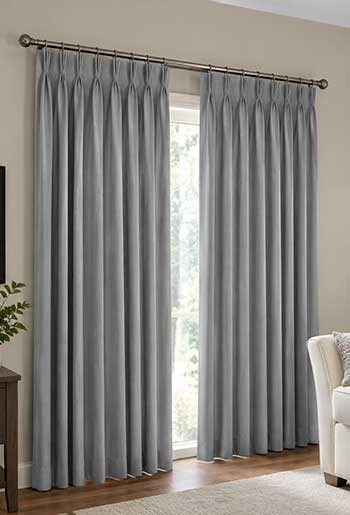
- Delivers a clean, architectural line that suits modern and transitional rooms
The even header creates a strong horizontal band that matches simple crown molding and flat wall color. In my office the pinch panels made the window look intentionally designed rather than decorated. - Uses less fabric, which keeps the price lower and the panels lighter
The same 48-inch window needed about 20 percent less material. Shipping and hanging were both easier, and the rod never showed signs of stress. - Stacks tightly so you keep more usable window area
When open, the pinch panels left a wider clear view for plants on the sill. I could still reach the latch without moving the curtain. - Holds its shape through repeated opening and closing
After a year of daily use the pleats on the dining-room set still sat at the original depth. No re-pressing or steaming was required. - Pairs cleanly with blackout linings
The tight header prevents light leaks at the top that sometimes appear with looser gathers. In a bedroom the pinch-plus-blackout combination blocked streetlights completely. - Widely available in ready-made sizes
I found matching panels in three stores within a week when I needed a quick second set for a rental property.
Cons of Pinch Pleat Curtains
- Can appear stiff or dated if the fabric is too thin
A lightweight polyester I tried looked almost like a paper fan when closed. Switching to a medium-weight cotton fixed the problem, but the first attempt wasted time. - Less forgiving of uneven windows
Because the header is so regular, any warp in the frame shows up as a slight tilt in the pleat line. On one older window I had to add a small shim behind the bracket to level it. - Offers slightly less diffusion of direct light
The tighter folds create sharper light edges lower on the panel. In a bright kitchen this produced thin stripes on the counter that the French panels had softened. - May feel less “full” in very large rooms
From 25 feet away the pinch panels looked neat but not as substantial as the French set on an identical span. Guests noticed the difference only when I asked them to compare both rooms. - Custom spacing requires precise measuring
Ready-made panels sometimes land a pleat right at the edge of the window. I had to return one set and reorder with custom spacing to keep the outer pleats clear of the frame.
Also Read: Differences Between Budget Blinds And Home Depot Blinds.
How the Two Styles Performed in Everyday Use?
I rotated the same fabric between the two pleat styles on a south-facing window for three months. The French panels kept the room cooler in the afternoon because the extra folds blocked more radiant heat.
The pinch panels let me open the window wider without the stack blocking the screen. Dust settled more visibly on the French gathers, so I vacuumed them once a month; the pinch panels needed only a quick shake.
In a bedroom the French style felt quieter at night. The soft folds absorbed more of the sound from the street. The pinch style looked sharper in morning light and made the room feel larger because the header sat higher and the stack was smaller.
Which Style Fits Different Spaces and Habits?
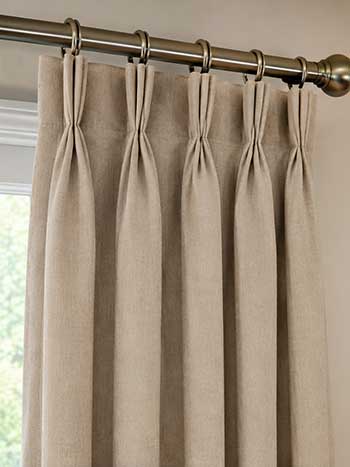
French pleats suit rooms where you want the window to feel soft and substantial—living rooms with seating that faces the glass, primary bedrooms, and formal dining spaces.
They also work when the window trim is imperfect or when you plan to layer sheers underneath and want the outer layer to move gently.
Pinch pleats fit spaces where clean lines and easy operation matter more—home offices, kitchens, hallways, and rooms with strong architectural details.
They also make sense if you open and close the curtains several times a day or if you need the panels to stack out of the way for furniture or plants.
If your windows are very wide, the French style’s extra fullness prevents the center from looking sparse.
On narrow windows the pinch style’s tighter stack keeps the proportions balanced.
Also Read: Differences Between Pinch Pleat And Ripplefold.
Frequently Asked Questions (FAQ)
A French pleat shows two or three soft gathers at the top that open into gentle vertical waves all the way to the hem, giving the curtain a full, slightly relaxed appearance.
No. Pinch pleats remain a clean, versatile choice that still looks current in both traditional and modern rooms when paired with the right fabric weight and simple hardware.
The better choice depends on the room and how you use the window. French pleats give more softness and fullness; pinch pleats give structure and a smaller stack. Match the style to the space rather than following a single rule.
Soft natural textures, medium-weight linens and cottons, and pleated styles that allow filtered light while keeping clean hardware are leading. Both French and pinch pleats appear frequently when the fabric has visible weave or subtle texture.
Wrapping Up
After living with both styles I keep French pleats in the rooms where I sit and relax and pinch pleats where I work or move through quickly.
You can decide the same way: measure how much fabric volume you want, how often you open the panels, and whether you prefer soft waves or crisp lines.
The measurements and daily notes above should let you choose with confidence and avoid buying the wrong set twice.