
I have worked with both chipboard and MDF on countless furniture builds, cabinet projects, and home renovations over the years, and the choice between them always comes down to balancing budget, strength, finish quality, and the environment where the piece will live.
This article walks you through the real differences, strengths, weaknesses, and practical uses of each material so you can decide which one fits your next project without wasting money or ending up with something that fails too soon.
| Aspect | Chipboard | MDF |
| Core composition | Compressed wood chips and resin | Fine wood fibers mixed with resin |
| Density | Lower to medium | Medium to high |
| Surface finish | Rough, needs laminate or veneer | Very smooth, excellent for painting |
| Screw-holding strength | Moderate, weak near edges | Better, more consistent |
| Moisture resistance | Poor | Poor to slightly better |
| Weight | Lighter | Heavier |
| Cost | Lower | Higher |
| Typical thickness range | 12–25 mm common | 6–30 mm common |
| Best for | Budget carcasses, temporary use | Painted furniture, detailed work |
| Lifespan in dry rooms | 5–10 years with care | 10–15+ years with care |
Key Features of Chipboard and MDF
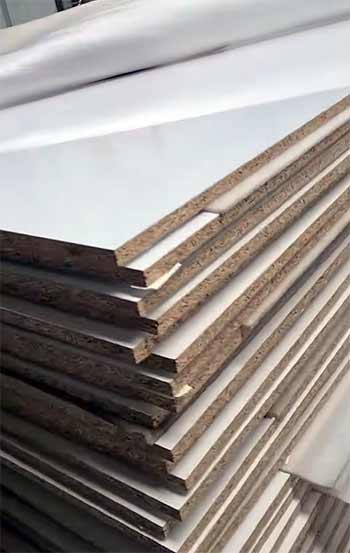
- Density And Internal Structure Of Chipboard Chipboard starts as a mix of wood particles of different sizes bound with synthetic resin under heat and pressure. The particles create a somewhat uneven core that feels lighter in the hand than MDF. When I cut a sheet, the edges show visible chips and voids, which means the material can crumble if you drive screws too close to the edge. The density usually sits between 600 and 700 kg/m³, enough for basic shelves but not for heavy loads without extra support. Because the particles are larger, the board flexes more under weight than denser options. In my workshop I always check for consistent thickness across a sheet; cheaper grades sometimes vary by a millimetre or two, which shows up when you try to create flush joints.
- Density And Internal Structure Of MDF MDF uses much finer wood fibres that are refined almost to a pulp before resin is added and the mix is pressed. The result is a board with density often between 700 and 800 kg/m³ or higher. The fibres lock together tightly, so the cross-section looks uniform with no large particles. When I sand an edge it stays clean and sharp. This higher density gives MDF better dimensional stability in dry conditions and allows it to hold fine profiles and routed details without tearing. The trade-off is noticeable weight; a full sheet feels heavier to lift and move around the workshop.
- Surface Characteristics Of Chipboard The face of raw chipboard is rough and porous. Paint sinks in unevenly and looks patchy unless you apply several coats of primer and filler. Most manufacturers cover it with melamine, laminate, or thin veneer at the factory. Those factory finishes hide the roughness well and give a ready-to-use surface for cabinets and wardrobes. Without that covering the board absorbs moisture fast and swells. I have seen uncoated chipboard edges expand after a single humid week in a garage.
- Surface Characteristics Of MDF MDF offers one of the smoothest surfaces among engineered boards. The fine fibres create a face that takes paint, primer, and even thin veneers with almost no preparation beyond light sanding. Routed edges stay crisp, and you can achieve a high-gloss or matte painted finish that looks like solid wood when done carefully. The surface also accepts vinyl wraps and paper laminates cleanly. In my experience a single coat of primer is often enough before top coats, which saves time on larger pieces.
- Machinability And Tool Behaviour With Chipboard Chipboard cuts easily with a circular saw or jigsaw, but the chips dull blades faster than solid wood. The loose particles tend to tear out on the underside of a cut unless you use a sharp blade and a zero-clearance insert. Screws need pilot holes near edges or they split the material. Dowels and biscuits work reasonably well if the joints are kept dry. I usually reinforce chipboard joints with glue and additional brackets when the piece will carry weight.
- Machinability And Tool Behaviour With MDF MDF machines cleanly. Router bits leave smooth edges, and the board holds fine detail for decorative mouldings or raised panels. Dust is finer and more airborne than chipboard dust, so good extraction is essential. Screws bite more securely, yet the denser core still benefits from pilot holes to avoid splitting. Edge banding sticks well because the surface is consistent. When I build painted furniture I prefer MDF for exactly these reasons: clean cuts and reliable paint adhesion.
- Weight And Handling Differences A standard 18 mm chipboard sheet is noticeably lighter than the same size in MDF. That makes chipboard easier to carry up stairs or position alone. MDF’s extra weight becomes an issue in tall wardrobes or wall-mounted units where the structure must support both the material and the contents. I factor weight into transport costs and into the choice of hinges and fixings.
- Cost Structure And Availability Chipboard remains the budget option. Basic melamine-faced boards cost less per sheet than comparable MDF. Prices rise when thicker grades or special coatings are needed, yet they still undercut MDF. MDF commands a premium for the smoother surface and better machining qualities. Both materials are widely stocked at timber yards and DIY stores in standard sizes, so availability rarely limits a project.
Also Read: Differences Between Backer Board And Drywall.
Key Differences Between Chipboard and MDF
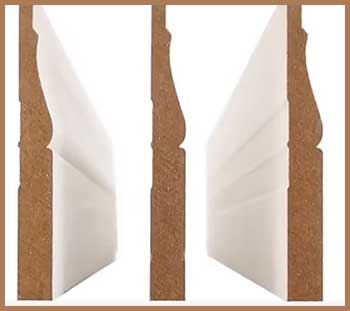
- Composition And How It Affects Performance Chipboard relies on larger wood particles that leave small air pockets inside the board. Those pockets reduce weight but also reduce strength and moisture resistance. MDF’s fine fibres pack tightly, removing most voids and creating a more homogeneous material. The tighter structure explains why MDF feels heavier and why it holds screws more consistently across the whole sheet. When I test both side by side by driving screws at different distances from the edge, MDF remains solid farther out while chipboard starts to crumble sooner.
- Strength Under Load And Edge Integrity Chipboard performs adequately for light to medium loads when the spans are short and the board is supported properly. Long shelves sag more quickly than MDF of the same thickness. Edge strength is the weak point: screws near the edge pull out more easily and the material can break away in chunks. MDF spreads load better because of its density. It still needs careful design for heavy books or appliances, yet it resists edge failure more reliably. In practice I treat both as carcass materials rather than structural beams.
- Reaction To Moisture And Humidity Neither board likes water. Chipboard swells dramatically when wet and rarely returns to its original size. Once the particles expand and the resin bond weakens, the board loses strength permanently. MDF also swells, but the finer fibres and tighter structure slow the process slightly. Both materials need sealing on all edges and faces if used in kitchens or bathrooms. I have replaced more chipboard kitchen cabinets damaged by a single leaking pipe than MDF ones, simply because the cheaper boards were left unfinished on the back or underside.
- Finish Quality And Visual Results Chipboard almost always needs a factory laminate or veneer to look acceptable. The raw surface is too irregular for a clean painted finish without heavy filling. MDF accepts paint, lacquer, and thin decorative films with minimal effort. The difference shows clearly on doors and drawer fronts: painted MDF can look almost like solid timber, while painted chipboard usually reveals texture or requires more coats. For projects where appearance matters I reach for MDF first.
- Long-Term Durability In Everyday Use In a dry living room both materials can last many years if kept dry and not overloaded. Chipboard tends to show wear sooner at hinge points and screw locations. MDF holds hardware longer and resists surface dents better because of its density. Neither equals solid wood or quality plywood for decades of heavy use, yet MDF generally outlasts chipboard when both receive the same care.
- Environmental And Workshop Considerations Chipboard often contains a higher proportion of recycled wood particles, which some people prefer for lower virgin timber use. The coarser dust is less airborne but still needs extraction. MDF produces finer dust that stays in the air longer and requires better filtration. Both boards use resins that can release formaldehyde, though modern low-emission grades are widely available. I always check the emission rating when buying larger quantities for indoor furniture.
Pros of Chipboard

- Lower purchase price that stretches project budgets The most obvious advantage is cost. When I build a set of simple storage units or temporary workshop benches, chipboard lets me cover more square metres for the same money. The savings add up quickly on large carcasses such as wardrobe frames or under-stair cupboards. That price difference often decides the material for rental properties or short-term installations where longevity is secondary to immediate function.
- Adequate strength for light-duty furniture and storage Chipboard carries clothing, folded textiles, and everyday household items without complaint when the design includes proper support. Fixed shelves on vertical partitions work well. I have built entire bedroom storage systems from melamine-faced chipboard that still look serviceable after several years of normal use. The material is not meant for heavy tool chests or water tanks, yet within its limits it performs reliably.
- Wide range of factory finishes that speed assembly Melamine, laminate, and wood-grain foils arrive already applied. That eliminates the need for on-site painting or veneering on many projects. Edges can be covered with matching iron-on banding in minutes. The ready-finished surface reduces labour time and keeps the workshop cleaner. For quick turnaround jobs this convenience is hard to beat.
- Lighter weight that simplifies handling and transport Moving full sheets or large panels is easier on the back and on vehicle capacity. In multi-storey homes or tight stairwells the reduced weight matters. Hinges and wall fixings also experience less constant load, which can extend their service life in lighter applications.
- Easy to source in standard sizes everywhere Almost every timber merchant and big-box store stocks chipboard in common thicknesses and melamine colours. Matching replacement panels years later is straightforward. That availability supports both DIY users and small professional workshops that prefer not to special-order material.
Also Read: Differences Between Plasterboard And Drywall.
Cons of Chipboard
- Weak edge strength and limited screw-holding power Screws driven near the edge often tear out or split the board. Hinges on doors need careful placement and sometimes additional reinforcement blocks. Over time the repeated opening of a wardrobe door can loosen the fixings. I have had to rebuild more than one set of chipboard doors because the hinge screws simply chewed the material away.
- Poor resistance to moisture that leads to permanent swelling Any prolonged contact with water causes the particles to expand and the board to lose shape. Once swollen, the surface finish cracks and the structural integrity drops. Kitchens, bathrooms, and laundry rooms demand extreme care with sealing, and even then risk remains higher than with better materials. A single undetected leak under a sink can ruin an entire base unit.
- Rough surface that limits finish options without covering Raw chipboard does not paint well. The porous face soaks up primer unevenly and shows texture. Most users rely on factory laminates, which restrict design freedom if a custom colour or texture is required. Matching an existing interior scheme becomes harder when only standard melamine colours are available.
- Tendency to sag under longer spans or heavier loads Shelves longer than about 800 mm often need intermediate supports or thicker boards to stay flat. Books, records, or stacked kitchenware cause visible deflection over months. The material’s lower density simply cannot match denser boards for stiffness.
- Shorter expected service life in demanding conditions In busy households or commercial settings chipboard shows wear at joints and edges sooner. The combination of weaker screw holding and moisture sensitivity shortens the useful life compared with MDF or plywood alternatives. Replacement becomes necessary earlier, which offsets some of the original cost savings.
Pros of MDF
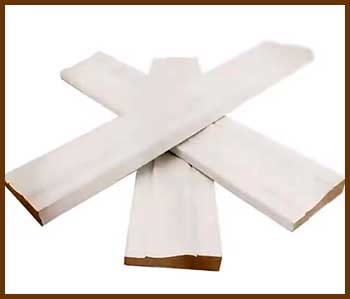
- Smooth, uniform surface ideal for painting and fine finishes The fine fibre structure accepts primer and paint evenly. Routed profiles stay sharp and look professional once finished. I regularly choose MDF for painted cabinet doors, drawer fronts, and decorative panels because the final result looks clean and consistent. High-gloss or soft-touch paints sit beautifully on the prepared surface.
- Better screw-holding and edge strength across the board Screws bite more securely even closer to the edge. Hinges stay tight longer, and joint integrity remains higher under repeated use. When I build tall wardrobes or multi-drawer units the extra holding power reduces the chance of hardware failure years later.
- Superior machining qualities for detailed work Routers, CNC machines, and hand tools produce clean cuts and precise shapes. Complex mouldings, finger pulls, and decorative edges are practical. The material holds its shape during machining, which speeds production and reduces waste from tear-out.
- Greater stiffness that reduces sagging on shelves and panels For the same thickness MDF spans farther before deflecting. Bookshelves, desk tops, and wide cabinet floors stay flatter under normal loads. That stiffness lets me design cleaner looking units with fewer intermediate supports.
- Longer service life when kept dry and properly finished In living areas, bedrooms, and dry storage spaces MDF outlasts chipboard. The denser core resists surface damage and maintains joint strength better. With good edge sealing and quality hardware a well-built MDF piece can remain serviceable for well over a decade.
Cons of MDF
- Higher cost that stretches budgets on large projects The smoother surface and better performance come at a price. Full sheets cost more than equivalent chipboard, and the difference multiplies across a complete kitchen or bedroom set. For strictly budget-driven work the extra expense is hard to justify.
- Greater weight that complicates handling and fixing Lifting and positioning large panels requires more effort or extra hands. Wall-mounted units need stronger fixings to support the added mass. Transport costs rise slightly because fewer sheets fit in a vehicle load.
- Still vulnerable to moisture despite denser structure MDF swells when wet, although more slowly than chipboard. Edges and cut surfaces must be sealed thoroughly. In high-humidity rooms the material demands the same careful finishing as chipboard; the density alone does not make it waterproof.
- Fine dust that requires better extraction and protection Cutting and sanding produce a powder that stays airborne longer. Proper masks and dust collection become essential for health and cleanliness. Workshops without adequate filtration fill with a haze that settles on every surface.
- Limited outdoor or wet-area use without special grades Standard MDF is strictly for dry interiors. Moisture-resistant grades exist but cost more and still need careful sealing. For true wet environments neither material is ideal; specialists look to other options.
Also Read: Differences Between Trex And Fiberon Decking.
Frequently Asked Questions (FAQ)
Yes for the main carcass in dry bedrooms when cost is a priority. Use thicker boards, reinforce joints, and prefer MDF or solid wood for doors and high-wear parts.
Weak edges, poor moisture resistance, rough surface without covering, tendency to sag, and shorter lifespan under heavy or damp conditions.
No. Plywood offers superior strength, screw holding, and moisture resistance. Chipboard suits lighter loads only.
Yes in most cases. MDF provides a smoother writing surface, better stiffness against sagging, and stronger edge fixing for legs and hardware.
Wrapping Up
I have laid out the real differences, strengths, and limits of chipboard and MDF so you can match the material to your budget, tools, and the conditions the finished piece will face.
You now know when the lower cost of chipboard makes sense and when the smoother surface and better holding power of MDF justify the extra spend.
Choose carefully, seal the edges, and support the spans properly, and either material can serve you well for years. The right choice today means fewer repairs and replacements tomorrow.