
I have spent considerable time analyzing Trex and Fiberon composite decking side by side because choosing the right boards for a backyard project can make or break the long-term enjoyment and cost of outdoor living.
This article walks through the real differences in materials, performance, warranties, looks, upkeep, and value so you can decide which brand fits your needs, climate, budget, and style preferences without the usual marketing noise.
| Category | Trex | Fiberon |
| Recycled Content | Up to 95% | Up to 94–95% |
| Capping | Three-sided on all lines | Three-sided on most; four-sided on premium (Paramount, Promenade, some Horizon) |
| Warranty (Residential) | 25 years (Enhance), 35 years (Select), 50 years (Transcend & higher) | 25–30 years (entry), 40 years (Sanctuary), lifetime performance + 50-year stain/fade (premium PVC & Concordia) |
| Material Cost (boards) | Roughly $5–$15 per sq ft | Roughly $4.50–$13+ per sq ft |
| Installed Cost Range | Typically $35–$65+ per sq ft | Typically $35–$60 per sq ft |
| Heat Retention | Noticeable on dark colors in full sun | Similar; four-sided caps can feel comparable |
| Availability | Very wide through big-box and dealers | Good but some lines sell out faster |
| Scratch Resistance | Strong on higher lines | Excellent on premium capped lines |
| Moisture Protection | Very good with three-sided shell | Superior on four-sided premium boards |
Key Differences Between Trex and Fiberon Decking
- Material Composition and Core Construction
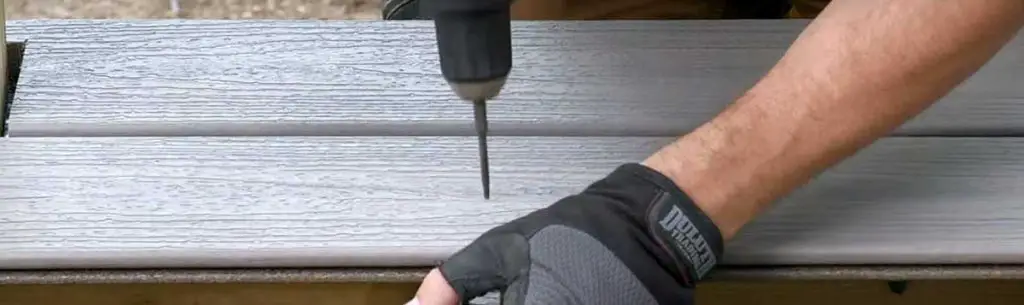
Both brands build boards from a blend of reclaimed wood fibers and recycled plastics, creating a wood-plastic composite that resists rot, insects, and splintering far better than traditional lumber.
Trex consistently hits around 95 percent recycled content across its lines, using plastic film and sawdust that would otherwise end up in landfills.
Fiberon sits right beside it at roughly 94 to 95 percent, with some collections leaning on similar reclaimed streams and an in-house recycling approach.
The real distinction shows up in how the protective outer layer is applied. Trex wraps a high-performance shell around three sides of every board in its current range.
That shell blocks moisture, stains, and UV damage on the top and edges while the underside remains open to the joists.
Fiberon matches the three-sided approach on its mid-tier and entry boards, yet several of its higher collections receive full four-sided capping.
That extra bottom layer gives Fiberon an edge in damp or shaded locations where moisture can linger underneath the deck surface. In practical terms, if your site stays wet after rain or sits under heavy tree cover, the four-sided boards can reduce the chance of any long-term core issues.
- Protective Cap Technology and Surface Performance
The cap is what keeps composite decking looking new year after year. Trex’s shell technology delivers solid resistance to fading, staining, and everyday scratches across Enhance, Select, and Transcend. Higher Trex lines feel denser and more refined underfoot.
Fiberon uses its PermaTech or similar protective surfaces; on four-sided boards the protection extends all the way around, which many installers notice when working in humid climates.
Scratch resistance tends to favor Fiberon’s premium offerings in real-world use with pets, patio furniture, and high foot traffic. Both brands still warm up in direct sunlight, especially darker colors, so lighter shades remain the smarter pick if barefoot comfort matters most during summer afternoons.
- Warranty Structure and Transferability
Warranty length is one of the clearest separating points.
Trex ties coverage tightly to the collection: Enhance carries a 25-year limited residential fade-and-stain warranty, Select moves up to 35 years, and Transcend plus the top Signature and Lineage lines reach 50 years.
Many Trex warranties allow a one-time transfer, which can help when selling a home.
Fiberon spreads coverage by collection as well. Entry-level Good Life and ArmorGuard lines usually sit at 25 to 30 years for both structural performance and stain/fade resistance. Sanctuary climbs to 40 years.
Premium PVC lines such as Paramount and Promenade, along with certain Concordia boards, offer lifetime structural performance plus a 50-year stain-and-fade guarantee.
Fiberon’s warranties are generally non-transferable, so the original purchaser keeps the coverage. Both companies require proper installation and occasional cleaning for the warranty to remain valid, and professional installation often strengthens the claim process.
- Pricing and Overall Value Position
Material prices overlap more than many expect. Trex boards commonly run from about five dollars per square foot on Enhance up to twelve or fifteen dollars on Transcend. Fiberon starts a bit lower on Good Life collections and climbs into similar premium territory.
Once labor, framing, fasteners, and railing enter the picture, total installed costs for either brand typically land between the mid-thirties and mid-sixties per square foot depending on region, deck height, and complexity.
Fiberon often edges out as the more budget-friendly option at the entry and mid levels, while Trex’s broader accessory ecosystem can add cost if you want matching railings, lighting, and fascia from the same manufacturer.
Long-term value favors whichever board matches your climate and traffic patterns, because both eliminate the annual staining and sealing cycle that wood demands.
- Color Range, Texture, and Aesthetic Realism
Trex offers a wide palette that includes rich multi-tonal options in Transcend and cleaner, more uniform tones in Enhance and Select. The grain patterns look convincingly like real wood, especially on the higher lines.
Fiberon counters with its own strong multi-chromatic finishes and highly realistic embossing; many homeowners find Fiberon’s textures particularly natural under close inspection. Neither brand locks you into a single look.
The choice usually comes down to which sample board feels right in your actual outdoor light rather than under showroom lamps.
- Availability and Installation Ecosystem
Trex maintains a clear advantage in everyday availability. Most big-box stores and independent dealers stock multiple Trex lines, and contractors know the product well. Fiberon is widely distributed yet certain popular colors or lengths can move quickly and require special order.
Both systems work with hidden fastener clips, so installation techniques feel familiar to experienced crews. Trex’s full suite of matching railing, lighting, and trim pieces simplifies a complete coordinated look if that matters to you.
Also Read: How Many Boards for Your Deck? (Instant Deck Board Calculator).
Key Features of Trex Decking
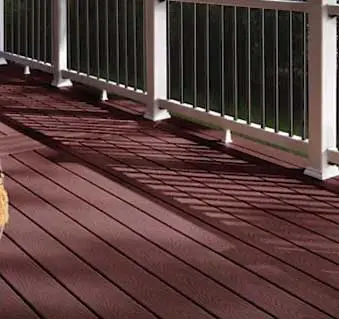
- High Recycled Content and Environmental Profile Trex builds every board with roughly 95 percent recycled and reclaimed materials. Plastic film that once wrapped consumer goods and wood fibers left over from milling operations form the core. That composition keeps boards free from the rot and insect damage that plague untreated lumber while reducing landfill pressure. The company also runs recycling programs that take back old plastic film, reinforcing the circular approach.
- Three-Sided Protective Shell Across All Lines Every current Trex board receives a durable outer shell on the top face and both long edges. This barrier resists moisture intrusion, UV fading, food stains, and mold growth when the surface is cleaned regularly. The open underside allows the board to sit cleanly on joists and still breathe.
- Tiered Product Lines for Different Budgets Enhance serves as the accessible entry point with a scalloped underside that keeps weight down and price lower. Select steps up in density and color depth. Transcend, Lineage, and Signature deliver the densest cores, deepest grain textures, and longest warranties. You can match performance and cost without jumping brands.
- Low-Maintenance Surface That Needs Only Occasional Cleaning Forget annual sanding, staining, or sealing. A mild soap-and-water wash or a gentle rinse once or twice a year removes most dirt, pollen, and spills. The shell keeps mold and mildew from taking hold when you stay on top of debris.
- Broad Accessory Compatibility Trex designs railings, post sleeves, lighting, fascia, and fasteners to work together. That system approach reduces mismatches and simplifies ordering when you want a fully finished outdoor room rather than just bare deck boards.
- Proven Fade and Stain Resistance Backed by Long Warranties Higher lines carry 50-year limited residential coverage against excessive fading and staining under normal use. The shell chemistry has been refined over years of real-world exposure in varied climates.
Pros of Trex Decking
- Established Brand Recognition and Wide Contractor Familiarity Most deck builders have installed Trex for years. That experience shortens learning curves, reduces installation surprises, and makes it easier to find someone who already knows the product details. When problems arise, local knowledge is usually only a phone call away.
- Consistent Three-Sided Protection Across Every Price Point You do not have to jump to the top collection to get a protective shell. Even Enhance boards carry the same basic technology that higher lines use, so performance remains reliable whether you stretch the budget or invest more.
- Transferable Warranty Options on Many Lines A one-time transfer can matter when you sell the house. Buyers often view the remaining warranty as a selling point, and Trex’s structure supports that conversation more readily than non-transferable policies.
- Extensive Matching Accessory Ecosystem Railings, lighting, fascia, and even outdoor furniture pieces coordinate with the deck boards. The result feels intentional rather than pieced together from multiple manufacturers.
- Strong Performance in a Wide Range of Climates The shell and core chemistry hold up from humid southern summers to freeze-thaw northern winters when installed correctly. Fade resistance on Transcend-level boards remains impressive after years of full sun exposure.
- Clear Product Ladder That Matches Budget to Performance You can start with Enhance for a solid, low-maintenance deck or step up to Transcend for denser boards and longer coverage. The progression feels logical rather than forced.
Cons of Trex Decking
- Higher Average Material Cost Compared with Entry Fiberon Lines Enhance sits in a competitive range, yet mid and premium Trex boards often price above comparable Fiberon options. The difference multiplies across a large deck surface.
- Three-Sided Capping Leaves the Underside Exposed In consistently damp or poorly ventilated locations the open bottom can allow moisture contact with the core over many years. Four-sided alternatives reduce that exposure.
- Noticeable Heat Build-Up on Dark Colors Like most composites, dark Trex boards can become uncomfortable under bare feet in peak summer sun. Lighter colors mitigate the issue but limit the design palette if you prefer deep tones.
- Some Entry Boards Feel Less Dense Underfoot Enhance’s scalloped profile keeps weight and cost down, yet the boards can feel slightly less substantial than solid-core premium options when you walk across them.
- Warranty Length Scales Directly with Price The longest coverage requires the highest investment. Entry-level buyers receive solid but shorter protection.
Also Read: My Experience With Massaranduba Decking.
Key Features of Fiberon Decking
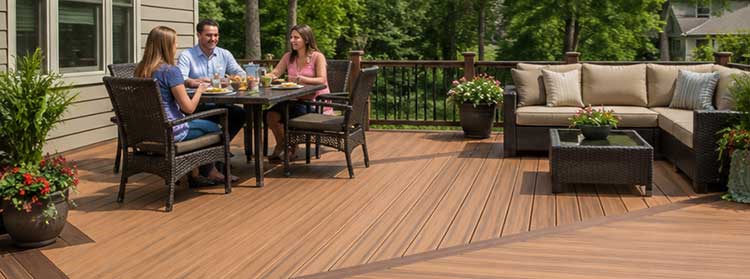
- Competitive Recycled Content and Manufacturing Approach Fiberon incorporates up to 94 or 95 percent recycled materials in many collections. The company operates its own recycling efforts that keep plastic waste out of landfills. The resulting boards deliver the same core resistance to rot, insects, and splintering that Trex provides.
- Four-Sided Capping on Premium Collections Paramount, Promenade, and certain Horizon boards receive a protective layer on all four sides. That full wrap offers extra defense against moisture rising from below, making these lines especially suitable for ground-level decks, pool surrounds, or shaded, damp sites.
- Realistic Multi-Tonal Colors and Deep Grain Embossing Fiberon emphasizes natural-looking color variation and embossed textures that many people describe as among the most wood-like in the composite category. Collections span warm earth tones, cool grays, and richer browns so you can match existing architecture or create contrast.
- Strong Scratch and Stain Resistance on Higher Lines The PermaTech-style surfaces stand up well to furniture movement, pet claws, and daily foot traffic. Spills wipe away more easily than on uncapped composites, and the warranty backs the claim against permanent staining when proper care is followed.
- Flexible Warranty Ladder That Reaches Lifetime Structural Coverage Entry collections start at 25 or 30 years. Sanctuary moves to 40 years. Premium PVC and select Concordia lines deliver lifetime structural performance plus 50-year stain-and-fade protection. That structure lets you buy exactly the coverage level you need.
- Lightweight Options and Straightforward Fastener Systems Some Fiberon boards feel lighter on the job site, and the hidden-clip systems install cleanly. The combination helps keep labor time reasonable whether a professional crew or an experienced DIYer handles the work.
Pros of Fiberon Decking
- Often Lower Entry and Mid-Level Pricing Good Life and similar collections frequently undercut Trex Enhance and Select on material cost, stretching a fixed budget further without sacrificing core composite benefits.
- Four-Sided Capping Available on Premium Boards Full encapsulation provides measurable extra protection in moist climates, ground-level installations, and areas with limited airflow under the deck.
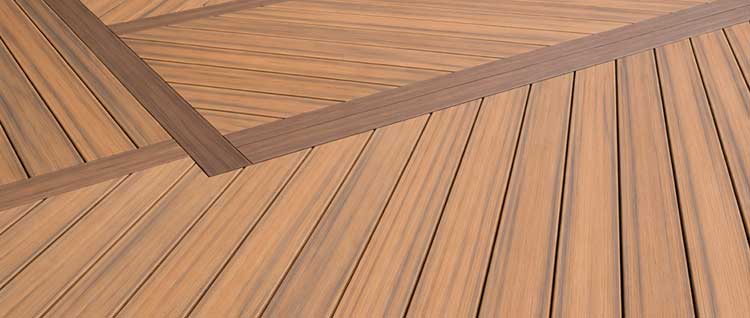
- Highly Realistic Surface Textures and Color Blends Many homeowners and installers rate Fiberon’s embossing and multi-tonal finishes among the most natural-looking composites available. The boards can fool casual observers into thinking they are looking at real wood.
- Competitive or Superior Scratch Resistance on Higher Lines Furniture legs, pet traffic, and heavy use leave fewer lasting marks on the tougher capped surfaces, reducing the visual wear that can appear on softer composites over time.
- Warranty Options That Reach Lifetime Structural Coverage Premium lines deliver peace of mind that extends beyond the typical 25- or 50-year windows, especially valuable for owners who plan to stay in the home for decades.
- Good Balance of Weight and Strength for Installation Certain collections handle easily on the job site while still meeting structural span requirements, which can speed up the build.
Cons of Fiberon Decking
- Availability Can Fluctuate on Popular Colors and Lengths High demand sometimes empties shelves, forcing special orders or substitutions that delay projects. Trex’s broader stocking network reduces that friction.
- Non-Transferable Warranties on Most Collections When the home sells, the remaining coverage stays with the original buyer. That limitation can matter in active real-estate markets.
- Entry-Level Boards May Show Scratches More Readily Lower collections trade some surface hardness for price, so high-traffic or pet-heavy decks benefit from moving up the line.
- Accessory Ecosystem Is Less Extensive Than Trex Matching railings and lighting exist, yet the range feels narrower. Coordinating a complete look sometimes requires mixing brands.
- Heat Retention Remains a Factor on Dark Boards Four-sided capping does not eliminate the tendency of dark composites to warm up in full sun. Light colors still perform best for barefoot comfort.
Also Read: My Experience With Deckorators Venture Decking.
Frequently Asked Questions (FAQ)
Several strong competitors exist, including Fiberon and others. “Better” depends on your priorities around price, warranty length, moisture protection, and local availability rather than a single universal ranking.
Higher average cost than some Fiberon lines, three-sided rather than four-sided capping, and noticeable heat on dark colors in full sun are the most common drawbacks homeowners mention.
No single brand wins every category. Trex leads in availability and accessory range; Fiberon often leads in entry pricing and four-sided protection. Match the brand to your specific site and budget.
Yes. Fiberon delivers solid durability, realistic looks, competitive pricing, and strong warranties on its higher collections, making it a reliable choice for many residential projects.
Final Thoughts
After weighing the construction details, real-world performance, warranties, and costs, I see both Trex and Fiberon as capable long-term solutions that free you from the constant upkeep of wood.
You now have the side-by-side facts to match either brand to your climate, traffic patterns, and budget. Choose the boards that feel right under your feet and fit the way you actually use the outdoor space, then enjoy the years of low-maintenance living that follow.