
I picked up my first Blackstone a few years back and have been hooked on outdoor flat-top cooking ever since. When the Omnivore models hit the scene, I had to try one side by side with my trusty original setup.
In this article, I share my real-world experiences comparing the two so you can decide which fits your cooking style best.
Whether you are firing up breakfast for the family or searing steaks for a crowd, understanding these differences helps you get the most out of your griddle time.
| Feature | Blackstone Original | Blackstone Omnivore |
| BTU Output | Typically 60,000+ | Around 38,000 (more efficient) |
| Heat Distribution | Good, but can have hot spots | More even across the surface |
| Warp Resistance | Standard plate, prone over time | Reinforced X-brace design |
| Wind Protection | Often needs add-on guards | Built-in wind guards |
| Fuel Efficiency | Uses more propane | Up to 35% more efficient |
| Preheat & Recovery | Solid performance | Faster preheat and heat recovery |
| Weight of Plate | Heavier | Lighter by about 15 lbs |
| Seasoning & Durability | Excellent with care | Seasons better, less warping |
| Best For | High-heat searing fans | Everyday efficiency and consistency |
Key Differences Between Blackstone Omnivore And Original

- Cooking Surface Design and Construction: The original Blackstone griddles use a traditional flat top that gets the job done but can develop slight warping after repeated high-heat cycles and temperature swings. I noticed this on my older unit after a couple of seasons, especially when cooking frozen items straight from the freezer. The Omnivore changes the game with its reinforced design featuring an X-brace underneath. This keeps the plate flatter longer, which means consistent contact for your food and fewer frustrating low spots where heat pools unevenly.
- Heat Management and Efficiency: Original models crank out higher BTUs, which feels powerful when you first turn them on. But in practice, I found myself adjusting burners more often on windy days because heat escaped easily. The Omnivore runs on fewer BTUs yet delivers comparable or better sustained temperatures thanks to better insulation and heat direction. It preheated to 350 degrees noticeably quicker in my tests, and the recovery time after throwing on a load of cold burgers was impressive. You end up using less propane over a long cooking session, which adds up when you griddle several times a week.
- Wind Resistance: Living in an area with occasional breezes, this became a big deal for me. Original griddles lose heat around the edges without extra accessories. Omnivore plates have integrated wind guards built right into the design—the side aprons extend lower and channel heat back onto the cooking surface while keeping side shelves cooler. No more chasing flames or uneven edges on gusty evenings.
- Overall Build and Portability: The Omnivore plate is lighter, making the whole unit easier to move or store if needed. My original 36-inch felt sturdy but bulky. Both have solid frames, but the newer design feels more refined without sacrificing toughness.
- Fuel Consumption in Real Use: After tracking propane use over multiple cooks, the Omnivore consistently lasted longer on the same tank. Great for those long tailgate sessions or weekend camping trips where refilling isn’t convenient.
I could keep going—these differences show up in everyday cooking more than you might expect.
Also Read: Comparison of Blackstone 1866 And 1932 Griddles.
Key Features of the Original Blackstone Griddle
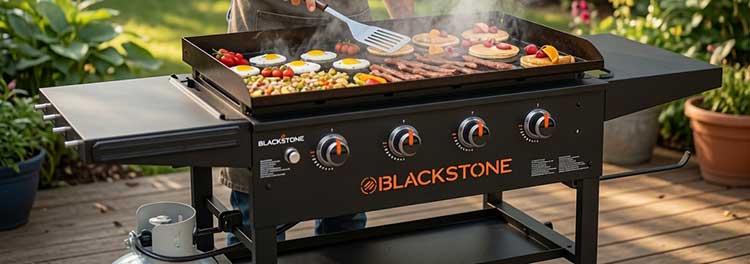
- High BTU Power: Delivers strong, direct heat that excels at quick searing. When I want a perfect crust on smash burgers, the original still brings that intense firepower.
- Proven Reliability: Thousands of users, including me, have put these through years of heavy use. With proper seasoning, the surface develops a great non-stick patina.
- Simple and Straightforward Design: Easy to understand controls and familiar setup. No learning curve if you are coming from basic outdoor cooking gear.
- Versatile Cooking Space: Available in multiple sizes like 17″, 22″, 28″, and 36″. Plenty of room for eggs, bacon, hash browns, and veggies all at once.
- Easy Grease Management: The rear grease trap works well and makes cleanup less messy than expected.
- Accessory Ecosystem: Tons of compatible covers, side tables, and tools available that fit perfectly.
- Affordable Entry Point: Often found at good prices, making it accessible for first-time buyers.
- Robust Frame: Holds up well outdoors and feels stable even when fully loaded with food.
- Quick Heat-Up for High Temps: Can reach searing levels fast when conditions are right.
- Community Favorite: Huge online following with recipes and tips tailored specifically to the classic models.
The original still shines for cooks who prioritize raw power and don’t mind monitoring propane levels a bit more closely.
Pros And Cons of the Original Blackstone
Pros:
- Delivers powerful high-heat searing that many cooks swear by for steaks and burgers, giving you that intense sizzle and crust formation right away which is hard to beat for certain recipes.
- Widely available and often more budget-friendly upfront, so you can get started without a big investment and still enjoy quality outdoor cooking.
- Familiar design that millions already know and love, making it simple to jump in and start creating meals without needing to learn new techniques.
- Strong aftermarket support and replacement parts, meaning it is easy to maintain and repair over many seasons of use.
- Can achieve very high surface temperatures in ideal conditions, perfect for those moments when you need maximum heat for quick cooking tasks.
- Durable frame that stands up to regular use and feels solid even during busy cooking sessions with lots of movement around it.
- Great for users who enjoy the classic griddle experience and want that traditional feel with proven performance.
- Simpler maintenance routine for some, as the straightforward setup requires minimal adjustments once seasoned properly.
- Excellent for large-volume cooking when max BTUs are needed, allowing you to handle big crowds or multiple dishes efficiently.
- Proven track record with years of real-world feedback from a huge community of enthusiasts.
Cons:
- Higher fuel consumption means more frequent propane changes, which can become noticeable during longer cooks or when you use it often.
- More susceptible to wind affecting heat consistency, leading to uneven results unless you add extra protections.
- Prone to some warping over extended heavy use, which can create slight dips that affect how food cooks uniformly.
- Heat distribution can show hot spots, requiring more burner adjustments and attention to move food around for best outcomes.
- Heavier plate makes moving the unit slightly more effort, especially if you need to reposition it frequently.
- Side shelves can get very hot without modifications, limiting their use as prep space during active cooking.
- Slower recovery times after loading cold ingredients, which can slow down your workflow when preparing large batches.
- May need extra wind guards purchased separately, adding to the overall cost and setup time.
- Less efficient overall for long cooking sessions, as it burns through fuel faster than necessary.
- Older design feels dated compared to newer innovations, particularly in terms of heat retention and everyday practicality.
In my use, the original never let me down for big family cooks, but I did notice those efficiency drawbacks more as time went on.
Also Read: Top Alternatives To Blackstone Griddle.
Key Features of the Blackstone Omnivore
- Patented Omnivore Plate Technology: The star of the show—optimized for uniform heat while using less fuel. I love how evenly my pancakes cook from center to edge now.
- Built-in Wind Guards: Transforms outdoor cooking in variable weather. Heat stays put, and side tables don’t get scorching hot.
- Warp Control with X-Brace: Keeps the surface flatter for better performance over time and with thermal shocks like adding cold food.
- Faster Preheat and Recovery: Gets ready quicker and bounces back when you add ingredients, keeping your cooking flow smooth.
- Fuel Efficiency: Saves money on propane and reduces trips to refill tanks—practical for frequent users.
- Lighter Plate Design: Easier handling without losing durability.
- Excellent Seasoning Performance: Develops and maintains seasoning beautifully, leading to better non-stick results faster in my experience.
- Independent Burner Zones: Multiple zones give precise control, perfect for different foods at different temperatures simultaneously.
- Modern Updates: Often paired with nicer hoods, shelves, and accessories in newer bundles.
- Versatility for All Cooks: Handles everything from delicate eggs to high-heat stir fries with more consistency.
These features make the Omnivore feel like an evolution that addresses common pain points from the original models.
Pros And Cons of the Blackstone Omnivore

Pros:
- Superior fuel efficiency saves money on propane and reduces hassle, letting you enjoy more cooks per tank without constant refills.
- More even heat across the entire surface for consistent results, so every part of your meal turns out just right without constant monitoring.
- Built-in wind protection makes it reliable outdoors even on breezy days, maintaining steady temperatures where the original might struggle.
- Reduced warping keeps performance strong season after season, providing a flatter cooking surface that improves with time and proper care.
- Faster preheat and recovery means less waiting around hungry and smoother transitions between different foods during a session.
- Lighter weight improves portability, making it easier to set up, move, or store compared to the heavier traditional plates.
- Better overall heat management for versatile cooking, handling everything from low and slow to quick sears with greater control.
- Seasons nicely and maintains non-stick properties well, resulting in easier food release and cleanup after each use.
- Modern design with thoughtful features like improved guards enhances the whole cooking experience and protects surrounding areas.
- Great for both beginners and experienced griddlers, offering reliability that builds confidence no matter your skill level.
- Holds temperature steadily with less fiddling, allowing you to focus more on the food and less on tweaking knobs.
- Environmentally friendlier due to lower propane use, which aligns well with conscious outdoor enthusiasts.
- Pairs well with hoods and covers for protection, keeping your investment clean and ready for the next cook.
- Impressive performance even on lower BTU settings, proving you do not need maximum power for excellent results.
Also Read: Differences Between Blackstone Iron Forged And Omnivore Griddle.
Cons:
- May not reach quite the same peak searing temps as high-BTU originals in some tests, though it still performs very well for most recipes.
- Newer technology means fewer long-term user reports initially, so real-world durability over many years is still being proven by early adopters.
- Sometimes priced a bit higher depending on the bundle, which might require budgeting if you are comparing entry-level options.
- Learning curve if you are used to cranking originals on high, as the efficient design responds differently and rewards technique adjustments.
- Availability can vary by retailer and size, making it slightly harder to find the exact configuration you want immediately.
- Some users report needing to adjust cooking techniques slightly for optimal results, especially when transitioning from older models.
- Not as “raw power” focused if that is your main priority, so dedicated high-heat fans might miss the extra intensity at times.
- Certain bundles include extras that increase cost, though they often add real value for frequent users.
- Requires proper initial seasoning like any Blackstone, with no shortcuts for best performance.
- Might feel over-engineered for very casual occasional users who only fire it up a few times a year.
I found the pros far outweighed the cons in daily use, especially for efficiency and consistency.
My Experiences Cooking on Both
When I first switched to the Omnivore, I cooked the same meals back-to-back. Breakfast sandwiches came out more evenly toasted.
Stir-fried veggies stayed crisp without burning in spots. Even smash burgers developed great crusts, though I adjusted my timing a little. The original still excels when I want maximum sizzle quickly, but the Omnivore makes everyday meals more enjoyable with less babysitting.
Cleanup feels similar on both, but the flatter Omnivore surface wipes down easier. Seasoning sticks better on the newer plate too. For family gatherings, the even heat means I am not rotating food as much.
Which One Should You Choose?
If you cook frequently and value efficiency, consistency, and convenience, I recommend the Omnivore. For pure high-output power on a budget or if you already own add-ons for the original, stick with that. Both are fantastic tools that elevate outdoor cooking.
I have enjoyed both and keep the original for specific high-heat tasks while using the Omnivore as my daily driver. You really cannot go wrong, but knowing these details helps set expectations.
Also Read: Comparison of Blackstone 1554 And 1866 Griddles.
Frequently Asked Questions (FAQ)
Yes, for most users it offers better efficiency, even heating, and durability thanks to its design improvements.
It is Blackstone’s upgraded griddle plate technology with features like wind guards and reinforced bracing for superior performance.
Many Costco Blackstone models feature the Omnivore plate technology, often bundled with hoods and covers.
Iron Forged refers to premium models that typically include the Omnivore plate along with upgraded styling and materials, while Omnivore primarily describes the specialized griddle top itself.
Final Thoughts
After all these cooks and comparisons, I believe the Omnivore represents a smart step forward for most backyard chefs like you and me. It addresses real frustrations with the originals while keeping the fun, versatile cooking we all love.
Give one a try and see how it transforms your outdoor meals—you will probably find yourself firing it up more often.