I have spent years comparing window styles for different homes, and the choice between awning and hopper windows often hinges on weather, space, and daily use.
You might be weighing options for a basement, bathroom, or high wall placement. This article compares them side by side with detailed features, pros, cons, and differences so you can pick the right one for your project.
| Feature | Awning Window | Hopper Window |
| Hinge Location | Top of the frame | Bottom of the frame |
| Opening Direction | Outward from the bottom | Inward from the top |
| Rain Protection When Open | Excellent; sash acts as canopy | Limited; must close during rain |
| Best Typical Placement | High walls, above counters, bathrooms | Basements, bathrooms, tight exteriors |
| Space Needed | Exterior clearance | Interior clearance |
| Cleaning Ease | Harder for exterior glass | Easier; both sides from inside |
| Ventilation Style | Controlled, good for steam/moisture | Strong air exchange in compact spaces |
| Security | Good due to small opening and angle | Strong; inward tilt resists prying |
| Energy Seal | Tight compression seal | Tight compression seal |
| Typical Cost Range | Often slightly higher | Often lower for standard sizes |
Key Differences Between Awning and Hopper Windows
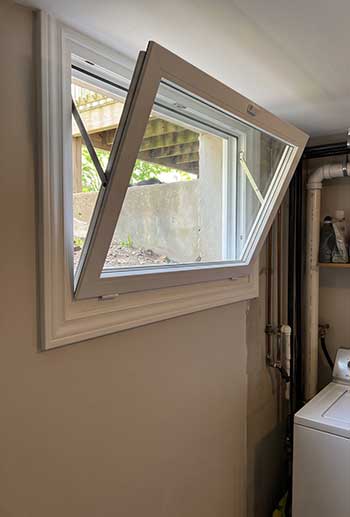
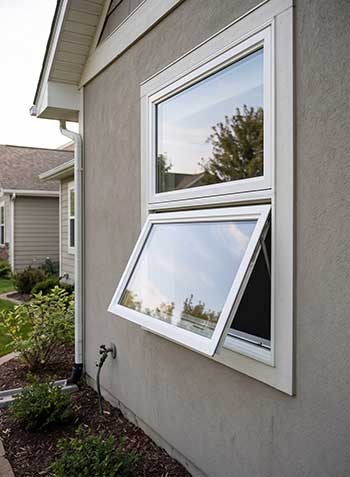
- Opening direction and space demands: Awning windows require clear space outside the wall so the sash can project outward without hitting a deck railing, walkway, or nearby structure. Hopper windows require clear space inside so the sash can tilt without colliding with a sink, toilet, shelf, or furniture. In one project I reviewed, an awning over a narrow path created a head-knock risk, while a hopper in a crowded basement bathroom needed the sill kept empty. You choose based on which side of the wall has more free room.
- Rain and weather performance: An open awning sash sheds light rain because the glass slopes outward and water runs off the exterior face. A hopper left open will funnel rain and wind-driven moisture straight into the room. In climates with frequent summer showers I have advised clients to favor awnings for rooms they want to ventilate regularly. Hoppers perform better in dusty or windy areas where the inward angle can help keep debris from blowing inside, though you still close them when rain starts.
- Cleaning and maintenance access: With an awning you can clean the interior glass easily, yet the exterior face usually requires a ladder or long-handled tool, especially on upper floors. A hopper lets you wipe both the interior and exterior glass from inside the room once the sash is tilted open. Homeowners who dislike outdoor cleaning or who have high-mounted windows often prefer the hopper for that reason alone. Hardware on both styles needs occasional lubrication, but the crank arms on awnings can see more wear if the window is operated daily.
- Placement flexibility and privacy: Awnings excel when mounted high on a wall: they admit light and air while keeping sightlines blocked for privacy. Hoppers sit more naturally at lower heights or in basements where the inward swing does not obstruct outdoor areas. In bathrooms both styles work, yet the hopper’s inward motion can interfere with curtains or blinds more readily. I have noted that awnings placed above eye level give better passive privacy without extra treatments.
- Airflow patterns and ventilation control: Awning windows direct air upward, which helps clear steam and odors in kitchens or bathrooms. Hopper windows bring air in more directly and can achieve a wider effective opening relative to their size in tight spaces. Neither opens as fully as a casement, yet the controlled angle on both lets you fine-tune the breeze. In humid climates the ability to leave an awning partially open matters more than raw air volume.
- Security and entry resistance: Both styles are harder to force open from outside than many sliding or double-hung units because of the compression seal and the way the sash seats against the frame. The inward tilt of a hopper reduces leverage for someone trying to pry it, while the outward angle and smaller typical opening of an awning also limit easy entry. Neither is an ideal emergency exit in most standard sizes, so check local codes if the room requires egress.
Also Read: Is PGT Windows And Doors Any Good?
Key Features of Awning Windows
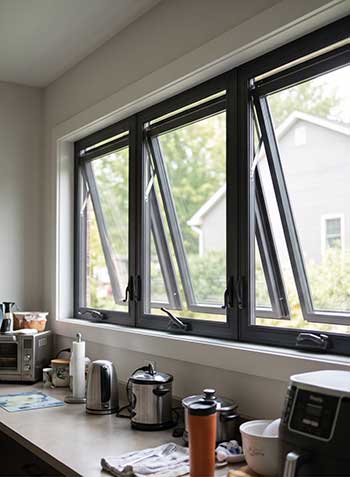
- Top-hinged crank operation: The operator handle sits at the bottom of the frame and uses a folding arm or similar mechanism to push the bottom of the sash outward. This keeps the hardware inside the room and makes the window easy to open even when it is mounted above a counter or high on the wall. Quality operators last longer when the window is not forced beyond its designed angle.
- Rain-shedding canopy effect: When the sash is open the glass forms a shallow roof over the opening. Light rain runs down the outside face instead of dripping onto the interior sill. This single feature is why many people choose awnings for coastal or rainy regions and for rooms they want to ventilate overnight.
- Compression weather seal: When locked the sash presses firmly against weatherstripping on all four sides. The result is lower air leakage than most sliding windows of similar glass quality. Double- or triple-pane glass with low-e coatings further improves the thermal performance.
- High-wall placement capability: Because the window does not swing into the room and the handle is low, awnings work well above showers, kitchen counters, or near the ceiling. The elevated position admits light while preserving privacy and wall space below for cabinets or furniture.
- Multi-point locking options: Many models include locks that engage at more than one point along the frame. Combined with the angled opening, this improves resistance to forced entry compared with single-latch sliding units.
- Compact and stackable sizing: Typical residential awnings stay modest in height so the hinges can support the weight. Wider openings are handled by ganging two or three units side by side or stacking them under a fixed lite. This modular approach keeps the look clean while adding ventilation exactly where needed.
Also Read: Is RELIABILT Replacement Windows Any Good?
Pros of Awning Windows
- Reliable ventilation in light rain: You can leave the window partially open during a summer shower and still keep the interior dry. In my experience this is the single most appreciated feature for homeowners in humid or rainy climates who want fresh air without constant monitoring.
- Excellent energy performance from the seal: The compression fit cuts air infiltration more effectively than many sliding designs. Combined with low-e glass this helps stabilize indoor temperatures and can reduce heating and cooling demand in the rooms where the windows are installed.
- Privacy with high placement: Mounting the window higher on the wall lets light enter while blocking direct views from outside. Bathrooms and bedrooms benefit without the need for heavy coverings that reduce airflow.
- Security advantages of the angled sash: The limited opening size and the way the sash sits make it difficult for someone outside to reach the latch or force the unit. Multi-point locks add another layer of resistance.
- Clean aesthetic and unobstructed view when closed: Without a center meeting rail the closed window looks more like a fixed lite. When open the view remains relatively clear compared with windows that have thick mid-rails.
- Flexible pairing with other windows: Awnings stack cleanly above or beside fixed or casement units. This lets you design a window wall that mixes light, ventilation, and style without forcing every opening to be the same type.
Cons of Awning Windows
- Exterior cleaning difficulty: Reaching the outside glass is inconvenient on upper floors or high placements. Many owners end up hiring professionals or using special tools, which adds ongoing effort and cost.
- Need for exterior clearance: An open sash projects outward and can obstruct walkways, decks, or landscaping. You must plan the location carefully or the window becomes a hazard or annoyance.
- Limited maximum opening and airflow volume: Most awnings open to roughly 45 degrees or less. The resulting air exchange is useful for steady ventilation but smaller than a fully open casement or sliding window of comparable size.
- Rarely suitable as an egress window: Standard sizes usually fail to provide the required clear opening dimensions once the sash is open, because the glass itself occupies part of the escape path. Check local codes before relying on them for bedrooms or basements that need emergency exits.
- Potential hardware wear on the operator: Daily use can stress the crank arm and hinges over many years. Lower-quality operators may need replacement sooner than the frame itself, especially in coastal salt air.
- Size constraints: Large single awnings are uncommon because the top hinges must support the weight of the glass. Wide openings are solved by multiple units, which increases cost and frame lines.
Key Features of Hopper Windows
- Bottom-hinged inward tilt: The sash pivots on hinges at the bottom edge and the top edge moves into the room. A simple handle or crank at the top or bottom controls the angle. The motion is intuitive once you know the window opens toward you rather than away.
- Interior-accessible glass: Tilting the sash inward exposes both faces of the glass to the room. You can clean the exterior side without going outside or using extension tools, which is a practical advantage in basements or second-story locations where outdoor access is awkward.
- Strong compression seal when closed: Like awnings, quality hoppers seat tightly against the frame. The seal reduces drafts and helps the window perform well with modern insulating glass. Some older or lower-cost models rely more on weatherstripping, so hardware quality matters.
- Compact footprint for tight spaces: Because nothing projects outside the wall, hoppers fit where an outward-swinging sash would hit a foundation, walkway, or neighboring structure. They are common in basement window wells and in narrow bathrooms where every inch of exterior clearance counts.
- Controlled debris and dust resistance: The inward angle can help shed some outdoor dust and debris away from the opening when the window is cracked. This historical advantage still helps in areas with unpaved roads or high pollen loads, though screens remain necessary for insects.
- Versatile small-room applications: Standard hoppers come in wide, relatively short proportions that suit above-tub walls, laundry rooms, and utility spaces. They can also serve as transom-style units above doors or other windows when a small operable section is needed high on the wall.
Also Read: Comparison of Ply Gem And Milgard Windows.
Pros of Hopper Windows
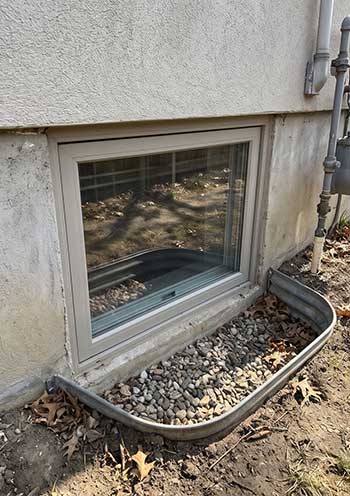
- Easy cleaning from inside the room: Both sides of the glass are reachable once the sash tilts inward. This is a major convenience for basement windows, high-mounted units, or any location where outdoor access is limited or unsafe.
- Ideal for spaces with restricted outdoor clearance: Nothing swings outside the wall, so hoppers work next to foundations, in narrow wells, or along property lines where an awning would interfere.
- Solid security from the inward design: Prying the sash from outside is more difficult because the tilt direction works against external force. Combined with a good lock this makes hoppers suitable for ground-level applications when properly secured.
- Strong energy seal in quality models: Compression seating reduces drafts similarly to awnings. Smaller overall size also limits the area available for heat transfer, which can help in colder climates.
- Good ventilation in compact rooms: Even a modest hopper can exchange a useful volume of air because the entire sash moves. In bathrooms and laundry rooms this helps control humidity without needing a large opening.
- Often lower cost for standard sizes: Simpler hardware and smaller typical dimensions keep many hopper units more affordable than comparable awnings, especially in vinyl frames.
Cons of Hopper Windows
- Cannot remain open during rain: Water will enter the room if the window is left open in wet weather. You must close it at the first sign of rain, which reduces the “set and forget” ventilation that awnings provide.
- Requires clear interior space: The sash tilts into the room and can hit furniture, fixtures, or people if the area below or in front of the window is not kept free. In small bathrooms this forces careful layout planning.
- Limited size range: Hoppers are generally offered in modest dimensions. Very large units are rare, so they are better as supplemental windows than as the primary glazing for a big room.
- Potential for debris or dust entry: When open the inward angle can allow some outdoor particles to settle on the sill or enter the room. Screens help, yet the design is less protective against heavy dust than a closed or outward-projecting sash.
- May interfere with window treatments: Blinds and curtains can catch on the tilting sash. Many owners use films, shades mounted outside the swing path, or simply leave the window uncovered.
- Not typically an egress solution: Like awnings, standard hoppers rarely meet clear-opening rules for emergency escape because of size and the way the sash occupies space when open. Verify requirements for any sleeping room.
Best Uses and Placement Considerations
Awning windows shine in bathrooms, kitchens above counters, laundry rooms, and high on exterior walls where privacy and rain-resistant ventilation matter.
They also work as companions to fixed windows in living areas when you want a small operable section without sacrificing the main view.
Hopper windows are the practical choice for basements, ground-level walls with limited exterior space, and tight bathrooms or utility rooms. In both cases measure the swing path carefully before ordering so the open sash does not create a hazard or block access.
Energy Efficiency, Security, and Long-Term Performance
Both styles benefit from modern insulating glass, low-e coatings, and multi-chamber vinyl or fiberglass frames.
The compression seal is the shared advantage over sliding windows, which rely on brush or contact seals that allow more air leakage. Security is solid for residential use when quality locks are specified, though neither style replaces a dedicated egress window where codes require one.
Hardware quality affects longevity more than frame material in many cases; a well-made operator will outlast a cheap one regardless of whether the window is an awning or hopper.
Which Window Fits Your Needs?
If your priority is leaving a window open during light rain and you have exterior clearance, an awning is usually the better match. If outdoor space is tight, cleaning access is important, and you can manage closing the window when rain starts, a hopper often makes more sense.
In many homes both styles appear together: awnings high on the walls and hoppers in the basement. Measure the actual opening, note the swing direction that works, and match the window to the room’s weather exposure and daily use.
Also Read: Comparison of Milgard And Simonton Windows.
Frequently Asked Questions (FAQ)
They are harder to clean on the exterior, need outdoor clearance when open, offer limited airflow volume, and rarely meet egress requirements in standard sizes.
Advantages include easy interior cleaning, suitability for tight exterior spaces, and strong seals. Disadvantages include the inability to stay open in rain, the need for interior clearance, and limited size options.
Yes, they are a solid choice for basements, bathrooms, and locations where outdoor swing space is limited and easy cleaning is a priority.
Awnings offer better rain protection when open, tighter seals, and higher security. Sliding windows provide wider openings, simpler operation with no exterior projection, and often lower cost, but they seal less tightly and cannot stay open in rain.
Wrapping Up
Choosing between awning and hopper windows comes down to matching the opening direction and weather behavior to your specific rooms and climate.
You now have a clear side-by-side view of the features, differences, advantages, and limitations so you can select the style that will perform best in your home.
I have found that the right choice reduces everyday friction and improves comfort once the windows are installed.