
I decided to put together this article after seeing too many homeowners struggle with unexpected issues on their Alside ASCEND siding jobs.
My goal is simple: walk you through the real problems people run into with this composite cladding so you can spot them early, understand why they happen, and decide if the product still fits your home.
I keep the focus practical and based on patterns that keep showing up in installations and homeowner experiences.
Common Problems Associated With Alside ASCEND Siding
- Installation Errors Leading to Waviness and Gaps
- Oil Canning on Corner Posts and Panels
- Heat-Related Deformation in Darker Colors
- Limited or Inferior Trim and Accessory Options
- Substrate Preparation Challenges
- Difficulties with Warranty Claims
- Moisture Intrusion Risks from Poor Seams
- Long-Term Aesthetic Imperfections
Installation Errors Leading to Waviness and Gaps
When I first started looking into Alside ASCEND siding, the product literature made the install sound almost foolproof.
Lightweight panels, self-aligning stack lock, no caulking required. On paper it reads like a dream for crews. In practice I keep seeing the same set of headaches surface once the job is finished and the homeowner steps back to inspect.
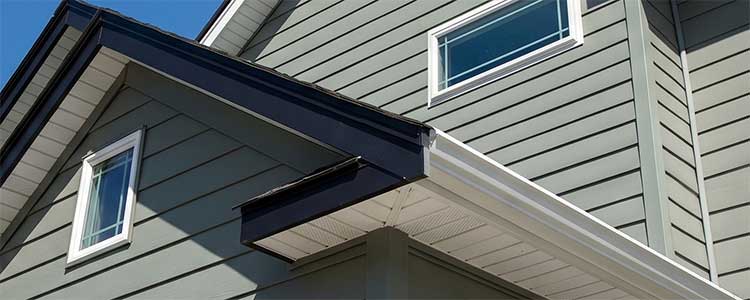
The most common complaint is waviness running across the face of the walls. The panels are supposed to hang true and create clean shadow lines, yet many finished walls show subtle waves or dips that catch the light at certain times of day.
That waviness usually traces back to the substrate not being flat enough or the crew not starting the first course perfectly level. Because each panel locks into the one below it, any small error multiplies as the wall climbs.
You end up with a surface that looks uneven even though every individual piece was hung according to the nail schedule.
Gaps at the overlap points show up just as often. The instructions call for cutting the underlap flush to the foam so the foam backs butt tight. When crews skip that step or rush the cut, you get visible air gaps under the joints.
Those gaps do more than look bad. They reduce the insulating value the foam core is supposed to deliver and create tiny channels where wind-driven rain can work its way behind the cladding. I have seen homeowners point out these gaps only weeks after the job, and the installer is already gone.
Trim pieces that refuse to sit flat add another layer of frustration. Outside corners and J-channels sometimes end up bent or twisted because the wall plane is not true or the accessories themselves arrive with slight manufacturing variation.
Once they are nailed, the distortion is locked in. Fixing it later means pulling sections of siding, which is never a clean process with a locking system.
From an analytical standpoint these issues are almost always installation-driven rather than pure product defects. The cladding itself is rigid enough that it reveals every shortcut the crew takes.
That rigidity is marketed as a strength, yet it becomes a liability when the crew lacks experience with the specific locking mechanism or when the house has older walls that are less than perfectly plane.
If you are hiring someone for an Alside ASCEND job, I recommend watching the first few courses go up and confirming the underlaps are cut flush before the walls get too high. Catching the problem early is far cheaper than living with wavy walls for the life of the house.
Also Read: Comparison of HardiePlank And Vinyl Siding.
Oil Canning on Corner Posts and Panels
Oil canning is one of those terms that sounds technical until you see it on your own house. The flat surfaces of the cladding or the corner posts develop visible ripples or waves that move with the temperature.
I have watched photos and video after video of brand-new Alside ASCEND installations showing this exact pattern, especially on the outside corner posts.
The posts seem particularly prone to the problem. Installers report that the posts look perfect in the morning and by afternoon, once the sun hits them, the oil canning appears. Darker colors make the effect more noticeable because they absorb more heat and expand more.
Even when the posts are nailed with the recommended expansion room, the waviness still shows up. Some crews have had the manufacturer send replacement posts multiple times and still end up with the same result once the heat builds.
On the main panels the oil canning is less common but still appears, usually in wide flat sections that face direct sun for long stretches of the day. The composite skin is thin enough that internal stresses from temperature swings can create the same elastic buckling you see in light-gauge metal.
The foam core is supposed to stabilize the panel, yet it does not completely eliminate the visual distortion under extreme heat differential between the sunny face and the shaded side of the same wall.
I find this problem especially frustrating because it is mostly cosmetic. The siding is not falling off or leaking, yet the wavy look undermines the premium appearance the product promises.
Homeowners who paid for the deep shadow lines and wood-like grain suddenly have a surface that looks less refined than standard vinyl in certain light.
From a practical angle the best prevention is careful color selection. Lighter colors expand less and hide the oil canning better. If you already have the darker tones installed, the options shrink to living with it or chasing warranty replacements that may or may not stay flat once the sun returns.
Heat-Related Deformation in Darker Colors
I have seen enough documented cases of panel failure on dark Alside ASCEND colors that I now treat heat performance as a real limitation rather than a rare edge case.
The product literature talks about fade resistance even on dark colors and heat resistance from the glass particles in the compound.
Yet real-world installations keep producing panels that bulge, distort, or develop permanent set after prolonged exposure to intense sun.
The warranty itself contains a clear exclusion for damage caused by heat buildup greater than 160 degrees Fahrenheit on the surface.
Reflection from nearby windows, metal roofs, or even light-colored concrete can push surface temperatures past that threshold on dark panels.
Once that happens the polymer skin can soften just enough to lose its original shape.
I have reviewed cases where entire sections of dark Riviera Dusk or similar deep tones had to be removed because the panels no longer sat flat against the wall.
The analytical part that interests me is how the foam core behaves under those conditions.
The graphite-infused polystyrene is excellent for thermal resistance in normal conditions, but when the face skin reaches extreme temperatures the differential expansion between the skin and the foam can create stress that the locking system cannot absorb.
The result is a panel that looks like it has been warped by heat even though no manufacturing defect is present.
If you are choosing colors, I strongly suggest requesting physical samples and leaving them in full sun for several days before you commit. What looks rich and modern in a showroom can become a maintenance headache on a south or west elevation.
The lighter and mid-tone options in the palette give you far more forgiveness and still deliver the dimensional look that makes people choose ASCEND in the first place.
Also Read: Is Certainteed Monogram Siding Good Quality?
Limited or Inferior Trim and Accessory Options
One pattern that stands out when I talk with contractors who have installed multiple Alside ASCEND jobs is the consistent complaint about the trim package. The main panels get most of the marketing attention, yet the corners, lineals, and accessory pieces often fall short of the same quality standard.
Outside corner posts are the frequent flashpoint. Some crews report that the posts oil-can almost immediately, as I already described.
Others note that the color match is slightly off from the main field panels or that the texture does not line up as cleanly as expected. When the trim does not sit perfectly flush, the entire elevation starts to look unfinished. Homeowners notice the mismatch even if the average passerby does not.
The limited range of architectural trim profiles also forces compromises. Many remodelers end up mixing in third-party trim systems just to achieve the clean transitions around windows and doors that the job requires.
That mix-and-match approach can create warranty gray areas and additional labor. I have seen jobs where the installer spent extra time fabricating custom solutions because the factory accessories simply did not deliver the crisp lines the homeowner expected from a premium composite product.
From a cost perspective this limitation undercuts one of the selling points of ASCEND. The panels themselves install faster than fiber cement, yet the time spent wrestling with mediocre trim can erase part of that labor savings.
If clean, consistent detailing matters to you, ask your contractor specifically how they plan to handle corners and openings before the material order is placed.
Substrate Preparation Challenges
Alside ASCEND is marketed as forgiving of minor wall imperfections, yet the real installations I have studied tell a different story.
The product still demands a reasonably flat, stable substrate if you want the finished surface to look as advertised.
Many older homes still have foam board or older sheathing that is not perfectly plane.
Crews debate whether to add a layer of OSB over existing foam before hanging the cladding.
Some insist the extra sheathing is necessary for long-term stability; others say the product can go directly over the foam as long as the wall is reasonably true.
The manufacturer’s guidance leaves room for interpretation, which means the decision often lands on the contractor’s preference and the homeowner’s budget.
When the substrate is left uneven, the rigid panels telegraph every high and low spot. The self-aligning lock cannot fully compensate for a wall that bows or has soft spots.
I have seen finished jobs where the siding looked wavy not because of installation technique but because the underlying surface was never corrected. Correcting it after the fact means stripping panels, adding sheathing, and reinstalling, which is expensive and disruptive.
My practical advice is to treat substrate evaluation as a non-negotiable step. Walk the walls with the contractor before any material arrives. Identify soft spots, out-of-plane areas, and transitions between different wall materials.
Spending a few hundred dollars on preparatory sheathing almost always costs less than living with a wavy finished product or fighting over who pays for the fix later.
Also Read: Comparison of Hardie Board And LP SmartSide.
Difficulties with Warranty Claims
The lifetime limited warranty sounds reassuring until you actually need to use it. Alside covers manufacturing defects that cause blistering, corroding, flaking, or peeling. Installation defects and heat-related damage sit outside that coverage. The claim process itself can feel slow and one-sided.
Homeowners report filing claims online only to wait weeks for a response, then face requests for extensive documentation, photos, and sometimes sample pieces. If the manufacturer decides the issue stems from installation or from surface temperatures that exceeded the stated limit, the claim is denied and the homeowner can even be asked to reimburse inspection costs. That administrative fee clause surprises a lot of people.
Because so many of the visible problems with Alside ASCEND trace back to installation technique or heat exposure rather than pure manufacturing flaws, the warranty often provides less protection than the marketing suggests.
I recommend documenting every step of the installation with dated photos and keeping every piece of paperwork. If a problem appears, file the claim promptly and be prepared to demonstrate that the installation followed the published guidelines exactly. Even then, success is not guaranteed when the root cause sits in a gray area.
Moisture Intrusion Risks from Poor Seams

Although the composite material itself does not absorb moisture, the system as a whole can still allow water behind the cladding if the seams are not executed correctly.
Gaps at the overlaps, incomplete foam contact, or poorly detailed transitions around openings create pathways for wind-driven rain.
Once water gets behind the panels it can sit against the substrate or the house wrap.
Over time that moisture can lead to mold, rot in the framing, or degradation of the insulation.
The cladding itself may look fine while the structure behind it quietly deteriorates.
I have reviewed cases where the siding still appeared solid years later, yet the homeowner discovered soft sheathing once a section was removed for another reason.
Proper flashing at windows, doors, and horizontal transitions remains critical even though the product literature emphasizes that no caulking is required on the panels themselves.
The absence of caulk does not eliminate the need for careful water management details.
Treating the entire wall assembly as a system rather than focusing only on the cladding panels is the only reliable way to avoid these hidden moisture problems.
Long-Term Aesthetic Imperfections
Even when the installation goes smoothly, some homeowners notice gradual changes in appearance. Slight fading can appear on the most exposed elevations despite the titanium dioxide and weatherable pigments.
The low-gloss finish helps, yet nothing stays perfectly uniform forever under intense ultraviolet exposure.
Dirt and environmental staining also show up more readily on the textured surface than many people expect. The cleaning guide recommends soft brushes and mild detergent, but aggressive washing can create glossy spots that stand out against the matte finish.
Over years the combination of minor fading, accumulated soil, and the inevitable small impacts from hail or debris can leave the siding looking less crisp than the day it was installed.
These long-term shifts are not unique to Alside ASCEND, yet they matter more because the product is positioned as a premium, low-maintenance alternative to fiber cement and wood. The expectation of near-permanent beauty is higher, so even modest changes feel more disappointing.
Also Read: Comparison of Hardie Board And Cement Board.
Frequently Asked Questions (FAQ)
It performs well when installed correctly on a suitable substrate and in appropriate colors, delivering solid wind resistance, impact strength, and a wood-like look with low maintenance. Results vary heavily with installation quality.
Waviness and gaps from installation errors, oil canning on corners, heat deformation on dark colors, limited trim quality, substrate challenges, and difficult warranty claims top the list.
Alside’s traditional vinyl lines are solid mid-range products. ASCEND is a separate composite cladding system, not standard vinyl, and carries different performance characteristics.
James Hardie fiber cement, LP SmartSide engineered wood, CertainTeed and other premium vinyl systems, and various composite or insulated cladding options all compete in the same market segment.
Wrapping Up
I wrote this piece because I want you to walk into an Alside ASCEND decision with clear eyes. The product can deliver an attractive, low-maintenance exterior when every piece of the installation lines up, yet the problems I outlined appear often enough that they deserve serious attention.
If you already have the siding on your house, use the patterns here to diagnose what you are seeing and decide whether a warranty claim or corrective work makes sense.
If you are still choosing materials, weigh the installation sensitivity and color limitations against the benefits and make sure your contractor has proven experience with this specific system.
Your home deserves cladding that stays as good as it looked on installation day, and understanding these issues is the first step toward getting there.