
I’ve spent months researching countertops for my own kitchen remodel, going back and forth between options that promise beauty, toughness, and real-life practicality.
When it comes to soapstone versus quartz countertops, the choice isn’t obvious. I wanted something that feels good under my hands, handles the chaos of daily cooking, and still looks great years from now.
That’s the main intent here: to walk you through an honest, side-by-side look so you can decide which material fits your home and habits better.
Right after this, here’s a quick comparison table to give you the big picture at a glance.
| Feature | Soapstone | Quartz |
| Material Type | Natural stone | Engineered stone |
| Durability | Softer, scratches easier but repairable | Very hard, highly scratch-resistant |
| Heat Resistance | Excellent, handles hot pans directly | Moderate, can discolor from extreme heat |
| Stain Resistance | High (non-porous) | Very high (non-porous) |
| Maintenance | Needs periodic oiling for best look | Very low, no sealing required |
| Appearance | Matte, develops rich patina over time | Consistent colors and patterns |
| Color Options | Limited, mostly dark grays and greens | Wide variety, mimics many stones |
| Cost (approx. installed) | $70–$120 per sq ft | $55–$100+ per sq ft |
| Longevity | Decades, ages gracefully | Decades, stays consistent |
Key Differences Between Soapstone And Quartz Countertops
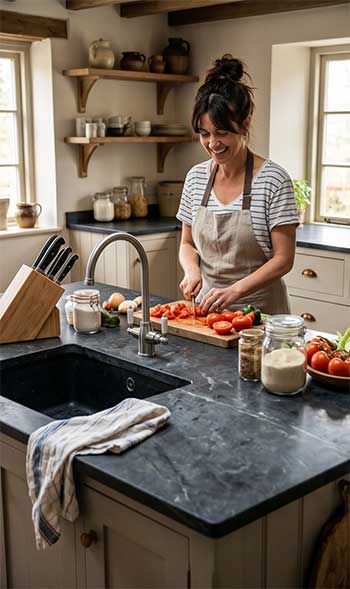
- Origin and composition: Soapstone comes straight from the earth as a natural metamorphic rock made mostly of talc, giving it that soft, almost soapy feel when you touch it. Quartz countertops are man-made by crushing natural quartz crystals, mixing them with resins and pigments, then pressing into slabs. This engineered process gives quartz more uniformity but introduces resins that affect performance in certain ways.
- Feel and texture: I love running my hand across soapstone because it has a warm, velvety matte finish that feels organic and inviting. Quartz often comes polished or honed, feeling smoother and cooler, more like a modern manufactured surface.
- Aging process: Soapstone changes over time, darkening and developing a unique patina that many people find charming and character-rich. Quartz stays looking almost exactly like the day it was installed, which appeals if you want predictability.
- Workability during installation: Soapstone is softer, so fabricators can sometimes make on-site adjustments more easily, but large slabs may require seams. Quartz is harder, which can make precise cuts trickier but results in very consistent edges.
- Environmental considerations: As a pure natural stone, soapstone has a simpler extraction story with no added resins. Quartz involves manufacturing energy and binders, though many brands now offer more sustainable versions with recycled content.
- Repair potential: Scratches or dings in soapstone can often be sanded or oiled out by you at home. Quartz damage, like deep chips or heat marks, usually needs professional help and may not blend perfectly.
- Weight and structural needs: Both are heavy, but soapstone’s density varies by slab. Your cabinets need proper support either way, but I double-checked mine before choosing.
Also Read: Differences Between Perla Venata And Taj Mahal Quartzite.
Key Features of Soapstone Countertops
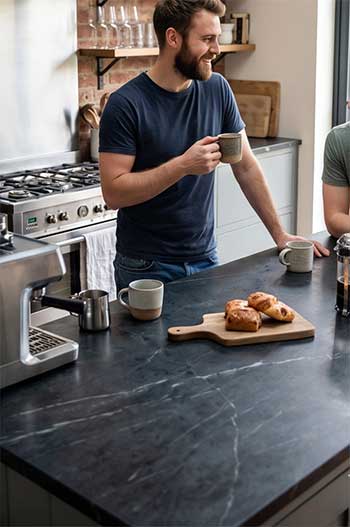
- Natural non-porous surface: Even without any sealer, soapstone resists liquid absorption remarkably well, so spills from wine, oil, or coffee don’t penetrate deeply.
- Superior heat tolerance: You can set a hot cast-iron skillet straight from the stove onto the counter without worrying about burn marks or cracking. This feature alone won me over during testing with actual pans.
- Soft, tactile feel: The surface has a gentle give that feels premium and warm compared to colder stones.
- Antibacterial properties: Its dense composition naturally discourages bacterial growth, making it hygienic for food prep areas.
- Patina development: Over months and years, it darkens into deeper, richer tones that hide minor wear and create a lived-in, timeless look.
- Repairability: Minor scratches sand away easily with fine-grit paper, and mineral oil brings the color back evenly.
- Limited but distinctive palette: Mostly charcoal grays, deep greens, and some lighter variations with subtle veining that feels authentic rather than manufactured.
- Outdoor suitability: It handles weather well, so it’s great for exterior kitchens or bars where temperature swings occur.
- No chemical sealers needed: You avoid introducing extra substances into your kitchen environment.
- Long-term value: While initial cost can be higher, its durability and ability to age beautifully mean it holds appeal for future homeowners too.
I remember testing a sample by leaving lemon juice and red wine on it overnight. The next day, a quick wipe and light oiling made it look fresh again. That real-user experience showed me how forgiving it can be despite its softness.
Pros of Soapstone Countertops
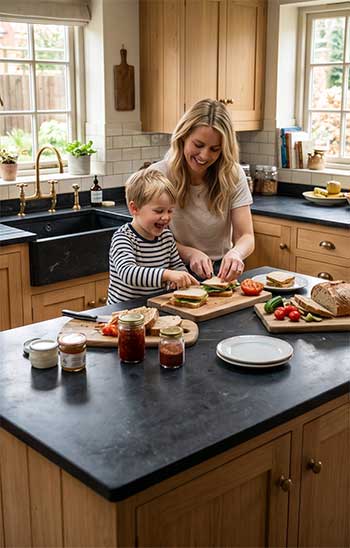
- You get genuine natural beauty that no engineered material fully replicates, with soft curves and organic variations that add soul to the kitchen.
- Heat resistance stands out in busy cooking spaces where multiple pots and pans move constantly. I no longer scramble for trivets every time.
- The patina evolves uniquely to your household, creating a surface that tells a story rather than staying static.
- Easy cleaning with just mild soap and water keeps daily routines simple without harsh chemicals.
- Scratches and marks integrate into the overall look instead of standing out glaringly, which reduces stress about perfection.
- It stays cooler in summer and warmer in winter compared to some polished surfaces, improving the sensory experience.
- Environmentally, it requires no resins or binders during production, appealing if you prioritize minimal processing.
- Repairs are DIY-friendly for minor issues, saving time and money over the years.
- Its density makes it resistant to most acids and etchants that damage other natural stones.
- Many people find the maintenance ritual of occasional oiling meditative and part of caring for a quality material.
Elaborating further, the warmth it brings to a space changes how the kitchen feels during family gatherings. Guests often comment on how inviting it looks and feels, unlike slicker alternatives that can seem clinical.
Cons of Soapstone Countertops
- Its relative softness means it scratches more readily from knives, keys, or heavy objects dragged across it, so you need to use cutting boards religiously.
- You must apply mineral oil periodically (every few months to a year depending on use) to maintain even color and prevent dry patches or water marks from showing prominently.
- Color choices are narrower, sticking mostly to darker tones, which may not suit bright, airy, or ultra-modern designs craving whites or bold patterns.
- Higher price point in some regions because quality slabs with desirable consistency can be harder to source in large quantities.
- Potential for visible seams in larger installations since natural slabs have size limits.
- Initial appearance can look somewhat plain or gray before oiling brings out its depth, requiring patience as the patina builds.
- Dust from sanding repairs (though rare) needs careful cleanup to avoid affecting surrounding areas.
- It may not appeal to those who want a flawless, unchanging surface year after year.
- Finding experienced fabricators comfortable working with it can take extra effort in some areas.
- While non-porous, very prolonged exposure to oils without wiping can slightly alter localized color until re-oiled.
In my testing, the oiling step took about 15 minutes but became part of a seasonal routine I actually enjoy. Still, if you hate any upkeep, this could feel like a drawback.
Also Read: Differences Between Naica Quartzite And Taj Mahal.
Key Features of Quartz Countertops
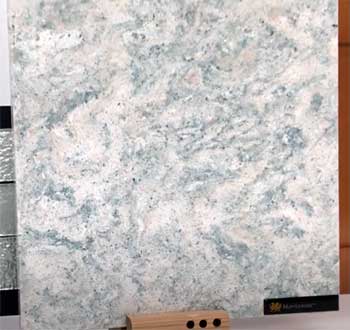
- Engineered consistency: Every slab looks nearly identical in pattern and color within a batch, making matching easy for large or complex layouts.
- High hardness rating: The crushed quartz content makes it very resistant to everyday scratches and chips from normal kitchen activity.
- Non-porous by design: Resins create a barrier that blocks stains, moisture, and bacteria effectively.
- Vast design variety: You can choose from whites, blacks, marbles looks, concrete mimics, wood grains, and almost anything in between.
- Uniform thickness and edges: Manufacturing allows precise control, resulting in clean, modern profiles.
- Built-in color stability: UV-resistant options keep the surface from fading even in sunny kitchens.
- Hygienic certification: Many brands meet food-safety standards, ideal for heavy meal prep.
- Smooth, easy-wipe surface: Spills bead up and clean with a quick swipe.
- Predictable performance: What you see in the showroom is what you get long-term.
- Wide availability: Easier to find installers and stock in most markets.
When I placed samples side by side, quartz felt more polished and contemporary, perfect for a sleek aesthetic.
Pros of Quartz Countertops
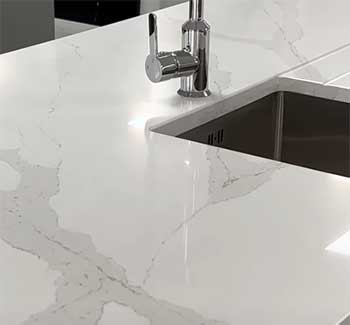
- Outstanding scratch and chip resistance handles busy families or frequent entertaining without showing wear quickly.
- Minimal daily maintenance—just wipe with soap and water, no sealing or special treatments ever required.
- Enormous selection of colors and patterns lets you match any design vision, from classic to trendy.
- Consistent appearance across the entire kitchen, even with islands or multiple surfaces.
- Strong stain resistance means coffee, tomato sauce, or oils won’t leave permanent marks if wiped promptly.
- Good overall durability for high-traffic areas where knives or appliances might accidentally contact the surface.
- Many options include recycled materials, adding an eco-conscious angle.
- Professional installation often goes smoothly due to standardized slab sizes.
- Retains its “new” look for decades, appealing if you plan to sell the home soon.
- Versatile for bathrooms, laundry rooms, or other areas beyond the kitchen.
The peace of mind from not worrying about immediate cleanup or sealing is huge when life gets hectic with kids or pets around.
Cons of Quartz Countertops
- Heat sensitivity from the resins can cause discoloration, cracking, or burn marks if very hot pans sit directly on the surface for long.
- Some patterns with heavy veining or busy designs can look artificial up close compared to true natural stone.
- Repairs for deep damage are more complicated and noticeable because the material doesn’t blend as seamlessly.
- Higher-end designs with premium finishes or special effects push the cost upward significantly.
- Potential for visible seams in large layouts, though fabricators minimize them.
- Can feel colder and harder under touch than natural alternatives.
- Manufacturing process involves energy and chemicals, which matters to some buyers focused on sustainability.
- Overly glossy finishes show fingerprints and smudges more readily.
- Limited outdoor use in extreme sun or temperature swings due to resin expansion.
- Trends in colors can date faster if you choose something very current rather than timeless.
I tested heat by placing a hot pan briefly, and while short contact was fine, prolonged exposure showed faint marks that concerned me for real daily use.
Which One Should You Choose?
After weighing everything, I see soapstone suiting those who crave natural character, superior heat handling, and don’t mind a bit of personal care to develop its beauty.
You will appreciate the way it warms up a space and forgives minor imperfections as part of its story.
Quartz fits better if you prioritize low-effort living, scratch resistance, and design flexibility. It delivers reliability without demanding attention, making it ideal for modern, fast-paced households.
Also Read: Differences Between Lumataj And Taj Mahal Quartzite.
Frequently Asked Questions (FAQ)
It depends on you. Soapstone wins for heat resistance and natural patina if you enjoy some upkeep. Quartz is better for low maintenance and scratch resistance in busy kitchens.
It scratches more easily due to its softer nature and requires periodic oiling to keep an even, rich appearance.
Shifting tastes favor more natural, textured looks over uniform engineered surfaces, plus concerns around heat sensitivity and a desire for authentic materials have some homeowners exploring alternatives.
The best one matches your lifestyle. Soapstone for warmth and heat performance; quartz for durability and ease if you want minimal effort.
Final Thoughts
In the end, visit showrooms, touch samples, and picture your actual routines. I ultimately leaned toward one based on my cooking style and tolerance for maintenance, but your priorities might point differently.
Think about how you use the kitchen daily, what look inspires you, and how much time you want to spend caring for the surface.