
Standing in a dusty stone yard three years ago, I stared at two massive bins of small rocks that looked nearly identical on the surface.
I needed to resurface my backyard patio and side walkway, and you might be facing that exact same landscaping crossroads right now.
I wrote this complete breakdown of pea pebbles vs. pea gravel to help you understand their geological, functional, and financial differences so you can select the exact right stone for your outdoor project without wasting money or regretting your Saturday afternoon labor.
| Aspect | Pea Pebbles | Pea Gravel |
| Typical Size | 1/4 to 3/8 inch, consistently rounded | 1/8 to 3/8 inch, mostly rounded with some variation |
| Surface Texture | Very smooth, almost polished | Smooth but can feel slightly gritty |
| Color Options | Wide range including white, tan, gray, mixed earth tones | Usually natural beige, gray, or brown; limited bright colors |
| Drainage | Excellent; water moves through quickly | Excellent; similar or slightly faster in loose fills |
| Comfort Underfoot | Soft and pleasant to walk on barefoot | Comfortable but can feel sharper if angular pieces are present |
| Weed Suppression | Good when layered properly over fabric | Good, same installation method works |
| Cost Range | Higher, often 20-40% more per ton | Lower, more budget-friendly in bulk |
| Best Primary Use | Decorative paths, borders, dry creek beds | Driveways, drainage trenches, utility paths |
| Longevity | Holds shape well; resists breaking down | Durable; may compact more over time |
| Installation Ease | Easy to spread and level | Easy to spread; settles a bit faster |
Key Differences Between Pea Pebbles and Pea Gravel
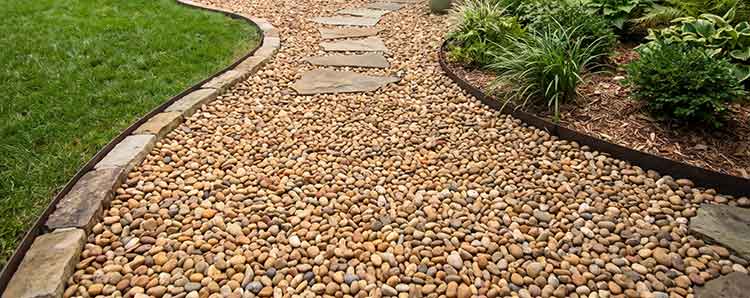
- Shape consistency and surface finish
Pea pebbles tend to be more uniformly rounded and smoother. When you run your hand across a pile, they feel almost like polished beads. Pea gravel can include a few flatter or slightly angular pieces that never got fully rounded.
That small difference shows up when you walk barefoot or when kids play on the surface. The smoother pebbles stay more comfortable after years of use, while gravel can develop a few sharper edges as it shifts.
- Color range and visual impact
Pebbles usually come in a broader palette. You can get bright white, warm tan, charcoal gray, or blended river mixes that look intentional in a garden design. Gravel sticks closer to natural local colors—mostly beige, gray, or brown.
If you want the material to blend into the existing soil or to make a strong design statement, the extra color choices with pebbles become noticeable right away.
- Price per volume and long-term value
Gravel almost always costs less per ton or per cubic yard. The difference can be large enough on a big project that you save hundreds of dollars. Pebbles cost more because of the extra sorting, washing, and sometimes tumbling.
Over ten years the cheaper gravel may need a bit more topping up if it migrates, while the higher-priced pebbles hold their place better in decorative spots. You pay more up front for pebbles and usually spend less time fussing with them later.
- How they settle and compact
Gravel packs down a little faster under foot traffic or vehicle weight. The slight irregularities help the pieces lock together. Pebbles stay looser longer because their perfect round shape lets them roll past each other.
In a high-traffic path that difference means gravel can feel more stable after a season, while pebbles may need occasional raking to keep the surface even.
- Appearance after rain or dust
Both look fresh when clean, but pebbles often keep a brighter, cleaner look after storms because their smooth surfaces shed dirt more easily.
Gravel can hold a thin film of dust in the tiny crevices, so it may appear duller until you hose it or the next rain rinses it. In dry climates that visual difference becomes part of the weekly maintenance picture.
Also Read: Comparison of Shell Stone Pavers And Travertine.
Key Features of Pea Pebbles
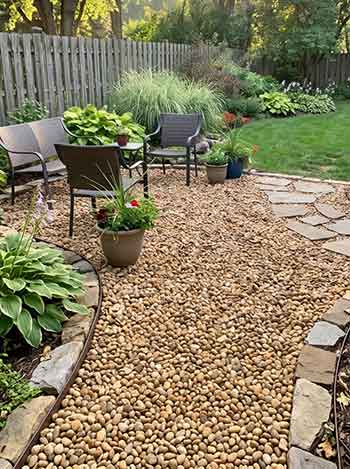
- Extremely smooth texture that stays comfortable: The rounded edges never dig into bare feet or paws. I have walked on both materials in garden centers and the pebble surfaces always felt softer after twenty steps. That comfort matters on paths you use every day or around pools where people walk without shoes.
- Consistent sizing that creates a clean finished look: Most loads stay within a tight size range. Once you level them, the surface looks even instead of patchy. Designers like this uniformity for modern or Japanese-inspired gardens where every stone should read as intentional.
- Strong resistance to breaking down: Because they are already well-rounded and dense, individual pebbles rarely crack or turn to dust under normal foot traffic. They keep their original size and shape for many years with only light raking.
- Good water movement without clogging: The gaps between the round stones let rain pass through quickly. You rarely see standing water on a properly prepared pebble path even after heavy storms.
- Attractive color options that hold their tone: Many suppliers offer washed and screened pebbles that keep their color instead of fading to gray. White or tan versions stay bright longer than untreated gravel in sunny spots.
- Easy to contain with simple edging: The smooth shape means they do not push against borders as aggressively. Standard plastic or metal edging holds them in place without constant repairs.
Pros of Pea Pebbles
- Comfortable walking surface for bare feet and pets: The smooth round shape never pinches or cuts. Families with young children or dogs often notice the difference within the first week.
- Clean, polished appearance that elevates the whole yard: A well-installed pebble path or border looks finished rather than temporary. Neighbors frequently comment on the neat edges and even color.
- Less dust and mud tracked indoors: Because dirt does not stick as easily to the smooth surfaces, shoes stay cleaner after rain. That small daily benefit adds up in muddy seasons.
- Long-lasting color and shape with minimal touch-ups: You rake once or twice a year instead of constantly topping up. The material keeps the same look it had on installation day.
- Works well in decorative dry creek beds and garden accents: The uniform stones create a convincing water-like flow when arranged in gentle curves. Designers use them precisely because the eye reads the surface as intentional.
- Quieter underfoot than larger crushed stone: There is almost no crunch or rattle when you walk. The surface stays peaceful even in high-use areas near seating.
Cons of Pea Pebbles
- Higher upfront cost that can strain smaller budgets: The price difference becomes real on projects larger than a few hundred square feet. You may have to reduce the total area or choose a cheaper alternative.
- Can migrate more easily on slopes: Perfectly round stones roll downhill if the grade is steeper than about 5 percent. Extra edging or occasional raking becomes necessary.
- Slightly slower to compact into a firm walking surface: They stay loose longer, so the path can feel soft for the first season. Some people add a light stabilizer if they want immediate firmness.
- Limited local availability in unusual colors: If you want a specific shade you may wait for a shipment or pay shipping from farther away. Standard gray or tan is easier to find.
- Not ideal under heavy vehicle traffic without a solid base: Cars can push the loose stones aside and create ruts faster than with more angular gravel. A proper base layer is mandatory for any driveway use.
Also Read: Comparison of Pavers And Stamped Concrete.
Key Features of Pea Gravel
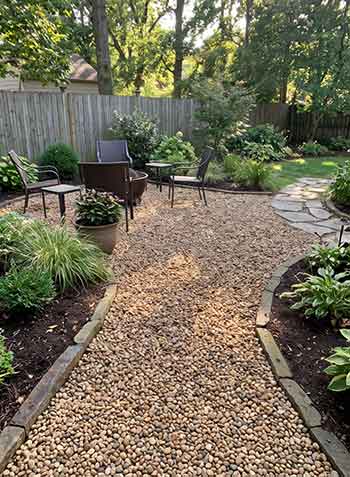
- Reliable drainage in almost any setting: Water moves through a gravel layer fast enough for French drains, dry wells, or simple paths on clay soil. The slight variation in shape creates enough voids that the material rarely seals itself shut.
- Lower purchase price that makes large areas practical: You can cover a long driveway or a big play area without the budget jumping into decorative-stone territory. Bulk delivery further drops the per-square-foot cost.
- Natural look that blends with most landscapes: The muted colors and slight irregularity make gravel disappear into the background rather than compete with plants. Many people prefer that quieter appearance around vegetable gardens or utility zones.
- Decent stability once it settles: After a few months of rain and foot traffic the pieces nest together. Paths feel solid underfoot even if the surface never becomes as perfectly smooth as pebbles.
- Availability in large quantities from local suppliers: Most landscape yards stock pea gravel year-round and can deliver it the same week. You rarely wait for special orders the way you might with unusual pebble colors.
- Tolerance for mixed traffic: Cars, wheelbarrows, and heavy foot traffic all work on a well-prepared gravel surface. The material does not scatter as dramatically as perfectly round pebbles under the same loads.
Pros of Pea Gravel
- Significantly lower cost for large coverage areas: You can finish a long path or a full driveway approach for less money and still get good drainage and a tidy look.
- Strong performance in drainage applications: French drains, curtain drains, and dry wells all rely on this material because water moves through it reliably year after year.
- Blends naturally with existing soil and plants: The muted colors do not fight with mulch or foliage. The surface looks like it belongs rather than like an imported accent.
- Settles into a stable surface under normal use: After the first season the pieces lock enough that raking becomes occasional rather than constant. Paths stay level with minimal effort.
- Widely available from local yards with same-week delivery: You can usually get what you need without special orders. That speed matters when weather windows are short.
- Handles mixed foot and light vehicle traffic well: Wheelbarrows, bikes, and occasional cars do not destroy the surface the way they might on softer materials.
Cons of Pea Gravel
- Slightly less comfortable for barefoot walking: A few sharper pieces can appear after settling. Most people still walk on it without shoes, but it never feels as soft as true pebbles.
- Can look duller after dust or light rain: The tiny surface irregularities hold a film that makes the color appear muted until the next good rinse. In dry climates you notice the difference more.
- May require more frequent topping on high-traffic paths: Stones shift and thin out where people walk the same line every day. You add a thin layer every couple of years to keep the original depth.
- Fewer decorative color choices: You work with whatever natural tones the local quarry produces. Bright white or carefully matched blends are harder to source at the same low price.
- Edges can feel less refined in formal gardens: The slight irregularity reads as casual. If the rest of the yard is highly manicured, the gravel surface may look unfinished by comparison.
Practical Uses and Performance
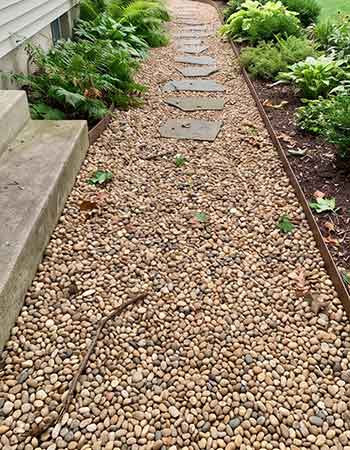
Paths that see daily family traffic usually favor pea pebbles when comfort and looks matter most.
A narrow garden walk or the area around a patio stays pleasant under bare feet and photographs well.
Pea gravel wins on longer utility paths, side yards, or anywhere cars might roll.
Both materials need a solid base of compacted aggregate and landscape fabric if you want them to last.
Skip the fabric and weeds find every gap within a season.
On slopes steeper than a gentle grade, either material needs sturdy edging; otherwise both will slowly migrate downhill.
In freeze-thaw climates the drainage advantage of either stone keeps ice from forming thick sheets the way solid pavement does.
Maintenance stays simple: rake high spots back into low spots twice a year and add a thin top-up only where the layer thins.
Neither product needs sealing or special treatments.
Also Read: Try Our Free Paver Sand Calculator.
Frequently Asked Questions (FAQ)
Avoid pea gravel on steep slopes without strong edging, in areas where you want a perfectly smooth barefoot surface, or under heavy vehicle traffic unless you install a thick, well-compacted base. It also struggles in very formal garden designs where the slight irregularity looks out of place.
Neither is universally better. Pea pebbles win when comfort, color choice, and a polished look matter most. Pea gravel wins when budget, drainage volume, and natural blending are the priorities. Match the material to the main job the area has to do.
Yes. Pea gravel typically costs noticeably less per ton or cubic yard than pea pebbles. The gap is large enough on bigger projects that many people choose gravel simply to stay inside their budget.
Weeds can appear if you skip landscape fabric or if the fabric tears. With a proper fabric layer underneath and a full 2- to 3-inch depth of gravel on top, most weeds stay suppressed. Occasional hand-pulling handles any that sneak through the edges.
Wrapping Up
I have used both materials on different parts of the same property and the choice always came down to what the space needed most. You will get solid drainage and a tidy surface from either one.
If your project values the softer feel and cleaner appearance, pea pebbles justify the extra cost. If you need to cover more ground without stretching the budget, pea gravel delivers reliable performance at a lower price.
Look at your traffic, your slope, and how much the finished look matters to you, then pick the material that solves those specific problems.