I walked into the decision between Milgard Trinsic and Tuscany after measuring my own rooms and talking with installers who work these series every week.
Both lines deliver solid vinyl performance, but the choice comes down to whether you want cleaner modern lines with more glass or a traditional profile that fills older openings better.
This side-by-side look covers the practical trade-offs so you can match the series to your home, budget, and daily use.
| Feature | Milgard Trinsic | Milgard Tuscany |
| Design Style | Modern, slim frames, clean square lines | Traditional, thicker frames, classic wood-like look |
| Frame Depth | Approx. 2-7/8 inches | Approx. 3-1/4 to 3-3/4 inches |
| Glass Area | Maximized for more light and views | Slightly reduced due to wider frames |
| Energy Efficiency | Excellent; U-Factor typically 0.25–0.32; ENERGY STAR options | Excellent; U-Factor typically 0.25–0.33; strong with thicker frame |
| Hardware | SmartTouch lock, sleek integration | SmartTouch lock, durable feel |
| Window Styles | Single-hung, sliders, casement, awning, picture, radius | Same plus double-hung, bay & bow options |
| Warranty | Full Lifetime (parts & labor); glass breakage often optional | Full Lifetime with glass breakage included |
| Typical Unit Price Range | Roughly $440–$1,075 | Roughly $485–$1,295 |
| Best Fit | Contemporary homes, maximizing light | Traditional or craftsman homes, retrofit depth |
Key Differences Between Milgard Trinsic And Tuscany Windows

- Frame profile and visual weight stand out the moment you place samples side by side. Trinsic keeps the vinyl narrow so the glass dominates; Tuscany uses more material around the glass for a heavier, more traditional presence that many people associate with older wood windows. I measured a typical single-hung and saw roughly half an inch to an inch more visible glass on the Trinsic side, which reads brighter once the windows are installed.
- Depth of the jamb affects how cleanly the unit sits in an existing opening. Trinsic’s shallower profile often works better when you want to keep existing interior blinds or trim intact. Tuscany’s extra depth fills the void left by older bulkier frames without as much filler or extension, which can simplify certain replacement jobs.
- Available configurations differ in ways that matter for whole-house projects. Both cover the common single-hung, horizontal slider, casement, and awning styles, yet Tuscany adds double-hung operation and bay or bow combinations that Trinsic generally skips. If your plan includes those extra shapes, the series choice narrows quickly.
- Warranty details on glass breakage tilt one direction. Tuscany typically includes coverage for accidental breakage as part of the full lifetime package. Trinsic frequently treats the same coverage as an optional upgrade you select at order time. Both cover the frame, hardware, and labor for the original owner under the full lifetime terms when chosen, but the glass piece is the practical distinction many homeowners notice later.
- Pricing sits close yet not identical. Across quotes I reviewed, Trinsic units land a bit lower for comparable sizes and glass packages, while Tuscany commands a modest premium that reflects the thicker profile and broader style options. Installed cost still depends more on labor, opening size, and local rates than on the series label alone.
Also Read: Comparison of Champion Windows And Renewal by Andersen Windows.
Key Features of Milgard Trinsic
- Slim, even sightlines and a squared-off profile give the series its contemporary signature. The frames stay narrow enough that the window almost disappears from certain angles, letting the outdoor view take over. I stood in rooms with both series and the Trinsic versions consistently made the space feel larger because less vinyl interrupted the glass.
- SmartTouch hardware locks with a single smooth motion and sits flush so it does not fight the minimalist look. The mechanism exceeds basic forced-entry requirements and earns praise from people who prefer easy operation without bulky handles.
- Dual-pane insulating glass comes standard with Low-E coatings such as SunCoat or the higher-performance SunCoatMAX option, plus argon fill in most packages. These layers cut heat transfer and UV while the narrow frame still delivers competitive U-Factors in the 0.25–0.32 range depending on exact glass and spacer choices.
- Pull-rail screens replace the old plastic tabs that break easily, and weep-hole covers help manage moisture. The vinyl itself uses Milgard’s signature formula that resists fading and requires almost no maintenance beyond occasional cleaning.
- Full lifetime warranty coverage on the frame, parts, and labor for the original homeowner, with glass-breakage protection available as an add-on. Transferability rules and labor terms follow Milgard’s standard language for the series.
Pros of Milgard Trinsic
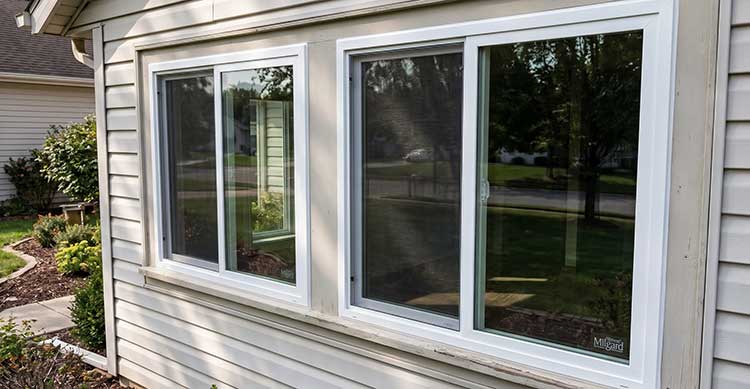
- More visible glass and cleaner lines make rooms feel brighter and more open without enlarging the actual opening. Homeowners who want contemporary architecture or simply more daylight often choose this series for that reason alone.
- Slightly lower unit pricing helps control overall project cost when replacing many windows. The savings are not dramatic on a single unit, yet they add up across a full elevation or whole-house job.
- Shallower jamb depth simplifies certain retrofit situations and preserves interior treatments that would otherwise need adjustment. Installers I spoke with noted fewer shims or extensions in some openings.
- Modern hardware integration keeps the exterior and interior surfaces uncluttered. The lock disappears into the frame better than older positive-action designs, which suits minimalist interiors.
- Energy performance stays competitive with the thicker series once glass packages are matched, so you do not give up efficiency for the slimmer look. SunCoatMAX options handle high-sun exposures effectively.
- Low-maintenance vinyl and standard pull-rail screens reduce ongoing chores. Color stability holds up under normal weathering without painting or staining.
Cons of Milgard Trinsic
- Fewer operating styles mean double-hung or complex bay configurations require a different series or a custom solution. Projects that need those shapes lose the option.
- Glass-breakage coverage usually costs extra at order time. Families with kids, pets, or nearby ball fields may want to budget for the upgrade or accept the risk.
- Narrower frames offer slightly less thermal mass at the perimeter. In extreme cold the difference is small once glass is optimized, yet some colder-climate owners prefer the thicker profile for peace of mind.
- The very modern appearance can look out of place on traditional or historic-style homes. Matching existing wood-trim aesthetics becomes harder.
- Availability of certain premium color or grid combinations may be more limited than on the flagship line, depending on the plant and region.
Also Read: Comparison of Pella And Renewal by Andersen Windows.
Key Features of Milgard Tuscany
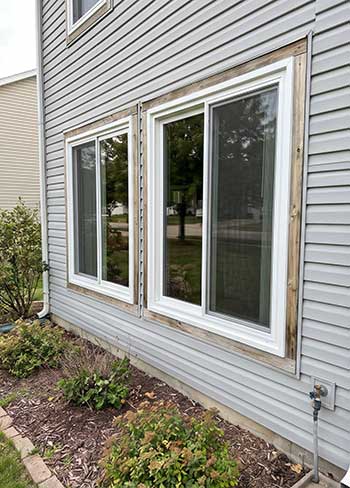
- Thicker multi-chambered vinyl frames create deeper shadow lines and a more substantial traditional appearance. Equal sightlines keep the visual width consistent between fixed and operable sections, which many people prefer when matching existing millwork or classic architecture.
- SmartTouch lock hardware matches the durability focus of the line and operates with the same single-motion ease. Multi-point options on certain patio-door configurations add security without changing the overall window aesthetic.
- Energy packages mirror the Trinsic options—SunCoat Low-E, SunCoatMAX, argon, warm-edge spacers—while the extra frame mass can improve condensation resistance at the glass-to-frame joint in colder conditions. Typical U-Factors land in a similar 0.25–0.33 band.
- Broader style library includes double-hung operation and bay or bow units that expand design flexibility. Grid patterns, premium exterior colors, and interior color matches give more ways to coordinate with existing trim or new finishes.
- Full lifetime warranty includes glass-breakage coverage as a standard element rather than an upgrade. Parts, labor, and frame protection run for the original owner under the same lifetime structure, with the usual transfer and territory conditions.
Pros of Milgard Tuscany
- Traditional frame proportions and equal sightlines blend with classic homes, craftsman detailing, and older wood-window replacements. The visual weight feels intentional rather than sparse.
- Extra frame depth fills deeper openings cleanly and can improve the fit against existing sills or exterior trim. Many replacement projects benefit from that extra material.
- Glass-breakage coverage comes included in the full lifetime package, removing one decision and one potential out-of-pocket expense later. That coverage matters when unexpected impacts occur.
- Wider range of styles, including double-hung and bay/bow, supports more architectural variety without switching manufacturers. Designers and homeowners gain flexibility.
- Thicker multi-chamber construction adds a measure of rigidity and can contribute to better sound dampening and condensation control in certain climates. Performance numbers stay strong across packages.
- Premium positioning and long track record give confidence for buyers who want the established flagship vinyl line. Color and hardware options support coordination with other exterior finishes.
Cons of Milgard Tuscany
- Slightly higher pricing for comparable sizes and glass packages increases total project cost. The premium is modest on paper yet noticeable when multiplied across many units.
- Wider frames reduce the net glass area compared with Trinsic, so rooms gain a bit less daylight and view. The difference is visible side-by-side even if it is not dramatic from the street.
- Bulkier profile can look heavy on contemporary or minimalist architecture. Clean modern builds sometimes prefer the slimmer alternative.
- Deeper jamb may require more adjustment or filler in very shallow openings, adding minor labor in some retrofits.
- The traditional aesthetic locks in a look that is harder to update later if design tastes shift toward contemporary.
Also Read: Comparison of Marvin Elevate And Ultimate Windows.
Energy Efficiency, Comfort, and Everyday Performance
Both series meet or exceed ENERGY STAR criteria when ordered with the appropriate Low-E and gas-fill packages for your climate zone.
U-Factors typically fall between 0.25 and 0.33, and solar-heat-gain coefficients drop into the low 0.20s or below with SunCoatMAX coatings. I checked NFRC-style ratings on similar configurations and the numbers stayed close enough that glass choice matters more than the series label.
Argon fill and warm-edge spacers appear in standard high-performance packages for both. The thicker Tuscany frame can reduce edge-of-glass condensation risk in colder weather because more insulating material sits between interior and exterior surfaces.
Trinsic counters with more glass, which can increase solar gain on south and west exposures unless you specify the lower-SHGC coating.
Noise reduction ratings (STC/OITC) also land in similar ranges—roughly the high 20s to low 30s for standard dual-pane units, with laminated glass pushing higher.
Neither series is a specialty acoustic product, yet both outperform older single-pane or poorly sealed windows by a clear margin. Air infiltration stays low on properly installed units because of multi-point weatherstripping and welded corners.
Day-to-day operation feels comparable. SmartTouch locks on both lines require little force and give clear visual confirmation when engaged. Screens pull out cleanly, and the vinyl does not swell or require painting. Maintenance reduces to occasional washing and checking weep holes.
Cost, Value, and Installation Realities
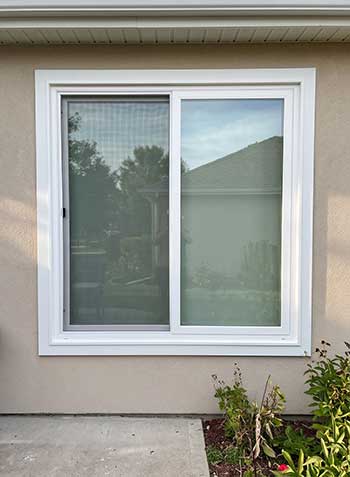
Unit pricing varies by size, style, glass package, color, and region, yet patterns emerge.
Trinsic windows often quote in the mid-four-hundreds to low-one-thousands for standard residential sizes.
Tuscany units run higher by roughly $50–$200 per window in many of the quotes I reviewed, reflecting the thicker profile and included glass-breakage coverage.
Installed cost depends far more on labor, accessibility, and structural work than on the series.
A full-house replacement can easily double or triple the unit total once tear-out, flashing, and haul-away are included.
Patio-door pricing follows the same pattern: Trinsic sliding units sit a few hundred dollars below equivalent Tuscany configurations in published examples.
Value calculation should include energy savings over time, warranty service, and resale appeal.
Both series deliver measurable reductions in heating and cooling loads compared with older windows.
The lifetime labor coverage reduces long-term risk if a seal fails or hardware needs adjustment. Homes with modern architecture may see stronger buyer response to Trinsic; traditional neighborhoods often prefer the Tuscany profile.
Which Series Fits Your Project?
Choose Trinsic when the priority is maximum glass, clean contemporary lines, and a lower unit price. The series works especially well in new construction or remodels that emphasize open views and daylight. It also suits openings where a shallower frame simplifies the fit.
Choose Tuscany when the home has traditional detailing, you need double-hung or bay configurations, or you want glass-breakage coverage included without an extra decision. The thicker frame fills deeper openings more naturally and maintains a classic appearance that matches existing architecture.
In my own evaluation the performance gap stayed small once glass packages matched. The deciding factors were the look I wanted from the street and inside the rooms, the specific styles required, and whether the modest price difference mattered against the rest of the project budget.
You can request side-by-side samples or mock-ups from a local Milgard dealer to confirm which profile feels right in your openings before ordering.
Also Read: Comparison of Retrofit And New Construction Windows.
Frequently Asked Questions (FAQ)
No single series is best for every home. Trinsic suits modern designs that maximize glass; Tuscany fits traditional styles and offers more configuration options plus included glass-breakage coverage. Match the series to your architecture and needs.
Trinsic units generally cost less—often by $50–$200 per standard window—depending on size, glass, and location. Tuscany carries a modest premium for its thicker profile and broader features. Installed totals vary more with labor than with the series itself.
V300 Trinsic is better when you want slim modern frames and more glass area at a lower price. V400 Tuscany is better when you prefer traditional proportions, double-hung or bay styles, and standard glass-breakage coverage. Both deliver comparable energy performance with matched glass packages.
Homeowners often praise the clean modern look, increased daylight, easy SmartTouch operation, and low maintenance. Some note the limited style options compared with Tuscany and the optional nature of glass-breakage coverage. Overall feedback stays positive for contemporary applications when installation is done correctly.
Final Thoughts
You now have a clear side-by-side view of how the Trinsic and Tuscany series actually differ in daily use, appearance, and long-term ownership. Pick the profile that matches your home’s architecture and the features you will notice every day; the energy and warranty basics stay strong either way.
Measure your openings, review local quotes, and choose the series that feels right when the samples sit in front of you.