
I often face the same question when planning a furniture build or shopping for cabinets: should I go with MDF or particle board?
After handling both materials in multiple home projects, comparing how they cut, hold screws, react to humidity, and hold up over years of daily use, I decided to lay out a clear, practical comparison.
This piece examines composition, performance, costs, and real-life results so you can choose the right board for your project without second-guessing.
| Feature | MDF | Particle Board |
| Core Material | Fine wood fibers mixed with resin | Larger wood chips and particles with resin |
| Density | Higher (typically 600–800 kg/m³) | Lower (typically 500–700 kg/m³) |
| Surface Smoothness | Extremely smooth, ideal for paint | Rougher, often needs laminate or veneer |
| Screw Holding Strength | Better, especially with pilot holes | Weaker, prone to stripping |
| Moisture Resistance | Poor unless sealed | Very poor, swells quickly |
| Weight | Heavier | Lighter |
| Cost | Higher | Lower |
| Edge Quality | Clean, can be profiled | Crumbly, hard to finish cleanly |
| Common Uses | Painted cabinets, moldings, shelves | Budget furniture, laminate tops |
| Workability | Machines cleanly with sharp tools | Can chip and tear more easily |
Key Differences between MDF and Particle Board
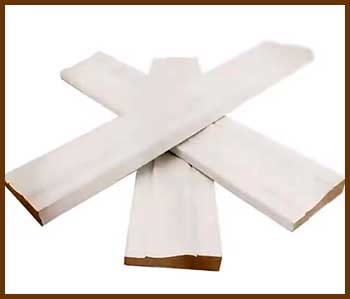
- Density and Internal Strength MDF’s finer fibers create a tighter matrix that resists compression and shear forces better. Particle board’s larger chips leave more voids, so the board crushes more easily under concentrated loads. When I hang heavy doors or mount wall cabinets, I prefer MDF for the extra margin of safety.
- Moisture Behavior Both materials swell when wet, yet particle board reacts faster and more dramatically. A spilled glass left overnight can cause particle board edges to expand and crumble. MDF also fails if soaked, but the denser core buys a little more time for cleanup. Neither should be used in wet zones without thorough sealing and protective finishes.
- Edge Integrity and Finishing Options MDF edges can be sanded smooth and painted or edge-banded cleanly. Particle board edges tend to fray and absorb moisture greedily. I always cover particle board edges with thick banding or laminate strips because exposed particle edges look unfinished and degrade quickly.
- Tool Response and Dust Production Cutting MDF produces fine, powdery dust that coats everything. Particle board dust is coarser and less airborne, yet the chips can clog saw blades faster. Both materials dull tools, so I keep dedicated blades for engineered boards.
- Long-Term Stability under Load MDF shelves sag less than particle board shelves of equal thickness and span. Over years of book storage I have seen particle board bows develop sooner. Adding a solid wood front edge or reducing the span improves either material, but the difference remains measurable.
- Price versus Performance Trade-off Particle board wins on upfront cost. MDF costs more yet delivers better machining, finishing, and durability. For painted built-ins that must look refined, the extra expense of MDF usually pays off. For hidden structural panels or short-term use, particle board keeps the budget in check.
Also Read: Differences Between Shiplap And Nickel Gap.
Key Features of MDF
- Density and Uniform Structure MDF packs more material into the same thickness, so it feels solid and resists warping better than lighter boards when kept dry. The uniform fiber distribution means every cut looks the same. I appreciate this consistency when building long runs of cabinetry because the material behaves predictably under the saw and router.
- Surface Quality for Finishing The face is almost glass-smooth. Primer and paint lay down evenly with almost no sanding required beyond a light scuff. I have sprayed multiple coats of enamel on MDF doors and the finish looks factory-smooth. Veneers also bond tightly without showing the underlying texture.
- Machinability and Edge Detail Sharp carbide tools cut MDF cleanly. I can route decorative profiles, create grooves, or form bullnose edges that stay crisp. The edges do soak up glue and finish more than the faces, so sealing them first remains important.
- Screw and Fastener Performance With proper pilot holes and the right screw length, MDF holds hardware better than particle board. Hinges and drawer slides stay secure longer. Over-tightening still risks stripping, so I always stop once the head seats firmly.
- Weight and Structural Feel The extra density adds mass. A full sheet feels substantial, which helps shelves resist sagging under moderate loads when properly supported. That same weight makes large panels harder to handle alone.
Pros of MDF
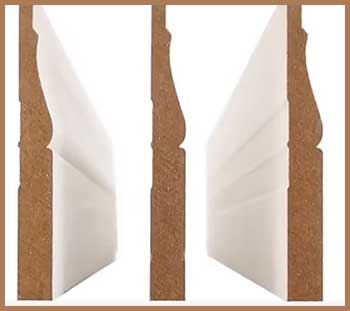
- Superior Paint and Finish Results The smooth face accepts multiple coats of paint without grain show-through. I have achieved near-furniture-grade finishes on MDF doors that rival solid wood after careful priming and light sanding between coats. Even dark colors lay down evenly and look professional once fully cured.
- Consistent Machining Across the Sheet Every part of an MDF panel behaves the same way under the router or table saw. Complex joinery and decorative profiles come out clean and repeatable, which speeds production when I build matching sets of cabinets or long runs of shelving. The lack of natural grain variation means fewer surprises during cutting.
- Better Screw Retention for Hardware Hinges, drawer slides, and shelf pins stay put longer in MDF. The denser core grips threads more reliably once pilot holes are drilled to the correct depth. I have noticed far fewer loose doors or sagging drawers compared with the same hardware installed in particle board.
- Reduced Risk of Surface Defects Because the fibers are fine and evenly distributed, knots, voids, and soft spots are rare. I waste less material and spend less time filling imperfections before finishing. This consistency also makes large painted panels look uniform from edge to edge.
- Versatility for Custom Work MDF works well for curved parts when laminated in layers, for CNC-carved details, and for large painted panels. The material supports a wide range of design choices that particle board cannot match as cleanly, which is why I reach for it whenever a project needs more refined detailing.
Cons of MDF
- High Sensitivity to Water Even brief contact with standing water can cause swelling that never fully recovers. I always seal every face and edge before installation and avoid using unsealed MDF near sinks or exterior doors. Once moisture gets in, the board can expand and lose its smooth surface permanently.
- Weight That Complicates Handling Large sheets feel heavy. Solo installation of tall cabinet sides or wide tabletops becomes awkward. I often need a helper or temporary supports to position panels safely, especially when working with full 4×8 sheets.
- Fine Dust That Requires Careful Control Cutting and sanding release a cloud of ultra-fine particles. A good dust collection system and respirator are non-negotiable. Cleanup takes longer than with coarser materials, and the dust seems to settle on every nearby surface.
- Edge Absorption of Finish Raw edges drink primer and paint. Multiple coats or edge banding become necessary for a uniform look. Skipping this step leaves a dull, porous border that stands out against the smoother faces.
- Higher Material Cost The price per sheet exceeds particle board by a noticeable margin. On large projects the difference adds up quickly and can push a budget over the limit, especially when several full sheets are required.
Also Read: Differences Between Shiplap And Tongue and Groove.
Key Features of Particle Board
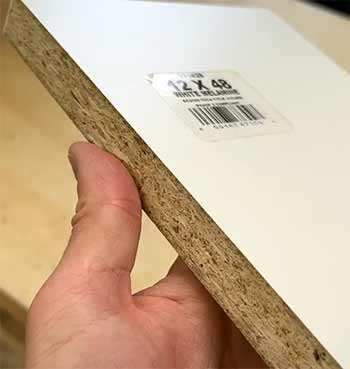
- Lightweight Construction Particle board weighs noticeably less than MDF of the same size. Moving large panels or assembling tall cabinets becomes easier. I have carried full sheets up stairs without the same strain I feel with MDF.
- Cost Efficiency Raw material and manufacturing costs stay lower. Manufacturers pass those savings to consumers, which is why budget furniture lines favor this board. For temporary or low-stress pieces the price difference can be decisive.
- Surface Covering Options Most particle board arrives pre-laminated or veneered. The covering hides the rough core and provides a ready-to-use surface. Melamine faces clean easily and resist light scratches, which suits kitchen cabinets that see daily use.
- Acceptable Performance in Dry Conditions When kept indoors and away from water, particle board supports typical household loads. Bookshelves and wardrobe carcasses hold up for years if the design includes adequate support and the fasteners are not over-stressed.
- Ease of Production and Availability Factories produce particle board in high volumes with simple processes. Sheets are widely stocked in standard sizes, making last-minute project runs straightforward.
Pros of Particle Board
- Attractive Purchase Price Lower manufacturing costs translate into cheaper sheets and finished furniture. For rental properties or temporary setups the savings matter. I have completed entire closet systems for noticeably less money simply by choosing particle board where the demands were light.
- Lighter Panels for Easier Movement I can carry and position particle board sheets with less effort. Assembly of tall units feels less strenuous, especially when working alone or in tight spaces where heavy panels become a real hassle.
- Ready-Made Decorative Surfaces Factory-applied laminates and melamine finishes eliminate the need for painting. Cleaning is simple and the surface resists light abrasion better than bare paint in some cases. This makes particle board a practical choice for high-traffic areas that still need a finished look.
- Adequate Strength for Light-Duty Use Books, clothing, and everyday kitchen items sit safely on well-supported particle board shelves. Many mass-produced pieces last a decade or more under normal household conditions when the spans are kept reasonable and the fasteners are not overloaded.
- Wide Availability in Standard Sizes Home centers stock particle board in common thicknesses and dimensions. Last-minute replacements or additions rarely require special orders, which keeps projects moving without delays.
Cons of Particle Board
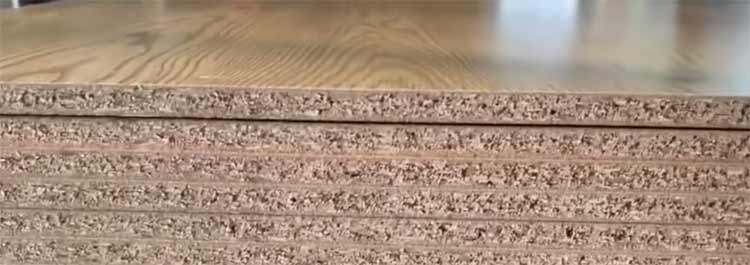
- Weak Resistance to Moisture Damage Water causes rapid swelling and loss of structural integrity. Once the core expands, the laminate often peels and the board cannot return to its original shape. I treat any particle board piece as strictly indoor and dry-only because even moderate humidity over time can start to affect the edges.
- Inferior Screw Holding Power Fasteners strip more easily, especially after repeated removal. Hinges can loosen over time, and heavy doors may sag if the mounting points weaken. I have had to reinforce several particle board cabinets simply because the original screw holes gave out.
- Rougher Core That Shows Through Thin Coverings If the laminate is thin or damaged, the irregular particle structure becomes visible. Edges remain difficult to finish attractively without thick banding, and any chip quickly reveals the coarse interior.
- Greater Tendency to Sag under Long-Term Loads Unsupported spans bow sooner than equivalent MDF. I shorten shelf lengths or add center supports whenever particle board is used for books or dishes, otherwise the shelves gradually develop a noticeable curve.
- Limited Options for Custom Profiling Routing decorative edges often produces tear-out and uneven results. The material simply does not machine as cleanly, restricting design flexibility and making detailed work more frustrating than it needs to be.
Also Read: Differences Between MDF And Wood Baseboard.
Frequently Asked Questions (FAQ)
MDF is heavy, produces fine dust when cut, absorbs water easily if unsealed, and costs more than particle board. Edges need careful sealing and the material can swell permanently after prolonged moisture exposure.
Most IKEA cabinet boxes use particle board covered with laminate or foil. Doors and drawer fronts often use MDF for a smoother finish. Exact construction varies by product line.
MDF is an engineered wood product made from real wood fibers and resin. It is not solid lumber, yet it is still derived from wood rather than plastic or other synthetic materials.
Manufacturers favor MDF and particle board because both offer consistent quality, lower cost than solid wood, easier large-scale production, and surfaces that accept modern finishes without the irregularities of natural timber.
Final Thoughts
I have tested both materials across enough projects to know that neither is universally better. MDF delivers smoother finishes, stronger hardware hold, and cleaner machining when the budget and weight allow it.
Particle board keeps projects affordable and light when the demands stay modest and the environment stays dry.
You now have the detailed comparison, the practical differences, and the real-world performance notes needed to match the right board to your next build or purchase. Choose according to the specific stresses, finish goals, and moisture risks your project will face, and the material will serve you well for years.