
I compared luxury vinyl plank and luxury vinyl tile extensively while planning updates across multiple rooms in my house.
If you are deciding which waterproof flooring fits your space, this breakdown covers the practical differences, features, advantages, and drawbacks so you can select the format that matches your rooms, budget, and lifestyle without later regrets.
| Aspect | Luxury Vinyl Plank | Luxury Vinyl Tile |
| Typical Shape | Long, narrow boards (6–9 inches wide) | Squares or rectangles (12×12 or 18×18) |
| Common Appearances | Oak, hickory, maple, distressed wood | Marble, slate, travertine, ceramic looks |
| Installation Style | Mostly click-lock floating | Glue-down or click-lock |
| Underfoot Feel | Slightly softer and quieter | Firmer, closer to hard tile |
| Best Room Fit | Living rooms, bedrooms, hallways | Bathrooms, kitchens, entryways |
| Average Cost | $2.50–$5.50 per square foot | $2.00–$5.00 per square foot |
| Seam Visibility | Longer runs hide seams well | Grid pattern more noticeable |
| Water Resistance | Fully waterproof when properly installed | Fully waterproof when properly installed |
Also Read: Is Proximity Mills Flooring Any Good?
Key Differences Between Luxury Vinyl Plank and Luxury Vinyl Tile
- Appearance And Layout Options
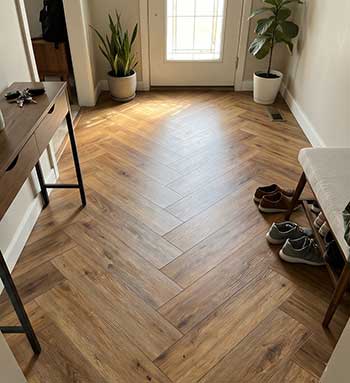
Luxury vinyl plank creates continuous wood-like runs that stretch across a room and make smaller spaces feel longer.
I found the longer boards easier to align in open living areas where I wanted a unified wood grain direction.
Luxury vinyl tile produces a grid or staggered tile pattern that reads more like stone or ceramic, which suits spaces where you want defined sections rather than flowing boards.
The plank format tends to photograph cleaner in wide shots, while tile formats allow more dramatic veining or stone patterns that stand out up close.
- Installation Approach And Subfloor Demands
Most luxury vinyl plank uses a click-lock system that floats over a flat subfloor with minimal adhesive. In my hallway project the boards snapped together quickly and I could walk on them the same day.
Luxury vinyl tile more often requires glue-down installation, especially the thinner flexible versions, which bonds it tightly but adds drying time and makes future removal harder.
Rigid-core versions of both exist, yet plank products more commonly include attached underlayment that reduces the need for extra layers.
- Visual Scale And Room Proportion
Planks usually measure longer than they are wide, so they draw the eye along the length of a room. Tiles sit closer to square, which creates a more balanced, static look that works well in compact bathrooms or kitchens where a large wood board might feel out of place.
When I tested samples side by side, the plank samples made my dining area look more expansive, while the tile samples grounded the space and paired better with existing cabinetry.
- Edge And Texture Treatment
Many plank products feature beveled edges that mimic real hardwood gaps and catch light along each board. Tile versions often have micro-bevels or square edges that sit tighter together.
Textures also differ: planks frequently use embossed-in-register printing that follows the printed grain, while tiles emphasize stone pores or ceramic glaze effects.
Both can include realistic surface variation, yet the plank style leans toward linear wood details and the tile style toward organic stone irregularities.
- Repair And Replacement Practicality
Individual planks in a click-lock floor can often be unclicked and swapped if damaged, though matching the exact batch helps. Glued tile floors usually require cutting out the affected piece and gluing a replacement, which can leave a visible patch if the adhesive ages differently.
In high-traffic zones I preferred the plank option because isolated board replacement felt less disruptive than reworking a glued tile section.
Also Read: Is Republic Flooring Any Good?
Key Features of Luxury Vinyl Plank and Luxury Vinyl Tile
- Wear Layer Thickness And Protection

Both products rely on a clear wear layer that protects the printed design, typically ranging from 12 mil for light residential use up to 20–28 mil for heavier traffic.
I prioritized 20 mil wear layers in my main living spaces because they resisted the scuffs from moving furniture and pet claws better than thinner versions.
The wear layer sits over a printed film that carries the wood or stone image, then a core, and sometimes a backing.
Higher-end options add UV-cured topcoats that improve stain resistance and keep the surface looking newer longer.
- Core Construction And Stability
Luxury vinyl plank frequently uses a rigid stone-plastic composite (SPC) or wood-plastic composite (WPC) core that resists dents and temperature swings.
Tile products can use the same rigid cores or a more flexible vinyl core depending on whether they are designed for click or glue installation.
The rigid cores on both helped my floors stay flat over minor subfloor dips, but the plank versions I chose included a built-in acoustic pad that cut down on footfall noise without an extra underlayment purchase.
- Waterproof Construction And Edge Sealing
Both formats are waterproof through the core, so spills do not swell the material the way solid hardwood can. Click-lock planks rely on tight interlocking edges and sometimes a perimeter sealant in wet rooms to keep moisture from reaching the subfloor.
Glue-down tiles create a continuous bonded surface that resists water intrusion between pieces. In my bathroom I added a bead of silicone at the tub edge regardless of format because even waterproof vinyl benefits from proper perimeter detailing.
- Surface Texture And Finish Options
Manufacturers offer matte, satin, and low-sheen finishes that reduce glare and hide minor scratches. Many planks include hand-scraped or wire-brushed textures that add depth to the wood look.
Tiles often feature more pronounced stone textures or subtle metallic flecks in marble-style prints. I noticed that textured surfaces on both felt less slippery when wet compared with smooth glossy options, which mattered in the kitchen where occasional spills happen.
- Attached Underlayment And Sound Ratings
Some plank products come with a pre-attached foam or cork underlayment that improves comfort and reduces sound transmission. Tile products less commonly include this layer because glue-down versions bond directly.
When I compared samples, the padded plank felt warmer under bare feet in the morning, while the tile samples transmitted more of the subfloor temperature. Sound ratings vary, yet both can meet typical residential requirements when installed over a suitable underlayment if none is attached.
Also Read: Differences Between Pergo And Vinyl Flooring.
Pros of Luxury Vinyl Plank

- Fast click-lock installation that fits weekend projects I installed roughly 400 square feet of plank flooring over two days because the boards locked together with a rubber mallet and tapping block. No adhesive meant I avoided fumes and could move appliances back into place the same evening. The floating system also allows the floor to expand slightly with seasonal changes, which reduced the risk of buckling in rooms that experience temperature swings.
- Warm, quieter surface compared with hard tile The combination of a resilient core and optional attached pad made the plank floor noticeably softer underfoot than the ceramic tile I replaced in the entry. Footsteps sounded less hollow, and the surface stayed warmer in winter without radiant heat. Family members commented that the living room felt more comfortable for long periods of sitting or playing on the floor.
- Strong wood-look realism across large areas Modern printing and embossing make many plank products hard to distinguish from hardwood at normal viewing distances. Long boards create continuous grain lines that hide the repeating pattern better than smaller tiles. In open-concept spaces the plank format tied the kitchen and living areas together visually without the busy grid that some tile layouts produce.
- Easy spot repairs in click systems When a heavy chair leg left a deep mark on one board, I was able to unclick the surrounding pieces, swap the damaged board with a spare from the same box, and relock everything without specialty tools. The repair blended well enough that guests did not notice the replacement board after a few weeks of normal wear.
- Wide style range that pairs with modern and traditional décor Plank collections include light gray oaks, dark walnuts, and reclaimed-look finishes that matched both my existing furniture and future paint colors. The linear layout also worked under area rugs without creating awkward pattern breaks. I appreciated having enough length options to minimize waste when cutting around doorways and vents.
Cons of Luxury Vinyl Plank
- Limited authentic stone or tile appearances Most plank lines focus on wood species, so achieving a marble or slate look requires choosing a tile-format product instead. If your design calls for large-format stone visuals, the plank shape will not deliver the same scale or pattern continuity. I kept a few tile samples on hand specifically for the powder room where a wood plank would have looked mismatched with the vanity style.
- Potential for visible seams in high-contrast finishes Darker or heavily textured planks can show the interlocking edges more clearly under strong side lighting. Over time, minor movement at the locks may create hairline gaps if the subfloor was not perfectly flat. In my sunlit hallway I selected a mid-tone finish partly to reduce how much the seams stood out during afternoon light.
- Dent resistance depends heavily on wear layer and core Thinner flexible planks can dent under concentrated weight from appliance legs or heavy furniture if the core is not rigid enough. Even with a 20 mil wear layer, dropping a cast-iron pan left a small impression that did not fully recover. Rigid-core planks performed better, yet I still used furniture pads on all legs as a precaution.
- Color and pattern matching across boxes Like most printed flooring, dye lots can vary slightly between production runs. I had to open several boxes and blend boards from different cartons to avoid noticeable shifts in grain color across the room. Planning for extra material and mixing during installation added a step I had not fully anticipated at the start.
Also Read: Free Vinyl Plank Flooring Installation Cost Calculator.
Pros of Luxury Vinyl Tile
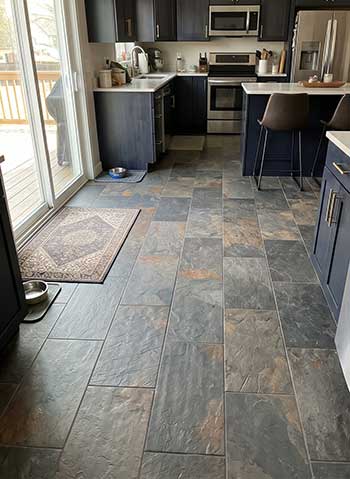
- Authentic tile and stone visuals in wet-prone rooms Tile formats excel at reproducing marble veining, slate textures, and ceramic glazes that feel appropriate in bathrooms and kitchens. The square or rectangular shapes allow classic grid, brick, or herringbone layouts that many homeowners associate with traditional tile. In my guest bathroom the marble-look tiles created a spa-like appearance without the grout maintenance of real stone.
- Stable glue-down bond in high-moisture areas When fully adhered, luxury vinyl tile stays locked in place even if water reaches the edges, because there are no floating seams that could lift. This made it a strong choice for the laundry room where occasional washer overflows occur. The bonded surface also resists the minor shifting that sometimes appears in floating floors over large spans.
- Pattern variety beyond wood grain Collections include large-format marble, small mosaic-style prints, and textured concrete looks that expand design options. I used a subtle travertine-style tile in the mudroom because it hid tracked-in dirt better than a light wood plank would have. The ability to mix sizes or add accent borders gave more layout flexibility than the linear plank format.
- Consistent performance under heavy point loads Many tile products use denser cores that resist indentation from refrigerator feet or island legs better than thinner floating planks. In the kitchen the glued tiles showed no visible marks after months of normal appliance movement. The firmer surface also paired well with the existing hard-surface countertops and felt cohesive underfoot.
Cons of Luxury Vinyl Tile
- Longer installation time with adhesive Glue-down tile requires spreading adhesive, placing each piece, and waiting for full cure before heavy traffic. My laundry room project took an extra day compared with the plank installation because I had to allow the adhesive to set properly. Cleanup of excess glue at the edges also added steps that the click-lock system avoided.
- More visible grid pattern in large open rooms The repeating tile layout can make expansive areas feel more segmented than continuous planks. In a sample layout I tried in the dining area, the grid lines competed with the furniture arrangement and made the space look smaller. Choosing a larger tile size reduced the effect, yet it still read as tiled rather than seamless.
- Repair difficulty once bonded Replacing a single glued tile usually means cutting it out carefully and matching both the adhesive and the exact print. Any slight color variation or adhesive residue can leave a noticeable patch. I kept extra tiles from the original boxes specifically because future repairs would be more involved than swapping a click-lock plank.
- Temperature sensitivity during glue application Adhesive performance depends on room temperature and humidity at the time of installation. Working in a cooler basement required extra time for the glue to tack properly, and rushing the process risked weak bonds. Floating plank systems proved more forgiving of minor temperature variations during the install window.
Installation Considerations and Room Recommendations
Click-lock luxury vinyl plank works well over existing hard floors when the surface is flat and clean, which saved me the cost of full subfloor replacement in two rooms.
Glue-down luxury vinyl tile demands a more thoroughly prepared substrate because any high spots telegraph through the thinner material.
In bathrooms I preferred the tile format near the shower because the visual matched traditional expectations, while I used plank in the adjacent hallway for continuity with the rest of the main floor.
Both formats require expansion gaps at walls when floating, yet the glued tile can often run closer to fixed objects once the adhesive cures. Transitions to other flooring types need reducers or T-moldings regardless of format.
I measured door clearances carefully because the added thickness of rigid-core plank plus underlayment sometimes required trimming door bottoms.
Maintenance and Long-Term Performance
Daily care for both involves sweeping or vacuuming without a beater bar and occasional damp mopping with a pH-neutral cleaner.
I avoided steam mops on both because excessive heat can affect the wear layer over time. Spills wipe up easily on either surface, and neither requires periodic refinishing the way hardwood does.
Over several years the higher wear-layer products I selected have resisted most household traffic. UV exposure near large windows can cause slight fading on lower-quality prints, so I chose collections with stronger fade-resistant coatings for sunlit rooms.
Both formats typically carry residential warranties of 15–25 years when installed according to guidelines, though commercial ratings exist for higher-traffic versions.
Also Read: Differences Between Oak Flooring And Maple Flooring.
Frequently Asked Questions (FAQ)
Neither is universally better. Plank usually works better for wood-look floors in living areas, while tile works better for stone or ceramic looks in bathrooms and kitchens.
It offers fewer stone-look options, seams can show in certain lighting, and thinner versions may dent under heavy point loads if the core is not rigid.
LVP refers to long plank-shaped pieces that typically mimic wood, while luxury vinyl tile uses square or rectangular shapes that mimic stone or ceramic tile.
Yes, many higher-end homes use premium rigid-core luxury vinyl plank with thick wear layers and realistic finishes as a durable, waterproof alternative to hardwood.
Wrapping Up
After living with both formats in different rooms, I found that luxury vinyl plank suits open living spaces where a continuous wood appearance and quicker installation matter most, while luxury vinyl tile fits wet areas and rooms where stone or ceramic looks feel more natural.
You should weigh the visual style you want against the installation method and room conditions before ordering. Matching the format to how you actually use each space will give you a floor that looks intentional and performs reliably for years.