
I have tested both landscape fabric and geotextile across flower beds, gravel paths, and drainage trenches in my own yard for more than a decade.
What started as simple weed-blocking experiments quickly showed me how the two materials behave differently under real weather, foot traffic, and time.
This article lays out the practical differences so you can match the right product to your project instead of guessing from store labels or short product claims.
| Feature | Landscape Fabric | Geotextile |
| Primary purpose | Weed suppression under mulch | Soil separation, filtration, reinforcement |
| Typical thickness | Thin to medium | Medium to heavy |
| Water flow | Moderate, can clog over time | High in non-woven, controlled in woven |
| Tensile strength | Low to moderate | High |
| Expected lifespan | 2–5 years in most beds | 10–20+ years in structural uses |
| Cost per square yard | Lower | Higher |
| Common applications | Ornamental beds, simple pathways | Driveways, French drains, slopes, retaining walls |
| UV resistance | Limited | Often engineered for longer exposure |
Key Differences Between Landscape Fabric and Geotextile

- Purpose and intended applications Landscape fabric is sold almost exclusively for home gardening and light landscaping. Its job is to block sunlight so seeds already in the soil cannot sprout easily, while still letting some rain and air reach plant roots. Geotextile starts from a different place. Civil engineers designed it to keep different soil layers from mixing, to filter water without letting fine particles clog drainage systems, and to add tensile strength under roads or heavy stone. When I first used landscape fabric under shredded bark in a front bed, the goal was purely cosmetic and low-effort weed control. When I later placed geotextile under a gravel driveway, the goal was structural: keep the gravel from sinking into the clay below and keep mud from pumping upward during spring thaw. Mixing the two purposes leads to disappointment. Using thin landscape fabric under a driveway fails within a season. Using heavy geotextile in a small flower bed can be overkill and more expensive than necessary.
- Material construction and fiber arrangement Most landscape fabric comes as either a woven sheet of polypropylene tapes or a spun-bonded non-woven mat. The weave is relatively open so water can move, yet the openings are small enough to limit light. Geotextile uses the same base polymers but at higher weights and with tighter quality control. Woven geotextile is made from continuous filaments or slit-film yarns locked in a grid that resists stretching under load. Non-woven geotextile is needle-punched so the fibers form a random, felt-like mass that lets water pass freely while still separating soil particles. In side-by-side tests I ran on a slope, the woven geotextile held its shape when I walked on wet gravel; the cheaper landscape fabric stretched and eventually tore at the edges.
- Durability under stress and weather Landscape fabric begins to break down once ultraviolet light, repeated wetting and drying, and root pressure work on it. After three seasons in my beds I could pull pieces out by hand. Geotextile is formulated for longer service. Many grades carry UV stabilizers and higher puncture resistance. On a retaining-wall backfill project the geotextile I used still looked intact after eight years of freeze-thaw cycles, while the landscape fabric I had tried earlier on a similar bank had fragmented into scraps that mixed with the soil.
- Water movement and filtration behavior Landscape fabric allows water through, yet the openings are sized more for light blocking than for high flow. Over time organic matter and fine silt collect on the surface and slow drainage. Non-woven geotextile is rated for much higher gallons per minute per square foot. That difference matters behind a retaining wall or under a French drain. I once replaced a clogged landscape-fabric drain with non-woven geotextile and watched the water clear within days instead of pooling for weeks.
- Installation demands and edge security Landscape fabric is light enough that one person can roll it out and pin it with landscape staples. Geotextile, especially the heavier woven grades, needs more care. Overlaps must be wider, seams sometimes require sewing or specialized fasteners, and the fabric must be tensioned so it does not wrinkle under load. The extra steps pay off in structural work but feel excessive in a simple mulched border.
Key Features of Landscape Fabric
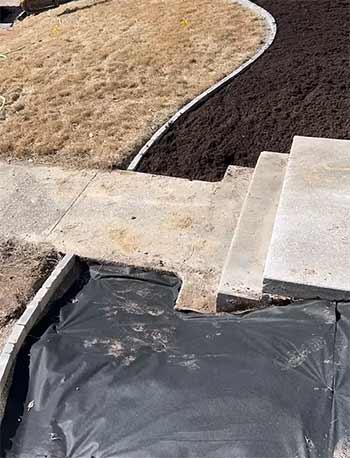
- Light-blocking surface that reduces seed germination The solid or tightly woven face stops most sunlight from reaching the soil. When I first covered a weedy bed and added two inches of mulch, the reduction in new sprouts the following spring was obvious. Existing perennial weeds still pushed through if their roots were strong, but annual seeds struggled.
- Moderate permeability that lets rain and irrigation reach roots Most products claim water passage. In practice the rate is enough for established shrubs and perennials provided the fabric stays free of heavy silt. I measured slower wetting of the soil under older fabric that had collected fine particles, so I now rinse or replace sections every few years in high-traffic beds.
- Lightweight rolls that are easy to cut and shape A single person can carry a 3-by-50-foot roll and trim it with ordinary scissors or a utility knife. That convenience makes it attractive for irregular beds and tight corners around existing plants.
- Compatibility with common mulches and decorative stone Bark, wood chips, and pea gravel sit cleanly on top. The fabric keeps the mulch from mixing into the soil too quickly, which can extend the tidy look of a bed by a season or two.
- Lower upfront cost for large surface areas When I priced out a 1,000-square-foot project, landscape fabric came in at roughly one-third the material cost of comparable geotextile. For temporary or low-load areas that price difference is hard to ignore.
Pros of Landscape Fabric
- Quick and inexpensive weed reduction in ornamental beds For the first two or three years the reduction in hand-weeding is noticeable. I spent far less time on my knees after installing it under a large shrub border.
- Helps keep mulch from disappearing into the soil too fast The barrier slows the mixing of organic mulch with native soil, so the surface stays looking fresh longer and the moisture-holding benefit of the mulch lasts.
- Simple enough for weekend projects without specialized tools No seaming equipment or heavy rollers are required. Pins and a utility knife handle most layouts.
- Available at nearly every garden center and big-box store I can pick up a roll the same day I decide to refresh a bed instead of waiting for a specialty order.
- Reduces the amount of mulch needed for visual coverage Because weeds are suppressed underneath, a thinner layer of mulch still looks full and tidy.
Cons of Landscape Fabric
- Limited lifespan once exposed to sun, roots, and traffic After three to five years most pieces I have used begin to tear or shred. Pulling weeds then brings up chunks of fabric, creating a mess that is harder to clean than the original weeds.
- New weed seeds germinate in the mulch layer above the fabric Wind-blown seeds and decomposing leaves create a new growing medium on top. I still end up pulling weeds; they are simply rooted in the mulch instead of the soil.
- Can restrict soil biology and natural nutrient cycling Earthworms and beneficial microbes move less freely when a continuous sheet sits between organic matter and mineral soil. Over time the soil under the fabric can become more compacted and less alive.
- Difficult and messy to remove once roots and soil have worked into it When I finally replaced fabric in an old bed, the material tore into strips and left plastic fragments mixed with the soil. Cleanup took longer than the original installation.
- Clogs more easily in areas with fine silt or heavy organic fall Drainage slows, and water can pond on the surface or run off elsewhere, defeating the purpose of a permeable barrier.
Also Read: Differences Between Shrub Hub And Yardzen.
Key Features of Geotextile

- High tensile strength that resists stretching and tearing Woven grades can carry significant loads without elongating. Under a gravel path that sees occasional vehicle traffic, the fabric kept the stone layer from punching into soft spots. Landscape fabric in the same location developed holes within months.
- Engineered filtration that separates soil particles while allowing water flow Non-woven geotextile acts like a filter sock. Fine clay stays on one side; clean water moves through. That property is the reason I switched to it for every French-drain install after watching cheaper fabric clog and force water to surface elsewhere.
- Wide range of weights and styles matched to specific loads Manufacturers publish puncture ratings, permittivity values, and apparent opening sizes. I select a lighter non-woven for drainage and a heavier woven for separation under driveways. That matching is rarely available with standard landscape fabric.
- Longer resistance to ultraviolet light and chemical breakdown Many geotextiles include stabilizers that keep the polymer chains intact for years even when edges are exposed. In an open rock garden the geotextile edges still looked serviceable after five seasons of full sun.
- Ability to reinforce soil and reduce erosion on slopes When placed under a thin layer of stone on a bank, geotextile holds the surface together during heavy rain. I watched a section protected this way stay intact while an unprotected neighboring bank lost several inches of topsoil in one storm.
Pros of Geotextile
- Long-term structural performance under load and weather In driveway and path applications the fabric continues to separate layers and support weight years after installation. I have sections that still function after more than a decade.
- Superior water filtration and drainage in engineered systems French drains, retaining-wall backfills, and permeable pavements stay clearer longer because the fabric is designed for that exact job.
- Higher resistance to puncture and tearing from sharp stone or equipment When I drive a wheelbarrow or light tractor over geotextile-protected gravel, the fabric rarely suffers damage that would ruin thinner landscape fabric.
- Versatility across civil and landscape projects One product line can serve weed control under heavy mulch, soil separation under pavers, and erosion control on banks. That flexibility reduces the number of materials I need to stock.
- Maintains soil structure by preventing mixing of layers Under a gravel driveway the clay stays down and the stone stays clean, so the surface remains firm and drainable instead of turning into a muddy mess each spring.
Cons of Geotextile
- Higher material cost that can stretch a small project budget For a modest flower bed the price difference feels unnecessary. I reserve geotextile for places where the extra strength is actually required.
- Heavier rolls that are harder to handle alone A full roll of medium-weight geotextile needs two people or a cart for comfortable placement. Solo work takes more time and planning.
- Over-engineered for simple low-load garden beds Using a high-strength woven geotextile under annuals or shallow-rooted perennials adds cost and installation effort without delivering proportional benefit.
- Requires more careful overlapping and securing to perform as designed Skimping on overlaps or pins can allow soil to migrate at the seams, reducing the separation benefit. The learning curve is steeper than with landscape fabric.
- Can still allow surface weeds if organic debris accumulates on top Like any barrier, geotextile does not stop seeds that land in the mulch or gravel above it. Maintenance of the surface layer remains necessary.
Performance Over Time
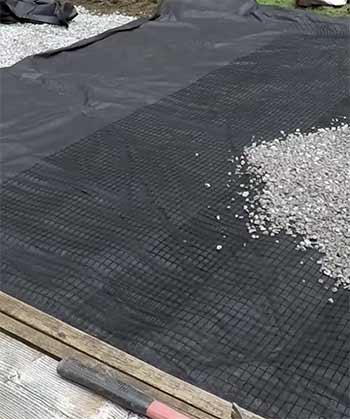
After watching both materials age in the same climate, patterns become clear.
Landscape fabric delivers its best results in the first two seasons of a low-traffic ornamental bed.
Beyond that the combination of root pressure, UV exposure, and surface weeds reduces its value.
Geotextile continues to perform in structural roles long after the landscape fabric has failed.
In drainage applications the difference is especially sharp: non-woven geotextile keeps water moving while landscape fabric gradually restricts flow.
Cost calculations change once you factor in replacement labor.
A cheaper fabric that must be dug up and discarded every four years can exceed the price of a single geotextile installation that lasts fifteen years.
Installation technique also affects outcomes. I now always clear existing vegetation, grade the surface smooth, and overlap edges by at least twelve inches for either product. With geotextile I add extra pins or seam weights on slopes.
With landscape fabric I accept that some maintenance will still be required and plan to top-dress mulch annually.
Also Read: Is Lockscape Sticky Mulch Worth It?
Frequently Asked Questions (FAQ)
Yes. Non-woven grades allow high flow rates; woven grades allow controlled but still useful passage.
Some use geotextile under hardscapes and drainage systems. Many avoid thin landscape fabric in planting beds because of long-term maintenance issues.
Avoid it in vegetable gardens, around plants that spread by runners, on steep slopes needing structural support, and anywhere you want active soil biology.
Properly installed high-quality geotextile prevents grass from penetrating the material itself. Grass can still appear through gaps, damaged spots, or from seeds in the layer above.
Wrapping Up
After years of installing, maintaining, and eventually removing both products, I choose based on the job rather than brand claims. Landscape fabric still has a place in light-duty ornamental work where speed and low cost matter most.
Geotextile earns its higher price wherever strength, filtration, or longevity are required. You now have the practical differences, performance notes, and real-yard observations needed to match the material to your next project.
Pick the one that solves the actual problem you face, install it carefully, and you will spend less time fighting weeds or repairing failed layers later.