
If you’re a dog parent like me who’s spent way too much time staring at ingredient lists wondering whether your pup is really getting the nutrition they deserve, Badlands Ranch and The Farmer’s Dog probably caught your eye.
Both brands position themselves as premium upgrades over typical kibble, promising real ingredients and better health outcomes.
In this comparison, I’ll lay out how they actually differ in practice so you can decide what fits your dog’s needs, your budget, and your daily life.
| Aspect | Badlands Ranch | The Farmer’s Dog | Notes |
| Food Type | Air-dried, shelf-stable | Fresh, gently cooked, flash-frozen | Badlands wins for no-fridge convenience |
| Meat Content | Up to 87% meat, organs & seafood | High fresh named meats (varies by recipe) | Badlands more concentrated animal protein |
| Processing | Low-temp air-dried in small batches | Gently cooked then frozen | Fresh often better nutrient absorption; air-dried more convenient |
| Personalization | Limited recipes, one-size approach | Highly customized per dog (age, weight, activity, health) | Farmer’s Dog clear winner here |
| Key Extras | Superfoods like lion’s mane, chia, turmeric | Salmon oil, visible veggies, vet nutrient blend | Both add functional ingredients |
| Storage & Prep | Pantry stable, just scoop | Freezer + fridge thaw required daily | Big lifestyle difference |
| Approx. Cost | Very high per bag (often $1.50–2+/oz) | Subscription model, $2–12+/day depending on dog size | Both premium; Farmer’s adds up with recurring orders |
| Best Suited For | Busy homes, picky eaters, no freezer space | Dogs with sensitivities, owners wanting tailored portions | Depends on your setup |
| Vet Backing | Strong ratings from nutrition-focused reviews | Frequently top-listed by vets | Farmer’s edges for explicit vet nutritionist formulation + trials |
Key Differences Between Badlands Ranch And Farmer’s Dog
- Ingredient Quality and Transparency
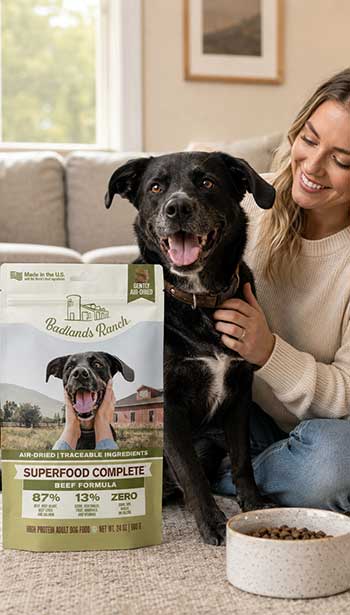
Badlands Ranch puts a heavy emphasis on organ meats right in the recipe names and lists.
Recipes often start with beef, beef liver, beef heart, and salmon, then layer in targeted superfoods like lion’s mane mushroom for brain support, chia seeds for healthy fats, and turmeric for its natural anti-inflammatory properties.
The brand avoids grains, corn, soy, wheat, and common fillers entirely.
This creates a very meat-forward profile that many owners say leads to smaller, firmer stools and shinier coats within a few weeks.
The Farmer’s Dog takes a whole-foods approach with visible fresh cuts of beef, turkey, chicken, or pork alongside carrots, sweet potatoes, kale, or broccoli.
Organs appear but aren’t always the star. Both skip artificial preservatives and by-products, yet Badlands feels more “nose-to-tail” while Farmer’s Dog reads like thoughtful home cooking with added balance from their nutrient blend.
For dogs that thrive on high animal protein and natural micronutrients from organs, Badlands often delivers noticeable energy and coat improvements faster.
- Processing Methods and Nutrient Retention
Badlands Ranch uses a low-and-slow air-drying process after gentle cooking. This removes moisture while keeping more of the original vitamins, enzymes, and amino acids intact compared to high-heat kibble extrusion.
The result is a lightweight, shelf-stable kibble-like texture that dogs treat like a high-value reward. The Farmer’s Dog gently cooks fresh ingredients at lower temperatures to kill pathogens without destroying delicate nutrients, then flash-freezes everything.
Fresh formats generally offer superior bioavailability, meaning your dog’s body absorbs more of the good stuff. Many owners switching to fresh report better digestion and less gas. However, air-drying gives Badlands an edge in convenience and consistency.
If your dog has a sensitive stomach or you want maximum nutrient uptake, the fresh route often shows quicker results in stool quality and vitality. If you travel or hate freezer management, the air-dried method keeps things simple without sacrificing much quality.
- Personalization and Portion Control
This is where the two diverge sharply. The Farmer’s Dog builds every plan around your specific dog using details like age, breed, weight, activity level, allergies, and even medications.
Meals arrive pre-portioned in sleeves labeled with your dog’s name, which helps prevent overfeeding and supports steady weight management. You can adjust recipes, pause shipments, or add variety easily. Badlands Ranch offers set recipes you choose yourself.
There’s no quiz or custom blending. You measure by weight or cup according to general guidelines. For multi-dog homes or pets with diagnosed conditions like food sensitivities or joint issues, Farmer’s Dog customization reduces guesswork and waste.
For straightforward households with healthy adult dogs, Badlands Ranch simplicity avoids subscription lock-in and lets you experiment with flavors without committing to weeks of one recipe.
- Cost Structure and Long-Term Value
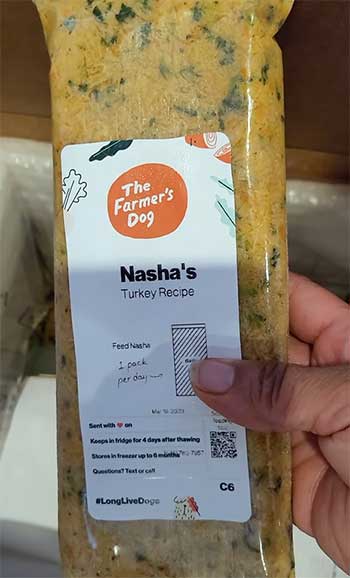
Both sit at the premium end, but the math plays out differently.
Badlands Ranch comes in smaller bags with high per-ounce pricing, though the calorie density means you feed less volume.
A single bag can last a small dog quite a while, and there’s no recurring charge pressure.
The Farmer’s Dog subscription scales with your dog’s size and can feel steep monthly, especially for larger breeds or multiple dogs, but pre-portioned packs cut down on waste and overfeeding costs over time.
Many owners find the health payoffs (fewer vet visits for skin or digestion issues) offset some expense.
Still, if budget is tight, Badlands Ranch lets you buy one bag to test without ongoing commitment.
Farmer’s Dog rewards consistency with potential visible improvements in energy and coat that some owners describe as transformative.
- Storage, Shelf Life, and Daily Routine
Badlands Ranch wins hands-down for ease. Bags sit in the pantry like regular kibble. No thawing, no freezer space, no planning ahead. You open and scoop.
The Farmer’s Dog demands freezer real estate for the bulk delivery and fridge space for the current week’s packs. Each meal needs overnight thawing.
For apartment dwellers or people who forget to pull packs out, this adds friction. On the plus side, the fresh format stays closer to its “just made” state. If your kitchen has limited cold storage or your schedule is unpredictable, Badlands Ranch removes a daily chore.
If you can build thawing into your routine and value that fresh-cooked smell and texture, Farmer’s Dog integrates well once the habit forms.
- Targeted Health Support and Real-World Feedback
Badlands Ranch leans on specific superfoods for immune, joint, and cognitive benefits alongside the high meat base. Owners frequently mention improved playfulness and reduced itching.
The Farmer’s Dog uses salmon oil for omega-3s and a balanced nutrient mix formulated by veterinary nutritionists, with published feeding trial data supporting digestibility.
Reports often highlight glossier coats, better stool consistency, and calmer digestion in dogs that struggled on kibble. Neither is a miracle cure, but both outperform standard dry foods in owner-reported outcomes for skin, energy, and gut health.
The choice often comes down to whether your dog needs broad high-protein density (Badlands) or tailored fresh balance (Farmer’s Dog).
Also Read: Differences Between IAMS And Blue Buffalo.
Key Features of Badlands Ranch
- High meat and organ inclusion creates dense nutrition that supports muscle maintenance and natural vitamin intake without heavy synthetic reliance.
- Air-drying at low temperatures preserves more heat-sensitive nutrients than traditional kibble while delivering a satisfying crunch dogs enjoy.
- Superfood additions like lion’s mane, chia, and turmeric target specific areas such as brain health, skin barrier, and gentle inflammation response.
- Multiple flavor options including beef, chicken, lamb & venison, and fish & turkey let you rotate without boredom.
- Shelf-stable format simplifies travel, storage, and daily feeding for busy households.
- Strong customer feedback on palatability, with many picky eaters accepting it readily after transition.
- Made in the USA with a focus on humane sourcing and contributions to animal welfare causes.
Pros of Badlands Ranch
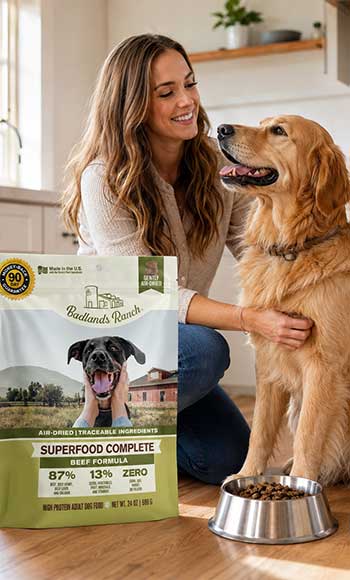
- Outstanding convenience stands out immediately. You store it anywhere, feed it anytime, and skip the thawing dance entirely. For anyone juggling work, kids, or travel, this removes a real barrier that fresh food services create.
- The organ-heavy recipes deliver concentrated natural nutrition that supports everything from coat shine to steady energy. Owners switching from standard kibble often notice firmer stools and less digestive upset within the first couple of weeks because there’s no filler bulk.
- Palatability is a genuine strength. The air-dried texture and high meat aroma win over dogs that turn away from other premium options. This matters when you’re dealing with seniors or picky eaters who need reliable intake.
- Superfood inclusions add functional layers without complicating the formula. Lion’s mane and turmeric bring targeted support that many owners appreciate for active or aging dogs.
- No subscription pressure means you can test a single bag, rotate flavors freely, and walk away if it doesn’t click. That flexibility feels refreshing compared to locked-in delivery models.
- High customer satisfaction scores reflect consistent reports of improved vitality and fewer allergy-like symptoms once dogs adapt.
Cons of Badlands Ranch
- The price per pound sits at the high end even among premium foods. While calorie density helps stretch a bag, larger dogs or multi-pet homes can still see significant monthly spend.
- Limited recipe variety compared to some competitors means less flexibility if your dog develops a sensitivity to one protein or simply gets bored.
- Some formulas carry higher fat levels that may not suit sedentary dogs or those with certain metabolic concerns. Monitoring portions and consulting your vet becomes important.
- No per-dog customization leaves owners of dogs with specific medical needs doing more manual adjustments or mixing.
- Smaller bag sizes require more frequent reordering for bigger dogs, which adds minor hassle despite the shelf stability.
Also Read: Differences Between IAMS And Purina Pro Plan.
Key Features of The Farmer’s Dog
- Recipes developed and tested by board-certified veterinary nutritionists following AAFCO standards with supporting feeding trial research.
- Human-grade ingredients prepared like real meals, then gently cooked and flash-frozen to lock in freshness and flavor.
- Deep personalization based on your dog’s full profile, including health conditions and lifestyle factors.
- Pre-portioned packs reduce overfeeding risk and make calorie control straightforward.
- Visible whole vegetables and proteins give transparency and support hydration through higher moisture content.
- Flexible subscription tools let you pause, skip, or modify deliveries as life changes.
- Clean safety record with no recalls and emphasis on USDA-level kitchen standards.
Pros of The Farmer’s Dog
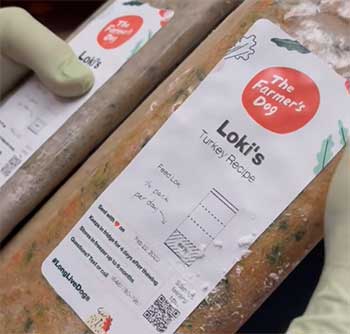
- Personalization changes the game for many owners. Getting portions and recipes matched to your dog’s exact profile reduces waste and supports steady weight and health goals in a way generic bags can’t match.
- Fresh preparation and higher moisture often translate to better real-world digestibility. Countless owners describe shinier coats, more consistent energy, and noticeably better stool quality after the switch.
- Veterinary nutritionist formulation plus published feeding trials give extra confidence, especially if your dog has a history of digestive or skin issues. Many vets actively recommend it for these reasons.
- Subscription flexibility with easy pausing and modifications fits real life better than rigid schedules. You can adjust as your dog ages or activity changes.
- Human-grade sourcing and minimal processing align with owners who want food that looks and smells like something they’d eat themselves.
- Strong safety track record and responsive support build trust over time.
Cons of The Farmer’s Dog
- The subscription model and recurring cost can add up quickly, particularly for large breeds or households with more than one dog. Budget planning becomes essential.
- Freezer and fridge requirements plus daily thawing add steps to your routine. Anyone short on cold storage space or prone to forgetting prep will feel the friction.
- Limited protein options (mainly beef, chicken, turkey, pork) restrict choices if your dog needs novel proteins or has multiple sensitivities.
- A recent class action lawsuit alleges higher fat content in some recipes than label as-fed numbers suggest and raises questions about suitability for certain dogs. The company disputes the claims and points to its formulation standards.
- Some owners report initial adjustment periods or billing/customer service hiccups during cancellations or changes, though many experiences remain positive.
Which One Fits Your Dog Best?
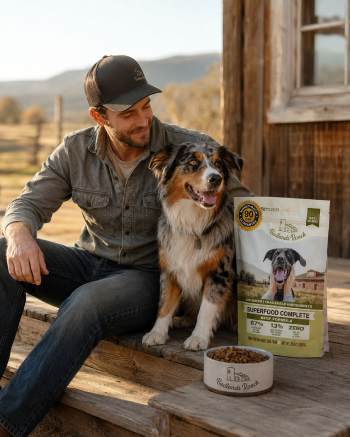
After weighing the details, the decision hinges on your priorities and your dog’s individual situation.
If convenience, pantry storage, and high meat density top your list, and you want to avoid daily thawing or subscription management, Badlands Ranch offers a strong, straightforward upgrade that many dogs accept enthusiastically with visible coat and energy benefits.
It shines for busy households or dogs that do well on concentrated nutrition without needing heavy customization.
On the other hand, if your dog has sensitivities, weight concerns, or you simply want meals built specifically around their profile with the digestibility advantages of fresh food, The Farmer’s Dog personalization and vet-backed approach often deliver more targeted results.
The freshness factor shows up in owner reports as better overall vitality, though the lifestyle commitment and ongoing cost require real commitment.
Both represent meaningful steps above average commercial foods in ingredient quality and reported outcomes. Neither is universally “better.”
The right choice comes down to matching the format and features to how you actually live and what your vet sees in your dog’s health markers. Start with a small test if possible, watch stool quality, energy, and coat over four to six weeks, and adjust from there.
Your dog will tell you through their daily enthusiasm and check-up results which path feels right.
Also Read: Differences Between Hill’s Science Diet And Blue Buffalo.
Frequently Asked Questions (FAQ)
Many veterinary nutrition reviews praise its high meat and organ content, superfood additions, and nutrient density from low-temperature air-drying. Some note that higher-fat recipes may not suit every dog and highlight the premium price as a consideration.
No single food earns that title because the best option depends on your dog’s age, health conditions, activity level, and tolerances. Fresh and air-dried premium options with high-quality named ingredients consistently rank at the top for digestibility and nutrient bioavailability.
A 2026 class action lawsuit claims some recipes contain higher fat levels on a dry-matter basis than the as-fed percentages on packaging suggest, potentially raising risks like pancreatitis for non-working dogs. The company strongly disputes the allegations and maintains its recipes meet established nutritional standards.
Yes. Numerous veterinarians and veterinary nutritionists list The Farmer’s Dog among top fresh food choices because of its vet-formulated recipes, published feeding trials, human-grade ingredients, and reported benefits for digestion and skin health in many dogs.
Wrapping Up
If you’re standing where I was a while back—trying to figure out whether to go with the shelf-stable simplicity of Badlands Ranch or the personalized freshness of The Farmer’s Dog—here’s the bottom line.
Both deliver real ingredients and noticeable upgrades over standard kibble in areas like coat quality, digestion, and energy. Badlands Ranch gives you convenience and high meat density without the freezer hassle, while The Farmer’s Dog offers tailored portions and that fresh-cooked edge many dogs respond to quickly.
The right pick depends on your dog’s health needs, your storage situation, and how much customization matters to you. Run the details by your vet, test what fits your routine, and watch how your pup actually thrives.
Either way, you’re moving in a better direction than most commercial options out there.