
I spent months comparing subfloor options on real jobs and in my own projects, and the choice between AdvanTech and traditional plywood kept coming up as the one that actually decides how solid, quiet, and problem-free a finished floor feels years later.
This article walks through the real differences in performance, moisture behavior, installation, cost, and long-term results so you can pick the right panel for your build without second-guessing.
| Feature | AdvanTech Subfloor | Plywood Subfloor (Typical CDX) |
| Core Construction | Oriented wood strands fully coated in advanced moisture-resistant resins | Cross-laminated wood veneers bonded with exterior-grade glue |
| Moisture Resistance | Excellent – minimal edge swell, recovers well after temporary wetting | Moderate – can swell, cup, or delaminate with prolonged exposure |
| Stiffness & Strength | Very high – reduced bounce and deflection | Good – solid but more variable across grades |
| Fastener Holding | Outstanding density keeps nails and screws tight | Good, yet can loosen more over time with movement |
| Edge Swell Risk | Extremely low | Noticeable, often requires sanding |
| Typical Cost per Sheet (approx. 23/32″) | Higher | Lower to mid-range depending on grade |
| Squeak Potential | Very low when installed with adhesive | Moderate to higher if movement develops |
| Warranty Highlights | Limited lifetime plus long no-sand guarantee | Standard structural warranty, varies by maker |
| Best Suited For | Moisture-prone builds, long construction timelines, quiet floors | Dry-site projects, tighter budgets, familiar handling |
Key Differences Between AdvanTech Subfloor And Plywood

- Composition And Manufacturing Process AdvanTech starts with carefully sized wood strands arranged in oriented layers and flooded with proprietary liquid resins that coat every strand before the panel is pressed. That full coating creates a dense, consistent matrix. Plywood begins with thin sheets of wood veneer peeled from logs, stacked so the grain runs perpendicular from layer to layer, then glued under heat and pressure. The cross-lamination gives plywood its classic strength, yet the veneers themselves remain more open to water wicking along the grain and into any internal voids that form during production.
- Moisture Response Under Real Job-Site Conditions I have watched both products sit through unexpected rain delays. AdvanTech panels bead water on the surface much like a treated deck board and show almost no permanent thickness change at the edges. Plywood absorbs more freely, especially at cut edges and any gaps between plies. Once swollen, plywood often stays thicker and can create ridges that telegraph through finish flooring unless you sand them flat.
- Dimensional Stability Across Seasons Because every strand in AdvanTech is resin-coated and the panel density is higher, expansion and contraction stay tighter. Plywood moves more with humidity swings. That movement shows up as slight cupping or gaps that later translate into floor noise.
- Surface Consistency And Voids AdvanTech delivers a uniform face with no internal voids large enough to create soft spots. Lower-grade plywood can hide small gaps or loose plies that eventually become soft spots under heavy furniture or concentrated loads.
- Weight And Handling On The Job AdvanTech panels feel noticeably heavier in the same thickness. That extra mass contributes to stiffness but means two people should lift larger sheets. Plywood is lighter and easier for a solo installer to maneuver into place.
- Sound And Vibration Control The denser core of AdvanTech dampens footfall noise better. Plywood transmits more vibration unless additional underlayment or adhesive is used.
Also Read: Differences Between AdvanTech And DryMax OSB Subfloor.
Key Features of AdvanTech Subfloor
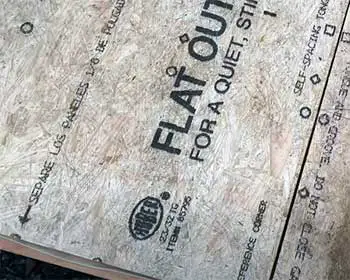
- Advanced resin technology throughout the panel Every wood strand receives a thorough coating of moisture-resistant resin during manufacture. The result is protection that continues even on freshly cut edges, something ordinary OSB and many plywoods cannot claim.
- Precision tongue-and-groove edges The milled profile is consistent panel after panel. When you push two sheets together the joint self-spaces correctly and creates a continuous surface that feels locked rather than simply butted.
- High certified stiffness and bending strength Independent testing shows AdvanTech panels deliver higher design values for stiffness and strength than commodity plywood or standard OSB of the same thickness. Floors feel firmer underfoot and deflect less between joists.
- Exceptional fastener retention The dense wood matrix grips nails and screws tightly. Combined with polyurethane subfloor adhesive the connection resists the cyclic movement that causes squeaks years later.
- Long exposure tolerance during construction Panels carry a multi-hundred-day no-sand guarantee against edge swell from incidental weather. That buffer matters on jobs that stretch through rainy seasons or winter delays.
- Structural 1 rating and ESR documentation Many thicknesses meet Structural 1 requirements and carry evaluation reports that document performance above basic code minimums for strength, stiffness, and holding power.
- Clean, sanded surface ready for most finish floors The face arrives relatively smooth and free of the large flakes that can appear on commodity OSB, reducing the need for extra prep before underlayment or finished flooring goes down.
Pros of AdvanTech Subfloor
- Superior resistance to edge swelling and permanent thickness change After repeated soak tests and real rain exposure the panels return close to original dimensions. That single trait eliminates the sanding callbacks that eat into profit and schedule.
- Dramatically quieter finished floors When installed with the recommended polyurethane adhesive the panel-to-joist bond is so stiff that movement is almost eliminated. Homeowners notice the difference immediately.
- Higher load capacity and less floor bounce The combination of density and resin technology produces floors that feel solid even on 24-inch joist spacing. Heavy appliances and concentrated loads create less noticeable deflection.
- Longer construction weather window The extended no-sand guarantee gives crews breathing room when schedules slip or weather turns wet. Fewer panels need replacement or rework.
- Strong fastener performance over time Screws and nails stay seated. The risk of nail pops or loose fasteners under hardwood or tile drops sharply.
- Consistent quality from sheet to sheet Manufacturing controls keep thickness, density, and resin distribution uniform. You do not find the soft spots or voids that occasionally appear in lower-grade plywood.
- Reduced long-term maintenance and repair costs Fewer moisture-related failures and less movement mean the subfloor stays flat under the finished floor for decades, protecting the investment above it.
Cons of AdvanTech Subfloor
- Higher material cost per sheet The premium resin system and tighter quality control push the price above commodity plywood and standard OSB. On large floor areas the difference adds up quickly.
- Heavier panels increase labor effort A 23/32-inch sheet can weigh noticeably more than the equivalent plywood. Crews may need extra hands or mechanical aids for efficient placement, especially on upper floors.
- Specialized adhesive recommendation Water-based or latex adhesives are not recommended. You must use polyurethane or solvent-based products that meet specific standards, which can raise adhesive cost slightly and require different cleanup habits.
- Not intended for permanent exterior exposure Although highly resistant during construction, the panels are rated Exposure 1. They should not remain fully exposed to weather indefinitely or serve as permanent exterior sheathing without proper covering.
- Cutting produces more fine dust The dense resin-coated strands generate finer dust than plywood. Dust collection and respiratory protection become more important on larger jobs.
- Limited decorative or visible applications The surface is engineered for performance under finish flooring, not for staining or leaving exposed. Appearance grades of plywood still win when the panel will be seen.
Also Read: Differences Between Durastrand And AdvanTech Subfloor.
Key Features of Plywood Subfloor

- Cross-laminated veneer construction Alternating grain directions create inherent resistance to splitting and provide balanced strength in both directions. This classic design has proven itself for decades in residential and light commercial floors.
- Wide range of grades and thicknesses Builders can choose from CDX for general subfloor use up to higher-appearance or marine-grade panels when extra durability or smoother faces are required. Thickness options cover nearly every span rating needed.
- Familiar cutting and fastening behavior Most carpenters already know how plywood drills, saws, and accepts fasteners. Blade wear is predictable and the material behaves the same whether you are nailing or screwing.
- Good shear strength for lateral loads The continuous veneer layers transfer racking forces effectively, making plywood a solid choice when the subfloor also contributes to the overall shear wall system.
- Availability almost everywhere Lumber yards and big-box stores stock plywood year-round in standard sizes, so last-minute replacements or small additions rarely create delays.
- Potential for smooth face grades Higher grades offer faces free of large knots and voids, which can simplify installation of thin finish floors that might telegraph surface imperfections.
Pros of Plywood Subfloor
- Lower upfront material cost on most projects Standard CDX or similar structural grades remain less expensive, freeing budget for other parts of the build or allowing thicker panels without raising the total spend.
- Lighter weight simplifies handling and installation One person can often position and fasten sheets more easily, which speeds production on smaller crews or tight sites.
- Broad familiarity among installers Almost every carpenter has years of experience with plywood. Techniques for cutting, fastening, and dealing with imperfections are second nature, reducing the learning curve.
- Excellent shear and racking resistance The continuous cross-laminated layers perform well when the floor diaphragm must resist lateral forces from wind or seismic activity.
- Availability of specialty grades Marine-grade or higher-appearance plywood can be specified when moisture exposure will be more severe or when a smoother surface is desired under thin flooring.
- Easier to source small quantities or odd sizes Because plywood is stocked everywhere, last-minute needs or repair panels are rarely a problem.
Cons of Plywood Subfloor
- Greater vulnerability to moisture damage Prolonged wetting can cause swelling, cupping, and eventual delamination, especially if water reaches the interior plies through edges or voids. Once damaged, the panel rarely returns to original thickness.
- Higher risk of floor squeaks over time Movement between the panel and joists, or within the plies themselves, can loosen fasteners and create noise. Proper adhesive helps, yet plywood still shows more movement than denser engineered panels.
- Potential internal voids and soft spots Lower grades may contain gaps between veneers that become soft under concentrated loads or that allow moisture to travel farther inside the panel.
- More variable thickness and flatness Manufacturing tolerances can produce sheets that are not perfectly consistent. On larger floors this variability sometimes requires extra sanding or leveling before finish flooring.
- Shorter weather-exposure tolerance Most plywood subfloor products lack the extended no-sand guarantees of premium engineered panels. Rain delays more often result in swollen edges that must be corrected.
- Greater long-term maintenance risk in humid climates In areas with high humidity or frequent plumbing incidents the chance of moisture-related floor problems rises compared with resin-coated alternatives.
When I look at the total picture, AdvanTech shines wherever construction timelines stretch, moisture is a realistic risk, or the finished floor must stay quiet and flat for decades.
Plywood still makes sense on dry-site projects with tight budgets and experienced crews who know how to protect the panels carefully. The decision is rarely about one product being universally better; it is about matching the panel’s real-world behavior to the specific conditions of your job.
Also Read: Differences Between Top Notch 350 And Advantech Sub-flooring.
Frequently Asked Questions (FAQ)
Most issues trace back to installation mistakes such as skipping adhesive, incorrect spacing, or leaving panels with the underside exposed to standing moisture for extended periods. Rare surface flaking has been reported when moisture content stays elevated from below. Weight and cost are the other frequent complaints.
It is highly moisture resistant, not waterproof. The resin system keeps absorption and swelling very low during temporary construction wetting, yet standing water should still be removed promptly and the panels are not rated for permanent exterior exposure.
For most residential and light commercial floors that face any moisture risk or demand long-term quiet performance, AdvanTech ranks at or near the top among widely available engineered panels. In completely dry, budget-driven projects, quality plywood remains a strong contender.
Both are acceptable when fasteners meet the manufacturer’s size and penetration requirements. Screws generally provide superior long-term holding power, especially when paired with polyurethane adhesive. Many builders prefer screws for the extra security against movement.
Wrapping Up
Choosing between these two materials ultimately comes down to the conditions your floor will face and the performance you expect ten or twenty years from now.
If you prioritize resistance to weather delays, minimal squeaks, and lasting flatness, AdvanTech gives you a clear edge. If material cost and ease of handling rank higher and the site stays dry, plywood continues to deliver reliable results. Match the panel to the project and you will end up with a floor that feels solid every time you walk across it.