
When I started looking for a reliable chef knife upgrade for my home kitchen, the Zwilling Pro and Professional S lines kept coming up as top contenders.
Both deliver that trusted German engineering Zwilling is known for, yet they approach design in noticeably different ways.
My goal here is to lay out exactly how they compare so you can decide which one matches the way you actually cook, whether that means quick weeknight meals or more serious weekend projects.
Here is a side-by-side comparison to get us started:
| Aspect | Zwilling Pro | Zwilling Professional S |
| Bolster | Curved half bolster, slanted and tapered | Full bolster with integrated finger guard |
| Blade Profile | Pronounced belly, modern curve for rocking | Traditional gentle belly and spine |
| Steel | Friodur ice-hardened stainless | Same Friodur ice-hardened stainless |
| Hardness | 57 HRC | 57 HRC |
| Handle | Triple-riveted POM, ergonomic | Triple-riveted POM, classic three-rivet |
| Edge Angle | 15° per side | 15° per side |
| Typical 8″ Chef Weight | ~9.4 oz | ~8.6–9 oz |
| Grip Feel | Excellent pinch grip comfort | Solid but bolster can limit some grips |
| Sharpening Access | Full blade edge usable and easy | Bolster interferes near heel |
| Best Suited For | Home cooks wanting modern ergonomics | Users who prefer traditional pro-kitchen feel |
Key Differences Between Zwilling Pro and Professional S
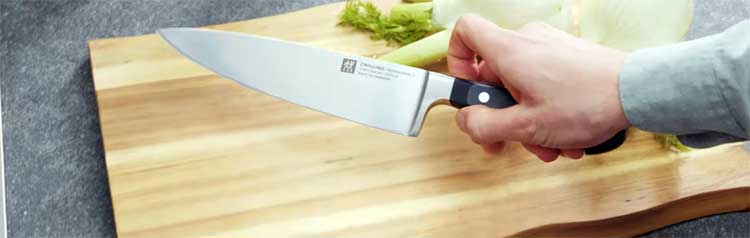
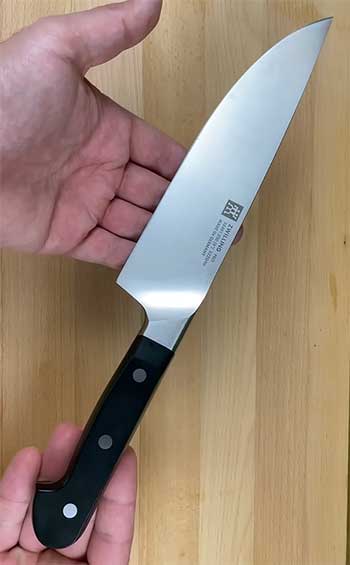
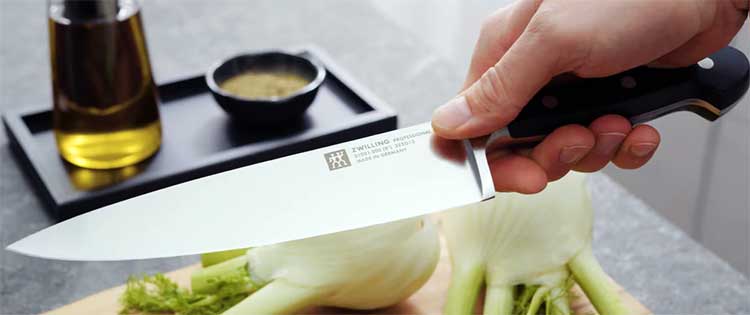
- The bolster design changes everything about how these knives feel in extended use. The Pro’s curved half bolster stops short and slopes away from the blade, giving your fingers a natural resting place during a pinch grip without any hard edge digging in. In contrast, the Professional S carries a full bolster that runs all the way to the cutting edge and doubles as a finger guard. That classic look feels reassuring at first, yet after an hour of chopping it can press against your knuckles and force your hand into a slightly higher position. I noticed this most when breaking down a whole chicken—the Pro let me choke up comfortably on the blade while the Professional S kept my grip farther back.
- Blade geometry affects cutting motion more than most people expect. The Pro carries a deeper curve through the belly, which makes rocking chops through herbs or onions feel almost effortless once you get the rhythm. The spine stays relatively straight toward the tip, so the point stays in better alignment with your hand during precision work like trimming fat. The Professional S sticks closer to a traditional profile with a milder curve overall. It excels at straight push cuts and slicing but requires a bit more wrist adjustment when you want to rock through a pile of vegetables. Both profiles are capable, yet the Pro rewards a more fluid, modern technique while the Professional S feels steadier for deliberate, controlled strokes.
- Sharpening and maintenance reveal practical gaps that show up over months of ownership. Because the Pro’s bolster tapers and curves away, you can run a stone or honing rod all the way to the heel without the bolster getting in the way. That means the entire edge stays sharp longer and you waste less time on awkward angles. The Professional S’s full bolster creates a small dead zone right where the blade meets the handle. Many owners end up with a slightly dull heel section after repeated sharpenings, and restoring that area requires extra care or a different technique. For someone who sharpens at home every couple of months, this difference adds up in both effort and edge longevity.
- Weight distribution and overall balance land close but not identical. The Pro tends to feel a touch more forward-weighted in the blade, which some cooks like for driving through tougher produce. The Professional S sits a bit more neutral, giving it that planted, no-nonsense feel many line cooks grew up with. Neither is heavy by modern standards, yet the subtle shift changes how fatigued your wrist gets during a long prep session. I tested both on a big batch of root vegetables and found the Pro let me keep a consistent pace without as much conscious adjustment.
- Handle ergonomics and available finishes offer another layer of choice. Both use the same durable triple-riveted POM material that resists moisture and cleaning chemicals, but the Pro’s handle shape pairs with the curved bolster for a seamless transition from blade to grip. Some versions even come in white handles for a cleaner look on lighter countertops. The Professional S sticks to the timeless black three-rivet look that screams professional kitchen. If you value a knife that disappears in your hand during repetitive tasks, the Pro’s refinements win out. If you prefer the visual and tactile reassurance of a full bolster, the Professional S delivers that traditional presence.
- Long-term durability and real-world wear tell similar stories with small caveats. Both lines use the same Friodur ice-hardened steel that resists corrosion and holds an edge through heavy home use. The full bolster on the Professional S can actually protect the blade spine during aggressive tasks, which some professional users appreciate. Yet that same bolster makes it slightly harder to maintain a perfectly even edge over years of sharpening. The Pro’s open design trades a bit of that protective bulk for easier upkeep and more usable blade length. In my experience, both knives still look and perform well after regular family cooking, but the Pro stays more user-friendly as it ages.
Also Read: Differences Between Chicago Cutlery And Henckels Knives.
Key Features of the Zwilling Pro

- The curved half bolster stands out as the signature update. It supports a true pinch grip without forcing your fingers into an unnatural position, which reduces hand fatigue during long chopping sessions. The taper also lets you sharpen or steel the entire edge right up to the handle, something I appreciate every time I maintain the knife at home.
- Friodur ice-hardened stainless steel runs through the full length of the blade and tang. This proprietary process delivers 57 HRC hardness along with excellent corrosion resistance, so the knife stays bright even after repeated dishwasher cycles or acidic ingredients. The steel takes a keen edge quickly and keeps it through dozens of meals before needing attention.
- Full tang construction paired with triple-riveted POM handles gives the knife serious structural integrity. The handle material stays grippy even when wet and never absorbs odors or moisture the way wood can. Rivets sit flush so nothing catches during cleaning or use.
- The blade profile features a generous belly that shines during rocking cuts while the tip geometry stays precise enough for fine work like deveining shrimp or scoring bread dough. This hybrid shape bridges traditional German performance with a touch more agility.
- Laser-controlled or precision-ground edges come factory sharp and ready for immediate use. The 15-degree angle per side strikes a good balance between keenness and durability for everyday ingredients.
- Available in multiple sizes and block sets, the Pro line fits both minimalist single-knife buyers and people building a full collection. White handle options add visual variety without sacrificing performance.
Pros of Zwilling Pro
- Superior pinch grip comfort reduces hand strain during extended prep work. After dicing several pounds of onions or herbs, my hand stays relaxed instead of fighting the bolster.
- Easier full-blade sharpening and honing means you maintain a consistently sharp edge with less effort and fewer awkward angles. The heel stays usable longer, which effectively gives you more cutting surface over the knife’s lifetime.
- Modern blade curve encourages efficient rocking technique that speeds up vegetable prep without sacrificing control. I find myself finishing mise en place faster on busy weeknights.
- Sleeker overall profile and optional white handles give the knife a contemporary look that fits nicely in home kitchens without screaming “commercial equipment.”
- Same high-quality Friodur steel and construction as the Professional S, so you sacrifice nothing in durability or corrosion resistance while gaining ergonomic improvements.
- Better access to the entire edge during maintenance translates to longer intervals between professional sharpenings for most home users.
- Comfortable balance that feels natural whether you prefer a forward-weighted or neutral feel, making it adaptable to different cutting styles.
- Strong value retention because the design improvements address common complaints about traditional bolsters without raising the price significantly.
Cons of Zwilling Pro
- Some traditionalists miss the reassuring bulk and protective feel of a full bolster when breaking down large cuts of meat or working in a very fast-paced environment.
- The more pronounced belly can require a slight adjustment in technique if you grew up using strictly traditional German profiles for every task.
- Slightly different spine geometry changes how the tip behaves during certain piercing or scoring motions compared to the classic shape.
- Availability in certain block sets can be more limited than the long-standing Professional S configurations in some retail channels.
- The modern aesthetic may not appeal to cooks who specifically want that old-school professional kitchen appearance on their counter.
Key Features of the Zwilling Professional S
- The full bolster provides a solid finger guard and classic aesthetic that many cooks associate with professional kitchens. It adds a sense of security when working quickly and protects the blade heel during heavy tasks.
- The same Friodur ice-hardened steel and 57 HRC hardness deliver reliable edge retention and corrosion resistance across the entire line. You get consistent performance whether you reach for the paring knife or the 10-inch chef.
- Triple-riveted POM handle with traditional three-rivet styling offers a secure, no-nonsense grip that feels familiar to anyone who has used older German knives. The rounded contours fit a wide range of hand sizes comfortably for shorter sessions.
- Traditional blade profile with gentle curve excels at straight slicing and controlled push cuts. The spine tapers in a way that keeps the tip aligned for precision work while the belly handles general chopping duties.
- Full tang and robust construction stand up to the demands of frequent use without loosening or developing hot spots. Many professional kitchens have relied on this style for decades.
- Wide range of knife types and block set configurations makes it easy to outfit an entire kitchen with matching pieces that share the same balance and sharpening requirements.
Also Read: Is Cambridge Silverware Any Good?
Pros of Zwilling Professional S
- Classic full bolster delivers the traditional look and finger protection that many experienced cooks prefer and trust instinctively.
- Proven track record in professional settings gives peace of mind that the knife can handle heavy daily abuse without drama.
- Neutral balance and familiar handle shape feel immediately comfortable to anyone transitioning from older German knives.
- Full bolster adds a layer of protection to the blade heel during aggressive chopping or when the knife bumps against other tools in a drawer or block.
- Consistent performance across a huge range of knife types and set configurations makes building a matched collection straightforward.
- Same excellent Friodur steel properties ensure reliable edge holding and easy maintenance for corrosion resistance.
- Timeless styling that never looks dated and pairs well with both modern and traditional kitchen decor.
- Often easier to find in complete block sets with matching pieces for every common task.
Cons of Zwilling Professional S
- Full bolster interferes with pinch grip comfort during long sessions and can cause hand fatigue or force a higher grip position.
- Sharpening becomes more complicated near the heel, often leaving a small section less sharp and requiring extra technique or time to restore.
- Traditional blade profile feels less agile for pure rocking chops compared to knives with deeper bellies, slowing down some repetitive vegetable work.
- The extra bolster material adds a tiny bit of visual and tactile bulk that some users find less refined after experiencing the Pro’s tapered design.
- Slightly reduced usable blade length over time as the heel area wears or dulls unevenly from repeated sharpening attempts around the bolster.
- Less ideal for cooks who frequently switch between pinch and handle grips depending on the task.
Also Read: Differences Between Bubba And Rapala Cordless Fillet Knives.
Frequently Asked Questions (FAQ)
Zwilling offers several tiers. Entry-level lines like Gourmet provide solid performance at lower prices. Four Star sits in the popular mid-range with excellent ergonomics. Professional S and Pro represent the core professional-grade options with forged construction and premium steel. Higher collaborations like Kramer by Zwilling push into premium custom territory.
Both brands produce excellent German-style knives with similar steel quality and durability. Zwilling often edges out in modern ergonomics and value, while Wusthof sometimes feels slightly more refined in fit and finish. Personal preference for bolster style and handle shape usually decides the winner more than raw quality.
Bourdain long recommended the Global G-2 8-inch chef knife for its lightweight Japanese design, extreme sharpness, and simplicity. He praised it as the one knife most home cooks actually need rather than a full German-style set.
There is no single “best” because it depends on your priorities. Professional S and Pro sit at the top for most serious home cooks due to their balance of performance, durability, and features. Four Star remains incredibly popular for its seamless handle comfort. Choose based on whether you prefer traditional bolster protection or modern pinch-grip ergonomics.
Final Thoughts
After spending real time with both lines in my kitchen, I keep reaching for the Pro more often because the curved bolster and easier sharpening simply make daily cooking more enjoyable.
You might feel the same once you hold them side by side. If your style leans heavily traditional or you already love the full bolster feel, the Professional S will still serve you faithfully for years.
Either way, you are getting a knife that punches well above its price in build quality and cutting performance.