
When it comes to picking solid knives for regular home cooking, Zwilling’s Pro and Four Star series keep coming up as strong options.
Both deliver forged German craftsmanship that holds up through years of chopping, slicing, and dicing.
I put this comparison together after looking closely at specs, user feedback, and how the designs actually work in practice because deciding between these two can feel confusing when they share so much core quality.
The goal is to show you the practical differences so you can match the right one to your own kitchen habits and grip style.
Here is a side-by-side look at the main specs for the 8-inch chef’s knife in each series.
| Feature | Zwilling Pro | Four Star |
| Construction | Forged from one piece of steel | Forged from one piece of steel |
| Steel & Hardness | High-carbon Friodur stainless, ~57 HRC | High-carbon Friodur stainless, ~57 HRC |
| Bolster | Curved half bolster | Full traditional bolster |
| Handle Material | Durable polymer with three visible rivets | Polypropylene with concealed rivets |
| Tang | Exposed full tang | Concealed full tang |
| Edge Angle | 15 degrees per side | 15 degrees per side |
| Weight & Balance Feel | Nimble with rounded butt for secure hold | Solid with squared butt, slightly bulkier feel |
| Best Suited For | Pinch-grip users wanting precision and control | Cooks who prefer maximum finger protection |
| Typical Price Range (8″ chef) | $140–160 | $120–150 |
Key Differences Between Zwilling Pro And Four Star
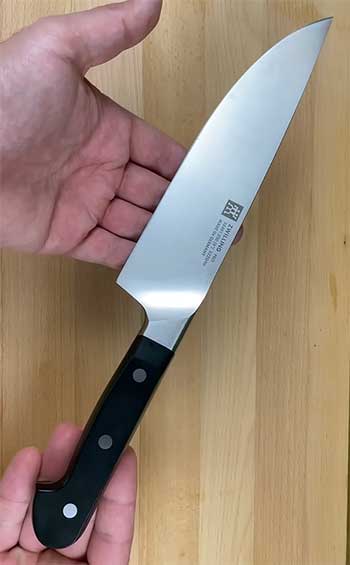
- The bolster design creates the most noticeable shift in daily use. Zwilling Pro uses a curved half bolster that slopes away from the blade edge. This shape lets your thumb and forefinger rest comfortably right on the blade for a true pinch grip during rocking chops or fine mincing. You get better leverage and control when breaking down an onion or chiffonading basil because the metal does not get in the way near the heel. In contrast, the Four Star carries a full bolster that extends all the way down. It acts like a built-in guard that keeps your fingers safely behind the blade even if your hand slips slightly. That extra protection feels reassuring when you are rushing through a big batch of carrots or working with slippery ingredients, but it can limit how close you get to the heel for certain cuts and makes sharpening that last inch of edge a bit more awkward.
- Handle shape and how the steel shows through also set them apart in feel. The Pro features a rounded butt and visible rivets along with an exposed tang. The design gives a classic heavy-duty look while the rounded end helps the knife settle securely in your palm without sharp corners digging in during long prep sessions. The Four Star goes for a squared, flat butt with everything concealed inside the polypropylene. It feels a bit bulkier in the hand and presents a cleaner, more minimalist profile that many people associate with traditional German knives. Over an hour of vegetable prep the rounded Pro handle tends to reduce hot spots on your palm, while the squared Four Star can feel more planted and stable if you prefer a firmer, less refined grip.
- Balance and perceived weight come through differently even though the overall heft stays similar. Because the Pro exposes more of the tang and uses the curved bolster, it often feels slightly more forward-balanced and responsive when you lift it for quick slices. That nimbleness helps during fast dicing or when you need to change angles quickly on a cutting board. The Four Star’s concealed construction and full bolster shift a touch more mass toward the handle, giving it a planted, almost planted-in-place stability. Some cooks like that extra authority when powering through denser items such as winter squash or crusty bread, while others find the Pro’s lighter-on-its-feet character less tiring after a full Sunday meal prep.
- Aesthetics and how the knives age play a role for people who like their tools to look intentional on the counter or in a block. The Pro’s exposed rivets and rounded steel butt develop a lived-in character that pairs well with both modern and classic kitchens. It reads as professional without trying too hard. The Four Star keeps a more uniform, seamless appearance that stays looking fresh even after years of dishwasher cycles and heavy use. If you value that timeless, almost vintage German look that has not changed much since the 1970s, the Four Star delivers it straight away.
- Sharpening and long-term maintenance reveal small but real practical gaps. With the Pro’s half bolster you can run a whetstone or guided sharpener straight through the entire edge without fighting thick metal at the heel. That makes touch-ups faster and more consistent. The Four Star’s full bolster protects your fingers beautifully but forces you to work around the extra steel when you reach the back of the blade. Over five or ten years of regular home sharpening this difference adds up in convenience, especially if you maintain your own edges instead of sending them out.
- Price positioning stays close enough that it rarely decides the choice on its own. Both sit in the same premium-but-accessible bracket, and you will often find either on sale for under $130 for the chef knife. The Pro sometimes carries a small premium because of the more intricate bolster geometry, yet the gap closes quickly during promotions. What you are really paying for in either case is the forged construction, the Friodur treatment, and the lifetime warranty against manufacturing defects.
Also Read: Are Ninja NeverDull Knives Good?
Standout Key Features in the Zwilling Pro Series

- The curved bolster directly supports professional-style pinch grip technique. Your thumb sits on one side of the bolster while the forefinger curls on the other, giving you fine motor control that feels almost like an extension of your hand. This matters when you are doing precise work such as deveining shrimp or scoring pastry dough because small adjustments happen more naturally without the bolster fighting your finger placement.
- Exposed rivets and tang create both visual interest and a tactile reminder of the full-tang strength running through the knife. Many users say the visible steel elements make the knife feel more substantial and trustworthy, which can increase confidence when tackling tougher vegetables or trimming meat.
- The rounded butt design reduces pressure points during extended use. After forty minutes of repetitive slicing the absence of sharp corners at the end of the handle keeps your grip more relaxed, which translates to cleaner cuts and less cumulative fatigue in your wrist and forearm.
- Polymer handle material resists moisture and temperature swings without absorbing odors. Whether you are working next to a hot stove or rinsing the knife under cold water, the handle stays comfortable and hygienic without swelling or cracking over time.
- The overall geometry encourages a smooth rocking motion. Combined with the 15-degree edge, the blade profile lets you maintain consistent contact with the board while the curved bolster keeps your hand in the optimal position, so you expend less energy per cut.
Potential Drawbacks of the Zwilling Pro Series
- The half bolster offers less physical barrier between your fingers and the blade edge. If you are still building knife skills or tend to grip higher on the handle during fast work, that missing full guard can feel slightly less forgiving until muscle memory develops.
- Visible rivets and exposed tang require occasional extra attention during cleaning. Food particles can collect in the small crevices around the rivets, so a quick scrub with a brush becomes part of the routine if you want the knife to stay spotless.
- Some cooks simply prefer the planted, almost planted-in-place stability of a squared handle butt. The Pro’s rounded end can feel a touch less authoritative when you are applying downward force on dense items, even though the actual cutting performance stays identical.
- Availability in certain block sets can be narrower than the long-running Four Star line. If you like the idea of buying a complete matching set with shears and steel right away, you may find fewer pre-configured options for the Pro.
Also Read: Are Imarku Knife Sets Good?
Standout Key Features in the Four Star Series
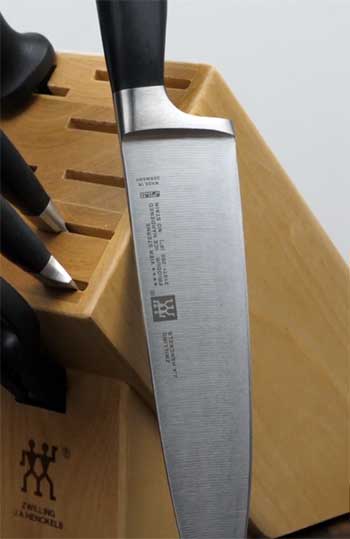
- The full bolster provides an immediate sense of safety that many home cooks appreciate from the first use. Your fingers stay naturally positioned behind a solid wall of steel, which reduces worry when working quickly or when younger family members are nearby in the kitchen.
- The squared butt and concealed construction give the knife a classic, no-nonsense presence that feels substantial without any visual distractions. It looks at home in both traditional wooden blocks and modern magnetic strips.
- Polypropylene handle material has proven itself over decades of real-world abuse. It stays matte and comfortable even after thousands of washes and resists the slight flex that some softer plastics develop.
- The heritage design since the mid-1970s means replacement parts and matching pieces remain easy to find years later. If you ever need another paring knife or bread knife to complete the set, the Four Star ecosystem stays well supported.
- Balance leans slightly handle-heavy in a way that many traditional cooks find reassuring. The knife sits calmly on the board and lets you focus on guiding the cut rather than fighting any forward pull.
Areas Where Four Star Might Fall Short
- The full bolster makes it harder to sharpen or use the very back of the blade effectively. You end up either stopping short or angling the stone awkwardly, which can lead to uneven edges over time if you maintain the knives yourself.
- The squared handle butt can create pressure points for people with smaller hands or those who use a lighter pinch grip. After a long session the flat end sometimes presses into the heel of the palm more than a rounded design would.
- Concealed tang and rivets give a cleaner look but remove the visual cue of full-tang strength. Some users simply like seeing the steel run all the way through because it reinforces the feeling of quality and durability.
- The classic look, while timeless, can feel a bit dated next to more modern curved-bolster designs if you prefer contemporary aesthetics on your counter.
Which One Fits Your Cooking Style Best?
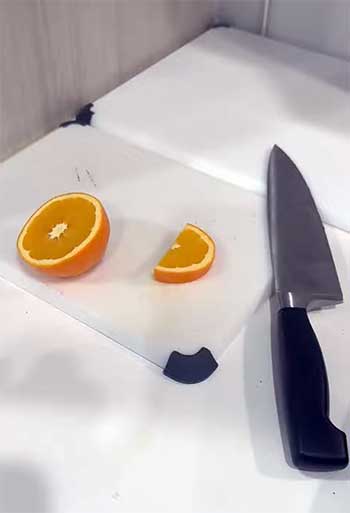
After weighing the details, the Pro series tends to reward cooks who already use or want to learn a pinch grip and who value quick, precise work with less hand fatigue.
The curved bolster and exposed elements simply make those motions feel more natural for longer periods.
The Four Star series rewards people who prioritize maximum finger protection and a planted, traditional feel, especially if safety margins matter more than the last bit of heel-sharpening convenience.
Neither is clearly superior in raw cutting ability or longevity; both will serve faithfully for a decade or more with basic care like hand washing and occasional honing.
The real decision comes down to how your hand interacts with the knife during the specific tasks you do most often.
If you can, hold both in a store for a few minutes of simulated chopping.
Your own grip will tell you faster than any spec sheet.
Also Read: Reasons For Cutco Knives Being So Expensive.
Frequently Asked Questions (FAQ)
Yes. They rank among Zwilling’s most popular and reliable lines, offering forged construction, strong edge retention, and a classic design that has earned loyal users for decades. They perform well for everyday home cooking and hold up under regular use.
It depends on priorities. The Pro series often edges ahead for cooks who want curved-bolster ergonomics and pinch-grip comfort. The Four Star remains a timeless favorite for traditional full-bolster protection and proven balance. Both sit near the top of Zwilling’s forged offerings.
For the Pro and Four Star lines, yes. These Zwilling-branded series use consistent forged construction and premium Friodur steel. Many Henckels-labeled lines sit at a more entry-level tier with different materials or stamped construction, so the Zwilling versions generally deliver tighter quality control and better long-term edge performance.
Zwilling structures its range by construction and features. The Gourmet series uses stamped blades for lighter weight and lower cost. Next come forged lines like Four Star for classic performance, then Pro for refined ergonomics with the curved bolster. Professional S and certain wood-handle variants sit slightly higher for specialized preferences.
Final Thoughts
If you cook several times a week and want knives that feel like natural extensions of your hand rather than tools you have to fight, both the Pro and Four Star will meet that standard.
The Pro simply leans into modern grip comfort while the Four Star honors the protective, no-compromise traditional approach.
Think about whether your typical prep involves more precise rocking cuts or a need for extra finger security, then choose the design that matches how you actually stand at the board. You will end up with a knife that improves your daily routine instead of just adding another item to the drawer.