
When I set out to compare the ZIP System and traditional house wrap for exterior wall protection, I wanted a clear, practical breakdown that shows you exactly how these two approaches stack up in real building projects.
My purpose here is to give you an analytical side-by-side look at their features, performance differences, strengths, and limitations so you can decide which option fits your budget, climate, and construction timeline without guesswork.
| Aspect | ZIP System | Traditional House Wrap (e.g., Tyvek) |
| Core Design | OSB sheathing with factory-applied WRB facer | Flexible sheet membrane over separate sheathing |
| Air Barrier Performance | High when seams are taped properly | Moderate; depends heavily on installation quality |
| Water Resistance | Integrated panel surface + tape | Overlapping layers with taped seams |
| Vapor Permeability | Approximately 12-16 perms | Typically 20-54 perms |
| Installation Speed | Faster; one product, fewer steps | Slower; separate sheathing then wrap |
| Material Cost | Higher upfront | Lower material cost |
| Wind/Tear Resistance | Excellent; rigid panels stay put | Vulnerable to flapping, tearing, or blow-off |
| Exposure Rating | Up to 180 days | Varies; often shorter practical exposure |
| Warranty | Up to 30 years (system dependent) | Often 10 years |
| Best For | High-performance, energy-focused builds | Cost-sensitive or highly detailed custom work |
Key Differences Between ZIP System And House Wrap
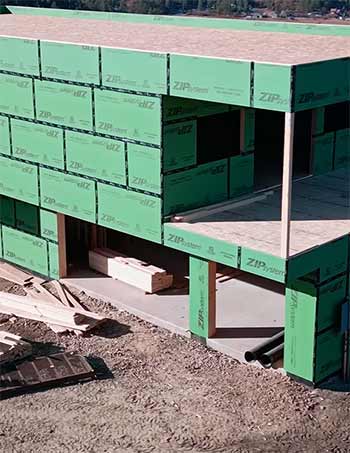
- Integration level and number of components required ZIP delivers structure, water resistance, and air sealing in a single panel-and-tape package. House wrap requires separate sheathing plus the membrane plus additional sealing products. The difference shows up in both labor hours and the number of potential failure points.
- Dependence on field installation quality With ZIP, the barrier is already on the panel; the critical step is thorough tape application and rolling. With house wrap, every lap, staple, and penetration seal must be executed correctly, and wind can still lift edges before siding is installed. I have observed more variation in final air-leakage numbers with wrap-based assemblies than with properly taped ZIP walls.
- Air-sealing consistency under real job-site conditions The rigid panel face of ZIP maintains its plane, so taped seams stay tight. Flexible wrap can shift, wrinkle, or pull away from fasteners, creating small pathways for air movement that only appear after the building is closed in. Blower-door results often favor the integrated system when crews follow the manufacturer’s rolling instructions.
- Drying potential of the wall assembly House wrap’s higher perm rating allows more vapor to move outward. ZIP’s lower rating still permits drying but at a slower rate. In mixed or cold climates, this difference can influence whether you pair the system with interior vapor control or exterior continuous insulation.
- Durability during the open construction phase ZIP panels resist wind and incidental impacts better because the barrier is bonded and the panel is structural. House wrap frequently requires re-attachment or replacement after storms, adding unexpected labor and material costs mid-project.
- Cost structure and labor trade-offs ZIP carries a higher material price per square foot, yet the elimination of a second trade and the reduction in ladder time often narrow the total installed cost gap. House wrap keeps the material line item low but can inflate labor when weather or detailing slows the wrapping crew.
- Repair and modification approaches Damaged house wrap can be patched with additional sheet and tape. ZIP repairs usually involve cutting out a section, installing a new panel piece, and retaping, which is more involved but still straightforward with the matching products.
Also Read: Differences Between Blueskin And Tyvek.
Key Features of the ZIP System
- Factory-applied water-resistive barrier that covers the entire panel face and eliminates the need for a separate membrane layer The phenolic-impregnated polymer facer is bonded under controlled conditions, so the coverage is uniform and free of the wrinkles or gaps that sometimes appear when crews stretch wrap by hand. I have seen this consistency reduce the number of callbacks related to water intrusion behind siding.
- Structural 1 rated OSB core that delivers shear strength and stiffness for wall and roof applications Available in 7/16-inch, 1/2-inch, and 5/8-inch thicknesses, the panels meet code requirements for racking resistance in high-wind zones. The engineered wood core holds fasteners securely and resists the edge swelling that cheaper commodity OSB sometimes shows after prolonged exposure.
- Proprietary acrylic adhesive tape designed specifically for the panel seams and penetrations When rolled firmly, the tape creates a continuous seal that functions as both water and air barrier. Liquid flash options exist for complex details around windows and doors, giving you a more complete envelope without relying on multiple products from different manufacturers.
- Exposure rating that allows the panels to sit uncovered for up to 180 days This matters on projects that stretch through wet seasons. The integrated barrier keeps the core drier than bare OSB would stay under the same conditions, reducing the risk of panel degradation before siding goes on.
- System warranty that can extend to 30 years when installation guidelines are followed The longer coverage period reflects the manufacturer’s confidence in the bonded facer and tape combination, though it still requires proper tape rolling and detailing to remain valid.
- Reduced number of material layers and fewer trade handoffs Framing crews install the panels and tape them in one sequence. That single-crew approach cuts coordination time and limits the windows of vulnerability that open when one trade finishes sheathing and another must return later to wrap.
Pros of the ZIP System
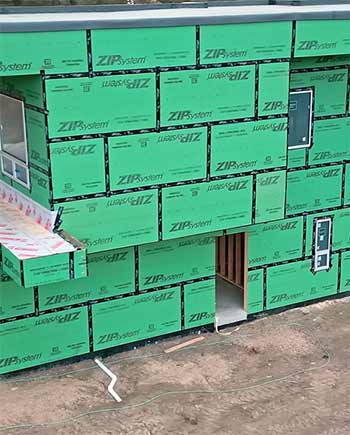
- Noticeably faster dry-in time that shortens weather exposure risk Once the panels are up and taped, the building envelope is closed against bulk water. In regions with unpredictable rain, this single-step process can keep interior framing drier and reduce the chance of mold or fastener corrosion before the roof and windows are finished.
- Superior as-built air tightness that supports energy-code compliance and comfort The continuous taped surface consistently produces lower air-change rates on blower-door tests compared with typical wrap installations. Tighter envelopes mean less conditioned air escaping and fewer drafts, which translates into lower heating and cooling loads over the life of the house.
- Reduced opportunity for installation errors that plague multi-layer systems There are fewer seams to misalign and no risk of the barrier being torn by subsequent trades installing windows or scaffolding. The factory-applied facer removes the variables of stretch, sag, and incomplete overlaps.
- Strong resistance to wind damage and construction-site abuse Rigid panels stay in place even when high winds hit an open frame. I have seen house wrap shredded or completely detached after a single storm, forcing crews to start over, while ZIP panels simply needed a few additional tape checks.
- Simplified quality control and inspection process Inspectors can walk the exterior and visually confirm that every seam is taped and every penetration is sealed. The uniformity of the system makes it easier to verify compliance than checking dozens of individual wrap overlaps and staple patterns.
- Long-term warranty coverage that exceeds most traditional wrap products The 30-year system warranty provides documentation that can matter for resale or for owners who want written assurance beyond standard builder warranties.
- Cleaner job sites with less scrap and fewer leftover rolls Panels arrive cut to size and generate less waste than large rolls of wrap that must be trimmed around openings. Less material handling also means fewer trips up ladders with bulky rolls.
Cons of the ZIP System
- Higher material cost that can stretch budgets on large or cost-sensitive projects The premium for the integrated panels and specialized tape is real. Even after labor savings are factored in, the total cost often exceeds commodity OSB plus standard house wrap, especially on square, simple floor plans where wrapping goes quickly.
- Lower vapor permeability that can limit drying capacity in certain climate zones The 12- to 16-perm range is adequate for many assemblies but less forgiving than high-perm wraps when moisture enters the wall from the interior or from leaks. Designers sometimes need to adjust interior vapor retarders or add exterior insulation to maintain balance.
- Reliance on proper tape application for the entire weather and air barrier function If seams are missed, incompletely rolled, or applied in cold or dusty conditions, the system loses its continuous seal. Field observations show that tape performance is the single most common weak point when installations fall short.
- Potential for edge swelling if panels sit wet for extended periods before taping Although the facer protects the face, the cut edges of OSB can still absorb water. Once swollen, they may not return to original dimension, which can create uneven planes under siding.
- Less flexibility for highly irregular or retrofit details compared with sheet membranes Rigid panels require precise cutting and fitting around complex projections. On older homes with out-of-square framing or unusual geometry, the flexible nature of house wrap can adapt more readily.
- Learning curve for crews unfamiliar with the product Framing crews used to standard OSB and separate wrapping may need training on tape rolling pressure, liquid flash application, and sequencing. Early projects sometimes show higher labor hours until the team gains experience.
Also Read: Differences Between Rex-Wrap And Tyvek House Wrap.
Key Features of Traditional House Wrap
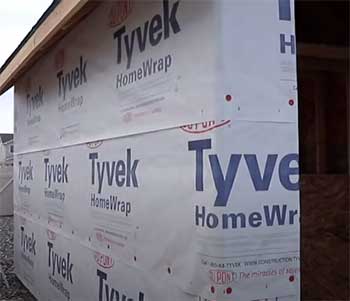
- Lightweight, flexible spunbonded olefin sheet that drapes easily over complex shapes and irregular framing The material conforms around corners, bump-outs, and odd angles without the cutting precision that rigid panels sometimes demand. This flexibility proves useful on renovation work or homes with intricate exterior geometry.
- High vapor permeability that supports outward drying of the wall assembly Ratings often fall in the 20- to 54-perm range depending on the specific product. In climates where walls need to dry toward the exterior, this characteristic can help manage incidental moisture that enters the assembly.
- Compatibility with a wide range of substrates and fastening methods You can install it over OSB, plywood, or even open studs in some applications. Staples, plastic-cap nails, or button fasteners all work, and the sheet can be repaired with patches if damaged during construction.
- Established track record spanning several decades of field use Builders and inspectors know the product well. Installation sequences are familiar, and replacement materials are stocked at most lumberyards, which simplifies logistics on remote or fast-moving jobs.
- Ability to create shingle-style overlaps that direct water downward and outward When lapped correctly and taped, the system forms a drainage plane that sheds bulk water even if small amounts get behind the cladding. Flashings can be integrated into the wrap layers for continuous protection at openings.
- Lower initial material cost compared with integrated panel systems The sheet itself is inexpensive, and the main expense comes from labor and the quality of the installation rather than the product price tag.
Pros of Traditional House Wrap
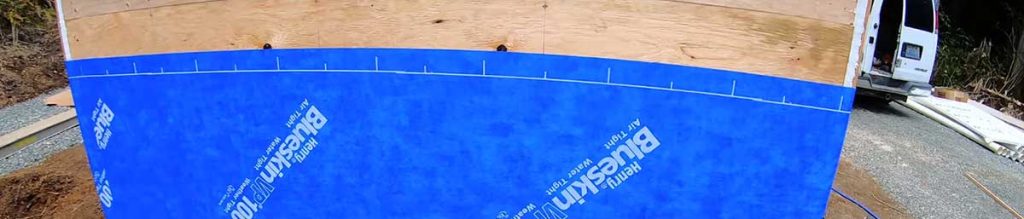
- Lower material cost that keeps the budget line item predictable The sheet itself is inexpensive, and you can choose from multiple brands and performance levels without jumping to a premium panel system. For production builders or tight-margin projects, this cost advantage remains significant.
- Higher vapor permeability that supports wall drying in a wider range of climates The ability of moisture vapor to move through the membrane helps assemblies recover from incidental wetting. In humid or mixed climates, this characteristic can reduce the risk of trapped moisture against the sheathing.
- Familiar installation process known to almost every framing and siding crew No specialized training is required beyond basic overlapping and taping techniques. This familiarity reduces the chance of schedule delays caused by product-specific learning curves.
- Easy field repairs and modifications Tears or punctures can be covered with additional wrap and tape in minutes. Window or door changes mid-project are simpler because the membrane can be cut and re-lapped without replacing entire panels.
- Compatibility with a broad range of cladding and insulation strategies House wrap works under vinyl, fiber cement, brick, stone, and rain-screen systems. It also pairs readily with exterior continuous insulation of varying thicknesses.
- Ability to serve as a temporary weather barrier while other work continues Once installed, the wrap provides protection even if siding is delayed, and it can be left in place longer than some rigid systems if the manufacturer’s exposure limits allow.
Cons of Traditional House Wrap
- Greater vulnerability to damage during the construction phase Wind can lift edges, scaffolding can tear the sheet, and subsequent trades can puncture it without noticing. Replacing damaged sections adds labor and material that were not in the original estimate.
- Higher dependence on perfect installation for air-barrier performance Missed tape, reverse laps, or unsealed penetrations create leakage paths that are difficult to find and fix after the building is closed. Many houses end up with air-change rates higher than the design target simply because the wrap was not detailed meticulously.
- More labor hours and ladder time required for complete coverage Crews must handle large rolls, maintain proper overlaps on multi-story walls, and return to seal every penetration. On tall or complex buildings, this extra labor can erase much of the material cost savings.
- Potential for the membrane to shift or sag over time if fasteners loosen Unlike a rigid panel, the flexible sheet can move slightly, which may open small gaps at seams or around fasteners years after occupancy.
- Shorter typical warranty periods compared with integrated systems Most house-wrap warranties run about ten years and often carry stricter conditions related to installation quality and exposure time.
- Increased opportunity for water to reach the sheathing if detailing fails Because the barrier is a separate layer, any discontinuity allows water to travel behind the wrap and contact the wood sheathing directly. Proper flashing integration becomes even more critical.
Also Read: Differences Between Tyvek And Kingspan GreenGuard House Wrap.
Frequently Asked Questions (FAQ)
Higher material cost, lower vapor permeability than many wraps, and dependence on careful tape application for full performance.
It often delivers better air sealing and faster installation, but Tyvek can offer higher drying potential and lower material cost depending on project priorities.
Yes for many high-performance or weather-exposed projects once labor savings and energy benefits are counted; less so on simple, budget-driven builds.
No. The ZIP System is designed as a complete weather and air barrier on its own when seams and penetrations are properly sealed.
Wrapping Up
I wrote this comparison so you could weigh the practical realities of the ZIP System against traditional house wrap and choose the approach that matches your project goals, climate, and budget.
Both systems can protect a house effectively when installed with care, yet they differ sharply in speed, air-sealing reliability, cost structure, and drying behavior.
Use the details above to match the product to the specific demands of your build rather than relying on general claims. The right choice is the one that delivers the performance you need without introducing unnecessary risk or expense.