
I spent the better part of a year cooking ribs, steaks, briskets, and weeknight burgers on both the Weber Searwood and several Traeger pellet grills.
I wanted a clear answer for anyone who wants one machine that smokes low and slow yet still puts a real crust on a ribeye. This article lays out the practical differences so you can match the grill to the way you actually cook.
| Feature | Weber Searwood 600 / XL 600 | Traeger (Pro 780 / Ironwood typical) |
| Temperature Range | 180–600°F | 165–500°F |
| Searing Ability | Full-grate DirectFlame | Indirect only (add-on grates help) |
| Total Cooking Area | 648 sq in (600) / 972 sq in (XL) | 780–924 sq in |
| Hopper Capacity | 20 lb | 18–22 lb |
| Smoke Mode | SmokeBoost | Super Smoke |
| Controller | Rapid React PID | D2 / WiFIRE |
| App | Weber Connect | WiFIRE (more recipes) |
| Open-Lid Cooking | Manual Mode keeps heat steady | Heat drops quickly |
| Warranty | 5 years (3 on electrical/grates) | 3–10 years limited |
| Side Shelves | Sold separately | Often included |
| Approximate Street Price | Lower for comparable size | Higher for similar features |
Key Differences Between Weber Searwood and Traeger
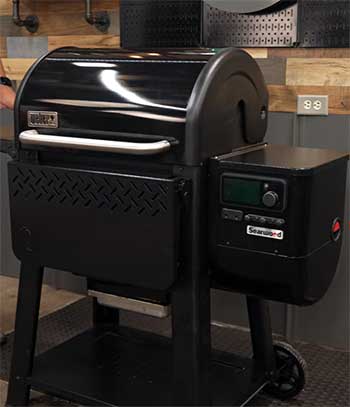
- Temperature ceiling and real-world searing The Searwood climbs to 600°F and lets flame reach the entire grate surface without a solid barrier blocking the fire pot. I seared thick ribeyes that developed deep brown crust and distinct grill marks in under four minutes per side, something that felt closer to a traditional gas or charcoal grill. Traeger models top out around 500°F and keep the fire pot more shielded, so the same steak comes out more like a hot roast unless you add aftermarket grates. That single gap changes how many people use the grill on weeknights when they want both smoke and a proper crust without firing up a second cooker.
- Heat recovery when the lid opens Weber’s Manual Mode keeps the fan and auger running hard even with the lid up, so temperature recovery stays quick. I flipped burgers, checked brisket bark, and rearranged chicken pieces without watching the numbers crash for several minutes. Traeger units tend to pause or slow the pellet feed when the lid opens, which means longer recovery times and a bit of momentum loss during busy multi-item cooks. Over a full afternoon of mixed grilling and smoking, that difference adds up in both time and consistency.
- Smoke character and control Both have dedicated smoke modes that increase wood flavor, yet they behave differently in practice. Searwood’s SmokeBoost holds a steady 180°F and produces a thicker, more noticeable wood note during the first couple of hours of a cook, which showed up clearly on pork shoulders and chicken thighs. Traeger’s Super Smoke is cleaner and more consistent across longer sessions, which some cooks prefer for competition-style brisket where a milder profile is desired. I found the Weber edge clearer on shorter and medium-length cooks, while Traeger felt more predictable for overnight low-and-slow work.
- Cooking surface and capacity trade-offs The Searwood XL gives you more total square inches in a shorter overall footprint, which helps if patio space is limited. The Traeger Ironwood and similar models spread the space differently and often include a second-tier rack that feels more usable for tall items such as whole chickens or multiple racks of ribs standing upright. If you regularly smoke four pork butts at once or need room for large family gatherings, measuring both units in person with your typical cook load makes the practical difference obvious.
- Accessory and expansion path Weber lets you drop in a full griddle insert or add a rotisserie that works directly with the same controller and fire system, turning the unit into a multi-function outdoor kitchen without buying a second appliance. Traeger’s ecosystem runs deeper for specialized probes, covers, specialty racks, and years of community-tested recipes. The choice here depends on whether you already own Weber tools from gas or charcoal grills or live inside the Traeger app and accessory world.
- Mobility and daily handling Traeger carts usually roll better thanks to larger wheels and more casters, making it easier to shift the grill for cleaning, storage, or rearranging the patio. The Searwood’s two-wheel design with fixed legs on the other side makes the unit feel heavier and more awkward when you need to move it across uneven ground or into a garage for winter. Neither is a true portable grill, but the difference shows up every time you reposition them for maintenance or seasonal storage.
Also Read: Is Char-Griller Flat Iron Worth It?
Key Features of the Weber Searwood
- DirectFlame full-grate searing zone that turns the whole cooking surface into a high-heat platform instead of limiting you to a small designated spot near the fire pot
- Rapid React PID controller that reaches target temperature in about fifteen minutes from a cold start and recovers quickly after repeated lid openings during active cooks
- SmokeBoost setting locked at 180°F that optimizes pellet smoldering for heavier smoke penetration during the early phase of longer cooks
- Manual Mode that maintains steady fuel and air flow for open-lid grilling, smash burgers, or griddle work without the system shutting down or losing heat rapidly
- Side-mounted 20-pound hopper that accepts a full bag of pellets without overflow and sits in a convenient position for refilling mid-cook
- Dual meat-probe ports with one probe included, readable both on the digital display and through the companion app for monitoring multiple cuts at once
- Easy-pull grease and ash drawer that collects most of the mess in one removable tray, reducing the need to tear the entire unit apart after greasy sessions
- Compatibility with Weber Crafted accessories, including the optional griddle insert and rotisserie kit that expand the grill into a more versatile outdoor cooking station
- Cast-aluminum lower cookbox that resists rust better than thin steel in wet or humid climates and helps hold heat more evenly
- Wi-Fi and Bluetooth connectivity through the Weber Connect app for remote monitoring, live temperature graphs, readiness alerts, and basic recipe guidance from your phone
Pros of the Weber Searwood
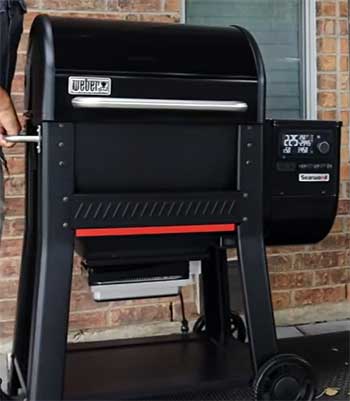
- Genuine high-heat searing that rivals many gas grills while still delivering real wood smoke, letting you finish steaks and chops without a second cooker
- Faster temperature recovery that keeps busy cooks moving without long pauses when you open the lid to flip or check food
- Lower purchase price for the feature set, especially when you compare the XL model to a similarly sized Traeger with comparable capacity
- Cleaner grease management system that reduces the time spent scraping and scrubbing after a greasy cook or high-volume session
- Versatility that lets one unit handle smoking, roasting, searing, and flat-top cooking with optional inserts instead of requiring multiple appliances
- Solid build quality rooted in Weber’s long experience with outdoor cookers, including materials that hold up well in varied weather
- Stronger smoke flavor on shorter and medium-length cooks according to multiple side-by-side tests with identical pellets and recipes
- Lighter overall weight that makes repositioning easier once you get past the wheel design limitations
- Five-year warranty coverage that exceeds many Traeger base warranties and provides extra peace of mind for longer ownership
- Ability to expand with rotisserie and griddle without buying an entirely separate appliance, stretching the value of the original purchase
Cons of the Weber Searwood
- Side shelves and front tables cost extra, so the out-of-box experience feels incomplete for many buyers who expect ready-to-use workspace
- Wheel design with only two rolling wheels makes the unit awkward to move on uneven surfaces, gravel, or when shifting it for seasonal storage
- SmokeBoost works only at 180°F, limiting its use during higher-temperature phases of a cook when you might still want extra smoke character
- App content and recipe library lag behind Traeger’s more mature platform, leaving fewer guided options for newer users
- Pellet consumption climbs quickly at 600°F, so high-heat sessions burn through fuel faster and require more frequent hopper checks
- No interior light means you need an external source for nighttime checks, which can be inconvenient during evening cooks
- Some users report the digital interface feels less intuitive without the app connected, requiring a short learning period for standalone use
- Warranty drops to three years on electrical parts and grates, which matters for long-term ownership and potential repair costs
- Hopper design makes complete emptying slightly more cumbersome than some competitors when switching pellet flavors or preparing for storage
- Footprint still requires careful placement even though the overall length is shorter than many Traegers, especially on smaller patios
Key Features of Traeger Pellet Grills
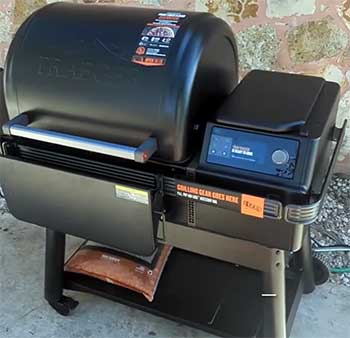
- Mature WiFIRE app ecosystem with hundreds of guided recipes, step-by-step timers, and strong community integration that many beginners find helpful for learning complex cooks
- Super Smoke mode that produces clean, consistent thin blue smoke over long cooks and can be activated across a wider temperature window on many models
- Double-wall insulation on Ironwood and higher models that holds set temperatures better in cold or windy weather and reduces overall pellet consumption during extended sessions
- Larger hopper options on many models that reduce the frequency of mid-cook refills during overnight briskets or multi-day weekend cooking
- Interior lights on several current models so you can check food after dark without needing a flashlight or phone light pointed into the chamber
- Robust cart designs with better wheels and often included side shelves that give you immediate prep space right out of the box
- Pellet sensor alerts on higher trims that warn you before the hopper runs dry, helping avoid temperature drops during unattended cooks
- Broad accessory lineup that includes specialized racks, covers, third-party probe support, and other add-ons refined over many product generations
- Proven D2 drivetrain that has been refined across multiple generations for steady temperature control and reliable pellet feeding under varied conditions
- Keep-warm function on some models that holds food at a safe temperature after the main cook ends, useful when guests arrive late or sides need more time
Also Read: Is Even Embers Gas Grill Worth It?
Pros of Traeger Pellet Grills
- Superior app experience that guides beginners through complex cooks with clear prompts, large recipe libraries, and community tips that reduce the learning curve
- Better cold-weather performance on insulated models that hold set temperatures with less pellet burn and fewer fluctuations during winter cooks
- More refined cart and mobility features that make the grill easier to roll around a patio, deck, or into storage without wrestling with fixed legs
- Longer track record specifically in pellet technology, which translates to fewer early-generation quirks and more predictable long-term behavior
- Included shelves on many models that provide immediate workspace out of the box instead of requiring extra purchases for basic convenience
- Cleaner, more consistent smoke profile preferred by some cooks who want milder wood notes that do not overpower delicate proteins
- Stronger after-sales accessory and community support that makes finding solutions, recipes, and replacement parts faster and more straightforward
- Interior lighting that is genuinely useful for evening cooks and late-night checks without needing external light sources
- Higher-end models offer pellet level sensors and advanced insulation as standard features rather than optional upgrades
- Brand recognition that still carries weight when you talk with other grill owners and seek advice or shared recipes
Cons of Traeger Pellet Grills
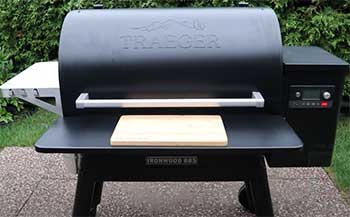
- Maximum temperature of roughly 500°F limits true steakhouse-level searing without aftermarket help, so pure high-heat work often needs a second tool
- Higher price tags on comparable-size models push the total investment up quickly once you factor in accessories and covers
- Heat recovery after lid openings is slower, which interrupts workflow during multi-item cooks when you need to check or rearrange food frequently
- Base warranties on many models sit at three years, shorter than Weber’s overall coverage and less reassuring for long-term ownership
- Smoke flavor can taste milder or cleaner than some cooks prefer for everyday barbecue where a more pronounced wood note is desired
- Larger units become heavy and less maneuverable despite better wheels, making repositioning for cleaning or storage more of a chore
- Grease management systems vary by model and can require more frequent deep cleaning to prevent buildup over time
- Some owners note that the app connection can drop during long cooks, requiring reconnection and interrupting remote monitoring
- Accessory ecosystem is excellent but also encourages additional spending after the initial purchase as new tools and upgrades become available
- Pure pellet focus means you lose the multi-fuel flexibility that Weber offers across its broader lineup of gas and charcoal options
Real Cooking Performance Across Common Foods
I ran the same pork shoulder, chicken thighs, and ribeye on both platforms over multiple weekends. The Searwood produced a slightly thicker bark and more pronounced wood notes on the shoulder after twelve hours.
The Traeger held tighter temperature swings in cool evening air and required fewer adjustments. For chicken thighs, the Weber’s higher heat option let me finish with a crisp skin that the Traeger could not match without an extra sear step on a separate grill. Steaks were the clearest divider.
The Searwood gave me the crust I expect from a dedicated grill; the Traeger delivered solid results but never quite the same edge.
Pellet use stayed comparable at smoking temperatures. At searing temperatures the Weber burned more fuel, which is expected when you open the flame path. Both units stayed clean enough that weekly maintenance stayed under fifteen minutes if I emptied the ash drawer after each major cook.
Also Read: Differences Between Pit Boss Sportsman 820 And Pro Series 850 Pellet Grill.
Frequently Asked Questions (FAQ)
It depends on your priorities. Weber edges ahead on searing power and price; Traeger leads on app maturity and cold-weather consistency.
Several pellet grills now match or exceed Traeger in specific areas. Weber Searwood, certain Recteq, and Camp Chef models often rank higher for value or searing.
Ratings shift by year and reviewer, but current mid-range favorites frequently include the Weber Searwood, Traeger Ironwood, and select Recteq models for balanced performance.
It remains one of the strongest and most refined options, especially for pure low-and-slow work, yet it no longer holds an uncontested top spot across every category.
Closing Thoughts
After months of side-by-side cooking I reach for the Weber Searwood when I want one grill that can smoke a brisket overnight and still sear steaks the next evening without compromise.
You may prefer the Traeger if the app ecosystem, included shelves, and proven cold-weather insulation matter more to your routine. Either way you end up with a capable pellet cooker; the right choice simply matches the way you actually use it in your own backyard.