
I have spent years evaluating weather barriers on real job sites and renovation projects, and this piece lays out exactly how Tyvek stacks up against the house wrap options you find at Lowe’s so you can decide which one protects your walls without wasting money or risking moisture problems.
| Feature | Tyvek HomeWrap | Lowe’s House Wrap (typical store brand/woven) |
| Material | Non-woven HDPE spunbond fibers | Woven polyolefin with coating and perforations |
| Water Holdout | Excellent, no holes needed | Good when new, can decline if perforations enlarge |
| Vapor Permeability | High (around 50–58 perms) | Moderate (often 10–15 perms) |
| Tear Resistance | Strong, tears do not easily run | Decent tensile strength but tears can propagate |
| UV Exposure Rating | Up to 120 days | Often 60–90 days |
| Air Barrier Performance | Superior continuous resistance | Adequate when seams are taped carefully |
| Cost per Square Foot | Higher premium | Noticeably lower budget option |
| Installation Feel | Flexible, translucent in some versions | Stiffer, sometimes opaque |
Key Differences Between Tyvek And Lowe’s House Wrap
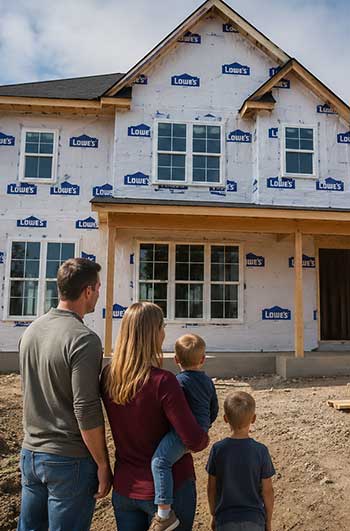
- Material Construction Changes Everything You notice the difference the moment you unroll both products. Tyvek feels like a continuous sheet of fused high-density polyethylene fibers created through a spunbond process. Those microscopic pores let vapor escape while blocking liquid water and air. Lowe’s house wrap, by contrast, is usually a woven fabric of polyolefin threads that receives a coating and then gets perforated so it can breathe. The perforations are the trade-off. They create the vapor path but also become potential weak points for water if wind or abrasion stretches them. On a windy day I have watched cheap woven wrap flutter and start to enlarge those tiny holes while Tyvek stayed intact.
- Water Management Behavior Under Real Rain When rain hits a vertical wall, Tyvek’s non-perforated structure forces water to bead and drain downward. Independent hydrostatic tests routinely show it holding out far more water pressure than perforated wraps. Lowe’s house wrap relies on the coating and the size of its perforations. In short exposure it performs fine, yet prolonged wind-driven rain can push moisture through enlarged holes or imperfect seams. I have seen both products keep walls dry when installed carefully, but Tyvek gives a wider margin of error if weather turns nasty before the siding goes on.
- Breathability And Drying Potential Your wall assembly will always collect some moisture from interior humidity or construction dampness. Tyvek’s high perm rating lets that vapor move outward quickly so the framing and sheathing can dry. Many Lowe’s wraps sit in a lower perm range that still meets code yet slows the drying process. In humid climates or tight modern wall systems that difference matters. Faster drying reduces the chance of mold or rot developing behind the cladding.
- Durability On The Job Site Construction sites are rough. Ladders lean against the wrap, workers walk past it, wind pulls at the edges. Tyvek’s fiber web resists tearing around fasteners and does not run like a woven fabric once a nick appears. Lowe’s woven options can feel tougher in pure tensile strength along the weave, yet once a tear starts it often travels farther. UV ratings also differ. Tyvek commonly allows four months of exposure; many store brands recommend shorter windows before cladding must cover them.
- Cost And Long-Term Value Equation You pay more upfront for Tyvek. The price difference on an average house can reach a few hundred dollars. Lowe’s house wrap keeps the material budget lower and works adequately for straightforward projects in mild climates with short construction schedules. Over decades the higher initial cost of Tyvek often pays back through fewer moisture callbacks and better energy performance from tighter air sealing.
- System Compatibility And Accessories Tyvek comes with a full family of tapes and flashing products designed to work with its surface. Seams seal cleanly and stay sealed. Lowe’s wraps accept generic tapes, yet the bond quality varies more. You end up spending extra time testing which tape sticks best and stays stuck through temperature swings.
Key Features of Tyvek
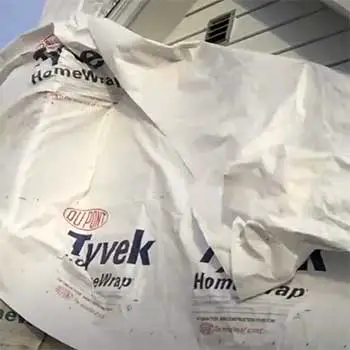
- Spunbond non-woven structure The manufacturing process spins continuous HDPE fibers and bonds them into a uniform sheet without punching holes. That single design choice delivers simultaneous water resistance, air resistance, and high vapor permeability. You get performance that does not force a compromise between keeping liquid out and letting vapor escape.
- High vapor transmission rate Typical perm ratings sit near 50 or higher. Moisture that finds its way into the wall cavity can leave instead of staying trapped against the sheathing. In cold climates this helps prevent condensation on the cold side of the insulation. In hot-humid zones it supports drying to the exterior.
- Consistent air barrier properties When seams and penetrations are detailed correctly, Tyvek creates a continuous plane that limits air leakage. Reduced air movement means insulation performs closer to its rated R-value and indoor comfort improves because drafts disappear.
- Tear and puncture resistance under site conditions The fiber web holds fasteners without large holes forming around them. Wind loads during the open-wrap phase do not shred the material as readily as some woven products. You still need careful handling, yet the forgiveness factor is higher.
- UV stability window Up to 120 days of exposure is the common rating. That window gives crews more scheduling flexibility when siding deliveries lag or weather delays cladding installation.
- Compatibility with multiple cladding types Fiber-cement, vinyl, wood, engineered wood, and stucco systems all work over Tyvek when proper drainage and flashing details are followed. The material does not react negatively with most common exterior finishes.
Pros of Tyvek
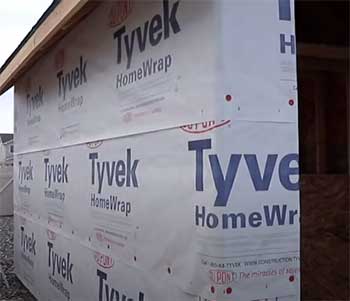
- Superior balance of water holdout and breathability You never have to choose between keeping bulk water out and allowing vapor to escape. The non-perforated structure delivers both properties at high levels, which is rare among weather barriers.
- Better long-term reliability in demanding weather Wind-driven rain, freeze-thaw cycles, and temperature swings stress every barrier. Tyvek’s consistent performance over decades of field use gives you confidence that the wall will stay dry even if installation is not perfect in every detail.
- Stronger resistance to installation damage Nicks and fastener holes stay localized instead of running across the sheet. That property reduces the number of repairs you need to make before cladding goes up.
- Proven energy-efficiency contribution By controlling air leakage more effectively, Tyvek helps insulation deliver closer to its full potential. Over the life of the house that translates into measurable heating and cooling savings.
- Comprehensive accessory system Matching tapes and flashing products create reliable seals at seams, windows, and doors. The system approach reduces the chance of weak points developing later.
- Higher resale and inspection appeal Many inspectors and future buyers recognize the brand and associate it with quality construction. That recognition can simplify appraisals and home inspections.
Cons of Tyvek
- Higher upfront material cost The premium price shows up immediately on the materials list. For budget-driven projects or simple structures in dry climates the extra dollars may feel unnecessary.
- Not fully surfactant resistant Certain wood species, detergents, or cladding materials can reduce water-holdout performance over time if surfactants are present. Proper detailing and compatible products mitigate the issue, yet it remains a known limitation.
- Requires careful UV management Although the 120-day rating is generous, leaving the wrap exposed beyond that window risks degradation. Project delays can force you into protective measures or replacement sections.
- Opaque or only semi-translucent appearance in some rolls Locating studs or verifying sheathing edges during installation takes a bit more effort compared with fully translucent products.
- Needs compatible tapes for optimal results Generic tapes sometimes fail to bond as securely. You should plan on using the recommended accessories to achieve the full performance.
Key Features of Lowe’s House Wrap
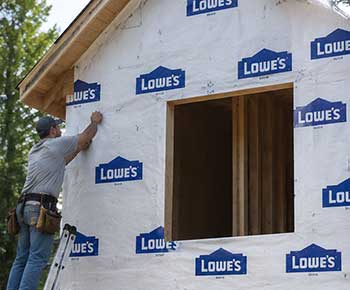
- Woven polyolefin base with protective coating The fabric starts as interlaced threads that provide good tensile strength along the weave directions. A polymer coating adds water resistance, and controlled perforations open pathways for vapor. The result is a product that meets basic weather-resistive barrier requirements at a lower price point.
- Adequate moisture vapor permeability for code compliance Perm ratings typically fall in a moderate range that still allows drying in most climate zones when the rest of the wall is detailed correctly. You will not get the same rapid drying potential as the higher-perm non-woven options, yet the numbers satisfy building officials.
- Lower material cost and wide availability You can walk into almost any Lowe’s location and find rolls ready to load. The price per square foot stays noticeably lower than premium branded wraps, which helps when the overall project budget is tight or when you are wrapping a large outbuilding rather than a primary residence.
- Reasonable job-site toughness when handled carefully The woven structure resists stretching in one direction and can feel robust during installation. Staples and plastic-cap nails hold well if you space them correctly. Many DIYers appreciate that it unrolls without excessive cling or static.
- UV protection sufficient for shorter exposure periods Most versions carry a rating that covers several weeks to a couple of months. As long as the siding schedule stays on track, the material maintains integrity until it is covered.
- Straightforward cutting and fastening Standard utility knives slice through it cleanly. The surface accepts common house-wrap tapes, and the product conforms around corners and openings without fighting you too much.
Also Read: Differences Between Blueskin And Tyvek House Wraps.
Pros of Lowe’s House Wrap
- Attractive price point for cost-conscious builds You can cover a large wall area without a big hit to the budget. That advantage matters on garages, sheds, or entry-level housing where every dollar counts.
- Easy to source and replace if damaged Because the product sits on the shelf at a major retailer, running out mid-job or needing a patch is rarely a logistics problem.
- Sufficient performance for many mild-climate applications In regions with moderate rainfall and short construction timelines the wrap does its basic job of shedding water and limiting air movement when seams are taped properly.
- Decent tensile strength along the weave Pulling the material tight during installation feels secure, and it resists stretching in the primary directions of the fabric.
- Familiar installation methods for most crews Anyone who has installed house wrap before can handle the Lowe’s product without a learning curve. Fastening patterns and overlap rules stay the same.
Cons of Lowe’s House Wrap
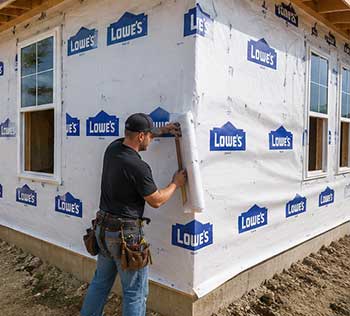
- Perforations create inherent performance trade-offs The holes that allow vapor transmission also represent potential paths for liquid water once they enlarge from wind, abrasion, or aging. Water holdout is good when new but less consistent over the life of the building.
- Lower and less consistent vapor permeability Drying potential sits below that of high-perm non-woven wraps. In wall assemblies that already dry slowly, the difference can increase moisture risk.
- Shorter recommended UV exposure window Many versions want cladding applied sooner. Unexpected delays can leave the material vulnerable.
- Tear propagation risk once damaged A small cut can travel farther along the woven structure than it would in a spunbond sheet. You spend more time repairing or replacing sections.
- Variable tape adhesion and long-term seal quality Generic tapes may not form as durable a bond. Temperature cycling and UV can cause seams to open over years if the wrong tape is chosen.
- Limited system support compared with premium brands You rarely find a complete suite of matching flashings and tapes engineered specifically for the store-brand surface chemistry.
Performance Observations
After wrapping houses with both products I notice the biggest practical difference appears during the open phase before siding. Tyvek shrugs off unexpected storms more reliably. Lowe’s wrap requires tighter scheduling and more attention to temporary protection.
Once the cladding is on and the wall is closed, both can keep the structure dry if the rest of the details—window flashing, kick-out flashings, and drainage planes—are executed well. The premium product simply gives you a larger safety margin when conditions are less than ideal.
Energy modeling and blower-door tests consistently show tighter envelopes with the non-woven high-performance wraps when seams are sealed correctly.
That tighter envelope reduces the load on heating and cooling equipment and improves indoor comfort. The budget wrap can achieve acceptable results, yet it demands more precision at every seam and penetration.
Installation Considerations That Affect Both Products
Overlap rules remain critical. Horizontal seams need proper shingling so water runs down and out rather than behind the lower course.
Vertical seams require generous overlap and continuous taping. Fastener spacing must follow manufacturer recommendations—usually sixteen inches on center or closer in high-wind zones. Plastic-cap nails or staples with wide crowns prevent the wrap from tearing away from the fastener under wind load.
Around windows and doors the sequence matters more than the brand of wrap. Install the wrap first or use the proper flexible flashing order so that water that gets behind the cladding still drains to the exterior.
Both products will fail if water is directed behind them by reverse laps or missing kick-outs.
Also Read: Comparison of ZIP System And House Wrap.
Frequently Asked Questions (FAQ)
Yes for basic protection on many projects when installed carefully and covered promptly, though it does not match the long-term consistency of premium non-woven wraps.
Higher cost, limited surfactant resistance, and the need to cover it within the UV exposure window are the main drawbacks.
Some alternatives offer higher surfactant resistance or different drainage features, yet Tyvek remains one of the most balanced and widely trusted options available.
Final Thoughts
When you weigh protection, longevity, and peace of mind against pure material cost, the decision becomes clearer. I have seen both products succeed and both products struggle when installation shortcuts appear.
The goal of this comparison is to equip you with the practical differences so you can match the wrap to your climate, schedule, and budget without surprises years later.
Choose the product that fits the real conditions your walls will face, detail the seams and openings with care, and the barrier will do its job for decades.