
I’ve spent a considerable amount of time researching HVAC systems, and if there’s one comparison that keeps coming up in homeowner forums, contractor discussions, and buyer guides, it’s Trane vs Carrier heat pumps.
Both brands carry decades of engineering credibility, but they serve different buyer profiles in ways that matter when you’re writing a check that can easily clear $5,000 or more.
In this article, I’m going to walk you through everything you need to know — efficiency ratings, key features, pricing, warranty structures, noise levels, and long-term reliability — so you can make the smartest decision for your home.
| Feature | Trane | Carrier |
| Founded | 1913 | 1915 |
| SEER2 Range | Up to 22 SEER2 | Up to 24 SEER2 |
| HSPF2 Range | Up to 10 HSPF2 | Up to 10.5 HSPF2 |
| Starting Price (unit only) | ~$1,200 | ~$1,100 |
| Top-of-line Price (installed) | $6,000–$12,000+ | $5,500–$11,000+ |
| Warranty (compressor) | 10 years (registered) | 10 years (registered) |
| Warranty (parts) | 10 years (registered) | 10 years (registered) |
| Noise Level (low range) | As low as 55 dB | As low as 51 dB |
| Cold Climate Performance | Good | Excellent (Infinity series) |
| Smart Thermostat Integration | Yes (Nexia) | Yes (Infinity Touch) |
| Variable-speed compressor | Available (XV series) | Available (Infinity series) |
| Dealer Network | Large | Very Large |
| Overall Reliability Score | High | High |
| Best For | Durability-focused buyers | Efficiency-focused buyers |
Key Differences Between Trane And Carrier Heat Pumps
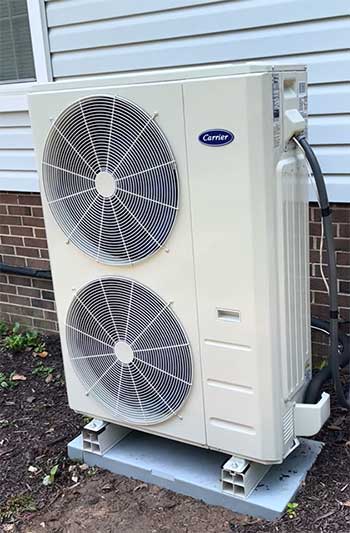
- Carrier leads slightly on maximum SEER2 efficiency, reaching up to 24 SEER2 with its top Infinity series models, while Trane caps out around 22 SEER2 with its XV series — a meaningful gap if you’re in a hot climate and running your system heavily from May through September
- Trane is widely regarded as the more durable brand in demanding conditions, with a reputation among HVAC contractors for producing units that simply keep running year after year with minimal issues, even under heavy use cycles
- Carrier’s Infinity system with Greenspeed Intelligence uses a truly variable-speed inverter compressor that adjusts its output in tiny increments, giving it a heating advantage in cold climates compared to Trane’s two-stage compressor options in mid-tier models
- Trane’s product line is generally simpler and more standardized across its tiers, making it easier for contractors to diagnose, service, and source parts — this translates to lower long-term maintenance costs in many regions
- Carrier integrates more deeply with smart home ecosystems through its Infinity Touch Control thermostat, which offers app-based remote monitoring and demand response capabilities that go beyond what Trane’s Nexia-based system provides
- Trane’s build quality, particularly the all-aluminum Spine Fin coil technology and the WeatherGuard top, is engineered specifically to resist corrosion and physical damage — useful in coastal or high-humidity environments
- Carrier’s Performance and Comfort series offer a broader range of mid-tier options, giving budget-conscious buyers more choices without having to jump to the premium Infinity tier to get decent efficiency gains
- Both brands use scroll compressors in their mid-to-high-end units, but Trane is often credited with having tighter manufacturing tolerances, which contributes to longer compressor lifespans under consistent heavy loads
Also Read: Comparison of Ruud And Trane HVAC Systems.
Key Features of Trane Heat Pumps
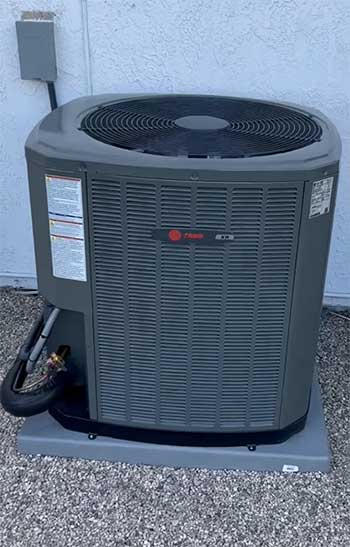
- Spine Fin all-aluminum coil that resists corrosion significantly better than traditional copper-aluminum coils, which is especially valuable in coastal, humid, or industrial-air environments where coil degradation accelerates
- WeatherGuard II top panel made from heavy-gauge galvanized steel that protects internal components from hail, UV exposure, falling debris, and physical damage that could otherwise dent conventional sheet metal tops
- Climatuff compressors, Trane’s proprietary compressor design, engineered to handle extreme temperature swings and high-demand cycles without the reliability issues seen in off-the-shelf compressor units
- Variable-speed operation available in the XV series, which can modulate compressor output to precisely match the home’s heating or cooling demand rather than cycling on and off in binary fashion
- Nexia smart home integration that allows remote temperature scheduling, energy usage tracking, and system diagnostics through a smartphone app, with compatibility for Amazon Alexa and Google Home voice commands
- Comfort features like ComfortLink II communicating technology, which allows the outdoor unit, air handler, and thermostat to communicate with each other and continuously optimize performance without manual adjustments
- Duratuff base pan that resists rust and corrosion at the foundation of the unit, where standing water and debris accumulation are most likely to accelerate material degradation
- Sound insulation engineering in XV series models to bring operating noise down to around 55 dB, which is roughly equivalent to a quiet conversation at normal volume
Pros of Trane Heat Pumps
- Trane has one of the strongest reputations for long-term durability in the HVAC industry, with many units reliably operating for 15 to 20 years when professionally maintained on a regular schedule
- The Spine Fin coil and Duratuff base are genuinely differentiated features — not just marketing — that address real failure points seen in competing units over time
- Trane’s broad dealer and contractor network means you’ll generally have no trouble finding a qualified technician familiar with the system, reducing diagnostic time and service call costs
- The XR series provides a solid, no-frills option for homeowners who just need reliable heating and cooling without premium efficiency premiums, making the brand accessible at multiple budget levels
- Trane’s warranty structure, when registered within 90 days of installation, delivers a full 10 years on both the compressor and functional parts, with some dealers offering additional extended labor warranties
- Climatuff compressor technology has demonstrated consistent performance in high-demand markets like the American South and Southwest, where heat pumps run almost continuously for four to five months per year
- Parts availability is strong across most of the United States, meaning that even years after installation, sourcing a replacement component is typically straightforward without long lead times
Cons of Trane Heat Pumps
- Trane units tend to carry a slight price premium over equivalent-efficiency Carrier models at the same tier, which can make the brand harder to justify for purely budget-driven purchase decisions
- The XV series variable-speed models, while impressive, don’t quite match Carrier’s Infinity Greenspeed units in cold-climate performance, where Carrier’s inverter-driven compressor technology has a genuine edge
- Trane’s smart home integration through Nexia is functional but feels a step behind Carrier’s Infinity Touch system in terms of interface polish, data granularity, and third-party integration depth
- Entry-level XR series models are single-stage units, meaning they run at full capacity or not at all — resulting in more temperature swings and higher energy consumption compared to two-stage or variable-speed competitors
- Trane’s aesthetics are utilitarian rather than refined, which is a minor point but one that matters to homeowners who care about how the equipment looks in visible outdoor installation areas
- Some users report that Trane units in the mid-tier XL series can be noisier than equivalent Carrier models at similar efficiency ratings, particularly during defrost cycles in winter months
Key Features of Carrier Heat Pumps
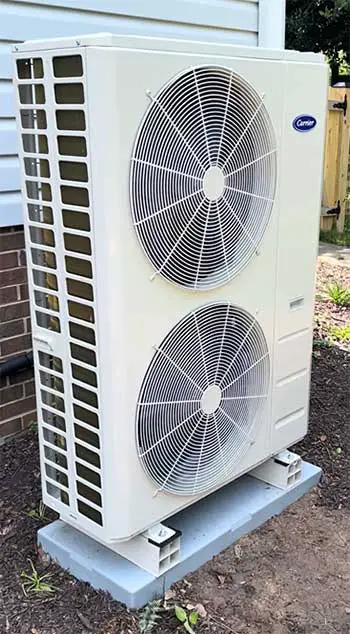
- Greenspeed Intelligence technology in the Infinity series uses a fully variable-speed scroll compressor driven by an inverter, allowing the system to modulate output between 25% and 100% of capacity in response to real-time demand rather than switching between two or three fixed stages
- Infinity Touch Control thermostat that functions as the system’s brain, providing zone control, weather-based setback, energy usage logs, maintenance reminders, and a color touchscreen interface that’s significantly more intuitive than most competing thermostats
- WeatherArmor Ultra protection on outdoor cabinets using UV-resistant polymer panels, powder-coated steel, and baked-on enamel that resists fading, chipping, and corrosion without the heavyweight construction Trane relies on
- Silencer System II design in Infinity series units that uses sound-dampening compressor blankets, vibration-isolating mounting hardware, and aerodynamically optimized fan blades to achieve noise levels as low as 51 dB — quieter than many refrigerators
- Cold climate heating performance rated down to -13°F (-25°C) in Carrier’s top Infinity units, making them a genuine all-climate solution for homeowners in northern states who previously had to rely on gas backup systems
- Côr Wi-Fi thermostat available for mid-range Performance series buyers, providing smart scheduling and remote access at a lower cost than the full Infinity Touch system
- Puron refrigerant (R-410A) across most of the lineup, with newer models transitioning to R-454B (low-GWP refrigerant) to comply with evolving environmental regulations and future-proof the system
- Zoning compatibility built into the Infinity system allows integration with whole-home zoning solutions, allowing different rooms or floors to be maintained at different temperatures simultaneously without complex third-party workarounds
Also Read: Is Ecoer Heat Pump Worth It?
Pros of Carrier Heat Pumps
- The Infinity series with Greenspeed Intelligence is genuinely among the most efficient residential heat pump systems available today, with SEER2 ratings up to 24 that translate into real and measurable electricity savings in high-usage climates
- Carrier’s cold-climate performance is best-in-class at the consumer level, with Infinity units maintaining effective heating output at outdoor temperatures well below what conventional heat pumps can handle
- The Infinity Touch Control is one of the best thermostats in the residential market — intuitive, data-rich, and genuinely useful for understanding and optimizing your home’s energy patterns
- Carrier’s Performance series provides a meaningful middle ground with efficiency improvements over the Comfort series without the full price premium of the Infinity line, giving buyers more nuanced budget options
- The brand’s global manufacturing scale means Carrier invests heavily in R&D, and the trickle-down of that investment into residential product lines is visible in the Greenspeed and Silencer technologies
- Carrier has one of the largest certified dealer networks in North America, meaning competitive installation quotes are achievable in virtually any region, which can offset any unit-cost premium
- Quieter operation across the premium lineup makes Carrier a strong choice for homes where the outdoor unit is located near bedroom windows, patios, or neighbor-adjacent fence lines
Cons of Carrier Heat Pumps
- The Infinity system’s sophistication comes with a corresponding complexity — when something does go wrong, diagnostic work requires technicians specifically trained in the Infinity communicating system, which can mean higher service call rates in areas with fewer certified Carrier dealers
- Entry-level Comfort series units are single-stage systems with modest SEER2 ratings, offering little efficiency advantage over entry-level competitors while still carrying the Carrier brand premium
- Some HVAC contractors report that Carrier units, particularly Infinity series, require more precise installation calibration than Trane units, meaning a poorly executed installation can negatively impact performance more than it would on a simpler system
- Long-term durability data for the Greenspeed inverter compressor is less established than for Trane’s Climatuff compressor, simply because the inverter-driven technology is newer to the residential market
- The Infinity Touch thermostat is proprietary, meaning it doesn’t play as nicely with third-party smart home platforms as homeowners who’ve invested in Lutron, Control4, or other ecosystems might prefer
- Carrier’s warranty terms, while competitive, have been subject to more frequent revisions and dealer-dependent variations than Trane’s, making it harder to know exactly what coverage you’re getting without reading the fine print carefully
Which Brand Is Right For You?
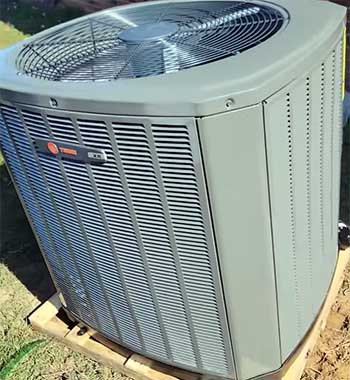
After all of this, I want to give you a direct answer rather than a wishy-washy “it depends.”
Choose Trane if you want a proven, durable system that most contractors can service, you’re in a moderate climate, you value simplicity over sophistication, and you’d rather pay slightly more upfront for a system known for longevity.
Choose Carrier if you’re in a cold climate and need strong low-temperature performance, you want the highest available efficiency ratings, you’re interested in advanced smart home integration, and you don’t mind a system that requires more precise installation and potentially more specialized service.
For most homeowners in moderate climates with typical usage patterns, the difference in day-to-day experience between the two brands is smaller than either company’s marketing would have you believe.
The installation quality, contractor relationship, and maintenance habits will outweigh brand differences in almost every scenario.
Also Read: Is Hisense Heat Pump Worth It?
Frequently Asked Questions (FAQ)
It depends on your priorities. Trane wins on durability and serviceability; Carrier wins on peak efficiency and cold-climate performance. Neither is a bad choice.
Trane, Carrier, and Lennox consistently top HVAC technician reliability surveys. Trane edges ahead slightly, but installation quality matters more than brand.
Multiply your system’s age by the repair cost. If the result exceeds $5,000, replacement is usually smarter than repair.
15 to 20 years with proper installation and annual maintenance. Neglected units or those in harsh climates may decline closer to 10 to 12 years.
Wrapping Up
Both Trane and Carrier are genuinely excellent heat pump brands — and if you buy either one from a certified dealer, have it professionally installed with a proper load calculation, and keep up with annual maintenance, you’re going to be comfortable for the next 15 to 20 years.
The decision really comes down to what you value most. If you want time-tested durability and a system that any competent HVAC tech can work on, go with Trane. If you want top-tier efficiency and cutting-edge cold-climate performance, Carrier’s Infinity series is hard to beat.
Either way, the brand on the cabinet matters far less than the quality of the hands that install it. Choose wisely, maintain it consistently, and you’ll get your money’s worth out of whichever direction you go.