
I’ve spent years cleaning my own place with everything from budget sticks to premium uprights, and the Kirby versus Dyson question keeps coming up because they represent two completely different ideas of what a vacuum should do.
This comparison lays out the real strengths, limitations, and trade-offs so you can decide which machine matches your floors, your energy level, and how you actually clean.
| Feature | Kirby (e.g. Avalir Platinum) | Dyson (e.g. V15 Detect) |
| Type | Corded upright, bagged | Mostly cordless stick, bagless |
| Weight | Around 23 lbs | About 6.8 lbs |
| Power Source | Corded, consistent power | Battery, fades over time |
| Suction Style | High airflow that holds up as bag fills | Strong cyclone power, best when bin is empty |
| Best For | Deep carpet cleaning, pets, longevity | Quick cleanups, stairs, hard floors, convenience |
| Filtration | HEPA bags available | Whole-machine filtration, HEPA on many models |
| Extras | Shampoo system, many tools, blower | Laser detection, auto modes, wall dock |
| Typical Price | $1,500–$2,500+ via demos | $400–$1,000 retail |
| Build | Metal-heavy, decades-long life | Plastic and tech, lighter lifespan |
| Sales Model | In-home demos only | Stores and online |
Key Differences Between Kirby And Dyson Vacuums
The gap between these machines shows up the moment you pick one up and start moving it. Kirby feels like a purpose-built cleaning system from another era, while Dyson feels like modern engineering focused on speed and ease.
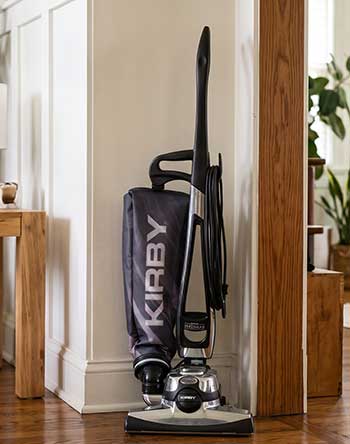
- Kirby stays corded so the motor never loses strength during a long session. You can go room to room for an hour without thinking about battery percentage. Dyson runs on a battery that drops in boost mode, so you plan around charging or stick to shorter jobs.
- Kirby uses bags that keep suction high even when half full. Dirt stays sealed until you toss the bag. Dyson uses a clear bin you empty by hand; power drops once the bin fills, and you deal with dust clouds if you tip it carelessly.
- Kirby weighs roughly three times more and needs the Tech Drive system to make pushing manageable. Without that assist, it becomes a workout. Dyson feels almost effortless to carry upstairs or whip around furniture.
- Kirby is sold almost exclusively through in-home demonstrations by independent distributors. The pitch is long and the price is high. Dyson sits on store shelves and websites where you can compare models and buy the same day.
- Kirby doubles as a carpet shampooer and comes with a large tool kit that includes inflators and other odd jobs. Dyson focuses on vacuuming with smart sensors and laser lights that reveal dust on hard floors.
- Kirby is built mostly from metal parts in the USA and many owners report machines still running after twenty or thirty years with occasional rebuilds. Dyson relies more on plastic and advanced motors that can develop issues after several years of heavy use.
- Kirby prioritizes deep agitation on thick carpet and holds a strong seal to pull embedded sand and pet hair. Dyson excels at surface cleaning and edges on hard floors but often leaves more residue in high-pile carpet after a single pass.
- Kirby demands storage space for the bulky upright and its attachments. Dyson mounts on a wall or stands upright in a corner and takes almost no floor space.
These differences shape daily life more than any spec sheet. If you hate cords and want to finish in ten minutes, Dyson removes friction. If you want carpets to look and feel cleaner after every pass and plan to keep the machine for decades, Kirby delivers that result at the cost of size and price.
Also Read: Is Black and Decker FurBuster Worth It?
Key Features of the Kirby Vacuum
Kirby machines, especially the Avalir Platinum, treat vacuuming as one part of a larger home cleaning system rather than a single task.
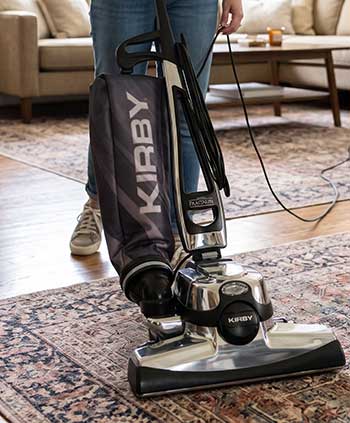
- Powerful two-speed motor designed for maximum airflow that stays strong as the bag fills. Many independent tests show it pulls more embedded dirt from carpet than lighter bagless units.
- Tech Drive self-propulsion engages with light pressure so the heavy body moves forward without constant pushing.
- Multi-Surface Shampoo System that converts the machine into a carpet and upholstery cleaner for stains and deep refresh cycles.
- Fifteen or more attachments including crevice tools, dusting brushes, extension hoses, and specialty pieces that handle stairs, cars, and odd corners.
- HEPA-style filter bags that trap fine particles and allergens instead of recirculating them when you empty a bin.
- Die-cast aluminum construction with polished metal finishes that resists the flex and cracks common in plastic housings.
- Adjustable height settings and toe-touch controls for different carpet piles plus a long cord that covers most rooms without switching outlets.
- Optional lifetime rebuild programs through authorized service that can restore performance years later.
When I first ran a Kirby across a high-traffic living room carpet that looked clean under a Dyson, the bag filled with fine grit I had not seen before. The machine does not just pick up what sits on top; it works the fibers. That difference matters if you have pets, kids, or thick rugs.
Pros of Kirby Vacuums
Kirby earns loyalty from people who measure a vacuum by how clean the carpet feels weeks later and how long the machine lasts.
- Exceptional deep-cleaning power on carpet that removes sand, pet hair, and fine dirt other machines leave behind. Independent airflow and pickup tests often favor it for embedded debris.
- Consistent suction that does not fade as the collection system fills, thanks to the bagged design.
- Extreme durability from metal construction and service support. Owners routinely report fifteen-to-thirty-year service lives with proper care.
- True multi-function capability including shampooing, which eliminates the need for a separate carpet cleaner.
- Strong filtration when using HEPA bags, which benefits allergy households by sealing dust until disposal.
- Tech Drive reduces the physical effort required to move the heavy body across carpet.
- Large accessory kit covers nearly every household surface without buying extras.
- Made in the USA with a rebuild program that extends the useful life further.
For households with wall-to-wall carpet and heavy pet traffic, these advantages translate into visibly cleaner floors and less frequent professional cleaning.
Cons of Kirby Vacuums
The same design choices that create performance also create friction for many buyers.
- Very high purchase price, often two or three times a comparable Dyson, and available mainly through in-home demos that can feel high-pressure.
- Significant weight around 23 pounds makes it tiring for multi-level homes or users with limited strength, even with Tech Drive.
- Bulky size requires dedicated storage and makes quick cleanups or stair work less convenient.
- Ongoing bag costs add to ownership expenses, though they protect suction.
- Corded operation limits mobility compared with cordless sticks.
- Aggressive sales history with some independent distributors has created negative experiences and regulatory complaints over the years.
- Less optimized for hard floors; the beater bar and weight can feel awkward or risky on delicate surfaces.
If your home is mostly hard flooring or you clean in short bursts between other tasks, these drawbacks become daily annoyances.
Also Read: Comparison of SEBO And Miele Vacuum.
Key Features of the Dyson Vacuum
Dyson models, particularly the V15 Detect and Gen5detect lines, lean into sensors, lightweight design, and the convenience of cordless operation.

- Digital motors that spin at extremely high RPM to generate strong air watts in a compact package.
- Laser illumination on the cleaner head that makes fine dust visible on hard floors so you can see what the vacuum is actually capturing.
- Auto mode that adjusts suction based on detected debris load, saving battery on lighter messes.
- Cyclonic separation that keeps suction from dropping as quickly as older bagless designs, paired with whole-machine filtration.
- Lightweight stick form that converts to handheld in seconds for furniture, stairs, and cars.
- Multiple cleaner heads including a motorized bar for carpet and a soft roller for hard floors.
- LCD screens on higher models that show runtime, power mode, and sometimes particle counts.
- Wall-mounted docks that keep the vacuum charged and out of the way.
I use a Dyson for daily touch-ups because I can grab it, hit the stairs, and put it back without wrestling a cord or heavy base. The laser makes hard-floor cleaning satisfying because you watch the dust disappear. It does not match Kirby for deep carpet work, but it removes the excuses that keep people from cleaning at all.
Pros of Dyson Vacuums
Dyson wins on the practical side of cleaning for people who value speed and low effort.
- Extremely lightweight and cordless design that makes stairs, cars, and quick sessions almost effortless.
- Smart features such as laser detection and auto power adjustment that improve results on hard floors and reduce guesswork.
- Bagless operation with easy bin emptying and no ongoing bag purchases.
- Widely available at retail prices that are lower than Kirby and often discounted.
- Strong everyday suction that handles pet hair, crumbs, and dust well on mixed surfaces.
- Sleek storage options that keep the machine visible yet out of the way.
- Frequent model updates that bring incremental improvements in motor power and battery life.
- Good filtration performance that captures fine particles without recirculating them.
For busy households that clean several times a week rather than once a month, these features lower the barrier and keep floors consistently acceptable.
Cons of Dyson Vacuums
Convenience comes with compromises in power consistency and longevity.
- Battery runtime drops in higher power modes, and many models lose suction strength as the bin fills.
- Plastic construction and complex electronics can develop problems after a few years of heavy use; warranties on cordless models are often shorter.
- Deep carpet performance lags behind Kirby in many side-by-side tests for embedded sand and fine grit.
- Higher-end models remain expensive, and replacement batteries or parts add cost later.
- Smaller bin capacity means more frequent emptying during big jobs.
- Some users report the laser exaggerates visible dust, leading to over-cleaning without proportional benefit.
- Limited multi-function capability; most models vacuum only and do not shampoo.
If your priority is extracting every last particle from thick carpet over years of ownership, these limitations show up quickly.
Also Read: Is Homeika Cordless Vacuum Worth It?
Performance on Different Floors and Real Daily Use

On thick carpet with pet hair and tracked-in grit, Kirby consistently leaves the surface looking and feeling cleaner after one thorough pass.
The combination of airflow, beater bar agitation, and sealed bag keeps dirt from escaping back into the room.
Dyson handles the same carpet adequately for maintenance but often requires multiple passes or a higher power setting that drains the battery.
On hardwood, tile, or laminate, Dyson becomes the clearer choice.
The soft roller heads and laser make fine dust visible and easy to capture without scattering it.
Kirby can clean hard floors with the right tools, yet the weight and primary carpet focus make the process slower and less precise.
Stairs expose the weight difference immediately. Carrying a 23-pound Kirby up and down is impractical for most people, so the hose and tools become essential. A Dyson stick simply goes upstairs and back without strain.
In a typical week, I grab the Dyson for daily crumbs and pet tracks. Once a week or so I bring out the heavier machine for a deeper carpet session. That hybrid approach captures the strengths of both, though it requires owning two units.
Long-Term Value and Ownership Costs
Kirby’s high upfront cost looks different when you spread it across twenty years of use and factor in the shampoo function that replaces another machine. Bag costs are real but modest compared with buying a new vacuum every five to seven years.
Service and rebuild options further extend the timeline.
Dyson’s lower entry price and zero bag cost look attractive in the short term. Battery replacements, possible motor or sensor issues, and the natural desire to upgrade to newer models every few years can narrow the gap. Many owners treat Dysons as five-to-ten-year appliances rather than lifetime tools.
Neither is cheap. The better long-term value depends on whether you value maximum cleaning depth and durability or frequent, low-effort convenience.
Who Should Choose Which?
Choose Kirby if you have substantial carpet, pets that shed heavily, a preference for buy-it-once durability, and the physical ability or willingness to manage a heavier machine.
The in-home demo process is part of the purchase, so set clear boundaries and compare the final price against what you actually need.
Choose Dyson if you live in a multi-level home, have mostly hard floors, value cordless freedom, or simply want cleaning to feel less like a chore. The retail model lets you research reviews, check current pricing, and return the unit if it does not fit.
Many households end up with both: a Dyson for daily work and a Kirby or similar heavy upright for periodic deep cleans.
Also Read: Comparison of Sirena And Rainbow Vacuums.
Frequently Asked Questions (FAQ)
Yes for deep carpet cleaning and long-term durability. It is not the best choice for everyone because of the weight, price, and sales model.
The issues centered on aggressive door-to-door sales tactics by some independent distributors, including high-pressure pitches, complaints about financing practices, and past legal cases involving sales methods rather than the vacuum’s cleaning performance itself.
Yes, depending on needs. Premium canisters from SEBO or Miele often outperform on filtration and carpet depth, while some Shark models match or beat Dyson on value and certain features.
There is no single absolute best. For most mixed-floor homes that want cordless convenience, recentDyson Detect models rank at the top of many tests. For maximum carpet cleaning power and longevity, Kirby or high-end canisters remain strong contenders. The right machine is the one that matches your floors, your routine, and how long you plan to keep it.
Wrapping Up
You now have a clear picture of how these two machines differ in power, convenience, cost, and daily feel.
Match the machine to the way you actually clean rather than the marketing, and both options can deliver a cleaner home for years.