
I’ve spent a lot of time with both SEBO and Miele vacuums — testing them on hardwood floors, thick carpets, pet hair nightmares, and everything in between.
If you’re trying to figure out which of these two German-engineered powerhouses deserves a spot in your home, you’re in the right place.
This article breaks down everything you need to know about SEBO vs Miele: the performance, the price, the quirks, and the hidden strengths that most reviews completely miss. Let’s get into it.
| Feature | SEBO | Miele |
| Country of Origin | Germany | Germany |
| Motor Type | Bypass motor (protected from debris) | Vortex motor / AirClean system |
| Filtration | Multi-layer S-Class or HEPA | HEPA AirClean / TimeStrip filter |
| Bag System | High-capacity hygiene bags | AirClean bags with self-sealing collar |
| Noise Level | ~68–72 dB | ~66–72 dB |
| Suction Control | Manual via slider | Dial-based with preset settings |
| Weight (canister) | ~12–14 lbs | ~10–13 lbs |
| Best For | Deep carpet cleaning, durability | Allergy sufferers, versatility |
| Price Range | $500–$900+ | $400–$1,200+ |
| Warranty | 5 years (some models) | 7 years (some models) |
| Popular Models | X4, D4, E3 Premium | Classic C1, Complete C3, Compact C2 |
| Cord Length | Up to 40 feet | Up to 36 feet |
| Repair/Service | Serviceable, but fewer dealers | Wide dealer network |
Key Differences Between SEBO And Miele
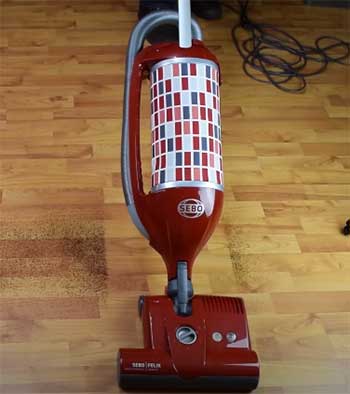
- Motor Design Philosophy: SEBO uses a bypass motor system, which means air used to cool the motor never passes through the filtration system. This protects the motor from fine dust and debris, which is a big reason SEBO motors tend to last so long. Miele’s vortex motor is highly efficient and paired tightly with their AirClean filtration system, which processes all airflow through the filter before exhausting it.
- Bag Design and Hygiene: Miele’s AirClean bags have a self-sealing collar that snaps shut when you remove the bag, meaning dust stays in the bag — not in the air, not on your hands. This is a genuinely excellent feature, especially for allergy sufferers. SEBO bags are high-capacity and effective, but the self-sealing mechanism on Miele’s bags is a noticeable advantage during bag changes.
- Brush Roll and Carpet Performance: SEBO’s brush rolls, particularly on the X series uprights, are widely regarded as some of the most aggressive and effective deep carpet cleaners on the market. The brush roll can be switched off for hard floors and has automatic height adjustment that adapts to pile thickness. Miele’s Dynamic Drive brush roll is excellent but tends to be slightly less aggressive — which is great if you want versatility, less so if you need serious carpet extraction.
- Suction Adjustment: Miele offers a dial with clear preset modes (carpet, hard floor, delicate, etc.) that makes it very intuitive. SEBO’s suction is typically adjusted via a simple slider on the hose, which is equally functional but lacks the clear labeling Miele offers. For casual users, Miele’s interface feels more approachable.
- Build Quality and Repairability: Both machines are built extremely well. However, SEBO has a slight edge here for long-term repairability — many components are modular and easy to replace, and the machines are designed to be serviced rather than discarded. Miele is also well-built, but some models have more proprietary components that can make repairs slightly more complex.
- Noise Levels: Both brands are relatively quiet compared to budget vacuums. Miele tends to have a quieter reputation, and the Complete C3 in particular is noticeably hushed. SEBO isn’t loud, but it does produce a slightly more mechanical sound during operation that some users describe as more reassuring than annoying.
- Cord Length: SEBO tends to offer longer cords on their models — up to 40 feet on some — which is a practical advantage in larger rooms where outlet access is limited.
- Dealer and Service Network: Miele has a significantly broader retail and service network, particularly in the United States. You can find Miele at department stores, specialty appliance shops, and online. SEBO is more niche and typically available through specialty vacuum dealers. If something goes wrong with your machine, Miele’s support infrastructure is easier to navigate in most regions.
Key Features of SEBO Vacuums
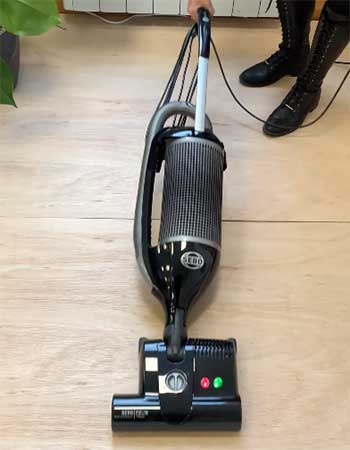
- Bypass Motor System: The motor is completely separated from the airflow path, which protects it from fine dust and small debris. This is a major reason SEBO vacuums have such extraordinary longevity — the motor isn’t grinding through the same air that’s carrying carpet grit and allergens.
- S-Class and HEPA Filtration: SEBO offers S-Class filtration (which exceeds HEPA standards in some configurations) across many of their models. This makes them genuinely suitable for households with allergy sufferers or asthma, not just as a marketing claim.
- Automatic Brush Roll Height Adjustment: On the X series uprights, the brush roll automatically adjusts to the carpet pile height. You don’t need to fiddle with settings every time you move from a low-pile area rug to a thick bedroom carpet. It senses and adapts.
- High-Capacity Bags: SEBO bags hold significantly more debris than many competitors before needing replacement. This is particularly useful in high-traffic homes or homes with pets, where you might be vacuuming large volumes of debris regularly.
- Robust Construction: SEBO vacuums are built to commercial standards. The plastic used in their housings is noticeably thicker and more impact-resistant than many consumer-grade vacuums. These machines are not delicate.
- On-Board Attachments: SEBO includes a solid set of attachments — crevice tools, upholstery brushes, and combination floor tools — that are stored on-board for easy access. The attachment quality is practical rather than flashy.
- Belt Design: SEBO’s flat belt is more durable than the round belts used in many competing vacuums. When it does need replacement, it’s inexpensive and straightforward to swap out.
- Flexible Hose and Wand: The hose on SEBO models is particularly flexible and resistant to kinking, which makes above-floor cleaning tasks significantly less frustrating.
Also Read: Is Shark Matrix Robot Vacuum Worth It?
Pros of SEBO Vacuums
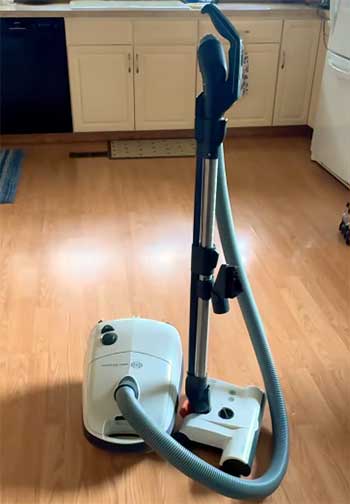
- Exceptional longevity — these machines are genuinely built to last decades, not years, and commercial usage proves it
- Superior deep carpet cleaning — the aggressive brush roll performance is outstanding on medium to thick pile carpets
- Bypass motor protection — your motor won’t wear out prematurely because it’s shielded from the debris passing through the vacuum
- High filtration standards — S-Class filtration is excellent for allergy management
- Longer cord length — up to 40 feet on some models, which is a practical real-world advantage
- Cost of ownership — bags and filters are reasonably priced, and the machine itself rarely needs servicing
- Commercial-grade build — the housing, hose, and components all feel like they were designed to be used hard, daily, for years
- Brush roll auto-adjustment — removes the guesswork when moving between floor types
- Repairability — modular design means components can be replaced rather than the whole machine discarded
Cons of SEBO Vacuums
- Fewer retail locations — finding a SEBO dealer, especially in the US, can be genuinely frustrating without ordering online
- Less intuitive suction controls — the slider-based adjustment lacks the clear preset labeling that Miele offers
- Aesthetic design is utilitarian — SEBO vacuums are not particularly sleek or attractive; they look like the workhorses they are
- Bag sealing mechanism is not self-sealing on removal, which can release a small puff of dust when changing bags
- Heavier on some models — certain upright SEBO models can feel bulky compared to Miele’s lighter canister options
- Fewer model options in certain markets — Miele’s lineup is broader and more diversified for specific use cases
- Less brand recognition — this doesn’t affect performance, but if you’re buying a gift or shopping at mainstream retailers, SEBO simply isn’t as visible
Key Features of Miele Vacuums
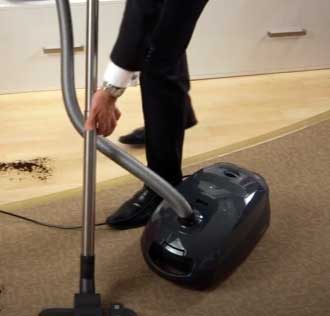
- AirClean Sealed System: Every component of a Miele vacuum — bag, motor filter, exhaust filter — works together as part of a sealed filtration system. Air enters dirty and exits clean. The system is tested to ensure no leakage points where unfiltered air can bypass the filtration path.
- Self-Sealing AirClean Bags: When you remove a Miele bag, the collar automatically seals. This prevents dust from escaping during bag changes, which is a thoughtful and genuinely useful design detail. For allergy sufferers especially, this matters enormously.
- TimeStrip Filter Indicator: Miele includes a TimeStrip on their filters that changes color to tell you when it’s time to replace the filter. No guessing, no schedule-keeping — the filter tells you when it’s done.
- Suction Control Dial: The rotary dial on Miele canisters lets you select from preset suction levels labeled for specific tasks — from delicate drapes to maximum carpet power. The interface is immediately intuitive.
- Dynamic Drive Brush Roll (Complete C3 and similar): Miele’s powered brush rolls are excellent for carpets and adjust electronically on some models. The SEB 228 and similar electrobrushes are genuinely impressive tools.
- Quiet Operation: Miele vacuums, particularly the Complete C3 Marin, are among the quietest vacuums available at any price point. This is a meaningful quality-of-life factor if you vacuum frequently or at odd hours.
- Wide Model Range: Miele offers canisters (C1, C2, C3), uprights, stick vacuums, and robot vacuums. Within the canister range alone, there are models specifically optimized for smooth floors, for pet hair, for allergies, and for maximum carpet performance.
- HEPA AirClean Filter: Available across most Miele models, the HEPA filter captures 99.95% of fine particles. Combined with the sealed system, the filtration performance is outstanding.
- Telescoping Stainless Steel Wand: The wand on Miele canisters is adjustable, lightweight, and locks securely. It feels premium in your hand in a way that’s hard to describe until you’ve used it.
Also Read: Is Black and Decker FurBuster Worth It?
Pros of Miele Vacuums
- Outstanding filtration and sealed system — genuinely excellent for allergy and asthma management
- Self-sealing bags — arguably the best hygienic bag-change experience in the industry
- Quiet operation — noticeably hushed, especially the Complete C3 range
- Intuitive controls — the suction dial with preset modes makes operation easy for anyone in the household
- Wide model range — there’s a Miele for almost every specific cleaning scenario
- Strong dealer and service network — easier to find, buy, and service than SEBO in most regions
- Long warranty — up to 7 years on some models
- Premium feel throughout — from the hose lock to the suction dial, everything about the user experience feels refined
- Excellent hard floor performance — Miele’s parquet/smooth floor settings and tools are superb
- Versatility — the range of attachments and floor tools covers nearly every cleaning scenario imaginable
Cons of Miele Vacuums
- Price — Miele’s top-tier models can push well past $1,000, which is a significant investment
- Proprietary accessories — Miele’s attachments and bags are specific to their system; off-brand alternatives aren’t always reliable
- Bags can feel small on lower-tier models — the C1 in particular uses smaller bags that need more frequent replacement in high-debris environments
- Brush roll performance on thick carpets isn’t quite as aggressive as SEBO’s X series — deep pile extraction is good, but not class-leading
- Motor not bypass-protected — in Miele’s design, airflow does pass through the filtration system, which is fine with regular filter maintenance but theoretically less protective of the motor long-term
- Replacement parts can be expensive — genuine Miele bags and filters cost more than SEBO equivalents
- Some models can feel plasticky at lower price points — the C1 doesn’t have quite the same solid feel as the C3
Performance Deep-Cut: Carpets, Hard Floors, and Pet Hair
- Carpet Performance
On medium to thick pile carpets, SEBO wins — and it’s not particularly close. The X4 and X8 uprights in particular deliver brush agitation and suction that pulls embedded debris out of carpet fibers in a way that few vacuums can match.
If you have a home dominated by thick carpeting and you want the deepest clean possible, SEBO is your machine.
Miele is excellent on carpets too, especially with the powered electrobrush attachments available on the C3 range. But the performance gap on thick pile is real and noticeable side by side.
- Hard Floor Performance
Here, Miele has the edge. The parquet settings, the delicate floor tools, and the suction control precision make Miele exceptionally well-suited to hardwood, tile, and laminate. SEBO on hard floors is fine — but Miele is genuinely excellent.
- Pet Hair
Both brands handle pet hair well, but for different reasons. SEBO’s aggressive brush roll is excellent at pulling pet hair out of carpet fibers.
Miele’s self-sealing bags make disposal cleaner and more hygienic. If your primary concern is pet hair on furniture and upholstery, Miele’s attachment range gives it a slight edge. For pet hair embedded in thick carpets, SEBO is superior.
Which One Should You Buy?
I’ll put it plainly: if you have primarily thick carpeted floors and you care most about deep cleaning performance and sheer durability, buy the SEBO. If you have a mix of hard floors and carpet, live with allergy sufferers, and want a refined user experience with excellent brand support, buy the Miele.
Neither choice is wrong. Both brands build machines that will make you wonder why you ever bought a cheap vacuum. But they’re optimized for slightly different priorities, and knowing yours makes the decision straightforward.
Also Read: Comparison of QRevo Edge And Curv Robot Vacuums.
Frequently Asked Questions (FAQ)
The Miele Complete C3 Marin is frequently cited by consumer testing organizations and vacuum specialists as one of the highest-rated bagged canister vacuums available. For uprights, the SEBO X8 and the Dyson Ball Animal are often at the top of independent rankings. “Highest rated” varies by category — canister vs. upright, bagged vs. bagless — but Miele’s Complete C3 consistently appears at the top of comprehensive tests.
The British Royal Family is reported to use Miele vacuums in their royal residences, which fits with Miele’s premium positioning in European markets. Miele has held a Royal Warrant in Germany, reflecting its reputation as a supplier of choice for discerning households.
The White House has not made official public statements about its specific vacuum brand. However, facilities of that scale typically use commercial-grade cleaning equipment from brands like SEBO, Hoover Commercial, or Sanitaire — machines built for institutional durability rather than consumer aesthetics.
The SEBO D4 is generally considered the stronger machine for cleaning performance, particularly on carpets, and offers bypass motor protection for longevity. The Miele C1 offers a better user experience in terms of intuitive controls and self-sealing bags, and it’s more widely available. For pure cleaning power and durability, most specialists favor the SEBO D4. For ease of use and filtration convenience, the Miele C1 holds its own. The SEBO D4 wins on performance; the Miele C1 wins on polish.
My Final Take
After everything I’ve put both of these machines through, here’s where I land: SEBO and Miele are both exceptional, and either one will outperform nearly every mass-market vacuum you’ve ever used.
SEBO earns its reputation through raw capability and bullet-proof construction. Miele earns its reputation through thoughtful design and a consistently refined experience.
You don’t need to overthink this. Match the machine to your home. Carpets everywhere? SEBO. Mixed floors and allergies? Miele. Buy either one and you’ll likely never want to go back.