
I’ve spent a lot of time analyzing countertop materials, and one question keeps coming up in renovation conversations more than almost any other: Formica or laminate?
If you’re renovating a kitchen or bathroom and trying to make sense of these two options — what they actually are, how they differ, which one costs less, and which one holds up better — you’re in the right place.
This article breaks it all down for you, from surface durability to long-term value, so you can walk into any home improvement store or contractor’s office knowing exactly what you want.
| Feature | Formica | Laminate (Generic) |
| What it is | A brand of high-pressure laminate | A broad category of surface material |
| Core material | Resin-soaked paper layers + kraft paper base | Varies by manufacturer |
| Cost range | $10–$40 per sq ft installed | $8–$35 per sq ft installed |
| Durability | High — known for consistency | Varies by brand and grade |
| Heat resistance | Moderate — use trivets | Moderate — use trivets |
| Scratch resistance | Good for daily use | Varies significantly |
| Water resistance | Resistant but not waterproof | Resistant but not waterproof |
| Design options | 180+ colors and patterns | Thousands across all brands |
| DIY-friendly | Yes | Yes |
| Eco-friendly options | Available | Varies by brand |
| Lifespan | 10–20 years | 10–20 years (quality-dependent) |
| Resale value impact | Moderate | Moderate |
Key Differences Between Formica And Laminate
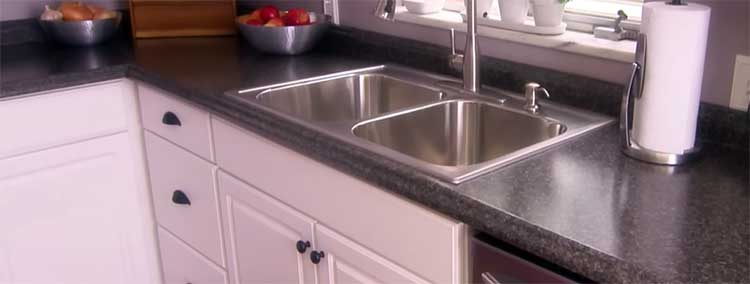
- Brand identity vs. product category: Formica is a specific manufacturer; laminate is the umbrella term that includes Formica and all its competitors. Treating them as equivalent is like treating “iPhone” and “smartphone” as the same thing — related, but not interchangeable.
- Quality consistency: Because Formica controls every step of their manufacturing process, their product quality is predictably consistent. Generic laminate quality varies wildly. A premium laminate from Wilsonart might outperform mid-range Formica in specific categories, but a cut-rate laminate from an off-brand supplier might fall apart within five years.
- Price floor and ceiling: Formica’s pricing tends to cluster in the middle-to-upper tier of the laminate market. You can almost always find cheaper laminate options, but you’re taking on more risk. Formica’s premium isn’t enormous, but it’s there — and for most buyers, it’s worth it.
- Design variety: Formica’s catalog is impressive — over 180 designs including stone looks, woodgrain, solids, and abstract patterns. But the combined design options across all laminate brands number in the thousands. If you have a very specific aesthetic in mind, casting a wider net across the laminate market might serve you better.
- Availability: Formica is widely stocked at major retailers and through specialty dealers. Generic laminates vary in availability, though big brands like Wilsonart are almost as easy to find.
- Sustainability: Formica has made significant strides in sustainable manufacturing, offering products with recycled content and low-emission adhesives. The eco-credentials of generic laminates depend entirely on the manufacturer.
- Resale appeal: Buyers and real estate agents recognize the Formica name. In a listing or during a walkthrough, a seller saying “Formica countertops” communicates something. Saying “laminate” is more neutral — fine, but less specific.
Also Read: Is Stretta Countertop Worth It?
Key Features of Formica Countertops
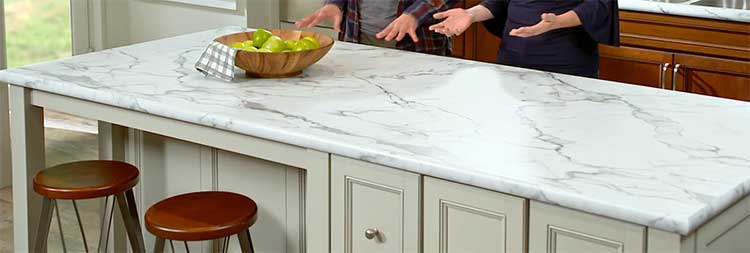
- High-pressure laminate construction: Formica uses the HPL process, which means the decorative layer is fused under extreme pressure and heat, creating a surface that’s significantly harder and more uniform than low-pressure alternatives.
- Scratch-resistant wear layer: The melamine surface layer resists everyday scratching from utensils, keys, and general kitchen activity better than many competing materials at this price point.
- Consistent color throughout the edge: Many Formica products now offer through-color edges, meaning the edge of the countertop matches the surface instead of showing an ugly dark brown substrate edge.
- Extensive design catalog: From marble-look finishes to matte solids and realistic wood grain textures, Formica’s design options allow homeowners to achieve high-end aesthetics without high-end pricing.
- Easy maintenance: Formica surfaces require nothing more than a damp cloth and mild soap. No sealing, no polishing, no special cleaners needed.
- DIY installation potential: For handy homeowners, Formica sheets can be purchased and installed without professional help, though precise cutting and adhesive application require some skill and patience.
- Antimicrobial options: Formica offers select products with built-in antimicrobial protection, which is particularly valuable in kitchen and bathroom environments.
- Thermal barrier required: Like all laminate surfaces, Formica does not tolerate direct contact with hot pots and pans. A trivet or hot pad is essential to prevent scorching or delamination.
- Post-form edge capability: Formica is compatible with post-form fabrication, where the countertop edge curves seamlessly upward into a backsplash — a classic kitchen look that’s cost-effective and clean.
Pros of Formica Countertops
- Proven brand reliability: Formica has been refining its manufacturing for over a century. That institutional knowledge shows in the consistency of the product — you’re unlikely to get a bad batch.
- Excellent cost-to-performance ratio: For the price, Formica delivers durability, aesthetics, and variety that would cost significantly more if you went with natural stone or quartz.
- Low maintenance demands: There’s no sealing required, no special cleaning products, and no annual maintenance rituals. Wipe it down and move on.
- Huge design range: Whether you want your countertops to look like Carrara marble, reclaimed wood, or a punchy solid color, Formica has options across all those categories.
- Widely available: You can walk into most major home improvement stores and find Formica products in stock. No waiting for special orders in many cases.
- Fast installation: A professional can install Formica countertops in a day or less in most kitchens. There’s no curing time, no sealing period — it’s ready to use immediately.
- Lightweight: Compared to stone or concrete countertops, Formica is lightweight, which makes it easier to handle during installation and puts less stress on cabinetry over time.
- Environmentally conscious options: Formica’s sustainability-focused product lines give environmentally minded consumers a responsible choice without sacrificing aesthetics.
Also Read: Differences Between Neolith And Dekton Countertops.
Cons of Formica Countertops
- Not waterproof at the seams: While Formica surfaces resist moisture well, water that seeps into the seams between sections or around the sink cutout can swell the substrate underneath, leading to bubbling or delamination over time.
- Heat vulnerability: Direct contact with hot pots or pans can cause scorching, bubbling, or discoloration. This is a hard limitation of the material, not just a quality issue.
- Hard to repair: Chips, burns, and deep scratches in Formica are difficult or impossible to repair seamlessly. Once the surface is damaged, your options are limited to covering it, living with it, or replacing the countertop entirely.
- Cannot be sanded or refinished: Unlike wood countertops or even some solid surface materials, Formica can’t be sanded down and refinished. What you see is what you get for the lifespan of the countertop.
- Perception gap: Despite its practical advantages, Formica carries a stigma in some real estate markets. Buyers who associate it with older or budget-tier kitchens may discount a home’s value in their minds, even when the installation is new and high-quality.
- Seam visibility: On wide countertop runs, seams between Formica sheets are visible. Skilled fabricators can minimize this, but they can’t eliminate it entirely.
- Less dramatic resale value impact: If you’re renovating to maximize resale value, Formica won’t move the needle the way quartz or granite might in certain markets.
Key Features of Laminate Countertops (Generic)
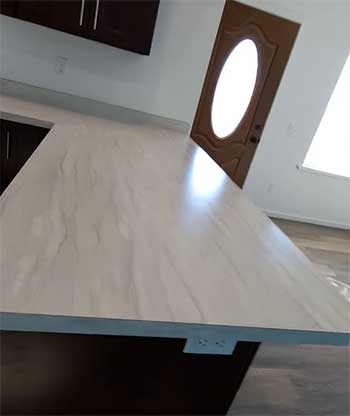
- Layered material construction: All laminates share the same fundamental architecture — decorative layer, core layers, substrate — but the quality of each layer varies significantly between manufacturers and price points.
- Wide price range: The laminate category spans from entry-level products you’ll find at discount retailers to premium HPL products that compete directly with Formica and Wilsonart on durability and aesthetics.
- Enormous design selection: Across all laminate brands combined, the design options are essentially limitless. If Formica’s 180+ designs don’t include exactly what you’re looking for, another laminate manufacturer almost certainly does.
- DIY compatibility: Like Formica, most laminate sheets can be purchased and installed by a competent DIYer with the right tools and patience.
- Variable durability: This is the central trade-off of generic laminate — you might get a product that lasts 20 years, or you might get one that shows wear within five years. Research is essential.
- Substrate sensitivity: The performance of any laminate countertop is heavily influenced by the substrate — the board underneath the laminate sheet. Particleboard swells when wet; MDF is more stable; plywood is the most resilient. Premium laminate countertops use better substrates; budget ones often don’t.
- Texture and finish variety: The laminate market offers everything from ultra-matte finishes and subtle textures to high-gloss surfaces and embossed patterns that mimic stone or wood grain convincingly.
Pros of Generic Laminate Countertops
- Lower entry-level cost: If budget is the primary driver, generic laminate can get you a functional, decent-looking countertop for less money than even mid-range Formica.
- Access to more design options: If you have a very specific look in mind, searching across the entire laminate market gives you far more options than any single brand.
- Widely compatible with DIY installation: The same DIY-friendly nature that applies to Formica applies to all laminates. Sheets are available at most large retailers.
- Good performance at premium tiers: High-end laminate from brands like Wilsonart or Pionite can match or exceed Formica in specific performance metrics. The category ceiling is high.
- Fast and easy maintenance: Like Formica, laminate requires minimal care — no sealing, no special products, just routine cleaning.
- Lightweight and installer-friendly: Easy to handle, transport, and install compared to stone alternatives.
- Accessible for quick renovation timelines: Because laminate doesn’t require curing time or specialized sealing after installation, your kitchen is back in use immediately.
Cons of Generic Laminate Countertops
- Quality inconsistency: This is the biggest downside. Without a trusted brand name, you’re taking a gamble on durability, wear resistance, and substrate quality. That gamble might pay off, or it might cost you a replacement in five years.
- Same heat vulnerability as Formica: No laminate surface tolerates direct heat contact. This limitation isn’t unique to any brand — it’s a category-wide issue.
- Moisture risk at seams: Generic laminates, especially those with lower-quality substrates, can be even more vulnerable to seam moisture than name-brand products. Swelling and delamination risk is higher.
- Not repairable: Like all laminates, generic options cannot be sanded or refinished. Damage is permanent.
- Research burden: Shopping generic laminate requires more homework. You need to vet the manufacturer, the substrate material, the wear layer thickness, and customer reviews. With Formica, that work is largely done for you by the brand’s reputation.
- Stigma in some markets: The word “laminate” without a brand name attached can be even harder to sell in a real estate context. In premium markets, some buyers will discount laminate countertops regardless of quality.
- Potential for short lifespan: Budget-tier laminate products with thin wear layers and particleboard substrates may need replacement within five to eight years, especially in high-use kitchens.
Also Read: Is Dekton Countertop Worth It?
How Do They Compare on the Things That Matter Most?
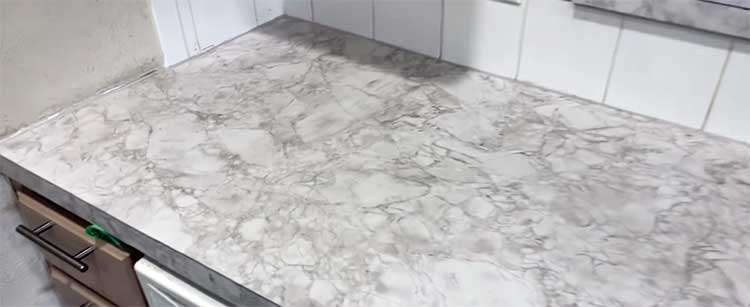
- Durability in Everyday Use
If you cook regularly — and I mean real cooking, not just reheating leftovers — the durability question matters a lot. Formica’s HPL construction gives it a relatively hard, scratch-resistant surface.
You can run a spatula across it, set down ceramic dishes, and chop vegetables nearby without causing noticeable damage. That said, it’s not indestructible. Repeated abrasion from rough materials will eventually dull the surface.
Generic laminate durability is entirely dependent on the product grade. Premium HPL from a reputable manufacturer performs comparably to Formica. Economy laminate with a thin decorative layer will show wear much faster. This is where the brand-vs-category distinction becomes practically significant.
- Water and Moisture Performance
Neither Formica nor generic laminate is waterproof. They’re both water-resistant — and there’s an important difference.
The surface itself sheds water well, but the seams are vulnerabilities. Water that sits in a seam long enough will eventually find its way to the substrate, and once that substrate starts swelling, the surface above it will too.
Proper installation with sealed seams minimizes this risk. But if you’re in a kitchen with a lot of water activity around the sink area, paying attention to seam placement and sealing quality is crucial regardless of which laminate product you choose.
- Aesthetics and Design Flexibility
Both options have come a very long way in design sophistication. Modern Formica finishes in particular are genuinely impressive — the marble-look and woodgrain options photograph well and read as high-end to the casual observer. Generic laminate across the broader market offers even more design variety.
If you care deeply about a specific aesthetic and Formica’s catalog doesn’t include exactly what you want, shopping the wider laminate market is a smart move. But for most homeowners, Formica’s selection is more than adequate.
- Installation Experience
Both Formica and generic laminate can be handled by a professional fabricator in about the same amount of time. A competent DIYer can work with either, though the skill ceiling is the same for both — precise cutting, good adhesive application, and careful seam placement all matter.
- Value Over Time
Over a 10-to-20-year lifespan, Formica typically delivers consistent value because you know what you’re getting. Premium generic laminate can match that. Budget generic laminate almost certainly won’t.
Which One Should You Choose?
If you want my honest take: for most homeowners, Formica is the smarter default. The brand consistency, the broad design range, and the readily available contractor experience with Formica products make it a lower-risk choice.
You’re not paying a massive premium over generic laminate — the price difference is usually modest — and you’re getting a product with a century of refinement behind it.
That said, if you find a specific design from another laminate brand that’s perfect for your space, or if you’re working with a fabricator who specializes in a particular premium laminate line, don’t feel locked into Formica.
The laminate category is broad enough that excellent products exist outside the Formica brand.
Where I’d steer you away from generic laminate is at the budget end. The cheapest laminate products on the market sacrifice wear layer thickness and substrate quality in ways that will cost you in the medium term.
If budget is the primary driver, Formica’s entry-level line is a better value than most budget generic laminates.
Also Read: Is Stone Coat Countertop Worth It?
Frequently Asked Questions (FAQ)
Yes — Formica remains a top choice for budget-friendly renovations, rentals, and practical kitchens. Today’s designs look far more modern than the dated styles people associate with the brand.
Formica is laminate. Compared to other laminate brands, Formica is a reliable mid-tier option with consistent quality and a wide design range.
Quartz leads the market for mid-to-upper range renovations. Laminate, including Formica, dominates the budget-friendly segment.
Laminate — starting around $8–$15 per square foot installed, it’s the most affordable countertop option available.
Wrapping Up
Choosing between Formica and laminate doesn’t have to be complicated. Formica is laminate — just a trusted, time-tested brand within that category. If you want reliability without doing deep research into manufacturer specs, Formica is your safest bet.
If you’re open to shopping the wider laminate market and willing to vet your options carefully, you can find comparable or even superior products at various price points. Either way, you’re getting an affordable, low-maintenance, good-looking countertop that works hard in real kitchens.
Just avoid the budget end of the generic laminate market, keep hot pans off the surface, and seal those seams properly — and your countertops will serve you well for years to come.