
As someone who’s logged countless hours on construction sites and in workshops relying on DeWalt tools, I set out to compare the Powerstack and Powerpack batteries head-to-head.
Let’s walks through their real-world differences, strengths, and weaknesses so you can decide which one fits your daily grind better.
| Feature | Powerstack | Powerpack |
| Cell Technology | Stacked pouch cells | Tabless cylindrical cells |
| Voltage | 20V MAX | 20V MAX |
| Common Capacities | 1.7Ah compact, 3.5Ah, 5Ah | 4Ah, 8Ah |
| Power Output Claim | Up to 50% more than standard XR | Higher current delivery with reduced heat |
| Size and Weight | Compact and lighter options available | Larger and heavier, especially at 8Ah |
| Lifespan | Up to 2X longer than traditional cylindrical | Extended due to lower heat and resistance |
| Best For | High-demand tools, tight spaces, overhead work | Long runtime on heavy continuous tasks |
| Compatibility | All 20V MAX tools and chargers | All 20V MAX tools and chargers |
| Price Range | Higher than standard XR | Premium for high-capacity models |
Key Differences Between DeWalt Powerstack And Powerpack
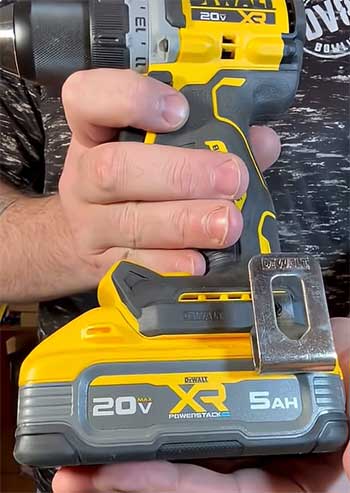
- Cell design stands out as the biggest separator. Powerstack relies on flat pouch cells stacked tightly together. This setup cuts internal resistance and packs more energy into a smaller footprint. Powerpack sticks with cylindrical cells but removes the traditional single tab, using a multi-tab approach instead. Energy flows more directly, which keeps temperatures lower during hard pulls.
- Power delivery feels different in the hand. I notice Powerstack maintains higher voltage under load on tools like grinders or circular saws, so the tool does not bog down as quickly. Powerpack shines when the job calls for sustained high current over hours, like running a reciprocating saw through dense material all morning.
- Physical size and balance change how the tool handles. Powerstack compact models sit lower and weigh less, which helps on overhead drilling or when working in cramped joist spaces. Powerpack packs, especially the 8Ah version, add noticeable bulk and mass that can tire the arm faster on all-day framing.
- Heat management follows different paths. Pouch cells in Powerstack dissipate heat across a broader surface, so the pack stays cooler during repeated high-draw cycles. Tabless design in Powerpack reduces hotspots at the connection points, letting you push the battery longer before any thermal cutoff kicks in.
- Capacity options lean in opposite directions. Powerstack focuses on mid-range Ah ratings that still deliver strong peak power. Powerpack pushes into higher Ah territory for pure runtime, making it the choice when swapping batteries mid-job becomes a real interruption.
- Durability features overlap but apply differently. Both include rubber overmolds for impact protection, yet the pouch construction of Powerstack seems more resistant to capacity fade over hundreds of cycles. Powerpack’s tabless cells handle repeated high-current discharges with less degradation.
- Cost per watt-hour tips toward Powerpack for pure endurance buyers, while Powerstack justifies its premium through the combination of power density and reduced weight.
Key Features of DeWalt Powerstack
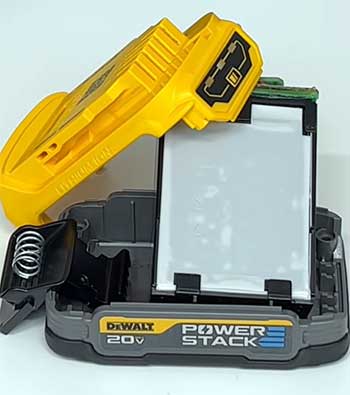
- Pouch cell construction forms the core of the technology. Instead of round 18650 or 21700 cells, flat lithium-ion pouches stack inside the pack. This arrangement creates a larger conductive surface area and lowers electrical resistance, which translates into stronger current delivery without as much voltage sag.
- Compact footprint appears across the lineup, especially the 1.7Ah model. That pack measures roughly 25 percent smaller than a comparable standard XR battery and weighs about 15 percent less. On a drill or impact driver the lower center of gravity makes one-handed work less fatiguing.
- Power claims center on a 50 percent boost over traditional cylindrical packs of similar or lower Ah rating. In practice this shows up as faster hole drilling, quicker cuts through dimensional lumber, and less bogging on a grinder when the disc hits thicker metal.
- Efficiency gains reach similar levels. The battery converts more of its stored energy into usable work rather than heat, so a 5Ah Powerstack often completes more linear feet of cutting or more holes per charge than a standard 5Ah XR under the same heavy load.
- Lifespan extends to roughly twice that of older cylindrical designs. Reduced capacity loss per cycle means the pack holds usable amp-hours longer before you notice the runtime drop off.
- Fuel gauge LEDs sit on the side for quick checks. Four lights give a clear snapshot of remaining charge so you avoid mid-task surprises.
- Full compatibility with the existing 20V MAX ecosystem means no adapters or new chargers. The pack drops onto any tool or charger already in the kit.
- Oil-resistant versions exist for mechanics and anyone working around lubricants. The casing resists common shop fluids that would eventually degrade standard housings.
- Impact-resistant rubber base protects both the pack and finished surfaces when you set the tool down.
Also Read: Differences Between DeWalt XR And Flexvolt.
Pros of DeWalt Powerstack
- Power density delivers noticeable performance gains on the tools that need it most. Circular saws cut faster through framing lumber, grinders maintain speed under load, and drills drive larger bits without the motor straining. The difference becomes obvious the first time you switch from a standard XR pack of similar size.
- Weight savings reduce fatigue over a full shift. Carrying a lighter battery on a tool belt or holding a compact pack overhead for ceiling work adds up. After eight hours the shoulders and wrists feel the difference.
- Cooler operation keeps productivity high. Because the pack sheds heat more effectively, tools stay in the productive power band longer before any thermal protection slows them down.
- Longer cycle life improves the total cost of ownership. Paying more up front makes sense when the battery still delivers strong runtime after the cheaper packs have already faded.
- Compact size opens up tight spaces. Working between studs, inside cabinets, or under sinks becomes easier when the battery does not stick out as far.
- Versatility across the 20V MAX lineup means one set of Powerstack packs can serve drills, saws, lights, and specialty tools without compromise.
- Reduced voltage sag under load keeps electronic tools running at their designed speeds. Brushless motors in particular respond with more consistent torque.
- Award-winning design and real-world feedback confirm the technology holds up on actual job sites rather than just laboratory benches.
Cons of DeWalt Powerstack
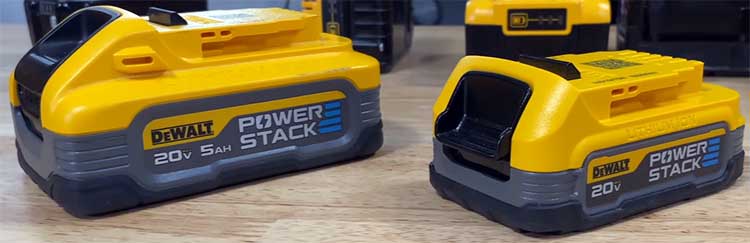
- Higher purchase price stands out immediately. A 5Ah Powerstack often costs nearly twice as much as a standard 5Ah XR, so the budget impact is real for anyone outfitting a full crew.
- Runtime on low-draw tools can feel shorter than expected. Because the pack prioritizes power delivery, the actual minutes of continuous light use sometimes fall short of a larger cylindrical pack with the same Ah rating.
- Limited high-capacity options leave a gap. If pure all-day runtime on a single pack is the priority, the current Powerstack range stops at 5Ah while other technologies climb higher.
- Availability of oil-resistant models varies by region and retailer, which can frustrate users who specifically need that protection.
- Slightly different form factor on the compact version means some tool-belt holders designed for standard packs fit less securely.
- Premium pricing makes it harder to justify for occasional DIY users who rarely push tools to their limits.
Key Features of DeWalt Powerpack
- Tabless cell technology removes the single metal tab that normally connects the electrode to the external circuit. Multiple contact points spread the current load, which cuts resistance and heat at the most vulnerable spot inside a traditional cell.
- High amp-hour ratings dominate the range. The 8Ah model stands out as the flagship, delivering long continuous runtime on tools that otherwise force frequent swaps.
- Heat reduction lets the pack stay in the tool longer under load. Because energy moves more efficiently, thermal cutoffs trigger less often during extended grinding or sawing sessions.
- Charging behavior improves as well. Without the same heat soak, the pack can begin accepting charge sooner after heavy use, shaving minutes off the downtime between cycles.
- Overmolded base provides the same impact protection found on other premium DeWalt packs. The rubber layer absorbs drops that would otherwise crack the casing or damage internal connections.
- LED charge indicator matches the rest of the XR family, so muscle memory from older batteries carries over without adjustment.
- Compatibility remains complete with every 20V MAX tool and charger. The form factor matches standard packs, so balance on larger tools stays familiar.
- Energy efficiency gains appear most clearly on high-draw applications. The design wastes less energy as heat, which helps the higher Ah rating translate into measurable extra work per charge.
- Durability focuses on sustained high-current use. The multi-tab approach reduces the stress that usually shortens cell life when tools demand sudden bursts of amperage.
Also Read: Differences Between DeWalt Max And Atomic.
Pros of DeWalt Powerpack
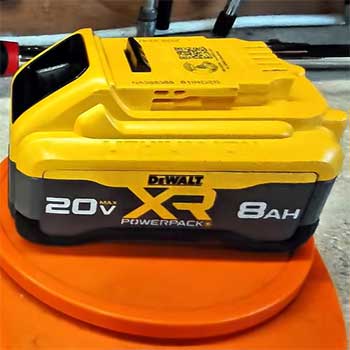
- Extended runtime changes the pace of the day. An 8Ah pack keeps a reciprocating saw or circular saw running through long stretches of demolition or framing without constant battery changes.
- Lower operating temperatures under continuous load protect both the battery and the tool motor. Heat is the enemy of longevity, and the tabless design fights it effectively.
- Strong current delivery supports high-demand tools without the voltage drop that slows work. The pack feels lively even when the tool is working hard.
- Familiar size and balance make the transition easy for anyone already carrying larger XR packs. No need to adjust technique or storage solutions.
- Improved charging readiness shortens the wait between heavy use and the next charge cycle. Less cooldown time means more productive minutes.
- Durable construction stands up to the knocks of a busy job site. The overmold and internal design handle drops and vibration well.
- Value appears over time for users who measure cost by hours of work completed rather than sticker price alone.
- Seamless fit within the existing DeWalt ecosystem keeps tool investment protected.
Cons of DeWalt Powerpack
- Added weight becomes noticeable after hours of use. The higher capacity packs pull the tool downward and can increase fatigue on overhead or extended arm tasks.
- Bulkier profile limits access in tight quarters. When space is restricted the larger pack can interfere with positioning the tool.
- Narrow product range restricts choice. With only a couple of capacity options currently available, users cannot fine-tune the balance between weight and runtime as freely as with other lines.
- Premium pricing still applies, especially for the 8Ah model. The cost sits well above standard XR packs of lower capacity.
- Heat advantages, while real, matter less on tools that draw only moderate current. Light-duty users may never notice the difference enough to justify the upgrade.
- Availability can lag behind more common XR packs at some retailers, forcing special orders or waits.
Performance Observations
I ran both batteries on the same set of tools across framing, electrical rough-in, and metal cutting tasks. On a circular saw cutting 2x material the 5Ah Powerstack completed more linear feet before the cut rate slowed.
The same saw with an 8Ah Powerpack simply kept going longer overall, even if each individual cut felt slightly less aggressive.
On an impact driver the compact Powerstack made the tool feel nimble and quick, while the heavier Powerpack added stability for high-torque fastening but slowed wrist movement.
Heat checks after thirty minutes of continuous grinder use showed the Powerstack surface running cooler to the touch. Both packs charged without issue on standard DeWalt chargers and displayed accurate fuel gauges throughout the tests.
Which Battery Fits Different Job Types?
Framers and carpenters who spend most of the day on saws and drills often prefer a mix. Powerstack packs go on the tools used overhead or in tight spots, while Powerpack units stay on the main saw for long continuous cuts.
Electricians working in finished spaces lean toward the compact Powerstack for its size advantage. Demolition crews and metal fabricators benefit more from the sustained output and runtime of Powerpack.
Occasional users who only need reliable power without extreme demands can stick with standard XR packs and skip both premium lines.
Also Read: Differences Between DeWalt DWS780 And DWS779.
Frequently Asked Questions (FAQ)
It depends on the work. For compact size and peak power under load it ranks near the top of the 20V MAX range.
Yes for users who need long continuous runtime on high-draw tools and want lower heat during extended sessions.
Powerstack is a pouch-cell technology within the broader XR lineup, while standard XR packs use traditional cylindrical cells.
Powerstack stays at 20V and prioritizes power density and weight. Flexvolt adds 60V capability for larger tools and generally higher total capacity, so each serves different needs.
Final Thoughts
After running both batteries through real jobs I see clear strengths on each side. Powerstack gives you more punch in a lighter package that fits tight spaces and keeps tools lively under load.
Powerpack trades some of that agility for longer stretches of work and cooler sustained performance. You will get the most value by matching the battery to the specific tools and tasks you face every day rather than treating either one as a universal upgrade.
Choose the technology that removes the most friction from your particular workflow and the investment pays for itself in fewer interruptions and less fatigue.