
I’ve installed, replaced, and lived with more flooring than most people will in a lifetime.
After swapping out everything from old carpet to hardwood in my own homes and helping friends with their projects, one question keeps coming up: should you go with click lock or tongue and groove?
That’s exactly what I want to help you figure out today. I’ll break down how these two systems actually perform in real life so you can choose the one that fits your space, your skill level, and your long-term needs without regrets.
| Feature | Click Lock | Tongue and Groove |
| Installation Speed | Very fast | Slower, requires more precision |
| Tools Needed | Minimal (sometimes just a mallet) | More tools (nails, glue, etc.) |
| Skill Level | Beginner-friendly | Intermediate to advanced |
| Stability | Good with proper subfloor | Excellent when nailed/glued |
| Repairability | Individual planks easier to replace | Often harder to replace single boards |
| Water Resistance | Depends on core material | Depends on core material |
| Cost of Labor | Lower (DIY friendly) | Higher if hiring professionals |
| Long-term Durability | Strong in modern versions | Traditionally very durable |
| Floating vs Fixed | Usually floating | Usually fixed |
Key Differences Between Click Lock And Tongue and Groove
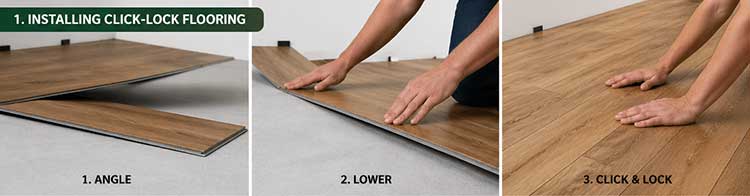
Let’s break down exactly how these two systems differ in practice across multiple important aspects:
- Installation method and approach: Click lock is designed as a floating floor that sits on top of the subfloor without being fastened down, while tongue and groove is typically secured firmly to the subfloor using nails, staples, or adhesive for a fixed installation.
- Speed of completion: Click lock allows you to cover large areas quickly — I’ve done full rooms in hours — whereas tongue and groove demands careful alignment, fastening, and often waiting for adhesives to cure, stretching the timeline significantly.
- Required skill level and learning curve: Click lock is accessible for most homeowners with basic DIY interest, but tongue and groove usually requires intermediate or advanced experience to achieve good results consistently.
- Ease of repair and maintenance: With click lock, you can often unlock sections to replace individual planks relatively easily, but tongue and groove repairs frequently involve destructive removal and careful reinstallation of surrounding boards.
- Stability and underfoot feel: Tongue and groove generally provides a more rigid, solid, and premium sensation because it’s anchored, while click lock offers good stability that can still feel slightly more flexible or floating in comparison.
- Performance in moisture-prone areas: Many modern click lock luxury vinyl planks are engineered with waterproof cores that handle spills and humidity well, whereas traditional tongue and groove wood products require more careful sealing and can be vulnerable unless specially treated.
- Handling of expansion and contraction: Click lock systems are built to accommodate natural movement within perimeter expansion gaps, but tongue and groove relies on secure fastening and precise gap planning to control movement and prevent warping or buckling.
- Overall project cost structure: Click lock often saves money on labor and time but can have higher material costs for advanced locking mechanisms, while tongue and groove material might be cheaper per square foot yet leads to higher total costs due to tools, adhesives, and professional help.
- Long-term refinishing potential: Tongue and groove, especially solid hardwood versions, can be sanded and refinished several times over its life, but most click lock products, particularly laminate and vinyl, are designed as replaceable rather than refinishable surfaces.
- Noise and comfort characteristics: Fixed tongue and groove installations can reduce sound transmission and hollow sounds more effectively in many homes, while floating click lock benefits greatly from added underlayment but may transmit more impact noise without it.
- Flexibility for future changes: Click lock gives you more options if you ever want to remove or reuse the flooring, whereas tongue and groove creates a more permanent bond with the subfloor that is harder to reverse.
- Visual seam appearance: Both can look seamless, but tongue and groove often achieves an almost monolithic traditional look, while click lock depends heavily on the quality of the locking profile and installer precision to hide joints.
After weighing all these differences through actual hands-on experience, I’ve found that your final choice usually comes down to three main factors: how quickly you need the job done, how long you plan to stay in the house, and how much hands-on work you’re comfortable doing yourself.
Also Read: Is Eco Forest Bamboo Flooring Worth It?
Understanding Click Lock Flooring
I remember the first time I tried click lock flooring in my living room. I finished the entire space in one weekend without calling any contractors. That’s the magic of this system. Click lock works by having specially shaped edges on each plank that snap together like puzzle pieces.
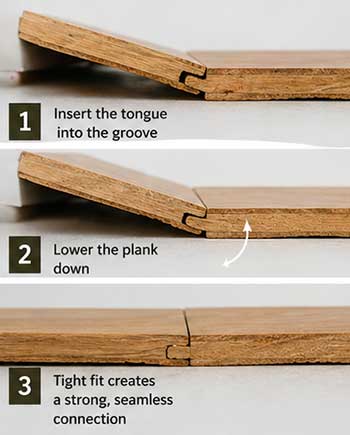
You simply angle one plank, push it down, and hear that satisfying click.
Pros of Click Lock Flooring
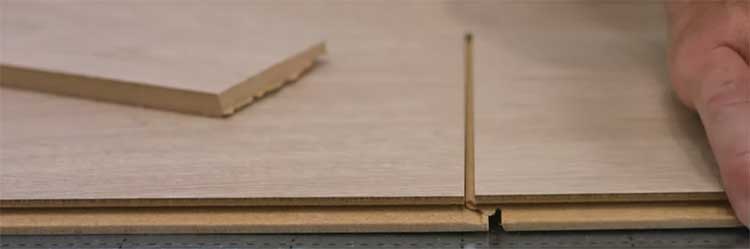
From my experience, here’s where click lock really shines and why so many homeowners are turning to it:
- Installation is genuinely fast and straightforward. I’ve laid down over 300 square feet in a single afternoon by myself, something that would have taken days with traditional methods.
- The floating design makes it far more forgiving on subfloors that aren’t perfectly level. Small imperfections that would cause problems with fixed flooring often go unnoticed.
- Replacing a single damaged plank is much simpler. You can carefully unlock a few rows, swap out the bad piece, and click everything back without destroying the surrounding floor.
- No glue or nails means a cleaner, quieter, and less messy job — perfect if you have kids or pets running around during the project.
- Many click lock luxury vinyl planks come with pre-attached underlayment that improves comfort, reduces noise, and saves you an extra step.
- It handles temperature and humidity changes better in many cases because the entire floor can expand and contract as one unit within the perimeter gaps.
- Labor costs drop dramatically when you do it yourself. I saved thousands by skipping professional installers on my last two rooms.
- Modern locking systems have become remarkably strong. Some can withstand heavy foot traffic and furniture movement without seams separating.
- You get excellent water resistance with quality vinyl cores, making it suitable for kitchens, bathrooms, and basements where moisture is a concern.
- The learning curve is gentle. Even if you make a mistake on the first few rows, you can usually pop them apart and try again without wasting material.
I particularly appreciate how click lock gives you flexibility. Life changes, and sometimes you want to take your investment with you when moving.
Cons of Click Lock Flooring
Of course, I’ve also run into the limitations that keep it from being perfect for every situation:
- The locking edges can be delicate during installation. One careless tap or wrong angle and you risk damaging the click mechanism, forcing you to discard the plank.
- In very large open spaces, you may need careful planning for expansion gaps and transition strips, which can break up the visual flow if not done thoughtfully.
- Cheaper click lock systems sometimes develop small gaps or height differences over years, especially if the subfloor has any movement or moisture issues.
- The floor can feel slightly less solid or “hollow” underfoot compared to a properly nailed or glued traditional floor, though better underlayment helps.
- Reaching a damaged plank in the middle of the room often requires disassembling multiple rows, which becomes time-consuming and tedious.
- Not every click lock product performs equally in extreme moisture environments — you really need to choose high-quality waterproof versions.
- Some people worry about long-term durability of the locking system in commercial-level traffic, although residential use is usually fine.
- Sound can travel more easily through floating floors unless you invest in thicker underlayment or sound-reducing pads.
- Certain click systems have a maximum run length recommended by manufacturers, beyond which you need to add transitions that some find unattractive.
- Over time, repeated expansion and contraction can put stress on the locks, potentially leading to minor separation if the room experiences drastic seasonal changes.
Also Read: Is Proximity Mills Flooring Worth It?
Exploring Tongue and Groove Flooring
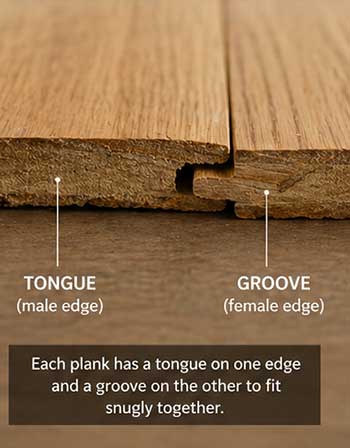
Tongue and groove has been around for generations, and there’s a reason it’s still popular. Each board has a protruding “tongue” on one side and a matching “groove” on the other. When installed correctly, these edges fit tightly together, creating a seamless surface.
Pros of Tongue and Groove Flooring
Here’s why tongue and groove continues to earn my respect after multiple installations:
- Once installed properly, the floor feels incredibly solid and unified, almost like one continuous surface rather than individual pieces.
- It excels at handling heavy loads and constant foot traffic, especially when nailed or glued down securely to the subfloor.
- The tight fit creates beautiful, nearly invisible seams that give a classic, high-end appearance many people love.
- You can sand and refinish solid hardwood tongue and groove floors multiple times over decades, extending their life significantly.
- It performs very well with radiant floor heating systems because the boards sit in direct contact with the subfloor.
- Acoustic qualities are often superior, with less hollow sound and better reduction of footfall noise between floors.
- The fixed nature means individual planks are far less likely to shift, pop up, or create gaps over time when done right.
- It offers excellent stability in rooms with consistent temperature and humidity levels.
- Many premium engineered wood and solid hardwood options use this system, delivering authentic natural beauty and texture.
- Properly installed tongue and groove can last a lifetime and even become a selling point when you eventually sell your home.
There’s a satisfying sense of permanence and craftsmanship that comes with tongue and groove that many homeowners, including me, find deeply appealing for main living areas.
Cons of Tongue and Groove Flooring
At the same time, I’ve learned firsthand why tongue and groove isn’t always the easiest or smartest choice:
- Installation takes considerably more time, patience, and skill. What I could do in one weekend with click lock might require an entire week with tongue and groove.
- You need more specialized tools — pneumatic nailers, adhesives, spacers, tapping blocks, and sometimes moisture meters or levels become essential.
- Mistakes during installation are much more expensive and difficult to correct. Damaging a tongue early on can ruin an entire row.
- Replacing a single damaged board in the middle of the floor is a major headache that often involves cutting out sections and careful patching.
- It’s far less beginner-friendly. If you’re new to flooring, the risk of poor results or wasted material is much higher.
- The floor doesn’t forgive uneven subfloors as easily. You may need extensive leveling work beforehand to avoid issues later.
- Professional installation costs add up fast, sometimes doubling or tripling your total project budget.
- Glue-down applications create mess, strong odors, and require excellent ventilation during and after the job.
- Expansion and contraction must be carefully managed with proper gaps and fastening schedules, or you risk buckling and cupping.
- Removing or replacing the entire floor later is labor-intensive and destructive compared to simply unlocking a floating system.
Which One Should You Choose?
After trying both systems in different rooms of my house, here’s my honest take. If you want fast results, easy installation, and good performance in most home settings, click lock is incredibly hard to beat, especially with today’s improved locking mechanisms. It’s perfect for busy families who need their space back quickly.
However, if you’re after that rock-solid traditional feel, plan to stay in your home long-term, and want the ability to refinish the surface years down the line, tongue and groove still holds strong appeal, particularly with real hardwood.
Your subfloor condition, room size, moisture levels, and personal DIY comfort all play huge roles. I always recommend preparing your subfloor properly regardless of which system you pick. That single step makes the biggest difference in how well either flooring performs over time.
Also Read: Is Republic Flooring Worth It?
Frequently Asked Questions (FAQ)
It depends on your priorities. Click lock is usually better for quick DIY projects and modern convenience, while tongue and groove excels when maximum stability and a solid feel matter most.
Potential disadvantages include possible gaps over time with poor subfloor prep, slightly less rigid feel, and occasional difficulty replacing middle planks without disassembling sections.
Today’s premium luxury vinyl planks with embossed surfaces, realistic grain patterns, and matte finishes look remarkably close to real hardwood. Look for thicker planks with good texture depth.
Wide plank designs in natural-looking wood tones and stone-effect tiles continue gaining popularity, along with enhanced waterproof luxury vinyl that mimics traditional materials almost perfectly.
Final Thoughts
In the end, both click lock and tongue and groove can give you a beautiful floor when chosen and installed correctly. I hope walking through my real experiences helps you feel more confident about your decision.
Think about how you’ll use the space, how much time you want to spend installing, and how long you plan to stay in the home. Whichever route you take, proper preparation and quality materials will serve you well for years to come.
Now it’s your turn – which system feels right for your next project?