
When I look at dishwasher brands to avoid, I’m not saying every machine from these companies is junk.
I’m looking at patterns: repair complaints, drying problems, weak customer support, noisy operation, short-lived parts, and poor value for the price.
If you’re shopping right now, I want you to know which brands deserve extra caution before you spend your money. By the end, you’ll have a clearer sense of what to avoid, what to question, and how to buy smarter.
Dishwasher Brands I Would Be Careful With
- Samsung
- Frigidaire
- Kenmore
- Viking
- Cove
- Electrolux
- Beko
- Fisher & Paykel
- Amana
- Hotpoint
Samsung Dishwashers
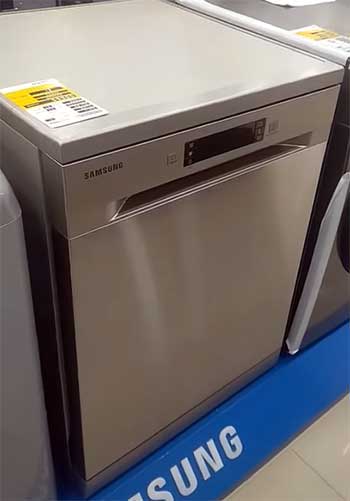
Samsung makes some beautiful dishwashers.
I’ll give them that. The designs are sleek, the control panels look modern, and the feature lists can be tempting.
You may see smart connectivity, quiet operation claims, storm-wash zones, flexible racks, and fingerprint-resistant finishes.
But here’s where I get cautious: Samsung dishwashers can feel like they are built more for showroom appeal than long-term ownership.
A common issue buyers mention is inconsistent cleaning.
One cycle may leave everything spotless, while another leaves food stuck to bowls or cloudy residue on glasses.
That kind of inconsistency gets old fast, especially when you bought the machine expecting premium convenience.
Drying can also be a sore spot. Some Samsung models rely heavily on condensation drying, which can leave plastic containers wet. That is not unusual in modern dishwashers, but when drying performance is already average and the machine has other quirks, it becomes frustrating.
Another reason I would pause before choosing Samsung is repair complexity. Modern Samsung appliances often include more electronic components, sensors, and smart features. That sounds impressive until one of those parts fails. Then you may be dealing with expensive diagnostics, part delays, or a repair that costs enough to make you question the purchase.
If you love Samsung’s look and features, I wouldn’t automatically tell you to walk away. I would tell you to read model-specific reviews carefully, check warranty coverage, and avoid buying only because the dishwasher matches your refrigerator.
Viking Dishwashers
Viking has a premium image. When you see the name, you probably think of luxury kitchens, serious cooking, and high-end appliances. That reputation makes Viking dishwashers especially disappointing when they fail to match the expectations created by the price.
My biggest issue with Viking dishwashers is value. If you’re paying luxury money, the machine should feel exceptional in cleaning, drying, quietness, durability, support, and overall ownership. Anything less feels like a bad bargain wearing a fancy badge.
Some owners have complained about reliability problems, poor drying, leaks, control panel issues, and service headaches. Even if only some models are affected, the risk feels more painful because Viking dishwashers are not cheap.
Luxury appliances also create a different kind of problem: repair costs. A basic dishwasher repair is annoying. A premium dishwasher repair can be wallet-punching. Parts may cost more, service may require a specialized technician, and delays can be longer.
I don’t mind paying more for better performance. I do mind paying more for a brand name and then still having to baby the machine.
If you’re building a luxury kitchen and want matching appliances, Viking may be tempting. But for the dishwasher specifically, I would compare it hard against Miele, Bosch Benchmark, Thermador, or high-end KitchenAid before committing.
Frigidaire Dishwashers
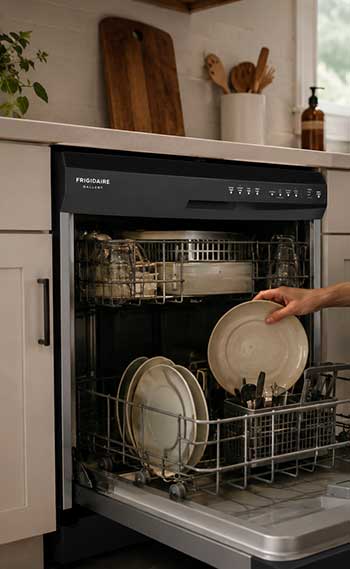
Frigidaire is a familiar name, and plenty of people buy it because the price looks friendly.
I understand the appeal. If you’re outfitting a kitchen on a budget, a Frigidaire dishwasher can look like a practical choice.
The problem is that cheaper dishwashers often reveal their weaknesses after the excitement of the low price wears off.
With Frigidaire, I would watch for complaints about noise, flimsy racks, door latch issues, and mediocre drying.
Some models do a decent job for light household use, but if you cook often, load heavily, or expect spotless results from every cycle, you may feel underwhelmed.
The interiors can also feel less durable than better-built competitors.
Plastic tubs, basic spray systems, and lighter rack materials are not always dealbreakers, but they do affect the day-to-day experience. A rack that starts rusting, wobbling, or sticking can make the whole appliance feel older than it is.
I also think Frigidaire can be risky for families that run the dishwasher daily. A budget dishwasher might make sense for a rental, guest suite, small apartment, or occasional use. But if this is your main kitchen machine, I would rather see you stretch toward a stronger mid-range option.
Frigidaire is not always terrible. The issue is value over time. A low price is only good if the appliance keeps working without annoying you every week.
Cove Dishwashers
Cove is connected with a premium appliance family, and that gives it an upscale glow right away. It looks refined, it feels high-end, and it is marketed toward people who want a polished kitchen experience.
But I would be careful.
Cove dishwashers are expensive, and expensive does not automatically mean trouble-free. When a high-end dishwasher has reliability concerns, the disappointment hits harder. You are not just buying a machine; you are buying confidence. If that confidence is shaky, the whole purchase feels wrong.
One thing I always consider with luxury dishwashers is whether the premium price brings a meaningful everyday benefit. Does it clean better? Dry better? Last longer? Run quieter? Offer better service? If the answer is not clearly yes, I start looking elsewhere.
Cove may make sense for someone who already owns matching premium appliances and wants a consistent kitchen suite. But for most buyers, I would not treat it as the safest reliability pick. At this price level, you have excellent alternatives that are better known for long-term dishwasher performance.
The risk with Cove is not that it lacks style. It has style. The risk is paying premium money for an appliance category where proven reliability matters more than brand prestige.
Kenmore Dishwashers
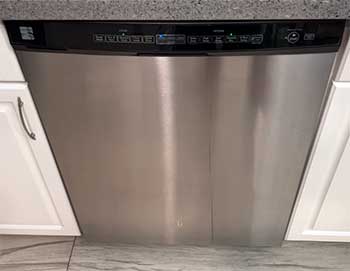
Kenmore is tricky because Kenmore appliances are often made by other manufacturers.
That means the name on the front does not always tell the full story.
One Kenmore dishwasher may perform differently from another because the actual maker, components, and design can vary.
That uncertainty is why I’m cautious.
When I buy a dishwasher, I want a clear picture of parts availability, repair support, model history, and long-term reliability. With Kenmore, that picture can be muddy. You may find some good models, but you may also find older designs, inconsistent support, and confusing model lineups.
Another concern is service. Depending on where you live, getting a Kenmore dishwasher repaired may not be as simple as calling any appliance technician and getting parts quickly. If a dishwasher is already a mid-price or budget machine, repair delays can make ownership more irritating than it needs to be.
Kenmore may appeal to you if you find a strong discount, especially for a secondary kitchen or rental unit. But I would not buy one blindly. I would look up the exact model number, find out who manufactured it, and compare it against Whirlpool, Bosch, GE, and KitchenAid alternatives in the same price range.
With Kenmore, the brand name alone is not enough. You need to inspect the specific model like a detective with a grudge.
Electrolux Dishwashers
Electrolux has made some attractive and feature-rich dishwashers, but I would approach the brand with caution. The designs often look polished, and the brand has a European-style appeal, yet owner satisfaction can be mixed depending on the model.
The complaints I pay attention to include poor drying, drainage problems, leaks, control errors, and parts-related frustration. A dishwasher can survive a few quirks if it cleans well and repairs are simple. But when performance issues and service concerns show up together, that is when I start backing away.
Electrolux also sits in an awkward space. It is not usually the cheapest option, but it may not deliver the same confidence as the strongest premium dishwasher brands. That puts buyers in a strange position: paying more than budget pricing without always getting premium peace of mind.
I would be especially careful with older Electrolux models or discounted units that look like a bargain. Sometimes a low price on a premium-looking dishwasher is not a deal; it is inventory trying to escape.
If you are considering Electrolux, I would check the exact model’s recent owner reviews, local repair availability, and warranty terms. I would not buy one based only on appearance or brand recognition.
Beko Dishwashers
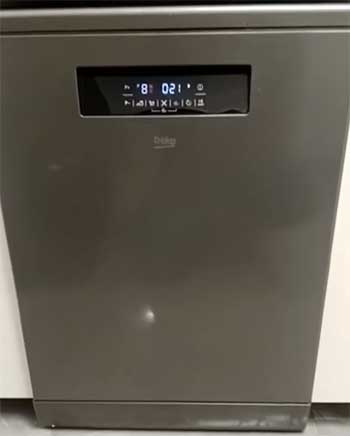
Beko has grown in visibility, and some buyers like the brand because it offers modern features at competitive prices.
You may see stainless interiors, quiet operation claims, flexible loading options, and energy-efficient cycles without a massive price tag.
That sounds good on paper.
My concern with Beko is consistency and support.
In some areas, service availability may be less convenient than with more established mainstream brands.
Even a decent dishwasher becomes a headache if you cannot easily get parts or a technician.
Some Beko models perform well, but the brand may not be the safest pick for every buyer. If you live in a market where Beko support is strong, your experience may be fine. If you live somewhere with limited service coverage, I would hesitate.
Another issue is resale confidence. Bosch, KitchenAid, Whirlpool, and Miele have stronger recognition among many homeowners. Beko may not carry the same trust factor, especially if you are upgrading a kitchen before selling a home.
I would not call Beko a brand to avoid in every situation. I would call it a brand to research locally. Before buying, ask: Who services it near me? Are parts easy to get? Are recent reviews strong for this exact model? If those answers are weak, move on.
Fisher & Paykel Dishwashers
Fisher & Paykel is best known for drawer-style dishwashers. I understand why people like the idea. A dish drawer can be convenient, especially in small kitchens, apartments, bars, or households that run smaller loads.
But convenience does not always equal simplicity.
Drawer dishwashers have a different design than traditional pull-down-door models. That can make repairs more specialized and sometimes more expensive. If the drawer mechanism, seal, pump, or electronic controls act up, you may not be dealing with a basic dishwasher fix.
Some owners love Fisher & Paykel dish drawers. Others complain about leaks, uneven cleaning, drainage issues, or limited loading capacity. That split reaction is exactly why I would be careful. It is not a universal crowd-pleaser.
The layout can also frustrate people who are used to a standard dishwasher. Tall plates, large pans, mixing bowls, and odd-shaped items may not fit as naturally. If you cook a lot, you might miss the open space of a traditional tub.
I would consider Fisher & Paykel only if the drawer format truly fits your lifestyle. If you just want reliable, no-drama cleaning for a busy family kitchen, I would probably choose a conventional dishwasher from a stronger reliability-focused brand.
Amana Dishwashers
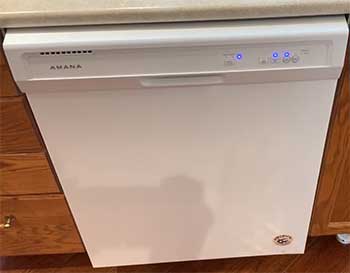
Amana usually appeals to budget shoppers.
The machines tend to be simple, affordable, and easy to understand.
That can be a good thing. Not everyone needs Wi-Fi, hidden controls, bottle jets, or a third rack.
But the low price can come with trade-offs.
Amana dishwashers may feel basic in cleaning power, sound insulation, rack quality, and drying performance. If your expectations are modest, that might be acceptable. If you want sparkling glasses, quiet cycles, flexible loading, and strong drying, Amana may feel too bare-bones.
I see Amana as a “minimum acceptable” dishwasher brand for certain situations. It can work for rental properties, starter homes, or people who rarely cook. But I would not put it high on my list for a household that runs full loads every night.
The main risk is not dramatic failure. It is everyday disappointment. You may find yourself pre-rinsing more, re-washing items, drying plastics by hand, or avoiding heavy cycles because the machine sounds too loud.
Sometimes cheap appliances save money. Sometimes they just move the cost into your patience.
Also Read: Differences Between Finish Ultimate And Cascade Platinum Plus Dishwasher Pods.
Hotpoint Dishwashers
Hotpoint is another budget-focused brand I would approach carefully. It is usually built for affordability, not premium performance. That does not make it useless, but it does mean you should keep expectations realistic.
Hotpoint dishwashers are often basic machines with fewer features, simpler racks, and less refined cleaning systems. If you want something inexpensive to handle light loads, it may do the job. But if you want quiet operation, strong drying, flexible loading, and long-term durability, I would keep shopping.
The biggest issue is that Hotpoint can feel outdated compared with modern competitors. A dishwasher should save time, not make you rearrange every cup like you’re solving a tiny kitchen puzzle. If the racks are awkward or the cleaning power is limited, daily use becomes annoying.
I would not choose Hotpoint for a main family dishwasher unless the budget is extremely tight. Even then, I would compare it against entry-level Whirlpool, GE, or Bosch options before deciding.
Hotpoint’s best argument is price. Its weakest argument is everything that happens after the receipt.
How I Decide Whether a Dishwasher Brand Is Risky?
When I judge dishwasher brands to avoid, I do not only look at one angry review. Every brand has unhappy customers. Even the best dishwasher can fail.
I look for patterns.
If many owners mention weak drying, I take that seriously. If repair technicians complain about hard-to-get parts, I take that seriously. If premium models have budget-level complaints, I really take that seriously.
I also look at the gap between promise and reality. A cheap dishwasher with basic performance is not shocking. A luxury dishwasher with repeated service issues is a bigger red flag because you paid for better.
Here is what I would check before buying any dishwasher:
- Model-specific reviews
- Warranty length and coverage
- Local repair availability
- Parts availability
- Noise level
- Drying system
- Rack quality
- Tub material
- Real owner complaints
- Return policy
The brand matters, but the exact model matters more. A risky brand can sometimes make a decent dishwasher, and a great brand can occasionally release a dud.
What I Would Buy Instead
If you want safer choices, I would usually start with Bosch, Miele, KitchenAid, Whirlpool, and select GE models. Bosch is often a strong all-around pick because it balances quiet operation, cleaning performance, and broad availability.
Miele is expensive, but it has a reputation for long lifespan and premium build quality. KitchenAid is a solid option if you want strong cleaning and sturdy racks. Whirlpool can be a practical value choice, especially if you want simpler repairs and mainstream parts.
I would not buy only by brand, though. I would still compare individual models. A mid-range Bosch may be better for you than a high-end machine packed with features you will never use.
Also Read: Is Kirkland Ultra Shine Dishwasher Detergent Worth It?
Frequently Asked Questions (FAQ)
Miele and Bosch are often considered among the most reliable dishwasher brands. If I wanted long-term confidence, I would start there.
Consumer Reports commonly rates Bosch models highly, especially for reliability, cleaning, and owner satisfaction. Specific recommendations can change by model year.
LG can be a good value with useful features, but I would usually choose Bosch for quieter performance, stronger reliability reputation, and overall buyer confidence.
Miele dishwashers are widely known for long lifespan. Bosch is also a strong choice if you want durability without going fully premium.
Final Thoughts
When I talk about dishwasher brands to avoid, I’m really talking about buying with your eyes open. Samsung, Frigidaire, Kenmore, Viking, Cove, Electrolux, Beko, Fisher & Paykel, Amana, and Hotpoint all deserve extra research before you commit.
Some may work fine for light use or specific budgets, but I would not buy them casually. You deserve a dishwasher that cleans well, dries properly, runs quietly, and does not turn every repair into a mini financial crisis.
Choose the exact model carefully, and you’ll save yourself a lot of kitchen regret.