
I’ve spent years testing kitchen knives in my own home, and few brands deliver the consistent German engineering that Zwilling brings to the table.
The Zwilling Four Star and Professional S stand out as two classic forged lines that serious home cooks and aspiring pros often compare.
What I’m setting out to do here is give you a clear, practical head-to-head look at how these two actually perform side by side so you can decide which one belongs in your knife block based on real differences in feel, weight, and daily use.
| Aspect | Zwilling Four Star | Zwilling Professional S |
| Construction | SIGMAFORGE precision-forged single piece | SIGMAFORGE fully forged single piece |
| Steel & Hardening | High-carbon stainless, FRIODUR ice-hardened, 57 HRC | High-carbon stainless, FRIODUR ice-hardened, 55-58 HRC |
| Weight (8″ Chef) | 0.44 lbs – noticeably lighter and quicker | 0.54 lbs – heavier with more substantial heft |
| Handle | Matte black polypropylene, ergonomic shape, recycled content | Black matte polymer, classic three-rivet design |
| Tang | Concealed | Full, exposed |
| Bolster | Pronounced forged for safety | Sturdy forged finger guard and balance point |
| Overall Length (8″ Chef) | 12.99 inches | 13.23 inches |
| Best Suited For | Long prep sessions, precision work, lighter feel | Heavy chopping, traditional professional confidence |
| Made In | Solingen, Germany | Germany |
| Warranty & Care | Lifetime; dishwasher safe (hand wash preferred) | Lifetime; dishwasher safe (hand wash preferred) |
Key Differences Between the Zwilling Four Star and Professional S
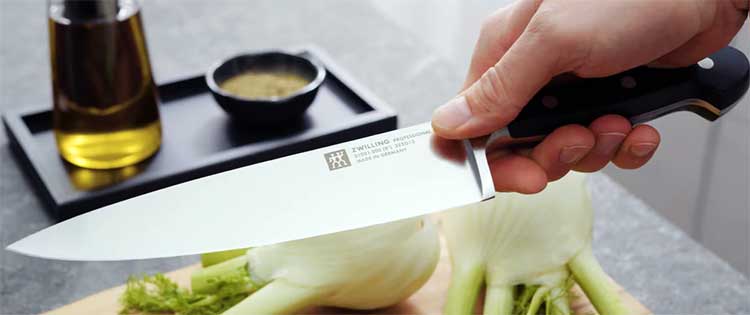
- Steel quality and the FRIODUR process
Both knives start with the same special high-carbon stainless formula and go through Zwilling’s ice-hardening treatment that locks in toughness while keeping the blade flexible enough to avoid chipping on bones or frozen items.
The result is a blade that arrives razor sharp and stays that way through dozens of onion dicing sessions or tomato slicing marathons before you even think about the honing steel.
In daily use the hardness difference feels negligible; what you notice instead is how both resist corrosion when you’re working with lemon juice or vinegar-based marinades. The real distinction shows up in how the steel behaves under the exact same edge angle over months of use.
- Weight and how it changes your cutting rhythm
The Four Star’s lighter build lets you move faster through repetitive tasks without your wrist or forearm complaining after thirty minutes of prep.
I’ve noticed this most when breaking down a big batch of vegetables for soup or stir-fry; the knife almost feels like an extension of your hand rather than something you’re pushing through the board.
The Professional S carries more mass, which gives it momentum on tougher items like butternut squash or large cuts of meat. That extra weight can feel reassuring when you want authority behind each chop, yet it also means you might slow down or switch hands sooner during a long cooking day.
- Handle shape, material, and wet-hand grip
The Four Star uses a polypropylene blend with a smooth ergonomic contour that many people find molds naturally to different hand sizes. It includes a meaningful percentage of recycled plastic without any loss in durability or sanitation.
When your hands get slippery from oil or water, the matte finish still gives decent purchase. The Professional S sticks with the traditional three-rivet polymer setup that has a slightly more segmented feel under your fingers.
Some cooks prefer the classic rivets because they create micro-texture that helps when you’re wearing gloves or your palms are damp from rinsing produce. Both handles stay comfortable for extended periods, but the Four Star’s continuous shape tends to reduce hot spots on the palm during very long sessions.
- Bolster design and its effect on sharpening and safety
Each line carries a pronounced forged bolster that protects your fingers and adds a visual cue for where to place your hand.
The Professional S bolster sits fully against the heel in classic style, which some users say makes it slightly trickier to maintain a perfect edge all the way to the back of the blade during sharpening. You simply adjust your angle a touch more carefully near that area.
The Four Star bolster is equally protective yet integrates in a way that feels a hair less obstructive for some sharpeners. In practice both require the same basic technique with a whetstone or guided sharpener, and neither becomes a real obstacle once you develop the habit.
- Tang construction and long-term balance
The Professional S exposes the full tang through the handle, which many traditionalists like because it gives a direct steel-to-hand connection and contributes to that planted, stable feeling.
The Four Star uses a concealed tang approach that still delivers excellent balance while keeping the end of the handle cleaner and potentially easier to clean thoroughly.
Over years of use both designs hold up without loosening or developing gaps, but the exposed tang on the Professional S can pick up a bit more visual wear if you’re rough on the handle end.
- Overall kitchen personality and who each one suits
The Four Star leans toward the cook who values agility and comfort across a wide range of home tasks from fine herb work to bulk vegetable prep.
The Professional S speaks more to someone who wants that unmistakable professional-kitchen presence and doesn’t mind the extra heft in exchange for authoritative cuts. Neither is “better” in absolute terms; they simply reward different priorities in how you move through a recipe.
Key Features of the Zwilling Four Star
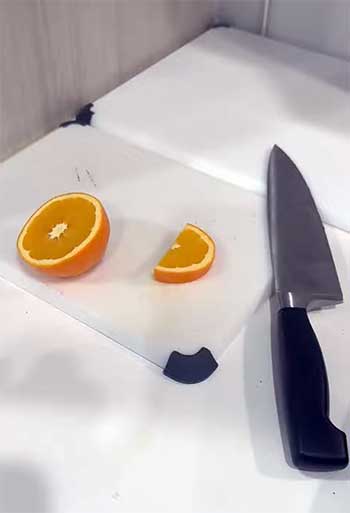
- Sustainable yet high-performance handle: The polypropylene construction incorporates recycled material while still delivering the heat, water, and shock resistance you expect from a serious kitchen tool. This matters when you’re running the knife through the dishwasher after a messy pasta night or when it sits in a block near the stove. The ergonomic shaping reduces the learning curve for anyone coming from cheaper stamped knives.
- SIGMAFORGE single-piece construction: Starting from one solid block of steel creates structural integrity that stamped blades simply cannot match. You get consistent thickness from tip to bolster, which translates into predictable flex and strength whether you’re using a rocking motion on herbs or a straight push cut on carrots.
- FRIODUR ice-hardened edge retention: The blade holds its factory sharpness through repeated contact with acidic foods and hard vegetables far longer than most mid-range knives. In my experience this means fewer trips to the sharpening station and more time actually cooking.
- Pronounced bolster for finger safety: The bolster creates a clear physical stop that keeps your guiding hand safely away from the edge even when you’re working quickly or the board gets crowded with ingredients.
- Made in Solingen with lifetime backing: German manufacturing standards plus the brand’s willingness to stand behind the product for life give you confidence that this knife will outlast several cheaper sets.
Pros of the Zwilling Four Star
- The lighter weight genuinely reduces fatigue when you’re prepping for a crowd or working through a long weekend cooking project. Your hand stays fresher, which means cleaner, more consistent cuts even in the final hour.
- The ergonomic polypropylene handle feels comfortable across different grip styles, whether you prefer a classic pinch or a full-hand hold. This versatility helps if multiple people in the household use the same knife.
- Recycled content in the handle adds an environmental angle without any trade-off in performance or sanitation, which matters to cooks who think about the full lifecycle of their tools.
- The concealed tang keeps the handle end smooth and simple to wipe down, reducing places where food particles could hide during quick cleanups between tasks.
- Out-of-the-box sharpness combined with strong edge retention means you spend less time maintaining the knife and more time enjoying the results on the plate.
- The overall package offers outstanding value for a forged German knife that will still look and perform well after years of regular home use.
Cons of the Zwilling Four Star
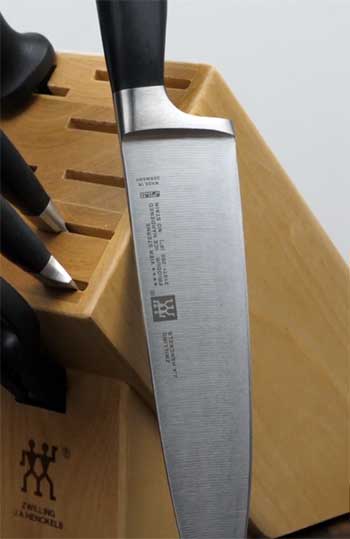
- Some cooks who grew up with heavier traditional knives find the lighter swing takes a short adjustment period before it feels completely natural on very dense ingredients.
- The concealed tang, while perfectly functional, lacks the visual and tactile steel-through-handle statement that certain traditionalists enjoy.
- If you regularly break down large primal cuts or do heavy cleaver-style work, the reduced mass may require a few extra strokes compared with a heavier blade.
- The modern handle aesthetic does not appeal to everyone who prefers the classic riveted look that signals “professional kitchen” at first glance.
Key Features of the Zwilling Professional S
- Classic three-rivet polymer handle: The riveted construction has been a kitchen standard for decades because it locks the handle securely to the tang and provides just enough texture for control without being aggressive on your skin.
- Full exposed tang for traditional balance: Feeling the steel run the entire length of the handle gives many cooks an immediate sense of solidity and control, especially during powerful chopping motions.
- Sturdy forged bolster as finger guard: The bolster doubles as both a safety barrier and a weight-distribution point that keeps the knife feeling planted on the board even when you’re applying downward force.
- FRIODUR hardened blade with excellent resilience: Same ice-hardening process delivers the corrosion resistance and edge life that professional kitchens have relied on for generations.
- Versatile blade geometry for everyday tasks: The profile works equally well for the rocking chop on garlic and the long slicing stroke on brisket or bread, making it a true all-rounder in most home settings.
Also Read: Comparison of Wüsthof And Henckels Knives.
Pros of the Zwilling Professional S
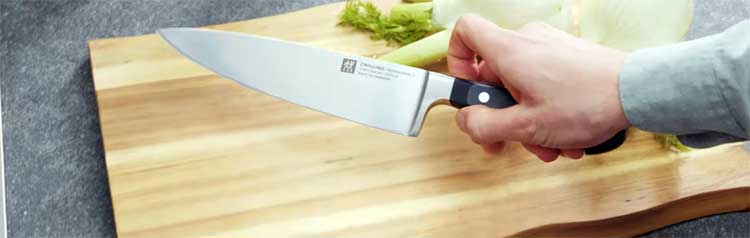
- The extra weight delivers satisfying momentum that makes short work of tough vegetables and large pieces of meat without requiring as much downward pressure from you.
- The three-rivet handle and exposed tang give that unmistakable classic professional feel that many experienced cooks find reassuring and confidence-inspiring.
- The full bolster provides rock-solid finger protection and contributes to excellent overall balance that shines during repetitive high-volume chopping.
- Decades of real-world use in professional and home settings have proven the construction holds up to daily abuse while maintaining performance.
- The traditional geometry and heft make it a natural choice for cooks who want one knife that can handle almost every task without feeling specialized or delicate.
Cons of the Zwilling Professional S
- The heavier build can accelerate hand and forearm tiredness during very long prep sessions or for cooks with smaller hands or less upper-body strength.
- The classic full bolster requires slightly more attention during sharpening to keep the heel of the edge in top condition, though this becomes second nature quickly.
- Some users notice the segmented rivet feel less plush than smoother modern handles when working for extended periods without gloves.
- The traditional aesthetic and weight may feel overbuilt if your cooking style leans more toward quick weekday meals rather than big weekend projects.
Which One Should You Choose?
If your typical kitchen sessions involve a lot of repetitive vegetable work and you want to stay comfortable for longer stretches, the Four Star’s lighter, more ergonomic profile will probably earn its place quickly.
If you value that planted, authoritative feel and often tackle heartier ingredients or larger quantities, the Professional S will feel like a natural extension of a professional mindset.
Both lines deliver the sharpness, durability, and German build quality that make Zwilling knives last for years with basic care. The “better” choice is simply the one whose weight and handle personality match how your hands actually move through food every day.
Also Read: Comparison of Henckels Pro And Four Star Knives.
Frequently Asked Questions (FAQ)
Zwilling offers several tiers. Entry-level lines like Gourmet use simpler construction for budget buyers. Mid-to-upper lines such as Four Star and Professional S deliver forged blades with excellent edge retention and comfort. The Pro series sits at the top with refined half-bolster ergonomics aimed at serious users who want maximum pinch-grip comfort and easier sharpening.
The main distinction is bolster style and handle philosophy. The Pro uses a tapered half bolster that improves pinch-grip comfort and makes full-edge sharpening easier. The Professional S keeps the traditional full bolster and classic three-rivet handle. Both share the same high-quality Friodur steel and forged construction, but the Pro feels more modern while the Professional S stays true to heritage design.
Yes. The Four Star is a well-regarded forged line with strong edge retention, comfortable ergonomics, and reliable German build quality. It performs excellently for everyday home cooking and holds up well over years of use, making it a smart step up from basic stamped knives.
It depends on your priorities. The Pro series often ranks highest for modern ergonomics and ease of sharpening. The Professional S and Four Star remain favorites for cooks who prefer traditional weight and classic looks at a slightly lower price point. Many home users find the Four Star strikes the best balance of comfort, performance, and value for daily use.
Final Thoughts
Zwilling Four Star or Professional S often comes down to whether you want lighter agility or traditional heft in your hand. Both will serve you well for years if you treat them with basic respect—regular honing, proper storage, and occasional sharpening.
Pick the one whose feel makes you want to reach for it every time you step up to the cutting board.