
If you’re serious about upgrading your living room with a couch that actually looks like it belongs in a design magazine — without the design-magazine price tag — the Article Timber Couch deserves a long, hard look.
I’m going to walk you through everything I’ve discovered about this sofa, from the first moment I sat down on it to the long-term wear patterns I noticed months later. Grab a coffee, get comfortable (hopefully on a better couch than the one you’re replacing), and let’s talk.
My First Encounter With The Article Timber Couch
I’ll be honest with you — I was skeptical. Online furniture shopping has burned me before.
You pick something that looks incredible on a screen, and then it shows up looking like it was assembled inside a cardboard box during a thunderstorm.
So when I ordered the Article Timber Couch, I kept my expectations measured.
The box arrived in two parts. Assembly was refreshingly straightforward — no missing hardware, no cryptic diagrams that require an engineering degree to interpret.
The legs screwed in cleanly, the cushions dropped into place, and within about thirty minutes, I was standing back and genuinely impressed by what I was looking at.
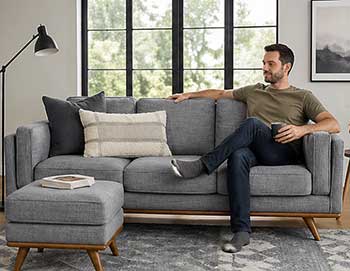
The Timber Couch is a mid-century modern piece at its core. The silhouette is clean and low-profile, with tapered wooden legs that give it that retro-forward feel so many people are chasing right now.
The fabric I chose — the dark charcoal woven upholstery — had a texture that felt premium in a way I wasn’t fully expecting at this price point. Running my hand across the seat, it didn’t feel scratchy or synthetic. It felt like something that cost considerably more.
Sitting down for the first time, I noticed two things immediately. The seat depth is generous — we’re talking around 22 inches — which means you can actually sit back and relax rather than perching on the edge like you’re waiting for a job interview.
The cushions have a good level of firmness. Not hard, not so soft you sink into oblivion. That middle-ground density that works whether you’re watching a three-hour movie marathon or just scrolling your phone for twenty minutes before bed.
The back cushions felt well-stuffed and held their shape better than I expected after daily use. After about six months of regular sitting, napping, and the occasional chaotic movie night with friends, the cushions had minimal visible compression.
That’s a good sign — and honestly not something I’ve been able to say about every couch I’ve owned.
The fabric held up impressively well too. I had a couple of minor spills — one red wine incident that still makes me nervous to think about — and a good blot-and-clean session handled it without leaving a visible stain.
The woven material seems to be moderately resistant to everyday mess, which matters a lot when you’re actually living in your living room and not just staging it for photos.
One thing I want to be upfront about: this is not a couch you buy if you want a plush, sink-in-forever experience. The Timber leans toward the firmer, more structured end of the spectrum. For some people, that’s a dealbreaker.
For me, after years of saggy, shapeless sofas, it felt like exactly the kind of support I didn’t know I needed.
The overall build felt solid. No creaking when you shift positions, no wobble when you stand up. The frame — which Article describes as kiln-dried solid wood construction — communicated that sturdiness clearly from the first day of use. This wasn’t a couch that felt like it was going to give out in eighteen months.
The Pros: Why The Article Timber Couch Gets It Right
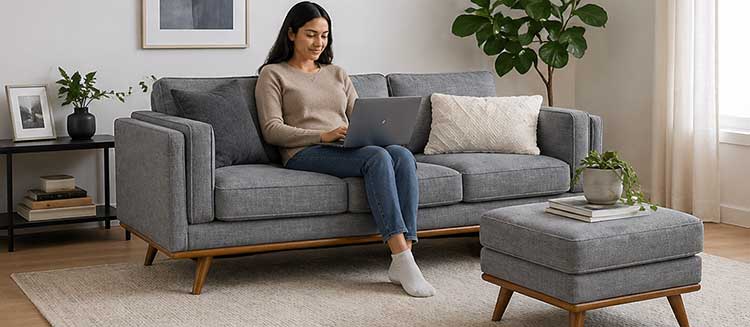
- Stunning Mid-Century Design That Actually Holds Up: Let’s start with the obvious: this couch looks exceptional. The Timber’s silhouette is purposeful and refined. Those tapered legs, the clean track arms, the low-profile back — it all works together to create a couch that reads as intentionally designed rather than assembled from generic parts. Whether your living room leans Scandinavian, industrial, or modern-eclectic, the Timber fits in without dominating the space. That’s a harder trick to pull off than it sounds.
- Solid Frame Construction You Can Actually Feel: Article uses kiln-dried hardwood framing for the Timber, and you feel the difference the moment you sit on it. The couch doesn’t flex awkwardly when you move around. It doesn’t sound like it’s complaining when you get up quickly. The structural integrity is there from the start, and based on my months of use, it shows no signs of weakening. For a direct-to-consumer furniture brand, that’s meaningful.
- Fabric Options That Match Real Life: You can choose from a solid range of fabric and color options, which is one of the genuinely underrated aspects of the Article experience. I went with the woven charcoal, but lighter options are available in bouclé and other textures for people who want that warmer, more cozy aesthetic. Each fabric choice communicates something different, and Article lets you make that call rather than forcing a one-size-fits-all approach.
- Comfortable Without Being Overwhelming: The medium-firm cushion density hits a sweet spot. If you have guests who like to sit upright while they chat, or you personally prefer a couch that supports your posture rather than swallowing you whole, the Timber delivers. It’s the kind of comfortable that doesn’t age poorly — you’re not going to be wishing the cushions were firmer in a year because they’ve already deflated.
- Assembly Is Genuinely Simple: I cannot overstate how refreshing it is to assemble furniture that comes with clear instructions, all the right hardware, and doesn’t take three adults and a YouTube tutorial to complete. The Timber goes together in under an hour, solo, without any professional help or colorful language.
- Price-To-Quality Ratio That Makes Sense: Compared to what you’d pay for similar aesthetics at a boutique furniture showroom, the Article Timber Couch lands in a price range that’s accessible without feeling like a compromise. You’re not paying for a retail middleman, and that saving shows up in the product itself.
- Durability That Rewards You Over Time: After sustained daily use, the Timber ages well. The frame stays firm, the cushions maintain most of their original shape, and the upholstery handles the wear of real life without looking prematurely tired. That long-term value proposition is what separates genuinely good furniture from furniture that merely looks good on day one.
The Cons: What The Article Timber Couch Gets Wrong
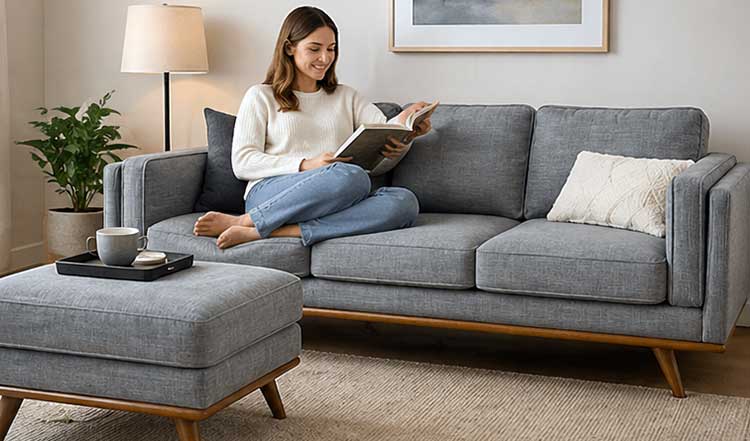
- The Seat Depth May Feel Too Long For Shorter People — At around 22 inches of seat depth, people on the shorter side may find themselves unable to sit fully back while keeping their feet on the floor. It’s a real ergonomic consideration depending on your height.
- Cushions Are Not Removable Or Reversible — Unlike some couches where you can flip or rotate cushions to even out wear, the Timber’s cushions are attached. Over years of use, high-traffic spots may compress more noticeably with no easy remedy.
- Limited Sectional Configurations — If you want an L-shaped or modular arrangement, the Timber line doesn’t offer as much flexibility as some competing designs. You’re working within a defined format.
- Shipping Timelines Can Vary — Article ships from a network of warehouses, and depending on your location and the time of your order, wait times can extend longer than expected. That’s not ideal when you’ve just moved into a new place with an empty living room.
- Fabric Requires Care — While the upholstery handles everyday wear reasonably well, it’s not a fully stain-proof or water-resistant material. Families with very young children or pets who have regular accidents may find maintenance more demanding than anticipated.
- Firm Feel Is Polarizing — The medium-firm cushion density is a genuine advantage for some buyers and a genuine disadvantage for others. If you love the feeling of being enveloped by a soft cloud of a couch, the Timber is going to feel too structured for you.
Maintenance And Care Tips For The Article Timber Couch
- Vacuum The Upholstery Regularly: The woven fabric of the Timber is excellent at collecting fine dust and pet hair over time. Running a soft brush vacuum attachment across the surface every week or two keeps it looking clean and prevents debris from working its way deeper into the weave. This one habit extends the life of your upholstery more than almost anything else you can do.
- Blot Spills Immediately — Never Rub: The moment something spills, your instinct might be to grab a cloth and scrub at it. Resist that urge completely. Rubbing a spill drives it deeper into the fabric fibers and can spread the stain. Instead, blot firmly with a clean, dry white cloth, working from the outside of the spill toward the center. Then follow up with a small amount of mild upholstery cleaner if needed.
- Use A Fabric Protector Spray After Purchase: One of the smartest things you can do after your Timber arrives is apply a fabric protector spray before you start using the couch daily. Products like Scotchgard create a light invisible barrier on the upholstery that dramatically improves resistance to spills and staining. Do this once, let it dry completely, and refresh it every six to twelve months depending on use.
- Rotate Your Sitting Positions: This sounds almost too simple, but it genuinely matters. If you always sit in the same corner of the couch, that section of cushioning will compress faster than the rest. Making a conscious effort to sit in different spots — or encouraging family members to do the same — distributes the wear more evenly and extends the life of the cushions.
- Keep The Couch Away From Direct Sunlight:UV exposure is one of the quieter enemies of upholstered furniture. Direct sunlight hitting the same section of fabric day after day causes fading and can degrade the material over time. Position your Timber away from windows that receive direct afternoon sun, or use window coverings during peak light hours if repositioning isn’t an option.
- Tighten The Legs Periodically: The tapered wooden legs are screwed in during assembly, and like most screwed connections, they can loosen slightly over time through regular use and vibration. Every few months, flip the couch carefully and check that each leg is still firmly tightened. This prevents the wobble before it starts and protects both the legs and the frame connection points from unnecessary stress.
- Address Pet Scratching Early: If you have cats or dogs with a history of scratching furniture, the Timber’s upholstery is not immune. A scratching post or furniture corner guards placed near the couch can redirect this behavior before it becomes a fabric problem. Lint rollers are also your best friend for pet hair that embeds in the woven texture.
How The Article Timber Couch Compares To Other Popular Sofas?
- Arhaus Kipton Sofa

The Arhaus Kipton comes in at a significantly higher price point than the Timber, and it brings a noticeably different value proposition.
The Kipton is a deep, sink-in sofa designed for maximum relaxation — plush cushions, substantial depth, and a more sprawling presence in the room.
It’s built for people who want their couch to feel like a luxury experience every single time they sit down.
The upholstery quality on the Kipton is exceptional, and Arhaus backs it with strong customer service and American craftsmanship.
Where the Timber wins is in design discipline and price efficiency. The Kipton is beautiful but expensive, and it’s a much softer, more casual silhouette. If you want a structured mid-century aesthetic without spending nearly as much, the Timber is the stronger choice.
If budget isn’t a concern and you want maximum cushion softness, the Kipton pulls ahead.
- IKEA Kivik Couch

The IKEA Kivik is the practical, budget-conscious counterpart that millions of people have trusted as a starter sofa. It’s affordable, modular, and widely available.
The Kivik is softer than the Timber, offers good variety in cover options (many of which are machine washable — a real advantage), and works well in casual living spaces.
However, the Kivik’s frame construction and long-term durability don’t compete with what the Timber offers.
The Kivik can begin to show wear and cushion compression within a couple of years under heavy daily use, whereas the Timber’s solid frame holds its integrity considerably longer.
If you’re furnishing a first apartment on a tight budget, the Kivik makes sense.
If you’re making a longer-term investment, the Timber is the better decision.
- Radley Couch

The Radley, typically found through retailers like Macy’s and similar department stores, leans into a more traditional, casual aesthetic. It’s softer, deeper, and often comes in configurations that include chaises and sectional options that the Timber line doesn’t match.
For families who want maximum lounging versatility and aren’t especially attached to the mid-century aesthetic, the Radley delivers comfort and flexibility.
Where the Timber is more refined, the Radley is more relaxed. The Timber wins on design precision and frame quality. The Radley wins on softness and configuration options. Your living room’s purpose will determine which matters more to you.
- Cozey Couch
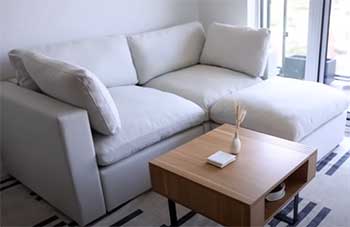
Cozey has built a following around its modular, customizable approach to sofas — you buy the sections you need, rearrange as your space changes, and expand over time.
That flexibility is genuinely compelling, especially for renters or people who move frequently.
The Cozey aesthetic is clean and modern, though it sits in a more casual register than the Timber’s mid-century precision.
The Timber’s edge over Cozey lies in material quality and the cohesiveness of the finished design. The Cozey system feels like a clever solution to a spatial problem. The Timber feels like a considered piece of furniture. If flexibility matters most, Cozey has a real advantage.
If permanence and design integrity are the priority, the Timber is the more satisfying purchase.
Frequently Asked Questions (FAQ)
Yes — Article consistently delivers above-average build quality for its price range. The direct-to-consumer model removes retail markups, putting more investment into materials and construction.
It’s comfortable in a firm, supportive way. If you prefer soft, sink-in cushioning, it may feel too structured. For most people, the medium-firm density is very livable.
Article offers better material quality, more sophisticated design aesthetics, and stronger long-term durability. IKEA wins on price and the practical advantage of removable, washable covers.
Article uses kiln-dried solid and engineered wood in its frames depending on the product. The Timber specifically features solid wood construction in its frame, which contributes to its durability and stability.
The Verdict: Should You Buy The Article Timber Couch?
If you want a living room that looks put-together, a couch that builds to last, and a purchase that you won’t be second-guessing two years from now, the Article Timber Couch earns a confident recommendation.
It’s not perfect — the seat depth may not suit everyone, and the firm cushions are a genuine preference question — but the overall package of design, construction quality, and price makes it one of the smarter choices in the mid-range sofa market. Go buy it.
Your living room will thank you.