
I have spent years baking bread, muffins, and everything in between with freshly milled flour, and I have put both the WonderMill and NutriMill through their paces in my own kitchen.
If you are like me, someone who wants the freshest, most nutritious flour possible without spending hours fiddling with complicated equipment, you are probably trying to decide between these two popular impact grain mills.
In this article, I share my real-user experiences, the strengths and weaknesses of each, and practical advice to help you choose the one that fits your baking habits and kitchen setup best. I compare them head-to-head so you can see which one might serve you and your family well for years to come.
| Feature | WonderMill | NutriMill (Classic/Impact) |
| Capacity (flour bowl) | 12 cups | 20-21 cups |
| Grain Hopper | Smaller, must turn on first | Larger, can fill and walk away |
| Noise Level | Loud but slightly quieter | Loud |
| Footprint (storage) | Compact, canister stacks on top | Bulkier unit |
| Flour Containment | Excellent, less mess | More flour dust on lid/counter |
| Speed | Very fast | Fast, great for big batches |
| Warranty | Strong lifetime on motor | Solid warranty |
| Price Range (approx.) | More affordable | Higher |
| Best For | Occasional to regular use, smaller spaces | Heavy bakers, large families |
This table gives you a quick snapshot, but let me walk you through the details from someone who actually uses these tools week after week.
Key Differences Between WonderMill And NutriMill
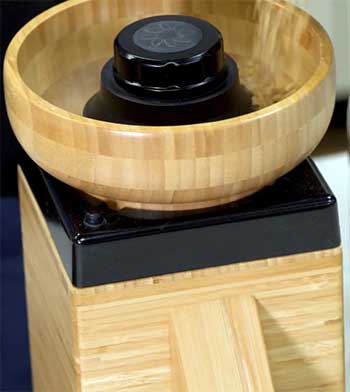
- Design and Build Approach: The WonderMill feels like a straightforward, no-frills workhorse. It has a separate base unit with the motor and milling chamber, plus a detachable flour canister. This setup makes it easier for me to store because I can stack the canister right on top when it is not in use, saving precious counter space in my busy kitchen. The NutriMill Classic integrates everything into one larger unit with a big built-in bowl, which feels more like a single appliance but takes up more room overall.
- How You Feed the Grain: With the WonderMill, I always turn it on before pouring in the berries or kernels. It has a safety feature that prevents jamming if followed correctly. The NutriMill lets me fill the hopper generously and let it run, which is convenient when I am multitasking with kids or other baking prep.
- Flour Output and Collection: WonderMill’s canister design keeps more flour contained inside. I appreciate not having clouds of dust escaping as often. NutriMill’s larger bowl collects a ton at once, but I have noticed some flour settling on the lid that ends up on the counter when I move it.
- Size and Storage Reality: If your kitchen has limited cabinet space like mine, the WonderMill wins for everyday practicality. The NutriMill demands more real estate but rewards you with bigger batches without stopping.
- User Interaction During Grinding: WonderMill requires a bit more attention at the start but runs smoothly. NutriMill feels more set-it-and-forget-it for larger quantities.
These differences have shaped how I use each one depending on the day and the recipe.
Key Features of the WonderMill
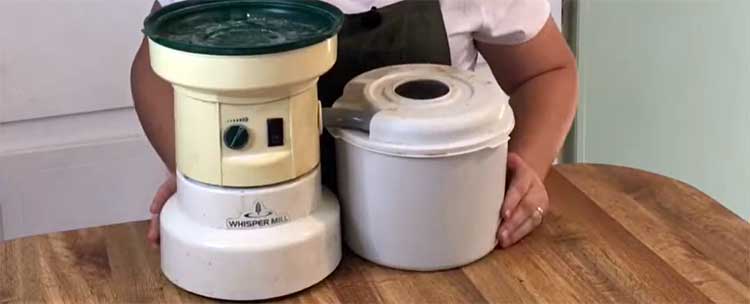
- Powerful and Efficient Motor: It grinds grains quickly into fine flour using high-speed impact technology with stainless steel blades. I have timed it milling a cup of wheat in under 30 seconds on many occasions, which keeps my baking flow going without long waits.
- Compact and Portable Design: At around 8 pounds, it is lightweight enough to move around. The stacking canister means it tucks away neatly, which matters a lot when your counters are already full of mixing bowls and proofing bread.
- Effective Containment System: The flour canister attaches securely, and with the lid on properly, it minimizes mess. This has saved me cleanup time compared to other setups I have tried.
- Versatility with Grains: It handles hard wheat, soft wheat, rice, oats (to some extent), and more. I use it regularly for einkorn, spelt, and standard bread flours.
- Durability Reputation: Many users, including professionals like Sue Becker, rely on it for consistent performance over years of daily or near-daily use. The motor is built tough.
- Ease of Cleaning: The milling chamber is accessible, and the parts wipe down without much hassle. I appreciate that it does not require special tools for basic maintenance.
- Quiet Operation Relative to Peers: While still loud, I find it a touch less intense than some alternatives, making it bearable even in an open kitchen layout.
- Value for Money: It often comes in at a more approachable price point while delivering reliable results that encourage me to mill more often.
These features make the WonderMill feel like a reliable partner in my daily baking routine rather than a bulky specialist tool.
Pros of the WonderMill
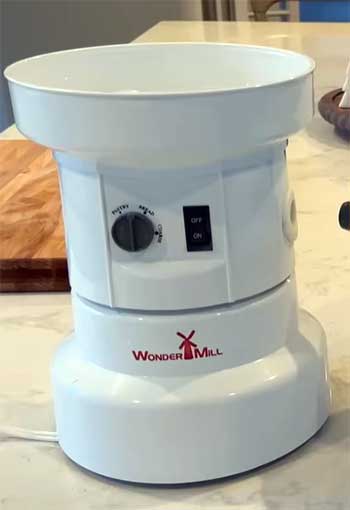
- I love how quickly it produces fine flour that performs beautifully in sourdough, sandwich loaves, and cookies. The texture is consistent and integrates well into recipes.
- Storage flexibility has been a game-changer for me. I can pull it out, use it, and put it away without rearranging half the pantry.
- Less flour dust means my kitchen stays cleaner, which reduces the post-baking overwhelm that used to happen.
- The speed lets me mill exactly what I need for a recipe without overcommitting to huge batches that might sit around.
- Strong customer support and parts availability make me confident it will last.
- It encourages experimentation because it is so easy to use for small test batches of new grains.
- Temperature control during grinding keeps the flour from getting too hot, preserving nutrients better in my experience.
- Overall, it fits the lifestyle of a home baker who values freshness but does not run a full bakery out of the kitchen.
I have milled hundreds of pounds with mine, and it still performs like new, which speaks volumes about its build quality from a real-user perspective.
Cons of the WonderMill
- The smaller capacity means I have to refill for very large baking days, which can interrupt the flow if I am making dozens of loaves.
- You must follow the startup sequence carefully (turn on before adding grain) to avoid potential jams, which took a couple tries to get used to.
- It is still quite loud, so I usually run it when the kids are not trying to nap or do homework nearby.
- The separate canister, while great for storage, requires careful attachment to maintain the dust-free claim.
- Not ideal for oily seeds or nuts, like most impact mills, so I use a different method for those.
- If you bake massive quantities weekly, the batch size might feel limiting compared to bigger options.
These drawbacks are manageable for my needs, but they might matter more if your household is enormous or you hate any extra steps.
Key Features of the NutriMill
- High-Capacity Hopper and Bowl: You can load a lot of grain at once and let it work through a large flour collection area. Perfect when I decide to stock up on several types of flour for the week.
- Integrated Design: Everything is in one piece, which some people find simpler for operation once you get the hang of aligning the bowl.
- Fast Grinding Performance: It powers through grains efficiently, producing fine flour suitable for all kinds of baking.
- Built for Volume: Designed with bigger families or frequent bakers in mind, it reduces the number of cycles needed for big projects.
- Accessible Controls: Simple on/off and settings that make it approachable even if you are new to milling.
- Solid Construction: It has a reputation for handling regular use well, with features that aim to protect nutrients during the process.
- Ability to Process Larger Quantities Seamlessly: I can walk away briefly while it runs, which is nice during busy prep times.
These elements position the NutriMill as a powerhouse for those who mill in bulk.
Also Read: Is Peugeot Pepper Mill Worth It?
Pros of the NutriMill
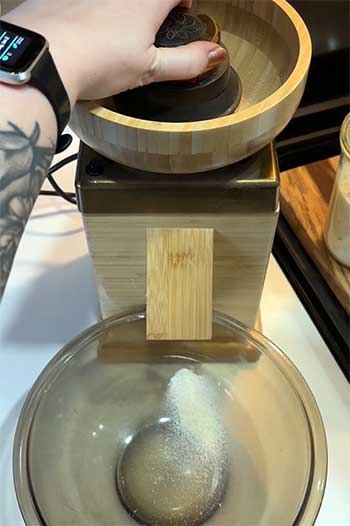
- The large capacity transforms big baking sessions. I can mill enough for multiple recipes or even freeze extra flour without constant refilling.
- It feels robust and ready for heavy duty, giving me confidence on days when I am preparing for holidays or large gatherings.
- The set-it-and-forget-it style with the hopper suits my multitasking personality when I have other kitchen tasks going.
- Produces excellent fine flour that rises well and tastes fresh in everything from pancakes to artisan breads.
- Good for stocking up on different flours like rye, barley, or cornmeal alternatives.
- The integrated bowl makes collecting and transferring flour straightforward once you master the lid handling.
- Long-term durability for serious home millers who commit to the habit.
- It supports a lifestyle where fresh milling becomes a sustainable part of meal planning rather than an occasional event.
For anyone baking for a crowd or wanting to minimize interruptions, these advantages really shine through in daily practice.
Cons of the NutriMill
- It takes up more space on the counter or in storage, which can be an issue in smaller kitchens like mine was at one point.
- More potential for flour escaping onto the lid and counter, requiring extra wiping after each use.
- The noise level is noticeable, and the overall bulk can make it feel less convenient to pull out frequently.
- Higher price point might make it a bigger investment upfront.
- The single-unit design means the whole thing stays out or needs more room to store compared to stackable options.
- Can be a bit fiddly to align the bowl perfectly every time to avoid minor messes.
- Less ideal if you prefer milling small amounts on demand without committing to large runs.
These points have made me selective about when I reach for it versus a more compact alternative.
My Personal Experience Using Both
When I first started milling, I tried the NutriMill and appreciated the volume it handled. It felt like a serious tool for a committed baker. Over time, the storage demands and cleanup nudged me to try the WonderMill.
The ease of putting it away and the reduced mess won me over for regular weekday use. Now I keep both available depending on the project. For a quick loaf or two, WonderMill all the way. For prepping a month’s worth of pancake mix or holiday baking, NutriMill steps up nicely.
This dual experience taught me that neither is universally “better”—it depends on your space, batch sizes, and how often you want to mill.
Both deliver that wonderful fresh flour flavor and nutrition boost that store-bought cannot match. I notice better texture in my baked goods and feel good about the whole grains my family eats.
Which One Should You Choose?
If your kitchen is tight on space and you mill a few times a week for family meals, I would lean toward the WonderMill for its practicality and lower mess factor.
If you have room and bake in large quantities regularly, the NutriMill’s capacity might save you time and effort in the long run. Consider your counter real estate, storage options, and baking volume honestly before deciding.
I recommend starting with what fits your current routine rather than dreaming of an ideal future setup. You can always add the other later if your needs grow.
Also Read: Is HexMill Pepper Grinder Worth It?
Frequently Asked Questions (FAQ)
Sue Becker primarily recommends and uses the WonderMill for its reliability and performance in home baking.
It depends on your needs, but both WonderMill and NutriMill are strong contenders among impact mills. Many experienced bakers praise the WonderMill for everyday use and the NutriMill for high-volume tasks.
WonderMill is an impact mill (fast, fine flour, louder), while Mockmill is typically a stone mill (quieter, adjustable coarseness, cooler flour, often smaller batches).
Yes, it is a solid, reliable choice known for speed, fine grind, and durability that many home bakers rely on for years.
Wrapping It Up
After all my testing and daily use, I can tell you that choosing between the WonderMill and NutriMill comes down to matching the tool to your life.
You want something that encourages you to mill more often because the benefits to taste, nutrition, and satisfaction in baking are huge. I have seen my bread rise better, my family enjoy meals more, and felt more connected to what we eat.
Take stock of your kitchen space, how much you bake, and what feels manageable for you. Either mill will open up a world of fresh possibilities.
You deserve to enjoy the process and the results. Start milling, experiment with different grains, and watch how it transforms your baking. I am confident you will find the right fit and love the journey as much as I have.