
I decided to put together this piece after dealing with several frustrating issues on my own WaterBoss 900 water softener over the years.
Let’s walk you through the typical problems that show up with this model, explain what causes them from a practical standpoint, and share what I learned while figuring them out so you can spot and address similar situations in your home without unnecessary headaches.
Common WaterBoss 900 Problems At A Glance
- E2 Error Code and Motor Connection Problems
- E1 Error Code Related to Home Position
- Salt Bridge Formation in the Brine Cabinet
- Reduced Water Pressure Throughout the House
- Rapid Salt Consumption from Wrong Settings
- Stuck or Incomplete Regeneration Cycles
- Leaks Around Fittings and the Housing
- Return of Hard Water Despite Regular Cycles
- Salty Taste in the Softened Water
- Excess Water Accumulating in the Brine Tank
E2 Error Code and Motor Connection Problems
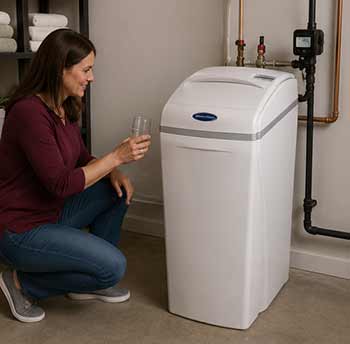
The first time the display on my WaterBoss 900 lit up with an E2 code, I felt that familiar knot of frustration that hits when a machine you rely on every day suddenly refuses to cooperate.
From what I observed and later confirmed through careful testing, this code points straight to a break in the link between the electronic controller and the motor that drives the valve.
The motor needs a clean signal to turn the internal components through each stage of the process.
When the connection fails, the whole system stalls and the error appears.
In my case the wires at the back of the controller had worked loose over time.
Vibration from normal operation, slight shifts during installation, or even a previous power surge can leave the plugs seated just poorly enough to interrupt communication.
I unplugged everything, then reseated the motor wire first (the orange or white one), followed by any sensor wire, and finally the power transformer.
That sequence matters because the controller prioritizes the motor signal. Using a generic transformer instead of the original one made the problem worse for me once; the voltage and connector design are specific, and substitutes often fail to deliver consistent power.
Analytically, the E2 situation reveals how dependent the WaterBoss 900 is on its compact electronic package. The design keeps the unit small and efficient, yet that same compactness means the wiring has little room for error.
When the motor cannot receive instructions, regeneration stops mid-cycle or never starts. Soft water production ends, and hardness minerals begin to slip through. I noticed the first signs as soap that refused to lather and faint mineral spots on glasses.
Ignoring the code only shortens the life of the resin bed because the unit continues to pass untreated water while the error sits unresolved. Regular visual checks of the rear connections after any power outage or relocation of the unit have kept the E2 from returning in my household.
E1 Error Code Related to Home Position
Shortly after the E2 episode, an E1 code appeared during a manual regeneration attempt.
This one told me the controller could not locate the “home” position of the valve disk.
The system relies on a cam disk and micro switch to confirm that the valve has returned to its starting point before beginning a new cycle.
When that confirmation fails, the display shows E1 and the process aborts.
I traced the issue to the controller itself not sitting fully seated on the drive end cap.
A slight gap, even a millimeter, throws off the sensor alignment.
Cycling power by unplugging the transformer for thirty seconds and plugging it back in forced the unit to search again.
Pushing the controller firmly into place resolved the rest. Other times the gear teeth may not engage properly or a small piece of debris can jam the mechanism, producing the same home-not-found reading.
From an analytical view, the E1 error highlights the precision engineering inside the WaterBoss 900 valve assembly. The compact design leaves little tolerance for misalignment.
Households with fluctuating water pressure or those who perform frequent manual regenerations seem more prone to it because the repeated starts and stops stress the positioning sensors.
When the error repeats, the resin never receives a full recharge, and hardness returns faster than the programmed capacity would suggest. I now check the physical seating of the controller every few months as part of routine upkeep. That simple habit has prevented the E1 from becoming a recurring visitor.
Salt Bridge Formation in the Brine Cabinet
Nothing mimics the feeling of a working softener better than a salt bridge. The display still cycles, the motor runs, yet the water stays hard.
Inside the brine cabinet a hard crust of salt forms a solid layer above an empty space or a pool of water. The water poured in during the brine-draw stage never reaches the salt, so no saturated brine forms, and the resin bed remains exhausted.
I first discovered this by gently probing the salt with a wooden broom handle. The handle sank through a crust and found open space beneath. Humidity in the utility room, mixing different grades of salt, or simply letting the level drop too low before refilling all contribute.
The official guidance of adding a gallon of warm (not boiling) water and breaking the crust apart worked for me, followed by a manual regeneration once the salt dissolved properly.
Analytically the salt bridge exposes a vulnerability shared by many cabinet-style softeners. The WaterBoss 900 stores salt and brine in the same compact housing, which saves floor space but creates conditions where temperature swings and residual moisture encourage crystallization.
Over time the bridge can grow thick enough that even a full regeneration cycle produces almost no soft water. Households in humid climates or those who buy bulk salt of varying purity run into this more often.
Keeping the salt level between one-third and two-thirds full and sticking to a single type of clean pellet or solar salt has largely eliminated the problem in my setup. Checking the tank with a blunt stick every time I add salt takes seconds and saves hours of troubleshooting later.
Reduced Water Pressure Throughout the House
When the shower suddenly felt weak and the kitchen faucet ran slower, I placed the WaterBoss 900 into bypass mode.
Pressure returned immediately, confirming the softener itself as the restriction.
Exhausted resin beads that have become fouled with iron or sediment pack together and restrict flow through the tank.
The WaterBoss 900 is rated for higher hardness levels, yet the resin still has a finite life.
Over years of service the beads lose capacity and begin to channel water unevenly. Iron present in the supply accelerates the process by coating the beads.
I learned that adding a modest iron adjustment to the hardness setting helps the controller regenerate more frequently, but once the resin is truly spent only replacement restores full flow.
From a practical analysis this pressure drop is progressive rather than sudden. Early signs appear as slightly longer fill times for the washing machine or a quieter spray from the shower head. Because the unit continues to operate, many owners assume the problem lies elsewhere in the plumbing.
Testing with the bypass valve isolates the softener quickly. In my experience, households that skip annual water testing miss the rising hardness numbers that signal resin decline.
Replacing the resin restores both pressure and softening capacity, and the compact design of the 900 makes the job more accessible than with taller traditional tanks.
Rapid Salt Consumption from Wrong Settings
I once watched a full bag of salt disappear in less than three weeks and knew something was off. The controller had been left in a high-capacity mode with an inflated hardness value.
Each regeneration therefore used more salt than necessary, and the unit regenerated more often than the actual water usage required.
Correcting the hardness setting to match a recent laboratory test, then confirming the efficiency mode, brought consumption back to a predictable bag per month for a family of four.
The WaterBoss 900 offers both high-efficiency and high-capacity options; the default high-efficiency setting uses less salt per grain of hardness removed. Leaving the unit in the wrong mode after a move or after someone else adjusted the controls is a common source of the problem.
Analytically the issue stems from the demand-initiated regeneration logic. The controller calculates remaining capacity based on the hardness number entered. An overly high number shrinks the calculated capacity, forcing earlier and more frequent regenerations.
Each extra cycle draws additional salt and water. For owners who value low operating cost, verifying the hardness setting against current water conditions every six months prevents waste. I keep a written record of the settings taped inside the cabinet door so any future adjustment starts from known values.
Stuck or Incomplete Regeneration Cycles
A flashing 02 on the display told me the unit had entered the brine and slow-rinse stage but never advanced.
The cycle stalled, leaving the resin only partially recharged.
Causes ranged from a restricted drain line to low water pressure at the injector that draws brine, or simply a salt bridge that prevented proper brine formation.
I cleared the drain tubing of any kinks, confirmed at least twenty psi at the unit, and broke up a minor salt crust.
A manual advance through the remaining cycles completed the process.
The WaterBoss 900 is designed to finish a full regeneration in roughly twenty-five to thirty minutes under normal conditions.
When the sequence hangs, the resin receives an incomplete cleaning and hardness minerals break through sooner.
Looking at the pattern, incomplete cycles often follow power interruptions or periods of very high water usage that push the unit into regeneration while other fixtures are open.
The resulting pressure drop starves the injector. Installing a simple check valve on the inlet side reduced the problem for me. Watching the display during a manual regeneration and listening for the characteristic change in water flow through the drain line gives early warning that a cycle is progressing correctly.
Leaks Around Fittings and the Housing
A slow drip at a compression fitting turned into a small puddle under the unit before I noticed. Over-tightening the supply lines during installation had slightly deformed the plastic fittings, and thermal expansion later opened a path for water.
On another occasion a hairline crack appeared near the brine-valve area after several years of service.
Shutting off the water, relieving pressure, and replacing the affected fitting solved the first leak. The housing leak required a more careful inspection of the injector assembly and O-rings.
The compact cabinet design of the WaterBoss 900 places many connections in a tight space, so any misalignment during initial plumbing shows up later as seepage.
Analytically these leaks are mechanical rather than electronic. Plastic components expand and contract with temperature changes in the utility room, and repeated pressure cycles fatigue the seals.
Owners who install the unit themselves sometimes apply more force than the fittings are designed to accept. Checking every joint with a dry paper towel after the first few regenerations and again after seasonal temperature shifts has kept my floor dry.
Catching a drip early prevents both water damage and the more serious problem of the unit running dry of brine because of lost volume.
Return of Hard Water Despite Regular Cycles
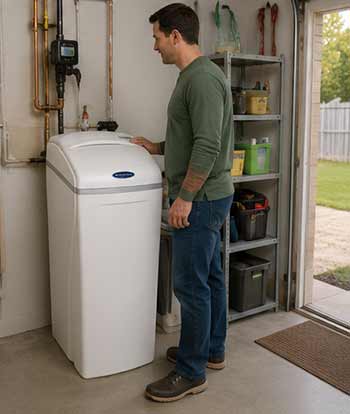
Even after watching the display complete a full sequence, the soap still felt sticky and the glassware spotted.
The unit was regenerating on schedule, yet the resin was not exchanging ions effectively.
Causes included a clogged injector, sediment in the brine line, or resin that had become coated with iron.
Cleaning the injector and the air-check assembly restored proper brine draw.
For iron fouling I used a resin cleaner according to the recommended frequency.
The WaterBoss 900 can handle moderate iron when the settings include the proper adjustment, but untreated iron eventually coats the beads and reduces capacity.
This situation taught me that a completed cycle on the display does not always equal a successful regeneration.
Measuring hardness at a tap before and after a cycle provides the only reliable confirmation.
When the numbers stay high, the mechanical path that creates and delivers brine needs attention. Households with well water or older municipal lines that carry more sediment experience this more frequently. A simple pre-filter ahead of the softener has extended the intervals between deep cleanings in my home.
Salty Taste in the Softened Water
On rare occasions the water carried a noticeable salt flavor after regeneration. Excess brine had not been fully rinsed from the resin bed. Low household water pressure, a restricted drain line, or a brine valve that continued to drip after the refill stage all contribute.
I verified the drain line was free of obstruction and that inlet pressure stayed above the minimum. Cleaning the brine valve stopped the slow drip that had been adding extra salt water. The WaterBoss 900 uses a relatively small amount of salt per cycle, so any leftover brine stands out more clearly than in older high-salt systems.
From an analytical perspective the salty-water problem is a rinse-phase failure. The final backwash and service stages must flush residual brine completely. When pressure or flow is marginal, the flush is incomplete.
Monitoring the first few gallons drawn after a regeneration and tasting them has become part of my routine. If saltiness appears, I force an extra rinse cycle and recheck the drain path.
Excess Water Accumulating in the Brine Tank
I opened the cabinet one morning to find the water level far higher than normal and the salt sitting in a slurry. The brine valve was not closing fully after the refill stage, or the float mechanism had stuck. Excess water dilutes the brine and can overflow if left unchecked.
Cleaning the brine valve and ensuring the float moved freely returned the level to normal. In some cases a piston seal inside the control valve allows water to seep into the brine cabinet continuously. Placing the unit in bypass and observing whether the level continues to rise isolates the source.
This issue underscores the importance of the sealed brine system in the WaterBoss 900. Because the cabinet is shared, any leak path quickly raises the water level.
Regular visual inspection of the brine level after several regeneration cycles catches the problem before overflow occurs. Maintaining clean salt and avoiding rock salt that leaves debris has kept the valve seats clear in my experience.
Also Read: Is Ensueño Fabric Softener Worth It?
Frequently Asked Questions (FAQ)
Error codes such as E1 and E2, salt bridges, reduced pressure from exhausted resin, rapid salt use from incorrect settings, incomplete regenerations, leaks at fittings, return of hard water, salty taste, and excess water in the brine tank.
Yes for many households. The compact design, efficient salt use, and demand-initiated regeneration deliver reliable soft water when settings match actual conditions and routine maintenance is followed.
It signals a connection problem between the controller and the motor. Reseating the motor wire first, then the other connections, and using the original transformer usually clears it.
A typical cycle finishes in about twenty-five to thirty minutes under normal conditions.
Wrapping Up
I have walked through every major problem I encountered with the WaterBoss 900 and the practical steps that restored performance. You now have a clear picture of the warning signs, the underlying causes, and the straightforward checks that keep the unit working.
Apply the same methodical approach in your own home and you will spend far less time dealing with hard water and far more time enjoying the soft water the system was designed to deliver.