
I spent months staring at cabinet samples in my own kitchen remodel, trying to decide whether the clean lines of Shaker doors or the detailed charm of traditional raised-panel styles made more sense for daily life.
Both options look great in photos, yet the practical differences in how they age, clean up, and feel under your hands only show up once you live with them.
This comparison lays out the real-world features, trade-offs, and details so you can match the right style to your space, habits, and budget without second-guessing later.
| Feature | Shaker Cabinets | Traditional Cabinets |
| Door Style | Flat center panel with simple recessed frame (five-piece construction) | Raised center panel with decorative edges and molding |
| Overall Look | Clean, minimalist, versatile across modern to transitional rooms | Ornate, classic, formal with more visual weight |
| Hardware Needs | Works with almost any pull or knob; often looks good with simple bars | Usually pairs best with decorative knobs, cup pulls, or ornate handles |
| Cleaning Ease | Smooth surfaces and fewer crevices collect less dust and grease | Grooves and raised details trap crumbs and require more attention |
| Customization | Easy to paint, stain, or update with different panel inserts | More limited once the molding and profiles are set |
| Cost Range | Generally more affordable for quality builds | Often higher due to extra milling and detailing |
| Durability in High-Use Areas | Solid frames hold up well; panels can expand slightly | Raised panels can crack or warp if humidity changes sharply |
| Best Room Fit | Kitchens, baths, laundry rooms in casual or updated homes | Formal kitchens, dining areas, or historic-style homes |
Key Differences Between Shaker and Traditional Cabinets
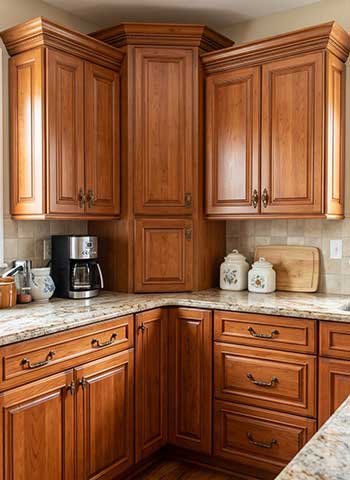
- Design Aesthetic and Visual Weight: Shaker cabinets keep the eye moving with flat panels and tight joints that feel light even in larger rooms. Traditional cabinets add shadow lines from the raised panels and often include crown molding or bead details that make the whole run look heavier and more permanent. In my kitchen the Shaker version made the island feel open; the traditional sample I tested made the same island look more enclosed and formal.
- Door and Frame Construction: A Shaker door is typically five pieces: a flat center panel floating inside a simple frame with square or slightly rounded edges. Traditional doors usually feature a raised center panel surrounded by a more sculpted frame that may include ogee or other decorative profiles. That extra milling changes both the feel when you open a door and how light hits the surface.
- Hardware Compatibility: Shaker doors accept almost any hardware without looking mismatched. I used simple black bar pulls on mine and the result still felt cohesive. Traditional doors often look unfinished with modern pulls and tend to pair better with more decorative knobs or cup pulls that echo the molding.
- Maintenance and Cleaning Reality: Flat Shaker surfaces wipe clean in one pass. Traditional raised panels and the grooves around them collect flour, crumbs, and grease that need a brush or cloth corner to reach. After cooking for a family of four I noticed the difference within the first week.
- Long-Term Style Flexibility: Shaker cabinets can be painted a new color or even have the center panel swapped in some constructions without looking odd. Traditional profiles are more locked in; changing the color is possible but the overall ornate character stays.
- Space and Scale Perception: In smaller kitchens Shaker doors help the room feel larger because there is less visual clutter. Traditional cabinets can make a compact kitchen feel busier and more filled.
Also Read: Comparison of Lowe’s And Home Depot Cabinets.
Key Features of Shaker Cabinets
- Simple Five-Piece Door Design: The hallmark is the flat or lightly recessed center panel set inside a basic frame. This construction has stayed popular for more than a century because it balances strength with a clean appearance that does not date quickly.
- Versatile Finish Options: Painted white, soft gray, or deep navy all work well. Stained versions in maple or oak show the wood grain without competing with the simple lines. I ended up with a soft greige paint that still looks fresh three years later.
- Solid Frame Construction: Most quality Shaker cabinets use solid wood frames with plywood or MDF panels. The frames resist racking better than some all-MDF options and accept hinges and pulls securely.
- Compatibility with Modern and Classic Hardware: From slim contemporary bars to traditional knobs, the doors do not force a single hardware style. This made it easy to update the look later without replacing the cabinets.
- Range of Overlay Styles: Full overlay versions create a sleek, almost seamless front. Partial overlay versions show more of the frame and feel slightly more traditional while still reading as Shaker.
- Easy Integration with Open Shelving or Glass Doors: The simple profile mixes cleanly with open shelves or glass-front uppers without clashing.
Pros of Shaker Cabinets
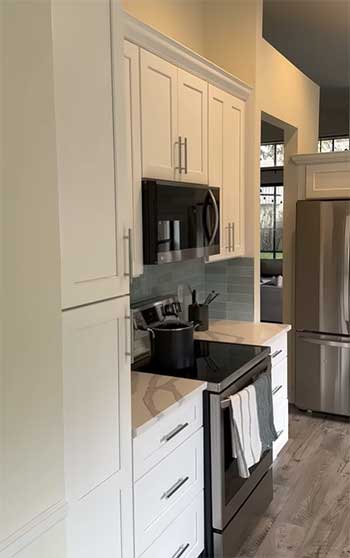
- Broad Style Compatibility: You can place them in a modern farmhouse kitchen, a transitional living space, or even a more formal room and they rarely look out of place. That flexibility saved me from committing to one rigid look. The same doors worked with both the black hardware I chose first and the mixed finishes I considered later. Because the profile stays simple, the cabinets adapt when you change countertops, lighting, or wall color without the doors suddenly feeling mismatched.
- Lower Long-Term Visual Fatigue: The clean lines do not shout for attention, so the cabinets recede and let countertops, backsplash, or lighting become the focus. After several years the design still feels current rather than locked to one trend cycle. In my open kitchen the Shaker fronts let the marble backsplash and pendant lights stand out, and the overall space never felt busy even on days when the counters held dishes and cookbooks. Guests often remarked that the room felt calm rather than cluttered by the cabinetry itself.
- Practical Cleaning: Fewer grooves mean faster wipe-downs after cooking. In a busy household this everyday advantage adds up more than the initial style choice. A damp cloth handled most splatters, and I rarely needed a brush for the door fronts. After cooking most nights with kids in the house, the simpler surfaces reduced the time I spent on weekly wipe-downs enough that the difference felt worthwhile. The flat panels also did not hold onto cooking smells the way deeper grooves sometimes do.
- Cost Efficiency at Quality Levels: You can often get solid-wood frames and good hardware for less than an equivalent traditional build because the milling is simpler. That difference freed up budget for better countertops in my project. Full-extension slides, soft-close hinges, and solid drawer boxes were easier to include without stretching the total. Over time the lower maintenance also carries a soft savings in both time and occasional touch-up work.
- Easy Updates: A fresh coat of paint or new hardware can refresh the entire kitchen without the raised-panel details fighting the new color. Several friends have repainted their Shaker kitchens twice with good results. Because the surfaces are mostly flat, paint covers evenly and the new color reads cleanly. Switching hardware is straightforward, and the doors continue to look intentional with either modern or classic pulls.
- Strong Resale Appeal: Most buyers recognize the style and see it as neutral rather than polarizing, which helps when it is time to sell. The clean lines appeal to a wide range of tastes, so the cabinets rarely become a sticking point during showings. In neighborhoods where recent remodels favor quieter surfaces, Shaker doors continue to feel current and well-maintained rather than dated.
Also Read: Is Mantra Cabinets Worth Your Money?
Cons of Shaker Cabinets
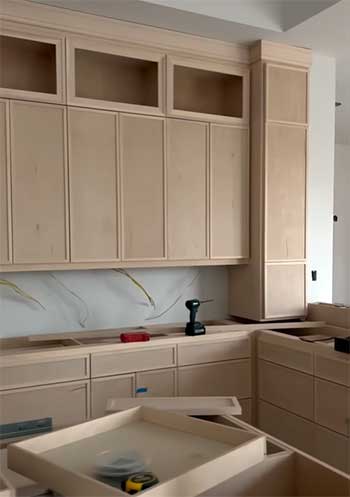
- Can Feel Plain Without Thoughtful Details: If the hardware, countertops, and lighting stay basic, the cabinets can look unfinished or builder-grade. You usually need at least one strong complementary element to keep the room interesting. In my first round of samples the plain white doors with basic knobs felt flat until I added a textured backsplash and warmer lighting. The simplicity that makes them versatile also means the rest of the kitchen has to carry more of the personality.
- Panel Movement in Extreme Humidity: The floating center panel is designed to expand and contract, but in very dry or humid climates you may see slight gaps or tightness that traditional glued panels sometimes avoid. In a dry winter I noticed a hairline shadow along one panel edge that disappeared once the humidity rose again. Quality construction and a stable finish minimize the effect, yet it is something to watch if your home experiences large seasonal swings.
- Less Distinctive Character: Some homeowners want the cabinets themselves to be a focal point. Shaker doors deliberately step back, so the personality has to come from elsewhere in the room. If you prefer the cabinetry to make a strong statement on its own, the clean profile can feel understated to the point of ordinary. The look relies on the overall composition rather than the doors alone.
- Similarity Across Brands: Many manufacturers produce nearly identical Shaker profiles, so achieving a truly custom look often requires upgraded materials or unique finishes rather than unique door shapes. The basic five-piece door is so common that the difference between stock and semi-custom often shows up in the wood species, paint quality, and interior construction rather than the door outline itself. You may need to specify custom edge details or a non-standard overlay to make the run feel more individual.
Also Read: Is Bellmont Cabinets Worth Your Money?
Key Features of Traditional Cabinets
- Raised-Panel Doors with Decorative Profiles: The center panel is raised and often edged with a molded detail. Frames frequently include more complex edges, bead board, or applied molding that add depth and shadow.
- Formal Overall Appearance: These cabinets usually pair with crown molding, light rails, and sometimes corbels or columns. The result feels finished and intentional in a way that simpler styles sometimes lack.
- Material and Milling Details: Solid wood is common for the raised panels and frames. The extra cuts and shaping require more skilled millwork, which is why the finished product often carries a higher price.
- Hardware Emphasis: Decorative knobs, ornate pulls, and sometimes metal accents become part of the design rather than an afterthought. The hardware needs to complement the molding or the whole run can look incomplete.
- Classic Color Pairings: Cream, warm white, deep cherry, or antique finishes appear frequently. These colors reinforce the timeless, formal character.
- Structural Strength for Heavy Doors: The frames are often built to support the weight of the raised panels and any added molding without sagging over time.
Pros of Traditional Cabinets
- Strong Sense of Permanence and Craftsmanship: The raised panels and molding convey care and tradition. In older homes or spaces meant to feel established, that presence can make the kitchen the centerpiece of the house. The extra milling and shadow lines signal that the cabinets were chosen with intention rather than simply selected from a standard catalog. Many people associate the detailing with quality and custom work, which can support higher resale perceptions in certain markets.
- Visual Interest Even in Simple Finishes: The shadow lines and depth keep the eye engaged even if the color is a single soft white. You get more detail without adding extra accessories. A plain cream finish still shows the raised panel and frame profiles, so the cabinets continue to look finished and layered. Under warm lighting the depth becomes more pronounced, giving the room a richer appearance throughout the day.
- Excellent Match for Formal or Historic Architecture: When the rest of the house has crown molding, wainscoting, or classic trim, traditional cabinets continue that language instead of interrupting it. The doors and any added light rails or corbels feel like a natural extension of the existing architecture. In a home with traditional details elsewhere, the kitchen stays consistent rather than introducing a contrasting modern note.
- Hardware Becomes a Design Feature: Ornate pulls and knobs can be beautiful on their own and reinforce the overall style rather than competing with it. The right cup pull or detailed knob echoes the molding and becomes part of the visual rhythm. Selecting hardware takes more care, yet once chosen it adds lasting character that simpler doors sometimes lack.
- Perceived Higher Value: Many people associate the extra detailing with quality and custom work, which can support higher resale perceptions in certain markets. The raised panels and molding read as more substantial to many buyers, especially in neighborhoods that favor classic or transitional homes. The finished look often photographs well and feels complete even before accessories are added.
Cons of Traditional Cabinets
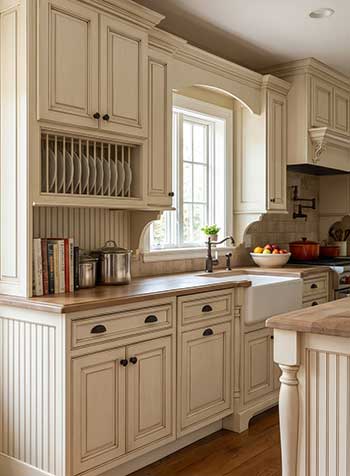
- Higher Up-Front Cost: The additional milling, more complex joinery, and often solid-wood panels increase the price. In my comparisons the gap was noticeable once I moved beyond basic stock options. Matching crown molding, light rails, and more expensive hardware to complete the look push the total higher still. The extra cost is most apparent when you specify solid wood raised panels and detailed profiles rather than simpler MDF versions.
- More Demanding Maintenance: Dust and grease settle in the grooves. Weekly cleaning takes longer, and deep cleans require more attention to corners and edges. After cooking for a family I found that the traditional samples needed a small brush for the panel edges and frame grooves, while the Shaker surfaces wiped clean with a cloth alone. Cooking smells also lingered longer in the deeper details if I did not clean the same day.
- Less Flexibility for Future Updates: Painting is possible, yet the raised profiles and moldings make color changes more labor-intensive and sometimes less successful if the original finish was stained. Softening the ornate character later is difficult; the details remain even after a new paint color. If tastes shift toward smoother surfaces, the cabinets may feel dated sooner than a cleaner profile, and refinishing or replacing the doors becomes a larger project.
- Can Overwhelm Smaller Spaces: The visual weight and extra lines can make a compact kitchen feel busier or more closed in than the same layout with Shaker doors. In a galley or small L-shaped kitchen the raised panels and shadow lines create more pattern, which can make the room feel tighter. The formal presence that works well in larger or more open layouts can feel heavy when wall space is limited.
- Style Lock-In: Once installed, the ornate character is hard to soften. If tastes shift toward simpler looks, the cabinets may feel dated sooner than a cleaner profile. The raised panels and molding set a strong traditional tone that is difficult to update without replacing the doors. In neighborhoods where most recent remodels favor cleaner lines, the more ornate traditional look can read as older even when the cabinets themselves are new.
Also Read: Free 3D Kitchen Remodel Cost Estimator.
Frequently Asked Questions (FAQ)
Shaker cabinets remain the most widely chosen style in current kitchen remodels because they adapt to many design directions and stay practical for everyday use.
No. Their simple lines continue to appear in both new construction and updates, and they pair easily with current hardware and finishes without looking dated.
Cabinets with heavy dark oak finishes, very ornate 1990s-style raised panels with gold accents, or builder-grade thermofoil that peels are the ones most often replaced during remodels.
Highly specific color-blocked cabinets, extreme mixed-metal hardware combinations, and overly glossy all-white high-gloss finishes that show every fingerprint are likely to feel less current as preferences shift toward quieter, more durable surfaces.
Final Thoughts
After weighing the daily cleaning, the flexibility for future changes, and the way each style sits in a real room, the choice comes down to how you want the kitchen to feel when you walk in every morning.
Shaker cabinets give you a clean, adaptable base that stays easy to live with and update. Traditional cabinets deliver more immediate character and a sense of established craftsmanship if that matches the rest of your home.
You now have the concrete differences in construction, maintenance, cost, and long-term look so you can decide which set of trade-offs fits the way you actually cook, clean, and use the space.