
When I compare Rinnai and Rheem tankless water heaters, I’m really trying to answer one practical question: which brand gives you better hot water comfort, long-term value, and fewer regrets after installation?
If you’re choosing between these two, you’re probably not just buying a heater; you’re buying daily showers, lower energy waste, space savings, and peace of mind.
I’ll walk you through the key differences, features, pros, cons, and real-user decision points so you can choose the better fit for your home.
| Factor | Rinnai Tankless Water Heater | Rheem Tankless Water Heater |
| Best For | Homeowners who want premium performance, strong engineering, and advanced recirculation options | Homeowners who want strong value, broad availability, and easier budget flexibility |
| Brand Strength | Known heavily for tankless gas water heaters and high-end residential systems | Known for a wide range of water heating products, including tank, tankless, hybrid, and electric models |
| Performance Feel | Smooth, powerful, and often excellent for larger homes | Dependable and practical, with strong models for medium to large homes |
| Efficiency | Very strong, especially in condensing models | Very competitive, especially in high-efficiency gas and electric models |
| Installation Cost | Often higher, especially for premium units | Often more flexible depending on model and installer |
| Smart Features | Available through compatible modules and app-based control on select systems | Available on select modern models, including Wi-Fi-enabled options |
| Recirculation | Excellent options, including built-in pump models and smart recirculation features | Strong recirculation options on select models, especially premium lines |
| Maintenance | Requires regular flushing and professional setup, like all tankless units | Also requires regular flushing and proper installation |
| Longevity | Strong reputation for long service life when maintained | Good lifespan, though model choice and maintenance matter a lot |
| Overall Personality | Premium, focused, performance-driven | Practical, accessible, value-friendly |
Key Differences Between Rinnai And Rheem Tankless Water Heaters
- Brand focus and product identity
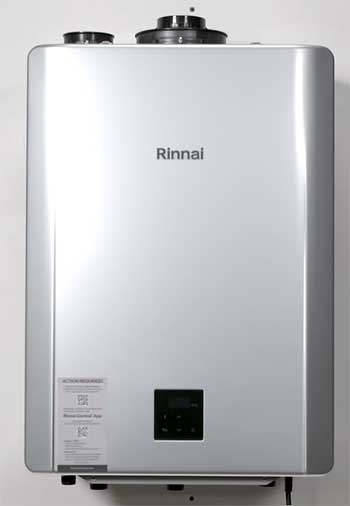
Rinnai has built a strong reputation around tankless technology.
When I think of Rinnai, I think of compact wall-mounted gas units, strong flow rates, premium engineering, and homes where hot water demand is serious.
The brand feels very focused on doing tankless well.
Rheem is broader.
It makes traditional tank water heaters, tankless units, heat pump water heaters, commercial units, and more.
That wide product range can be a benefit because you get more choices across price points.
But it also means Rheem does not feel as narrowly focused on tankless systems as Rinnai.
For you, this difference matters if you want a specialist brand versus a broad home-comfort brand. I’d lean Rinnai if tankless gas performance is the priority. I’d lean Rheem if I want more model variety and a potentially easier buying process.
- Price and total installation cost
Rinnai units often land in the premium category, especially when you look at higher-output condensing models with recirculation features. The unit itself can cost more, and installation can also add up if your home needs venting upgrades, gas line changes, condensate drainage, or recirculation plumbing.
Rheem can be more budget-friendly, depending on the model. That does not mean cheap or weak. It means Rheem gives you more choices if you’re trying to balance performance and cost. For many homeowners, Rheem hits the “good enough plus reliable” zone nicely.
Here’s the real-world part: tankless water heater cost is not just the sticker price. A lower-cost unit can become expensive if installation is complicated. A higher-cost unit can be worth it if it performs better for 15 to 20 years. I always compare installed cost, not just unit cost.
- Hot water delivery and flow rate
Flow rate is one of the most important comparison points. A tankless water heater does not store hot water. It heats water as it moves through the unit. That means the heater must be sized properly for your home’s demand.
Rinnai is often impressive in larger homes because its higher-end models are built for strong flow and consistent output. If you have multiple bathrooms, teenagers, guests, laundry running, and someone who treats long showers like a spiritual practice, Rinnai’s premium models can be very appealing.
Rheem also offers capable high-output tankless models. For many homes, especially two- or three-bathroom homes, Rheem can absolutely keep up when properly sized. But I would be extra careful to choose the right Rheem model for peak demand instead of assuming any tankless unit will handle everything.
- Efficiency and energy savings
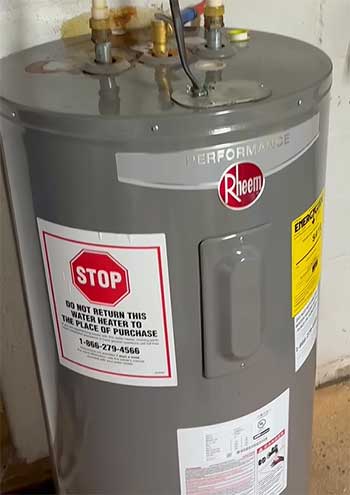
Both Rinnai and Rheem offer high-efficiency tankless water heaters.
Condensing gas models are usually the efficiency winners because they capture more heat from combustion gases before venting.
That can reduce wasted energy compared with non-condensing models.
In daily use, both brands can save energy because they do not keep a tank of water hot all day. That’s the big tankless advantage.
But savings depend on your usage.
If your household uses a lot of hot water, savings may be noticeable but not magical.
If you use moderate hot water and replace an old inefficient tank, the improvement can feel more meaningful.
I would not choose only by efficiency rating. I’d choose by the full mix: right size, reliable brand, good warranty, local service support, and installation quality.
- Recirculation and wait time for hot water
This is a big one. Tankless water heaters can still make you wait for hot water at far-away fixtures. The heater may create hot water quickly, but the hot water still has to travel through your pipes.
Rinnai has strong recirculation options, including models with built-in pumps and smart scheduling features. If fast hot water matters to you, Rinnai’s recirculation ecosystem is one of its strongest selling points.
Rheem also offers tankless models with recirculation features, especially in more advanced lines. Some Rheem systems include built-in recirculation and Wi-Fi control, which makes them much more competitive than older basic tankless setups.
My take: if your bathroom is far from the heater, recirculation matters more than brand pride. A properly designed recirculation setup can make either brand feel much better in daily life.
- Smart controls and convenience
Both brands offer smart control options on select models. This can include temperature control, maintenance alerts, vacation mode, scheduling, and system monitoring.
Rinnai’s smart controls feel especially useful when paired with recirculation scheduling. You can tune the system around your routine instead of letting the pump run wastefully.
Rheem’s smart features are also practical, especially if you like app-based control and alerts. The best Rheem models feel modern and user-friendly, not bare-bones.
Would I pay extra for Wi-Fi? Yes, if the price difference is reasonable and the app features match how I live. But I would not prioritize smart features over correct sizing, good installation, and serviceability.
Key Features of Rinnai Tankless Water Heaters
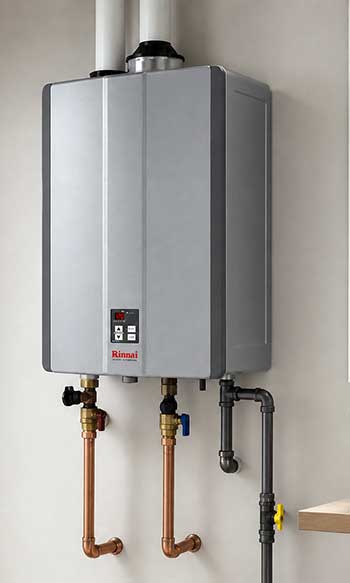
- Strong gas tankless performance: Rinnai is known for powerful gas tankless units that can serve busy households. The better models are built to deliver steady hot water without the bulky footprint of a tank. I like Rinnai most when the home has higher hot water demand and the buyer wants a long-term solution rather than the cheapest replacement.
- Condensing and non-condensing options: Rinnai offers both condensing and non-condensing tankless systems. Condensing models are usually more efficient, while non-condensing models may work well in certain replacement situations. The right choice depends on venting, budget, efficiency goals, and installation conditions.
- Compact wall-mounted design: Like most tankless units, Rinnai saves space. Instead of a large tank sitting in a garage, closet, or utility room, the unit mounts on the wall. That can free up storage space and make mechanical areas feel cleaner.
- Advanced recirculation compatibility: Rinnai’s recirculation features are a major reason I’d consider the brand. Select models support built-in pumps, smart circulation, scheduling, and accessory-based control. For a home where people hate waiting at the faucet, this can be a daily quality-of-life upgrade.
- Indoor and outdoor models: Rinnai offers indoor and outdoor installation options. Outdoor models can reduce the need for some venting work, while indoor models are better suited for colder climates or protected spaces. Your installer should guide this decision based on climate and code.
- Premium build reputation: Rinnai has a strong reputation for durability, especially when installed by someone who understands tankless systems. I would still never skip maintenance, though. Even a premium unit can suffer if hard water scale builds up inside the heat exchanger.
Pros of Rinnai Tankless Water Heaters
- Excellent for serious hot water demand: If your home has multiple bathrooms and a lot of overlapping hot water use, Rinnai’s higher-end models are very attractive. I like Rinnai for households that want strong performance and fewer compromises during busy mornings.
- Strong tankless specialization: Rinnai feels like a brand that knows exactly what it wants to be in this category. That focus can translate into better product confidence, especially if you’re buying a premium tankless gas unit.
- Great recirculation options:This is one of Rinnai’s best advantages. Fast hot water is not just about the heater; it is about moving hot water through the plumbing intelligently. Rinnai’s recirculation options help reduce waiting and water waste when configured correctly.
- Compact and clean installation: A Rinnai tankless unit can make a utility area feel much less crowded. If you are replacing a bulky tank, the wall-mounted design can be a refreshing upgrade.
- Long-term durability potential: With professional installation and regular flushing, Rinnai tankless heaters can last a long time. Many homeowners choose the brand because they want a system that feels built for the long haul.
- Strong premium perception: If resale impression matters, a recognized premium tankless brand can be a nice detail. It is not going to sell the house by itself, but buyers often like seeing a quality tankless system already installed.
Cons of Rinnai Tankless Water Heaters
- Higher upfront cost: Rinnai can be expensive. The unit price may be higher than some Rheem options, and premium features can push the project cost up quickly.
- Installation can be demanding: Tankless installation is not a casual swap in many homes. You may need venting changes, gas line upgrades, electrical work, or condensate management. Rinnai is excellent when installed properly, but poor installation can ruin the experience.
- Maintenance is still required: Some buyers think premium means maintenance-free. It does not. If you have hard water, flushing the unit is important. Ignoring scale buildup can reduce performance and shorten service life.
- Not always necessary for smaller homes: If you live alone or have modest hot water demand, a premium Rinnai system might be more than you need. In that case, Rheem or another value-focused option may make better financial sense.
- Accessories can add cost: Smart modules, recirculation accessories, valves, and installation extras can increase the final price. I would budget for the complete system, not just the heater.
Key Features of Rheem Tankless Water Heaters
- Broad model selection: Rheem gives you many choices. Gas tankless, electric tankless, condensing, non-condensing, indoor, outdoor, high-output, and more budget-conscious options are available depending on your market. This makes Rheem easier to fit into different homes and budgets.
- Strong value for many homeowners: Rheem often shines when you want a dependable tankless water heater without jumping straight to the highest price tier. I see Rheem as a practical choice for homeowners who want modern hot water performance but still care strongly about upfront cost.
- High-efficiency gas models: Rheem’s better gas tankless models can compete well on efficiency and performance. If you choose the right size and installation setup, Rheem can provide consistent hot water for normal family use.
- Electric tankless availability: One advantage Rheem has is visibility in electric tankless water heaters. Electric tankless units are not ideal for every whole-home application because they may require significant electrical capacity, but they can be useful for smaller homes, point-of-use setups, or places where gas is not available.
- Wi-Fi and recirculation on select models: Rheem’s advanced models include modern convenience features like Wi-Fi and recirculation. This makes Rheem more attractive if you want app control and faster hot water without stepping into a luxury-only price range.
- Easier retail availability: Rheem is widely available through big retailers, plumbing suppliers, and contractors. That can make shopping, comparing, and replacing easier. In some areas, it may also be easier to find technicians familiar with Rheem products.
Pros of Rheem Tankless Water Heaters
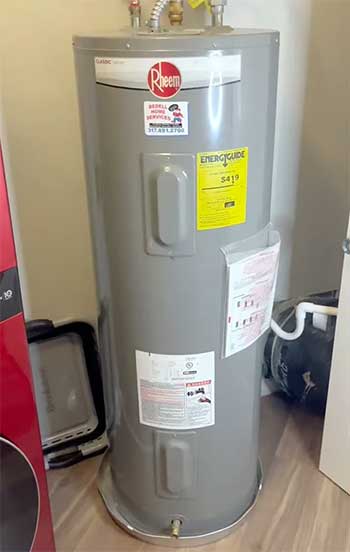
- Strong value across price ranges: Rheem is appealing because it often gives you a lot for the money. If you want tankless performance but you’re watching the budget, Rheem deserves a close look.
- Wide selection of models: Rheem gives you flexibility. You can compare gas, electric, indoor, outdoor, condensing, non-condensing, and different flow capacities. That variety makes it easier to match your home instead of overpaying for features you do not need.
- Good availability: Rheem is easy to find in many areas. That can make quotes, replacements, and service more convenient. Availability matters more than people think, especially when your old water heater fails at the worst possible time.
- Competitive modern features: Rheem’s better tankless models include useful features like recirculation and Wi-Fi control. That helps Rheem compete with premium brands while keeping value in the conversation.
- Good choice for standard family homes: For many average households, Rheem can deliver all the hot water they need. If your demand is moderate and your installer sizes the unit correctly, Rheem can be a smart, practical choice.
- Electric tankless options: If gas is not available, Rheem’s electric tankless lineup may be worth considering. I would check electrical requirements carefully, but the option itself is useful.
Cons of Rheem Tankless Water Heaters
- Not every model feels premium: Rheem has a wide lineup, and that means quality and feature sets can vary by model. A basic Rheem unit should not be compared directly with a high-end Rinnai unit. You need to compare similar tiers.
- Electric models may have limitations: Electric tankless water heaters can require major electrical capacity. For whole-home use, they may not be practical in every property. Before choosing electric, I would confirm panel capacity, amperage needs, and expected flow rate.
- Sizing mistakes can hurt performanceThis is true for every brand, but Rheem’s broad lineup makes it easy to pick the wrong unit if you only shop by price. A smaller unit may struggle during winter or when multiple fixtures run at once.
- Recirculation features depend on model: Not all Rheem tankless units include advanced recirculation. If fast hot water matters, you need to choose a model designed for it or plan the right accessories.
- Brand perception is more general: Rheem is respected, but it is not always viewed as the same tankless specialist as Rinnai. That may not matter to you, but it can influence how homeowners feel when choosing a premium system.
Which Brand Would I Choose?
If I were choosing for my own home and had a healthy budget, I would pick Rinnai for a gas tankless system, especially for a larger household. I like its tankless focus, strong performance reputation, and advanced recirculation options.
If I were trying to keep the project more cost-conscious, or if my hot water demand was average, I would seriously consider Rheem. It offers good performance, accessible pricing, and plenty of model variety.
So my practical answer is this:
Choose Rinnai if you want premium tankless gas performance, strong recirculation options, and long-term confidence.
Choose Rheem if you want value, flexibility, easier availability, and solid performance for a typical home.
Neither choice is bad. The better choice is the one that fits your home’s actual hot water demand.
Also Read: My Experience With Phyn Plus Smart Guard.
Frequently Asked Questions (FAQ)
Rinnai is often considered one of the most reliable tankless water heater brands, especially for gas models. Rheem is also reliable when properly sized, installed, and maintained.
No. Rinnai is a Japanese brand. It was founded in Japan and is widely known for gas appliances and tankless water heaters.
A Rinnai tankless water heater can often last around 15 to 20 years with proper installation, regular flushing, and good water quality.
Some Rheem water heaters are high-end, especially their advanced tankless and hybrid models. Rheem also sells budget and mid-range models, so quality depends on the specific unit.
Final Thoughts
When I compare Rinnai vs. Rheem tankless water heaters, I come back to what you actually need from the system. Rinnai feels like the premium pick for performance-focused homeowners who want strong gas tankless technology and advanced comfort features.
Rheem feels like the practical pick for homeowners who want dependable hot water, more model choices, and better budget flexibility. If you want maximum confidence and have higher demand, I’d look hard at Rinnai.
If you want smart value and solid daily performance, Rheem may be the better fit for you.