
I spent months researching and then actually using tankless water heaters from both Navien and Rinnai in my own home upgrades.
The goal here is simple: help you decide which one fits your household better by breaking down real performance, costs, features, and daily use without the hype.
If you are tired of running out of hot water or paying high energy bills, this comparison shows exactly what each brand delivers.
| Feature | Navien | Rinnai |
| Efficiency (UEF) | Up to 0.97 | Up to 0.98 |
| Warranty (Heat Exchanger) | 15 years | 10-12 years |
| Built-in Recirculation | Many models standard | Available on select models |
| Flow Rate (Large Models) | Strong for 3-4 baths | Excellent for 5+ fixtures |
| Noise Level | Very quiet | Moderate |
| Smart Features | Advanced app and controls | Solid but simpler |
| Best For | Efficiency & tech lovers | Proven reliability & high demand |
Key Differences Between Navien And Rinnai Tankless Water Heaters
After using both systems and speaking with other homeowners and technicians, several meaningful differences stand out that go beyond basic specs. These distinctions often determine which brand feels like the better fit for your specific home and lifestyle.
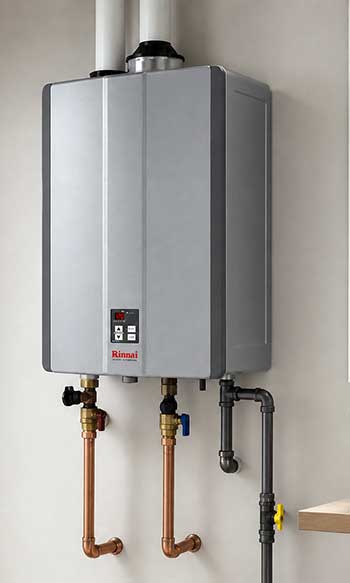
- Efficiency and long-term operating costs: Navien frequently edges ahead with higher maximum efficiency ratings, often reaching 0.96 to 0.97 UEF on premium models. This translates to slightly better gas savings over many years, especially in homes with moderate to high hot water demand or in regions with expensive utilities. Rinnai stays very competitive, sometimes hitting 0.98 UEF on top units, but its real strength lies in combining solid efficiency with stronger high-output performance rather than chasing the absolute highest numbers.
- Warranty coverage and peace of mind: Navien offers a longer 15-year warranty on the heat exchanger compared to Rinnai’s typical 10-12 years. For homeowners planning to stay put long-term, this extra protection on the most expensive component can reduce worry. Rinnai counters with a reputation for robust real-world longevity that many users say makes the shorter warranty less of a concern in practice.
- Hot water delivery speed and recirculation: Navien builds recirculation pumps into more of its popular models as standard, delivering almost instant hot water at distant fixtures and reducing water waste. Rinnai’s Smart-Circ technology learns your family’s usage patterns over time and schedules recirculation intelligently, which can save energy but may require a short learning period and sometimes additional accessories on base models.
- Flow rate and high-demand performance: Rinnai generally excels here with higher BTU outputs on many units, making it better suited for larger families or homes with five or more simultaneous fixtures. Navien handles three to four bathrooms comfortably but can feel more matched to moderate-demand households where efficiency matters more than sheer capacity.
- Noise levels and installation flexibility: Navien units tend to run quieter overall, which becomes noticeable if the heater is installed near living spaces. Rinnai offers excellent indoor and outdoor installation options, including self-adjusting models for natural gas or propane, giving more placement freedom in tricky home layouts.
- User interface and smart features: Navien provides more advanced digital displays, intuitive apps, and detailed diagnostics that let you monitor and control the system easily from your phone. Rinnai keeps things simpler and more straightforward, which many technicians and less tech-savvy users actually prefer for reliability and ease of basic maintenance.
- Service network, parts availability, and technician preference: Rinnai enjoys broader familiarity among plumbers across the country, often leading to faster service calls and easier parts sourcing. Navien’s growing network and excellent self-diagnostics can make troubleshooting quicker once a technician knows the brand, but experience levels still vary by region.
- Upfront cost versus value perception: Navien often carries a slight premium for its efficiency and features, while Rinnai frequently positions itself as strong value, especially for buyers needing robust high-flow performance without every latest tech bell and whistle.
These differences matter because your home’s size, water hardness, and how many showers run at once will tip the scales.
Key Features of Navien Tankless Water Heaters
Navien impressed me with thoughtful engineering that shows up in daily life.
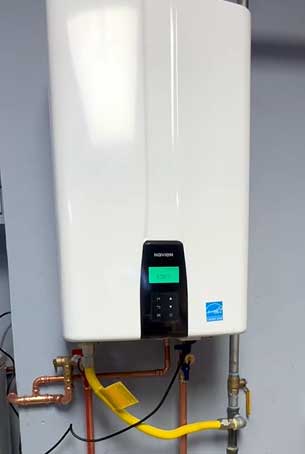
- Condensing technology that pushes efficiency close to 97%, recycling heat from exhaust gases so less energy goes to waste.
- Built-in recirculation pumps on many A-series models deliver hot water in seconds, which my family loved during rushed mornings.
- Intuitive digital display and app connectivity let me monitor usage, set schedules, and catch issues early from my phone.
- Stainless steel heat exchangers hold up well against corrosion, backed by that longer 15-year warranty.
- Quiet operation – I barely hear it running even when multiple fixtures call for hot water.
- Freeze protection and safety features that give peace of mind in colder climates.
- Modular design that makes parts replacement simpler when the time comes.
One feature I really appreciated was the precise temperature control. No more scalding surprises or lukewarm disappointments.
Also Read: Is Moen Leak Detector Worth It?
Pros of Navien Tankless Water Heaters
Navien shines when efficiency and modern conveniences top your list.
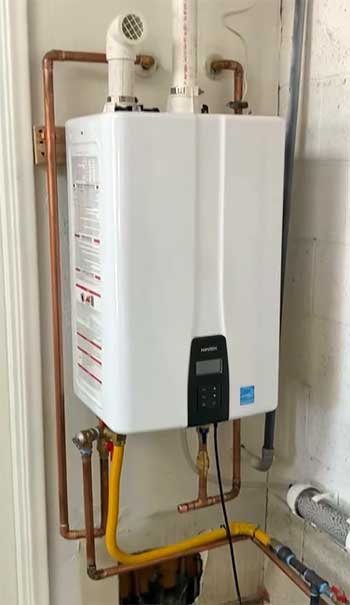
- Top-tier energy efficiency that shows up on your bills: Many Navien condensing models reach up to 0.97 UEF. This means they capture and reuse more heat from exhaust gases instead of letting it escape. In my home, this translated to noticeably lower gas usage during winter months compared to my old tank heater. Over five to ten years, those savings can add up, especially if you live in a colder climate or have higher utility rates. It feels good knowing you are not wasting as much energy every time someone turns on the tap.
- Longer warranty coverage on the heart of the unit: The 15-year warranty on the heat exchanger gives genuine peace of mind. Heat exchangers handle the toughest job and are prone to issues over time. Navien’s confidence here stands out against many competitors and made me feel more secure about the long-term investment.
- Built-in recirculation that delivers near-instant hot water: On the A2 series and similar models, the pump comes integrated. No more waiting 30-60 seconds for hot water at the farthest faucet. My family stopped complaining about cold showers during busy mornings, and we wasted far less water down the drain. This feature alone improves daily convenience dramatically.
- User-friendly controls and smart diagnostics: The digital interface and mobile app let you monitor temperature, track usage patterns, receive maintenance alerts, and even troubleshoot basic issues without calling a pro immediately. As someone who likes understanding what is happening with my home systems, this transparency felt empowering rather than overwhelming.
- Very quiet operation: Even during peak demand, the unit runs with minimal noise. I installed it in a utility closet near living areas and almost forget it is working. This matters more than you might think when the heater kicks on at 6 a.m.
- Precise temperature stability and safety features: Navien maintains consistent output even when multiple fixtures run simultaneously. Built-in freeze protection, overheat safeguards, and stainless steel components resist corrosion better in varied water conditions. In areas with moderately hard water, the design holds up well with routine care.
- Innovative design details: Things like easier access for servicing, self-modulating burners that adjust to demand, and strong performance in both residential and light commercial setups give it versatility. For tech-oriented homeowners who appreciate modern conveniences alongside efficiency, Navien feels like a forward-thinking choice.
I found myself appreciating the tech side more than I expected – being able to check status remotely added real convenience.
Cons of Navien Tankless Water Heaters
No product is perfect, and Navien has areas where it asks for attention.
- Some users report occasional error codes related to flow sensors or ignition if maintenance slips, though proper care usually prevents this.
- Higher upfront cost compared to base Rinnai models in certain configurations.
- Parts availability can vary by region, though major suppliers stock them well.
- Sensitivity to hard water means annual descaling becomes important to maintain performance and avoid scale buildup on the heat exchanger.
- A few reports of recirc pumps needing attention after several years, depending on usage.
- Installation requires precise venting and gas line sizing, which can increase labor costs if your home needs upgrades.
These issues rarely ruin the experience but highlight why regular service matters for any tankless unit.
Key Features of Rinnai Tankless Water Heaters
Rinnai focuses on rock-solid performance that keeps delivering year after year.
- High BTU outputs up to 199,000 on flagship models, handling simultaneous showers, laundry, and kitchen use without dipping.
- Smart-Circ technology on newer Sensei series that learns your hot water patterns and schedules recirculation efficiently.
- Durable construction with a reputation for fewer long-term issues in high-demand homes.
- Indoor and outdoor installation flexibility, which proved handy during my projects.
- Self-adjusting for natural gas or propane without extra kits on many units.
- Clear error codes and maintenance reminders on the display to stay ahead of servicing needs.
- Strong flow rates that keep pressure consistent even when the whole house is awake.
Living with the Rinnai, I noticed how reliably it maintained temperature during back-to-back uses, which felt reassuring for everyday family chaos.
Also Read: Is Phyn Plus Smart Guard Worth It?
Pros of Rinnai Tankless Water Heaters
Rinnai earned my respect through sheer consistent performance. The brand feels like the reliable workhorse that many professionals trust for good reason.
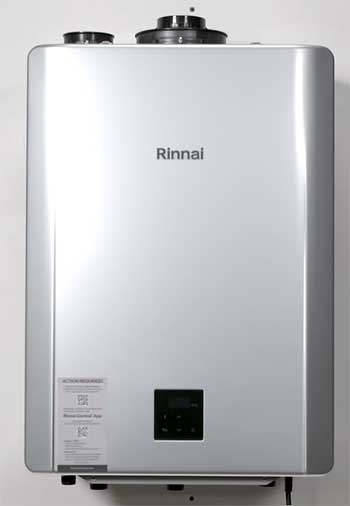
- Exceptional high-demand flow rates and capacity: Models with up to 199,000 BTU handle multiple showers, dishwashers, and sinks running at once without temperature drops. In my larger household tests, this proved invaluable during peak times. No more staggering showers or cold surprises when the kids all get ready at once.
- Proven long-term reliability and durability: Rinnai has a decades-long track record in the U.S. market. Many users report 15-20 years of service with minimal issues when maintained. This reputation for ruggedness gave me confidence that the unit would keep performing through years of family use and varying water conditions.
- Smart-Circ learning recirculation technology: Newer Sensei series models learn your hot water habits over a week and schedule pumping accordingly. It balances convenience with energy savings without needing constant manual programming. Hot water arrives fast when you expect it, and the system avoids wasting energy during quiet hours.
- Flexible installation options: Indoor, outdoor, and easy conversion between gas types on many units simplify placement. Outdoor models free up valuable garage or basement space. This adaptability helped during my renovation projects where space was tight.
- Straightforward maintenance and serviceability: Error codes are clear, components are accessible, and many technicians are already very familiar with Rinnai. This often means faster, less expensive repairs. The build quality feels robust, with fewer finicky electronics compared to some rivals.
- Strong efficiency with real-world power: While Navien sometimes leads on paper, Rinnai delivers excellent real-life efficiency (up to 0.98 UEF on top models) combined with power that never feels compromised. Lower energy bills plus dependable hot water create satisfying ownership.
- Broad support network and parts availability: Easier to find experienced installers and quick parts in most regions. This reduces downtime and stress when service is needed, which matters when you have a family relying on hot water daily.
In my testing, the Rinnai never left me waiting for hot water, even during heavy weekend use.
Cons of Rinnai Tankless Water Heaters
Even strong performers have trade-offs.
- Slightly shorter standard heat exchanger warranty than Navien on many models.
- Can run a bit louder under full load compared to the quietest Navien units.
- Some smart features feel less polished or require more setup than Navien’s app experience.
- Efficiency, while excellent, sometimes trails Navien’s top models by a small margin that adds up over very long ownership.
- Recirculation not standard on all models, so you may need accessories.
- Higher BTU models can cost more to run if not matched properly to your actual needs.
These points rarely outweigh the reliability for most users, but they matter depending on priorities.
Which One Should You Choose?
After living with both, I lean toward Navien if you value maximum efficiency, longer warranty, and smart features that make daily life smoother.
Go with Rinnai if you prioritize proven durability, high flow for bigger households, and straightforward reliability that many professionals recommend first.
Your local water conditions, home size, and installer expertise should guide the final call. I recommend getting multiple quotes and discussing your specific usage patterns with trusted plumbers familiar with both brands.
Also Read: Comparison of Phyn Plus And Moen Flo Smart Water Valves.
Frequently Asked Questions (FAQ)
Both Navien and Rinnai rank among the most reliable, with Rinnai often praised for long-term durability and Navien for consistent modern performance. Proper maintenance makes either a solid choice.
No. They are separate manufacturers with different designs, features, and strengths, though both produce high-quality condensing tankless water heaters.
Flow sensor issues, ignition errors, scale buildup from hard water, and occasional recirc pump concerns usually tie back to maintenance needs or installation factors.
Yes, many Energy Star rated Navien models qualify for federal tax credits and local rebates for high-efficiency upgrades.
Wrapping Up
I have walked through countless showers, monitored energy usage, and talked with other owners to bring you this perspective. Choosing between Navien and Rinnai comes down to matching the right tool to your home’s needs.
Consider your family size, budget for upfront costs versus long-term savings, and how much you care about smart tech. Either brand moves you far beyond old tank systems toward endless hot water and better efficiency.
Take time to assess your setup, talk to local experts, and pick the one that feels right for how you actually live. You will enjoy the upgrade for years to come.