
I’ve mixed both peat moss and perlite into potting blends for years, watching how each one changes moisture, air around roots, and overall plant vigor in containers and beds.
The real difference shows up in how long water stays available versus how freely excess drains away.
This comparison covers their core traits, practical upsides and downsides, and clear guidance so you can match either one (or both) to the plants and conditions you’re working with.
| Aspect | Peat Moss | Perlite |
| Source | Partially decomposed sphagnum from bogs | Expanded volcanic glass |
| Primary role | Holds large amounts of water and nutrients | Creates air pockets and speeds drainage |
| Water behavior | Absorbs and retains moisture for days | Lets water pass quickly; holds little |
| Aeration | Moderate; can compact over time | Excellent; stays loose indefinitely |
| pH | Acidic (typically 3.5–4.5) | Neutral (around 7) |
| Weight | Light dry, heavier when wet | Extremely light, stays light |
| Longevity in mix | Breaks down gradually | Does not decompose |
| Best for | Moisture-loving or acid-preferring plants | Plants needing sharp drainage and root oxygen |
Key Differences between Peat Moss and Perlite
- Moisture storage versus free drainage
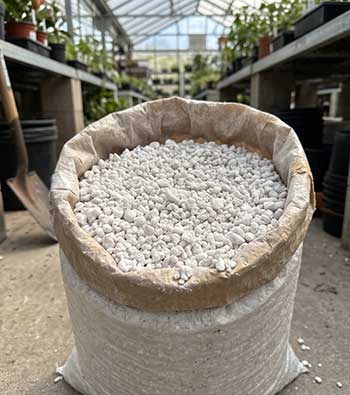
Peat moss functions like a reservoir.
It can hold up to twenty times its dry weight in water, which is why mixes heavy in peat stay moist for longer periods.
I measured this informally by weighing identical pots after watering and again after three days; the peat-heavy pots retained noticeably more mass. Perlite does the opposite.
Water films the outside of each granule but mostly drains past them, so the mix dries faster and never becomes waterlogged if drainage holes are clear.
The practical result is that peat moss suits plants that dislike drying out, while perlite suits plants that dislike sitting in wet media.
- Effect on soil structure over time
Peat moss starts loose but gradually compresses as it decomposes and as repeated watering packs the fibers. After a full growing season in one of my larger containers, the top few inches of a peat-based mix had settled enough that I needed to top it up.
Perlite remains rigid. The granules do not collapse or shrink, so the air space they create stays consistent even after a year or more. That stability is why many long-term houseplant mixes rely on perlite rather than organic components alone.
- pH influence and nutrient interaction
Peat moss lowers pH, which can benefit acid-loving species but can also lock up certain nutrients if the acidity becomes too extreme. When I grew blueberries in a peat-heavy blend, the foliage stayed green without extra acidifiers.
Perlite leaves pH unchanged, so any nutrients you add remain available at the level the rest of the mix dictates. Perlite also holds almost no nutrients itself, whereas peat moss can temporarily bind calcium, magnesium, and other cations.
- Handling and mixing behavior
Dry peat moss is dusty in its own way and can be hard to wet evenly. I usually place it in a tub, add warm water, and wait before blending. Perlite is lighter and pours easily, but the dust clouds are more irritating.
Once mixed, peat moss tends to stay distributed; perlite can float to the surface during heavy top-watering if the percentage is high. Both materials are sterile when bagged, which reduces the chance of introducing soil-borne pathogens.
- Environmental and availability factors
Peat moss extraction raises concerns about wetland habitats and stored carbon. Some regions have restricted or banned its use for that reason.
Perlite mining also has an impact, but the material is more widely viewed as renewable on human timescales because volcanic deposits are large. In stores near me, peat moss is often cheaper per cubic foot, while perlite costs more but lasts longer in the mix.
- Weight and container practicality
A pot filled with a peat-dominant mix becomes significantly heavier once watered. That extra weight can be useful for stability outdoors but makes indoor plants harder to rearrange.
Perlite keeps containers light even after watering, which I appreciate when I need to move large floor plants for cleaning or light adjustment.
Also Read: Is Revive Lawn Care Worth Your Money?
Key Features of Peat Moss
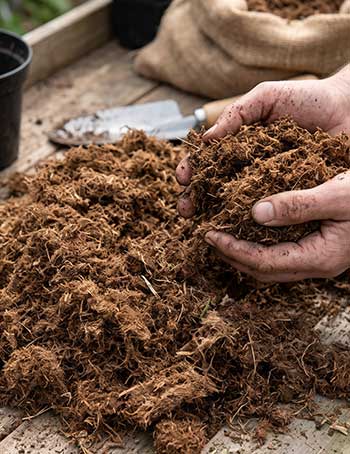
- Exceptional water-holding capacity that buffers against irregular watering: The fibrous structure traps water inside and between particles. In seed starting, this feature let me water less frequently without the surface crusting. For mature plants, it means roots can draw moisture over several days rather than needing daily attention in warm rooms.
- Ability to improve heavy soils without adding permanent bulk: When I worked peat moss into clay garden beds, the soil became easier to dig and drained better during spring rains while still retaining summer moisture. Because it eventually breaks down, it does not leave lasting coarse particles the way some amendments do.
- Natural acidity that supports specific plant groups: The low pH helps prevent iron chlorosis in acid-preferring plants. I used it successfully with azaleas and certain ferns where the foliage stayed deep green instead of yellowing.
- High organic content that feeds soil biology over time: As peat moss slowly decomposes, it contributes to the organic fraction of the mix. In outdoor beds this supported earthworm activity and a darker, richer appearance after one season.
- Sterility and low nutrient content at the start: Fresh peat moss contains almost no available nutrients and few weed seeds. That blank slate lets you control exactly what the plants receive through fertilizer rather than fighting unknown residues.
Pros of Peat Moss
- Strong moisture buffering reduces stress during missed waterings: In my experience with indoor herbs and tropical foliage, a peat-inclusive mix forgave occasional delays of two or three days better than a purely mineral mix. Leaves stayed turgid longer, and new growth continued without the wilting I saw in drier blends.
- Nutrient retention helps stretch fertilizer applications: Because peat moss can hold cations, nutrients applied in liquid form do not leach as quickly. I noticed less frequent yellowing of lower leaves on pepper plants when peat moss made up a substantial portion of the medium.
- Useful for starting seeds and rooting cuttings: The fine texture and even moisture create a forgiving environment for delicate new roots. Many of my early vegetable starts established faster in peat-based trays than in coarser mixes, with fewer losses to drying at the edges.
- Can correct overly alkaline soils or water: If your tap water or native soil runs high in pH, peat moss provides a counterbalance. I used it in containers for blueberries and saw better fruit set compared with the same plants in neutral media.
- Widely available and relatively inexpensive in bulk: Garden centers and farm stores stock large bales at prices that make it practical for filling multiple raised beds or dozens of pots in one season.
Cons of Peat Moss
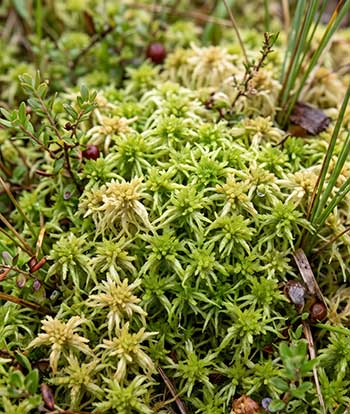
- Environmental cost of harvesting from sensitive wetlands: Extraction removes material that accumulated over centuries and can release stored carbon while altering local hydrology. Some gardeners and regions have moved away from it for these reasons, and I now limit my use to situations where no ready substitute matches the performance.
- Tendency to become hydrophobic when fully dry: If a peat-heavy mix dries out completely, water can bead on the surface and run off rather than soak in. I have had to submerge entire pots for an hour to rehydrate them after a vacation. This problem is less common when peat is blended with other materials, but it still occurs.
- Gradual breakdown leads to loss of volume and aeration: Over a growing season the mix settles. In one large indoor ficus I had to add fresh medium twice because the original level dropped and the remaining material felt denser. That settling can reduce oxygen to roots if you do not top-dress or repot.
- Acidity may require correction for many common plants: Most vegetables and many houseplants prefer a pH closer to 6–7. Without added lime, a peat-dominant mix can drift low enough to slow nutrient uptake. I learned this the hard way with tomatoes that showed purple stems until I adjusted the pH.
- Can harbor or encourage fungal issues if kept constantly wet: The sustained moisture that benefits some plants can favor damping-off or root rot in others if airflow is poor. Good drainage holes and occasional drying cycles help, but the risk is higher than with more open mixes.
Key Features of Perlite
- Permanent aeration that does not diminish: The expanded structure creates stable pore space. Roots in my perlite-amended mixes consistently looked white and branched rather than brown and limited. Even after twelve months the drainage rate remained close to the original.
- Extremely low weight that simplifies handling: Large hanging baskets and tall indoor trees stay manageable. I can lift a 14-inch pot filled with a high-perlite mix that would otherwise require two hands once watered.
- Chemical inertness that avoids unwanted pH or salt shifts: Perlite does not release or bind elements in ways that surprise you. When I used it with hydroponic-style nutrient solutions in containers, the readings stayed predictable.
- Resistance to compaction under repeated watering: The hard granules keep the mix open even when the organic portion settles. This feature is especially useful in self-watering containers where the bottom reservoir can otherwise create a dense layer above it.
- Clean appearance and ease of reuse: Spent perlite can be rinsed and used again in new mixes. I have recycled it from old pots into fresh succulent blends without problems.
Also Read: Top Gaia Green Living Soil Alternatives.
Pros of Perlite
- Reliable drainage prevents root suffocation: After switching several overwatered houseplants to a higher-perlite mix, the soft, dark roots I had been trimming disappeared. New growth was firmer, and I could water more freely without worrying about standing water.
- Consistent structure over multiple seasons: Because it does not decompose, the aeration benefit remains. I have reused the same perlite-amended mix for successive crops of lettuce in containers after simply refreshing the nutrients, and drainage stayed sharp.
- Lightweight nature improves mobility and reduces shipping weight: For anyone who moves plants seasonally or grows on balconies, the reduced weight is a daily convenience. Large specimens stay stable enough in wind yet are still liftable.
- Neutral chemistry lets you control pH and nutrients precisely: There are no hidden interactions. When I run controlled feeding schedules, the results match the fertilizer label more closely than they do in organic-heavy mixes.
- Sterile and free of weed seeds or pathogens: Fresh perlite introduces nothing unwanted. This cleanliness is helpful when propagating or when starting with sterile seed-starting systems.
Cons of Perlite
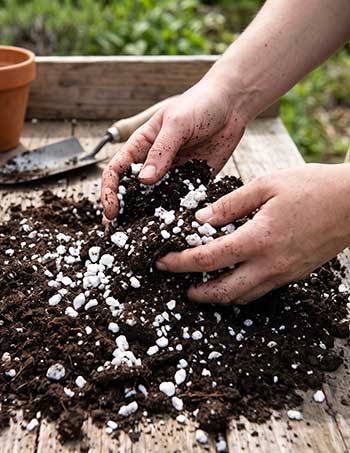
- Minimal water and nutrient holding capacity: Mixes that are mostly perlite dry out quickly and require more frequent watering and feeding. I found this limiting for thirsty tropicals unless I increased the organic fraction or used self-watering pots.
- Dust during handling can irritate lungs and eyes: Even with a mask, the fine particles become airborne. I now wet the perlite lightly before pouring it, which cuts the dust dramatically but adds an extra step.
- Can float or separate in very wet conditions: In mixes with a high percentage, top-watering sometimes pushes granules to the surface. They do not disappear, but the appearance becomes uneven until the next thorough watering redistributes them.
- Higher cost per volume compared with some bulk organics: For large outdoor projects the price adds up faster than peat moss or compost. I reserve pure perlite additions for containers where the drainage benefit is essential.
- Mining and processing have their own environmental footprint: While often considered preferable to peat extraction, the energy used to expand the raw ore and the landscape changes from quarrying are not zero. Availability can also fluctuate with industrial demand.
Using Peat Moss and Perlite Together
Most of my successful container mixes contain both. A common starting ratio for general houseplants is roughly equal parts peat moss (or a peat alternative), perlite, and a base potting soil or compost.
The peat supplies the moisture buffer and nutrient holding, while the perlite keeps the blend from staying soggy. For succulents I drop the peat percentage and raise the perlite. For moisture-loving ferns I do the reverse.
When combining them I always pre-moisten the peat moss so it blends evenly instead of forming dry clumps. The perlite then distributes without excessive dust.
Over time the peat portion settles a little, but the perlite maintains enough open space that I rarely see the root problems that appear in pure peat or pure soil mixes. This combination has become my default for anything that is not a true desert plant or a bog plant.
Choosing Based on Your Plants and Conditions
If your plants wilt quickly, sit in a warm room with dry air, or belong to groups that prefer consistent moisture, peat moss (or a similar organic) will usually give better results.
If you tend to overwater, grow in low-light spots where evaporation is slow, or keep succulents and cacti, perlite will protect the roots more effectively. Outdoor raised beds in rainy climates often benefit from perlite for drainage, while the same beds in arid regions may need the water-holding side of peat moss.
Container size also matters. Small pots dry faster, so a bit more peat moss can stabilize them. Large pots hold water longer, so extra perlite prevents the bottom from staying anaerobic. Testing a small batch and adjusting after a few weeks of real watering has always worked better for me than following a fixed recipe.
Also Read: Is Miracle-Gro Potting Mix Worth Your Money?
Frequently Asked Questions (FAQ)
Skip or minimize perlite when you need strong water retention, such as with bog plants, many ferns, or in very hot, dry locations where pots dry within a day. It is also less helpful if dust is a serious concern and you cannot wet it first, or when the mix already drains extremely well.
Many object to the environmental impact of bog harvesting, the material’s tendency to compact and become hard to rewet, and its acidity that requires extra management for neutral-loving plants. Availability and cost can also vary by region.
Yes. This is a standard way to customize commercial potting soil. Adding both improves moisture balance and aeration beyond what most bagged mixes provide on their own. Start with modest percentages and adjust based on how quickly the finished blend dries.
Peat moss suits acid-loving plants such as blueberries, azaleas, rhododendrons, and camellias, plus many ferns, carnivorous plants, and seedlings that benefit from steady moisture. It also helps in mixes for tropical foliage that dislike drying out completely.
Final Thoughts
I’ve seen both materials rescue struggling plants and create new problems when used in the wrong situation.
Peat moss gives you a moisture cushion and nutrient buffer that many common houseplants and vegetables appreciate, while perlite gives you reliable air and drainage that prevents the root rot so many of us have caused by kindness.
You get the best results when you look at your actual watering habits, the specific plants, and the container or bed conditions rather than treating either product as universally superior.
Try a small test mix, watch how the soil feels a few days after watering, and adjust the next batch. That simple observation has improved more of my results than any single recommended ratio.