
Paver Vs. Concrete Patio: Which One Survives Winter Without Cracking Your Budget?
When I started planning a patio for my own backyard, the choice between pavers and concrete felt like the biggest decision of the whole project.
Both materials create solid outdoor living spaces, yet they differ in upfront price, how they age, and how much work they demand later.
I compared costs, durability, looks, and everyday use so I could pick the surface that actually fits how I live outside. This guide lays out those same trade-offs so you can decide with clear eyes instead of guesswork.
| Feature | Paver Patio | Concrete Patio |
| Typical Installed Cost (20×20) | $4,000–$10,000 | $1,600–$4,800 |
| Cost Per Square Foot | $10–$17 (basic to mid) | $4–$12 |
| Lifespan | 25–50+ years | 20–40 years |
| Repair Approach | Lift and replace individual units | Patch cracks or repour sections |
| Design Flexibility | High—colors, shapes, patterns, borders | Moderate—broom, stamped, or stained |
| Freeze-Thaw Performance | Joints flex with movement | Rigid slab prone to cracking |
| Installation Time | Several days of precise work | Faster pour, then curing wait |
| Drainage | Gaps and permeable options help | Needs proper slope for runoff |
| Long-Term Maintenance | Joint sand, occasional weeds | Sealing and crack monitoring |
Key Differences Between Paver And Concrete Patio
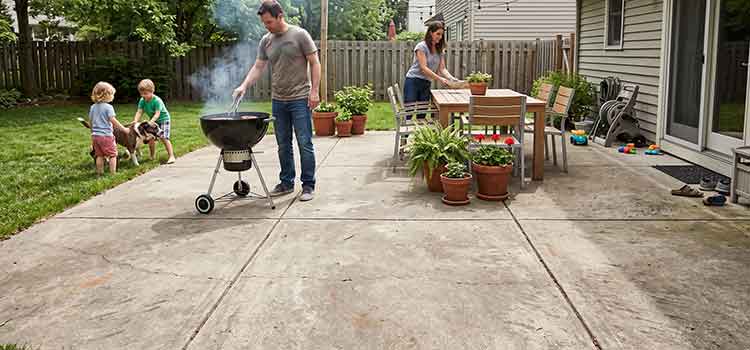
The biggest practical differences show up after the first few seasons, not on installation day.
- Cost gap that is often 30–50 percent lower for basic concrete, which can free up money for better outdoor furniture or lighting instead of going entirely into the surface itself
- Repair process that stays local with pavers versus visible patches on concrete, so a single damaged area does not force you to live with a mismatched repair for years
- Movement tolerance that favors pavers in climates with freeze-thaw cycles, because the joints absorb expansion and contraction that would otherwise split a continuous slab
- Design ceiling that is higher with pavers because patterns are built from many pieces, allowing borders, inlays, and curved edges that a single pour struggles to match cleanly
- Maintenance rhythm that is more frequent but smaller with pavers, involving occasional joint work rather than waiting for larger cracks that require more invasive fixes
Concrete wins when the budget is tight and the design is simple. Pavers pull ahead when you expect soil movement or want to change a section later.
I watched a neighbor replace three cracked pavers after a heavy snow year; the repair blended in. The concrete patio next door still shows the filled crack from the same winter.
Drainage also differs. Paver joints can shed some water, while a concrete slab relies entirely on slope. In heavy rain both need good grading, yet the segmented surface of pavers reduces the chance of standing water in low spots.
Also Read: Comparison of Shell Stone Pavers And Travertine.
Key Features of Paver Patios
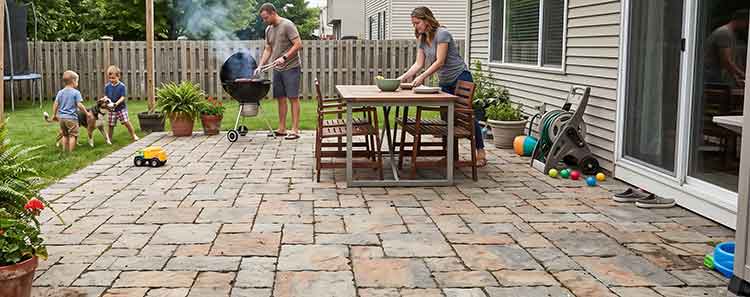
Pavers come as individual units made from concrete, clay brick, or natural stone. I liked that each piece is small enough to handle yet strong enough for furniture and foot traffic.
- Interlocking design that locks pieces together under pressure, so the surface stays stable even when people walk across it daily or when outdoor furniture gets shifted around for different gatherings
- Wide range of colors, textures, and sizes available off the shelf, which means you can pick something that matches your house brick or create a completely different look without waiting for custom mixes
- Ability to create curves, borders, and mixed patterns without major formwork, letting you shape the patio around existing trees, planters, or the natural contour of the yard instead of forcing a rigid rectangle
- Immediate use once the surface is complete—no multi-day curing period, so you can set tables, chairs, and a grill the same afternoon the crew finishes instead of waiting for the material to harden
- Option for permeable systems that let water pass through the joints, which helps reduce runoff in areas that get heavy rain and keeps the surface from turning into a slippery sheet during storms
Pros of Paver Patios
The advantages become clearer once you live with the surface.
- Individual pieces can be lifted, re-leveled, or replaced without tearing out large areas, which means a sunken section or a stained unit can be fixed in an afternoon with basic tools instead of calling a crew for a full patch
- Color and pattern options stay available years later if you need matching units, so you can keep a few spare pavers and blend repairs without the color shift that often happens with concrete patches
- Surface flexes with ground movement, reducing long cracks in cold climates, which keeps the patio looking even after multiple winters instead of developing spiderweb lines across the slab
- Immediate usability lets you set furniture the same day installation finishes, so you do not lose a full week of outdoor time while waiting for the material to cure properly
- Higher visual interest that many buyers notice in listing photos, because the texture and pattern create depth that a flat slab rarely matches even with stamping
Cons of Paver Patios
The downsides are real and show up in both budget and upkeep.
- Higher installed cost driven by materials and the labor of precise base work, which can push a standard 20 by 20 project several thousand dollars above a basic concrete slab even before any design upgrades
- Joints can collect weeds or moss if sand erodes and is not refreshed, especially in shaded or damp corners where seeds find a place to root between the units
- Poor base preparation leads to settling and uneven surfaces over time, turning what should be a stable patio into a series of low spots that hold water and create trip hazards
- Installation takes longer and requires more skill than a basic concrete pour, so the crew spends more days on site and the total labor hours rise with every curve or intricate pattern
- Some units can chip or fade if lower-quality materials are used, particularly with cheaper concrete pavers that lose color under strong sun or crack at the edges when heavy objects are dropped
Also Read: Comparison of Nicolock And Unilock Pavers.
Key Features of Concrete Patios
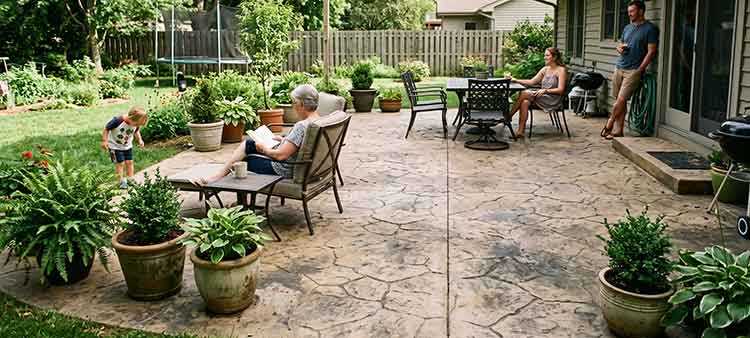
A concrete patio is one continuous slab poured in place. The simplicity is its main selling point.
- Single pour that creates a seamless surface, so there are no gaps where dirt or debris can collect and the whole area feels like one solid plane under your feet
- Multiple finish options including broom, exposed aggregate, stamped patterns, and integral color, giving you ways to add texture or tone without buying separate materials
- Relatively fast installation once forms and reinforcement are set, which keeps the project timeline shorter when the yard layout is simple and access is easy
- Solid feel underfoot with no gaps between pieces, making it straightforward to roll a cart across or set up tables without worrying about uneven edges
- Lower material cost for basic applications, which opens the door to larger patios or extra features like a small seating wall when the budget is limited
Pros of Concrete Patios
Concrete still solves real problems for many yards.
- Lower upfront cost makes larger areas more affordable, so you can cover more square footage or add simple extras like a small border without stretching the budget as far
- Fast installation for simple rectangular shapes, which means the crew can finish the pour in a day and the disruption to the yard stays shorter than a multi-day paver project
- Seamless surface that is easy to clean and furniture-friendly, letting you sweep leaves or move chairs without catching on edges or dealing with gaps that trap dirt
- Stamped or stained finishes can approximate higher-end looks at lower cost, giving texture and color variation that works for modern or traditional homes without the price of natural stone
- Minimal joint maintenance once the slab has cured, so you avoid the regular sand top-ups and weed checks that come with a segmented surface
For a straightforward entertainment pad the savings can free money for furniture or lighting. A competent crew can pour and finish a basic slab in a day, then you wait for curing before heavy use.
The continuous surface has no gaps for weeds and sweeps clean with a broom or blower. Stamped concrete offers texture and pattern without the price of natural stone.
I found that a well-done broom or exposed-aggregate finish holds up under heavy use and looks intentional rather than temporary. In mild climates the crack risk stays lower, so the long-term cost stays closer to the initial quote.
Cons of Concrete Patios
The limitations appear after the first winter or the first heavy load.
- Cracks form from soil movement, temperature swings, or poor base work, and once they appear they tend to grow rather than stay small, especially in areas that freeze and thaw
- Repairs are visible and often require cutting out sections or full replacement, so a patched area rarely blends and can become a permanent reminder of the original damage
- Design changes are limited once the concrete has set, which means adding a curve, running new utilities, or changing the layout later involves saw-cutting and more concrete work
- Curing time delays use of the space, forcing you to keep furniture and heavy items off the surface for days or longer while the material reaches full strength
- Color and stamped patterns can fade or wear unevenly, particularly in high-traffic zones or under strong sun, so the finished look you approved on day one can lighten or dull over the years
Even with rebar, a rigid slab cannot flex the way individual pavers can. In freeze-thaw zones those cracks are almost inevitable after several seasons.
Filling them leaves a line that never quite matches. If you later want to run electrical conduit or change the layout, you are cutting concrete rather than lifting a few pieces.
Stamped patterns look good at first but the repeated stamp becomes noticeable, and color can lighten with UV exposure. I have walked concrete patios that looked great the first year and showed scaling or discoloration by year five. Resealing helps, yet it is recurring work.
Also Read: Comparison of Unilock And Cambridge Pavers.
Installation Realities You Should Expect
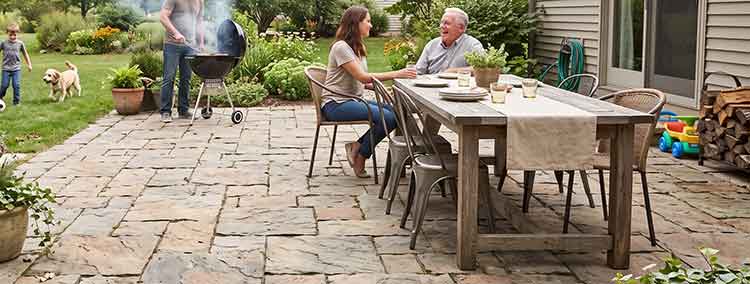
Site preparation decides how either material performs. Both need a stable base, proper slope, and drainage away from the house. Pavers require a thicker compacted gravel layer plus a sand setting bed and edge restraints.
Concrete needs forms, reinforcement, and careful finishing while the material is still workable. I learned that the cheapest quote often means the thinnest base. Ask contractors about compaction standards and drainage plans before you sign.
Access for equipment also matters. A tight side yard can raise labor costs for either option. Paver projects usually take more days on site; concrete pours finish faster but then sit unused while they cure.
Cost Considerations Over Time
Upfront numbers favor concrete. A basic 20 by 20 concrete patio often lands between $1,600 and $4,800. The same size in concrete pavers commonly runs $4,000 to $8,000 or more depending on region and pattern complexity. Stamped concrete narrows the gap but still usually stays below premium pavers.
Over ten to fifteen years the gap can shrink. Concrete may need crack repair, resurfacing, or partial replacement. Pavers mainly need joint sand refresh and occasional unit replacement.
When I ran the numbers for my own yard, the higher initial spend on pavers looked more reasonable once I factored in likely repairs in a climate that freezes. Local labor rates and material availability shift these ranges, so get three quotes that spell out base depth and edge details.
Maintenance and Longevity in Daily Use
Both surfaces last decades when installed correctly, yet the maintenance calendar differs. Concrete needs periodic sealing to protect against stains and to slow surface wear. Cracks should be addressed before they widen.
Pavers need occasional sweeping, joint sand top-ups, and weed control. Polymeric sand reduces the weed problem but does not eliminate it. In my experience a quick hose-down and occasional spot cleaning kept both looking good.
Longevity claims vary, but well-built paver installations commonly remain serviceable for 25 to 50 years because damaged units can be swapped. Concrete slabs often remain usable for 20 to 40 years, though visible cracks accumulate.
Climate, soil type, and how carefully the base was built matter more than the material name on the invoice.
Making the Choice for Your Yard
Budget, climate, and how long you plan to stay shape the decision. If you need the lowest possible cost for a simple rectangle and live in a mild climate, concrete delivers usable space quickly.
If you want easier future repairs, more design options, and better tolerance for ground movement, pavers justify the higher starting price. I ended up choosing pavers for my own patio because the freeze-thaw risk in my area made the repair advantage matter more than the initial savings.
Your priorities may differ. Walk both types of finished patios, ask contractors for recent local references, and compare quotes that include the same base specifications. The surface you pick will shape how you use the yard for years.
Also Read: Comparison of Pavers And Stamped Concrete.
Frequently Asked Questions (FAQ)
A 20 by 20 paver patio typically costs $4,000 to $10,000 installed for standard concrete pavers, with higher totals for premium materials or difficult sites.
Concrete is usually cheaper upfront, often by 30 to 50 percent for a basic slab compared with a standard paver installation.
Pavers cost more to install, require joint maintenance to control weeds and sand loss, and can settle unevenly if the base is poorly prepared.
Yes, a well-designed and properly installed paver patio commonly adds value by improving outdoor usability and curb appeal, with many projects recovering a substantial share of their cost at resale.
Wrapping Up
After comparing costs, repairs, and how each surface ages, I lean toward pavers when long-term flexibility matters and toward concrete when the budget is the main limit.
You should weigh the same factors against your climate, how you use the space, and how long you expect to own the house. The right choice is the one that still feels like a good decision five years from now.