
I have spent considerable time weighing Owens Corning Duration against Oakridge shingles because choosing the right architectural roofing material affects long-term protection, curb appeal, and overall value for any homeowner facing a reroof decision.
This article breaks down their performance traits, real-world strengths, limitations, and cost realities so you can match the product to your climate, budget, and how long you plan to stay in the house.
| Feature | Owens Corning Duration | Owens Corning Oakridge |
| Shingle Type | Architectural laminate with SureNail | Architectural laminate |
| Wind Resistance Warranty | 130 mph (4-nail application) | 110 mph (standard) |
| Weight per Square | Approx. 250 lbs | Approx. 225 lbs |
| Impact Resistance | Higher (often Class 3 range) | Class 2 |
| Algae Resistance | Limited (typically 10 years) | StreakGuard (10–25 years depending on color) |
| Warranty | Limited Lifetime | Limited Lifetime |
| Approximate Material Cost/Bundle | $95–$120 | $75–$95 |
| Installed Cost per Sq Ft (approx.) | $3.15–$4.00 | $2.45–$3.25 |
| Key Technology | SureNail reinforced fabric strip | Double-layer nailing zone |
| Best Suited For | High-wind, long-term ownership | Budget-conscious or moderate climates |
Key Differences Between Owens Corning Duration And Oakridge
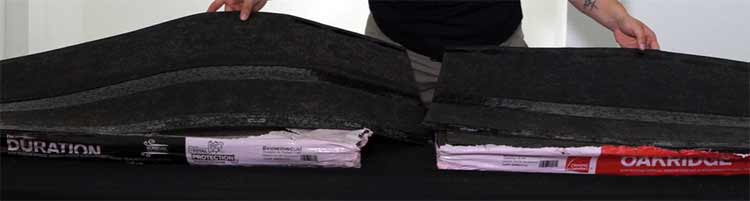
- Wind resistance and fastening method form the clearest split. Duration’s SureNail fabric strip and 130 mph rating with four nails give it a measurable edge in storm performance. Oakridge stops at 110 mph under standard application, so the practical difference shows up most clearly after the first major wind event. The reduced nail count on Duration also means fewer potential leak points through the deck.
- Weight and impact behavior diverge by roughly 25 pounds per square. That extra mass in Duration absorbs energy from hail and debris more effectively, while Oakridge’s lighter profile favors ease of installation and lower structural demand. The difference becomes noticeable both during the install and years later when storms test the surface.
- Technology investment is higher in Duration. The patented reinforcing strip, enhanced sealant, and triple-layer construction raise both cost and performance. Oakridge uses a simpler double-layer approach that still outperforms three-tab products but does not match the engineered fastening of Duration. The gap is most evident in long-term wind and adhesion performance.
- Cost structure favors Oakridge for pure material outlay and favors Duration when long-term ownership and reduced maintenance risk are prioritized. On a typical residential job the total installed difference often lands between $400 and $2,000 depending on roof size and local labor. That range lets homeowners decide whether the performance bump is worth the extra outlay.
- Aesthetic presentation leans toward Duration for homes where color depth and shadowing matter. TruDefinition blends create more visual interest; Oakridge colors are attractive but generally flatter in appearance. The richer multi-granule look of Duration tends to hold its character longer under strong sun exposure.
- Warranty activation potential is stronger with Duration when a certified contractor is used, because the product unlocks longer non-prorated periods and system-level coverage more readily. Both lines carry limited lifetime material protection for the original owner, yet the path to the fullest coverage is clearer with Duration. The difference shows up most clearly in the fine print of the system warranty documents.
- Best-use scenarios separate cleanly. Duration suits high-wind, hail-prone, or long-hold properties. Oakridge suits moderate climates, shorter ownership horizons, rental properties, or strict budget constraints where the architectural look is still desired. Matching the product to the specific situation usually produces the best long-term outcome.
Also Read: Comparison of Fiberglass And Asphalt Shingles.
Key Features of Owens Corning Duration
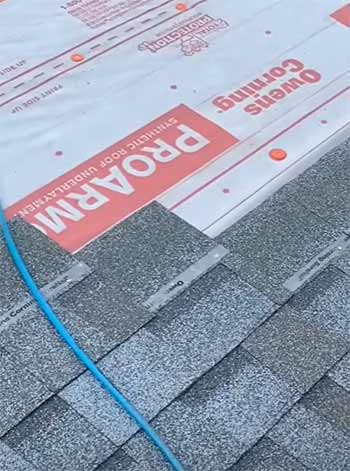
- SureNail Technology creates a visible, reinforced woven fabric strip right in the nailing zone. This strip locks nails more securely and reduces the chance of pull-through even if placement is slightly off. In practice this means the shingle stays put better during severe wind events and installers can achieve the full wind rating with only four nails instead of six, cutting deck penetrations. The fabric also spreads the load across a wider area so individual fasteners face less stress when gusts try to lift the edge of a course.
- The triple-layer construction places the reinforcing fabric over laminate bond layers and pairs it with an enhanced Tru-Bond sealant. Wide adhesive bands keep the layers locked together so the shingle resists peeling and cupping over years of thermal cycling. That extra bonding strength shows up most clearly after repeated hot-cold swings that would otherwise loosen ordinary laminate edges.
- Higher mass (around 250 pounds per square) adds passive resistance to hail and debris impact. The extra weight also gives the roof a more substantial feel underfoot and helps the shingles sit flatter against the deck. Over time the added density helps maintain a tighter seal along the overlaps, reducing the chance of wind-driven rain finding its way underneath.
- TruDefinition color platform delivers richer, multi-granule blends with sharper shadow lines. The result is a dimensional appearance that holds visual depth longer than flatter color mixes. Homeowners often notice that the darker accents stay distinct instead of washing out after a few seasons of strong sunlight.
- Class A fire rating and algae-resistant granules come standard. The algae package typically carries a 10-year limited warranty against staining, which is useful in humid regions where black streaks can appear within a few seasons. The granules themselves are formulated to discourage growth without relying solely on surface treatments that wear away.
- Limited Lifetime warranty covers manufacturing defects for as long as the original owner holds the home, with a non-prorated TRU PROtection period that is longer than many value-tier products when installed by a certified contractor. This structure gives clearer recourse if a manufacturing issue appears years down the road.
Also Read: Comparison of IKO Shingles And Owens Corning.
Pros of Owens Corning Duration
- Superior wind performance stands out immediately. The 130 mph rating with only four nails is meaningful in hurricane-prone or high-plains regions where sustained gusts regularly exceed 100 mph. Homes that have experienced previous wind damage often see fewer claims after switching to this line. The ability to reach the full rating without six nails also means fewer holes in the deck and a cleaner installation overall.
- Installation reliability improves because the SureNail strip gives roofers a clear target. Misplaced nails are less likely to compromise the entire course, which reduces callbacks and strengthens the overall system warranty when a Platinum Preferred contractor is used. The visual guide helps even less-experienced crews place fasteners more consistently.
- Heavier construction translates into better resistance against hail and falling limbs. In areas with frequent spring storms the added mass can keep granules intact longer and delay the need for early replacement. The denser mat also tends to recover its shape better after being walked on during maintenance or inspections.
- Visual depth from the TruDefinition process keeps the roof looking newer for a longer period. Color contrast and shadowing hold up against UV fade better than flatter blends, which matters if curb appeal is part of the resale calculation. Neighbors and potential buyers often comment on the richer appearance years after installation.
- Compatibility with Owens Corning’s full system components (underlayment, ridge, hip, and starter) unlocks the strongest available warranties, including extended workmanship coverage when installed by certified crews. Using the complete system removes many of the gray areas that can appear when mixing brands.
- Resale perception tends to favor the Duration name. Appraisers and home inspectors recognize the technology, so the roof often receives a stronger mark during inspections. Buyers who research shingles frequently view the product as a step above standard architectural options.
Cons of Owens Corning Duration
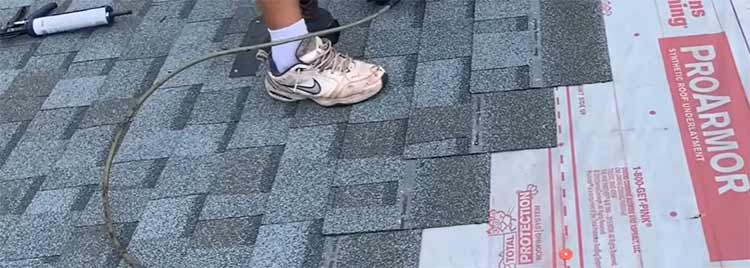
- Higher material cost shows up on every invoice. Expect to pay roughly $20–$30 more per bundle than Oakridge, and the installed difference on a typical 2,000-square-foot roof can range from several hundred to a couple of thousand dollars depending on labor rates and roof complexity. That gap can push some projects over a tight budget threshold.
- The extra weight, while beneficial for durability, can add load to older framing. Structural evaluation is sometimes needed on homes built before modern load requirements. In rare cases the added mass may require sistering of rafters or other reinforcement before the new roof goes on.
- Color selection, although rich, is regionally limited for certain specialty shades. Not every TruDefinition color is stocked in every market, which can force special orders and longer lead times. Homeowners in smaller markets may wait extra weeks for the exact blend they want.
- Algae warranty is generally shorter than some marketing claims for Oakridge colors, so in extremely humid zones additional maintenance or copper-based treatments may still be required after the initial coverage period. The 10-year algae term means proactive cleaning can still become necessary in the second decade.
- Availability of certified installers is stronger in urban and suburban markets; rural areas may see fewer contractors who can unlock the full wind and system warranties. Without a certified crew the strongest warranty levels remain out of reach even if the shingles themselves are installed correctly.
Also Read: Comparison of Cedar Shakes And Shingles.
Key Features of Owens Corning Oakridge
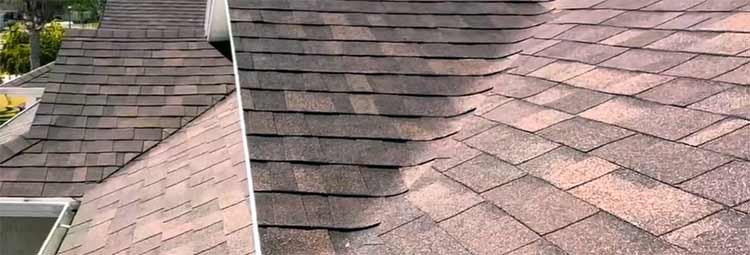
- Laminated architectural design gives the roof a dimensional look at a price closer to older three-tab products. The double-layer nailing zone still improves hold compared with single-layer economy shingles. That extra layer in the fastening area adds a measurable amount of tear resistance without pushing the product into the higher price bracket.
- Standard weight sits near 225 pounds per square, making the bundles lighter to carry and easier to position on steep or complex roofs. The reduced mass can matter on older structures where deck loading is a concern. Crews often appreciate the difference on multi-story homes where every pound lifted up a ladder counts.
- Wind rating of 110 mph with conventional four-nail application covers most inland and moderate coastal exposures. Some installers can push the rating higher with additional fasteners and adhesive, though the base warranty remains 110 mph. The rating still exceeds what many three-tab products offered a decade ago.
- StreakGuard algae protection is built into many color options. Warranty length on algae resistance ranges from 10 to 25 years depending on the specific color and region, helping keep the roof looking cleaner in damp climates. The copper-infused granules work continuously rather than relying on a coating that can wash off over time.
- Broad color selection overlaps heavily with Duration, so matching an existing neighborhood palette or achieving a classic look is straightforward. Popular shades such as Estate Gray, Driftwood, and Onyx Black appear frequently. This overlap lets homeowners stay within the Oakridge price range while still getting a color that blends with surrounding homes.
- Limited Lifetime warranty applies under the same ownership conditions as Duration, giving peace of mind on material defects even though the product sits lower in the performance hierarchy. The coverage still protects against manufacturing flaws for the life of the original ownership period.
- Class A fire rating and Class 2 impact rating meet code requirements in the majority of residential markets without requiring specialty upgrades. Most building departments accept these ratings without extra documentation or alternative product approvals.
Pros of Owens Corning Oakridge
- Clear price advantage makes it accessible for budget-driven projects or investment properties where maximum performance is secondary to cost control. Material savings of $1,000–$2,000 on a full replacement are common. Those savings can free up funds for better underlayment or ventilation that still improve overall roof performance.
- Lighter weight eases handling on steep pitches or multi-story homes and reduces strain on older roof decks. Crews often finish the job faster simply because each bundle is less cumbersome. The difference becomes noticeable on roofs with multiple valleys or dormers where frequent movement of material is required.
- Color options cover the most popular neighborhood looks without forcing a premium upcharge. Matching an adjacent home or achieving a neutral appearance is rarely a problem. Homeowners who simply want a clean, dimensional roof without standing out can stay within this line and still get an attractive result.
- Still delivers the laminated architectural profile that most buyers expect today. The jump from three-tab is noticeable, and the double-layer nailing zone provides better wind hold than basic products. The visual upgrade alone often satisfies the majority of residential buyers.
- Algae resistance on many colors carries a longer stated period in some literature, which can be attractive in the Southeast and Pacific Northwest. The extended coverage on select colors gives a longer window before staining becomes a warranty conversation.
- Warranty structure remains limited lifetime under the same ownership rules, so the core protection against manufacturing defects is not sacrificed for the lower price. Original owners still receive coverage for the life of their ownership period without stepping up to the higher-priced line.
Cons of Owens Corning Oakridge
- Lower wind rating leaves less margin in high-wind zones. Homes in coastal or tornado-prone regions may see higher insurance premiums or more frequent edge damage after storms. The 110 mph ceiling means the product sits closer to the threshold of many severe weather events.
- Absence of SureNail means the nailing zone relies on standard laminate strength. Nail placement becomes more critical, and the risk of pull-through rises if the crew is inexperienced or if the deck is uneven. Small deviations that Duration would tolerate can become larger problems over time.
- Lower impact resistance (Class 2) means hail events can produce more granule loss and cosmetic bruising. In hail-heavy markets the difference can shorten the practical service life by several years. Insurance adjusters sometimes note the lower rating when evaluating claim severity.
- Heavier reliance on perfect installation technique to achieve maximum performance. Without the reinforcing strip, small errors compound more easily into warranty issues. A rushed or less skilled crew has fewer built-in safeguards compared with Duration.
- Resale perception is solid but not as strong as Duration. Buyers who research shingles often view Oakridge as the “good enough” choice rather than the performance choice. In competitive housing markets that distinction can influence how quickly an offer comes in.
Also Read: Is Certainteed Roof Shingles Worth It?
Frequently Asked Questions (FAQ)
Between these two, Duration usually ranks higher for overall performance because of SureNail and the 130 mph wind rating. Higher lines such as Duration STORM exist for extreme impact needs.
Material cost is typically $20–$30 more per bundle for Duration. On a complete 2,000-square-foot roof the total installed difference commonly falls between $400 and $2,000.
With proper installation and maintenance they commonly deliver 20–30 years of service under a limited lifetime warranty, though actual life varies with climate and roof design.
Yes. It sits in the premium architectural tier thanks to SureNail Technology, higher wind rating, and richer color processing.
Wrapping UP
When I evaluate these two lines side by side, the decision rarely hinges on a single number. Climate, how long you expect to own the house, and the strength of the installation crew matter as much as the published ratings.
Duration rewards the homeowner who plans to stay and faces demanding weather. Oakridge rewards the homeowner who needs solid architectural performance without stretching the budget.