
I spent weeks comparing the Nectar Classic memory foam mattress against the Cocoon by Sealy Chill because both promise solid comfort without the premium price tag, yet they approach sleep support differently.
This breakdown covers the real differences in feel, cooling, trial terms, and long-term value so you can match one to your sleep position, body weight, and heat sensitivity instead of guessing.
| Feature | Nectar Classic Memory Foam | Cocoon by Sealy Chill |
| Construction | All-foam, typically 3–5 layers with gel-infused memory foam | All-foam, 3 layers with PCM cooling cover |
| Height | About 12 inches | About 10 inches |
| Firmness (1–10 scale) | Medium-firm, around 6–6.5 | Medium to medium-firm, often rated 6 or slightly firmer by testers |
| Cooling approach | Gel in foam plus heat-wicking cover fibers | Phase-change material in the cover that absorbs heat on contact |
| Motion isolation | Strong for couples | Strong, often rated highly in tests |
| Edge support | Adequate for average weights, weaker for heavier sleepers | Mixed; some tests show solid perimeter hold |
| Trial period | 365 nights | 100 nights (with 30-night minimum before return in some cases) |
| Warranty | Forever / lifetime | 10-year limited |
| Typical queen sale price | Around $650–$700 | Around $600–$700 |
| Best suited for | Side and back sleepers wanting contouring pressure relief and long trial | Hot sleepers and those preferring firmer surface support |
Key Differences Between Nectar and Cocoon
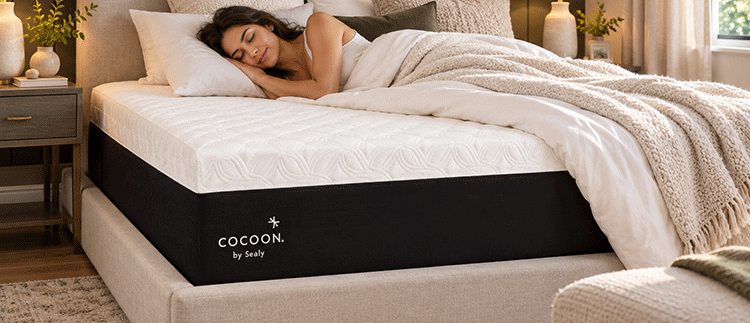
The two mattresses look similar on paper—both are affordable all-foam beds-in-a-box aimed at people who want memory foam without coils—but the day-to-day experience diverges in ways that matter once you sleep on them for more than a week.
- Firmness and body contouring feel quite different once the foam warms up. Nectar tends to give a classic slow-responding memory foam hug that cradles shoulders and hips more deeply, which many side sleepers appreciate for pressure relief. Cocoon often feels a touch more surface-level and supportive, with less of that enveloping sink, so stomach and back sleepers sometimes report better spinal alignment without the same degree of immersion.
- Cooling technology is where Cocoon usually pulls ahead for people who overheat. Its cover uses phase-change material that actively absorbs heat when you first lie down and continues to help manage temperature through the night. Nectar relies more on gel-infused foam and woven cooling fibers in the cover; it stays reasonably neutral for many sleepers but can still trap warmth once body heat builds, especially under thicker bedding or for those above average room temperature.
- Trial length and warranty create a practical gap in risk. Nectar’s full-year trial lets you test through seasons and habit changes, and the forever warranty covers defects for the original buyer. Cocoon’s 100-night window is standard but shorter, and its 10-year limited warranty is solid yet ends well before most people expect to replace a mattress.
- Height and overall profile affect the feel of the bed in a room. The extra couple of inches on Nectar give a slightly plusher, more substantial look and a bit more cushioning depth. Cocoon’s lower profile sits closer to a traditional mattress height and can feel less “plush pillow” and more “supportive platform.”
- Ease of movement and responsiveness also separate them. Both are all-foam so neither has coil bounce, but Nectar’s denser memory foam layer can make rolling over or sitting up feel slower and more resistant. Cocoon’s combination of memory foam and responsive layers often allows slightly easier position changes, which combination sleepers notice after a few nights.
- Edge performance varies by body weight more than brand marketing suggests. Average-weight sleepers can sit on either edge without dramatic collapse, but people over roughly 230 pounds frequently report more sink or instability on pure foam edges; hybrid versions of both brands improve this if edge sitting is important.
- Brand positioning and extras differ too. Nectar emphasizes its long trial, warranty, and frequent free accessory bundles (sheets, pillows, protector). Cocoon leans on the Sealy name recognition and its dedicated cooling story, sometimes including bedding in promotions as well.
These distinctions show up most clearly after the break-in period of a couple of weeks. The first night on either can feel firmer or smell faintly of new foam, but the lasting difference is usually how much contouring versus surface support you prefer and how sensitive you are to heat.
Also Read: Is Craft & Trade Mattress Worth It?
Key Features of the Nectar Mattress
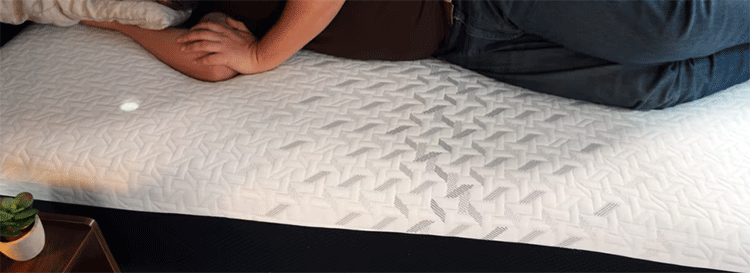
Nectar built its reputation around accessible memory foam that delivers consistent pressure relief and minimal disturbance for partners.
- The comfort layer uses gel-infused memory foam that softens with body heat and contours to curves. Side sleepers often feel this most at the shoulders and hips, where the foam distributes weight and reduces those sharp pressure points that lead to tossing.
- A responsive transition layer sits beneath the memory foam to keep the body from sinking too far into the base. This helps maintain spinal alignment for back sleepers while still allowing the top layer to do its cradling work.
- The high-density foam base provides the structural foundation. It contributes to the strong motion isolation that couples notice—partner movements rarely travel across the surface the way they do on older innerspring beds.
- CertiPUR-US certified foams are standard across the lineup, which means the materials meet standards for low VOC emissions, no heavy metals, and no ozone-depleting chemicals.
- The cover is a poly-blend with heat-wicking fibers. It is usually not intended to be removed for washing in a way that keeps the warranty intact, so most people spot-clean or use a protector.
- Free white-glove delivery and old-mattress removal are available in many areas as an add-on, and the brand frequently includes sheets, pillows, and a protector with purchase.
- Hybrid options exist for people who want more airflow and edge support; the all-foam Classic remains the core comparison point against Cocoon’s Chill model.
In practice, the combination of contouring and isolation is what keeps many people on Nectar after the trial. The mattress does not feel bouncy, but the slow response can feel luxurious once you settle in.
Pros of the Nectar Mattress
Nectar earns its place through practical advantages that show up over months rather than the first weekend.
- Pressure relief stands out for side sleepers and anyone with joint sensitivity. The memory foam layer conforms closely enough to cushion hips and shoulders without the extreme sink of older-style memory foam.
- Motion isolation is excellent for couples or anyone sharing with a pet. Movements stay localized, so one person turning rarely wakes the other.
- The 365-night trial removes most purchase anxiety. You can experience the mattress through different seasons and sleep habits before deciding.
- The forever warranty gives long-term reassurance for the original buyer on manufacturing defects.
- Value remains strong at typical sale prices, especially when free accessories are included. Many sleepers find the performance competitive with higher-priced foam beds.
- Spinal alignment holds up well for average-weight back and combination sleepers once the mattress is broken in.
- Availability of hybrid models lets you upgrade airflow and edge support without switching brands.
- CertiPUR-US foams and straightforward construction reduce concerns about off-gassing for most people after the first few days.
These strengths make Nectar a reliable default for people who want the classic memory foam experience with minimal risk.
Cons of the Nectar Mattress
Even popular mattresses have clear limitations that become obvious for certain sleepers.
- Heat retention can still be an issue despite gel and cooling fibers. Hot sleepers or those in warm climates often report the surface warming after a few hours, leading to more night awakenings.
- Edge support is only average on the all-foam version. Sitting on the side or sleeping near the edge can feel less stable, particularly for people over 230 pounds.
- Slow response makes position changes feel sticky. Combination sleepers who roll frequently may find the memory foam resists movement more than they like.
- Heavier sleepers above roughly 250 pounds frequently need the hybrid version for adequate long-term support and to avoid bottoming out.
- The cover is not designed for easy machine washing, so a protector is practically required to keep it clean.
- Off-gassing can be noticeable for the first 24–48 hours in a closed room, though it fades for most people.
- Some testers find the feel less dynamic than hybrid or latex beds, which can translate to less “bounce” when getting in or out of bed.
These drawbacks matter most if you sleep hot, weigh more than average, or prefer a mattress that responds quickly when you move.
Also Read: Comparison of DreamCloud And Sleep Number Mattress.
Key Features of the Cocoon Mattress
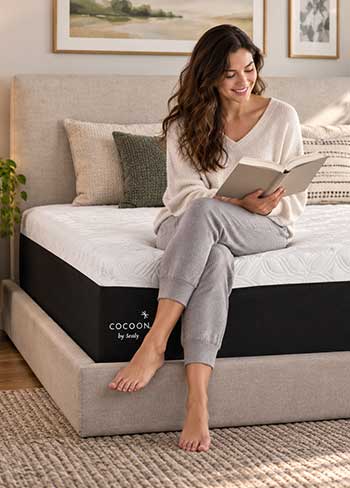
Cocoon by Sealy positions the Chill as a cooling-focused memory foam bed that still offers the familiar Sealy construction approach at a budget-friendly price.
- The standout feature is the phase-change material woven into the cover. This technology absorbs heat when you make contact and helps keep the sleep surface cooler longer than standard foam covers, which is why hot sleepers frequently prefer it in side-by-side tests.
- Perfect Fit memory foam forms the primary comfort layer and adapts to body shape and position. It provides pressure relief without the deepest sink that some pure memory foam beds create.
- A responsive comfort layer and dense support foam complete the three-layer build. The result is a mattress that feels supportive enough for back and stomach sleepers while still offering enough give for side sleeping.
- CertiPUR-US certified foams are used, matching the low-emission standards of most reputable bed-in-a-box brands.
- The overall height stays around 10 inches, which works well on standard frames and looks less bulky in smaller bedrooms.
- Motion isolation is consistently strong; restless partners are unlikely to disturb each other significantly.
- Shipping is free and compressed in a box, with the mattress expanding within hours after unboxing. Some promotions include free bedding.
The cooling cover is the feature that most clearly differentiates Cocoon in real use. People who previously overheated on foam often report waking less often to flip covers or adjust the thermostat.
Pros of the Cocoon Mattress
Cocoon’s advantages center on temperature management and straightforward supportive comfort at a competitive price.
- The phase-change cover delivers measurable cooling for many users. Hot sleepers often notice the surface stays cooler to the touch and helps them fall asleep faster without overheating later in the night.
- Firmness tends to suit back and stomach sleepers who want support without excessive sink. The medium-firm profile keeps the spine more neutral for those positions.
- Motion isolation is strong enough that most couples do not complain about disturbance.
- Sealy brand recognition provides a level of trust for shoppers who prefer an established manufacturer over newer direct-to-consumer names.
- Pricing stays accessible with frequent discounts, and free bedding bundles appear regularly.
- The lower profile fits most frames and rooms without looking overly tall.
- CertiPUR-US foams meet standard safety expectations for emissions and materials.
- Responsiveness is slightly better than denser pure memory foam for people who change positions often.
For sleepers whose main complaint with foam is heat, these points frequently tip the scale toward Cocoon.
Cons of the Cocoon Mattress
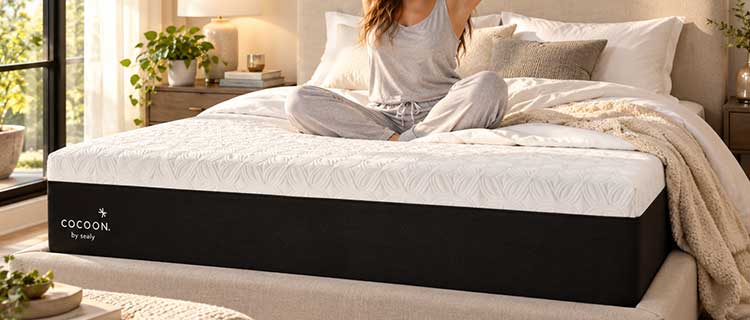
The trade-offs become clearer when you compare long-term ownership and specific sleep needs.
- The 100-night trial is shorter than Nectar’s year-long window. If you need more time to adjust or want to test across seasons, the shorter period increases the chance of keeping a mattress that later disappoints.
- Warranty is limited to 10 years. While typical for the category, it ends earlier than Nectar’s forever coverage.
- Contouring is less pronounced than on Nectar for dedicated side sleepers who want deep cradling around the hips and shoulders.
- Edge support receives mixed feedback; some testers find it adequate while others note dip when sitting on the side for long periods.
- All-foam construction still limits airflow compared with hybrids, so extremely hot sleepers may still prefer a coil-based bed.
- Some users find the firmness slightly too firm for lighter side sleepers under 130 pounds, leading to pressure at the shoulders.
- Durability reports vary; like most foam beds, the top layers can soften over several years with heavier use.
These limitations mainly affect people who prioritize maximum trial time, deep contouring, or the longest possible warranty.
Matching the Mattress to Your Sleep Needs
Your sleep position and body weight usually decide which mattress feels better after the first month.
Side sleepers who want the foam to cradle pressure points often prefer Nectar’s more enveloping top layer. Back and stomach sleepers who like a steadier surface frequently lean toward Cocoon’s supportive feel and cooler initial contact.
Couples who value isolation can choose either, though Nectar’s longer trial makes experimentation easier. Hot sleepers should start with Cocoon’s PCM cover unless they specifically want the deeper memory foam hug.
Heavier sleepers above 230–250 pounds should look at the hybrid versions of both rather than pure foam. Combination sleepers who move a lot may find Cocoon slightly easier for position changes, while people who settle into one position and stay there often enjoy Nectar’s cradling once they stop moving.
I noticed that most of the difference appears after the second or third week once the foams have fully expanded and your body has adjusted.
The first few nights on either can feel firmer than expected, so the trial length becomes more important than the marketing claims.
Also Read: Is Stearns and Foster Better Than Beautyrest Black?
Frequently Asked Questions (FAQ)
The main downsides are potential heat retention for hot sleepers, average edge support on the all-foam model, slower response that can make movement feel sticky, and less ideal long-term support for people over roughly 250 pounds without switching to a hybrid.
Yes for hot sleepers and those who want solid medium-firm support at a budget price with Sealy backing. The cooling cover and straightforward construction deliver good value, though the shorter trial and warranty mean you should be fairly confident about the feel before the 100 nights end.
It depends on priorities. Hybrids from various brands often provide better edge support, airflow, and durability for heavier sleepers or those who want more bounce. Latex or higher-end cooling foam beds can outperform Nectar on temperature and responsiveness, but they usually cost more. For pure memory foam pressure relief and trial length at this price, Nectar remains competitive for many people.
A class action settlement addressed claims that fiberglass used as a fire retardant in certain Nectar, DreamCloud, and related mattresses could escape and contaminate homes. The $9 million settlement covers specific models purchased between late 2017 and mid-2024. A separate settlement offered $30 vouchers related to advertised discount practices. Current models and claims processes are handled through official settlement sites.
Final Thoughts
After weighing the construction details, tester feedback, and ownership terms, I lean toward Nectar when the priority is pressure relief, a full year to decide, and strong isolation for shared beds.
You should pick Cocoon if you sleep hot and want the phase-change cover to manage temperature from the first contact. Neither mattress is perfect for every body, but both deliver reliable all-foam performance at prices that leave room for a good protector and sheets.
Test the feel that matches your position and heat sensitivity, and use the trial period on whichever one you choose so the final decision rests on how you actually sleep rather than the specifications alone.