
When I compare Maytag vs. Bosch dishwasher models, I’m really asking one practical question: which brand makes cleanup easier for the way you and I actually live? Maytag leans into power, capacity, heated drying, and rugged value.
Bosch focuses on quiet performance, refined racks, advanced drying, and a premium feel. In this guide, I’ll compare both from a real-user angle so you can choose the dishwasher that fits your kitchen, budget, and patience level.
| Category | Maytag Dishwasher | Bosch Dishwasher |
| Best for | Heavy-duty cleaning, large loads, value buyers | Quiet kitchens, premium design, efficient cleaning |
| Cleaning style | Strong wash cycles like PowerBlast and Dual Power Filtration | Sensor-driven cleaning with PrecisionWash |
| Drying | Heated Dry, PowerDry, Open Air Dry on select models | CrystalDry on many 800 Series models |
| Noise level | Usually quiet enough, often around the mid-to-high 40 dBA range | Often very quiet, with some models around 42 dBA or lower |
| Rack flexibility | Practical third racks and large tub space on select models | Flexible third rack, adjustable racks, polished loading design |
| Build feel | Tough, simple, workhorse-style | Sleek, refined, premium |
| Price personality | More budget-friendly | Usually more expensive |
| Warranty appeal | Strong limited parts warranty on select components | Strong brand reputation, but model warranty varies |
| Best choice if | You want muscle and capacity for the money | You want quietness, elegance, and premium drying |
Key Differences Between Maytag and Bosch Dishwashers
- Cleaning Power and Food Handling
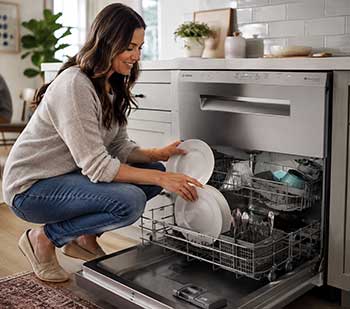
Maytag feels like the dishwasher for people who load plates with confidence.
I like that many Maytag models are built around a no-nonsense cleaning approach: scrape, load, run, done.
Features like Dual Power Filtration and PowerBlast are meant for stuck-on food, casserole dishes, greasy pans, and the kind of dinner cleanup that makes you question your life choices for a minute.
Maytag promotes Dual Power Filtration, PowerBlast, and PowerDry as major dishwasher features.
Bosch, on the other hand, feels more controlled and precise. It does not usually shout “heavy-duty” in the same way Maytag does. Instead, Bosch uses sensor-based washing, smart spray patterns, and refined water management.
PrecisionWash is one of Bosch’s headline cleaning systems, and it is designed to monitor the wash and target dishes throughout the cycle.
So here is how I see it: Maytag is the brawler; Bosch is the technician. If your dishes are often messy, saucy, and heavily loaded, Maytag makes a strong case. If you want consistently clean dishes with less noise and a more polished experience, Bosch feels more premium.
- Noise Level and Kitchen Comfort
This is where Bosch usually pulls ahead. If you have an open-concept kitchen, a sleeping baby, a work-from-home setup, or a couch close to the dishwasher, sound matters more than people admit.
Bosch has built a major reputation around quiet dishwashers, and many of its models sit in the low-40 dBA range. Bosch lists some 800 Series models at 42 dBA, with CrystalDry, PrecisionWash, and Home Connect included on select units.
Maytag is not loud in the old-school “jet engine under the counter” sense. Many current models are reasonably quiet. But Bosch has the edge if silence is your love language. With Bosch, I’m more likely to forget the dishwasher is running. With Maytag, I’m more aware that it is doing a job.
- Drying Performance
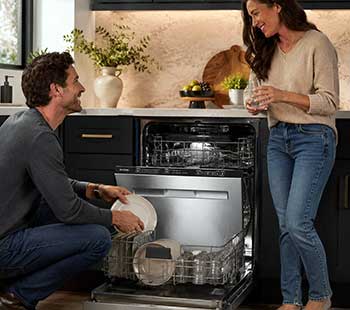
Drying is one of the biggest deal-breakers for me because nobody wants to open a dishwasher and start towel-drying plastic containers like it’s a punishment.
Maytag often uses heated drying systems, and select models include PowerDry or Open Air Dry options.
That traditional heated-dry style can work well, especially if you like dishes coming out warm and dry.
Maytag also highlights Heated Dry and a 10-year limited parts warranty on select components for certain models.
Bosch takes a different approach, especially on higher-end models with CrystalDry. CrystalDry is designed to improve drying, including plastics, without relying on the same old exposed heating element concept.
On premium Bosch models, this is a major selling point. If you hate wet cups and damp storage containers, Bosch 800 Series models deserve serious attention.
- Design and Interior Layout
Maytag gives you a practical interior. I think of it as “load it fast and move on.” Many models offer a third rack, large tub capacity, and space for mugs, bowls, and utensils. Select Maytag models also advertise MaxTub capacity and a third-level rack wash zone.
Bosch feels more intentional. The racks glide nicely, the stainless-steel interiors look upscale, and the third rack is usually more flexible. If you enjoy a dishwasher that feels engineered rather than merely assembled, Bosch has that satisfying, premium vibe.
The difference is like comparing a sturdy pickup truck to a German sedan. Both can get you there. One feels tougher. The other feels smoother.
- Price and Value
Maytag usually wins on value. You often get strong cleaning power, heated drying, a third rack on select models, and solid capacity without climbing into luxury pricing. That makes Maytag attractive if you want dependable performance without turning your appliance purchase into a financial personality crisis.
Bosch costs more, especially when you move into the 500, 800, or Benchmark Series. But you are paying for quiet operation, refined design, advanced drying, and brand prestige. If you are remodeling your kitchen or want your dishwasher to feel invisible in daily life, Bosch can justify the higher price.
Key Features of Maytag Dishwashers
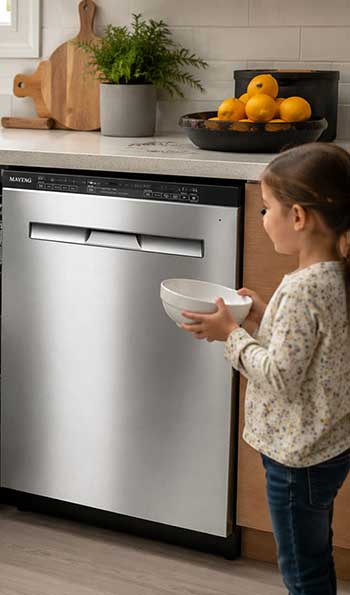
- Dual Power Filtration: This is one of Maytag’s most practical features. It helps break down and filter food particles, which reduces the need for pre-rinsing. I like this because pre-rinsing defeats the whole point of owning a dishwasher. You should scrape off chunks, sure, but you should not need to wash the plate before the machine washes the plate.
- PowerBlast Cycle: PowerBlast is Maytag’s “bring me the dirty stuff” cycle. It is built for stubborn messes, baked-on food, and heavily soiled dishes. If your household cooks often, uses sauce-heavy meals, or lets dishes sit longer than planned, this cycle is a genuine advantage.
- Heated Dry and PowerDry: Maytag’s drying approach is familiar and effective. Heated drying can be especially appealing if you want dishes that feel ready to put away right after the cycle ends. On select models, PowerDry adds more drying confidence.
- Large Capacity and Third Rack Options: Some Maytag dishwashers offer roomy tubs and third racks, which are helpful for utensils, mugs, lids, and small bowls. If you hate playing dishwasher Tetris after dinner, extra space matters.
- Tough Brand Personality: Maytag’s identity is built around durability and dependability. Whether every model lives up to that perfectly depends on the unit, installation, water quality, and use habits, but the brand clearly aims at people who want a workhorse appliance.
Also Read: Differences Between Finish Quantum And Ultimate Dishwasher Pods.
Pros of Maytag Dishwashers
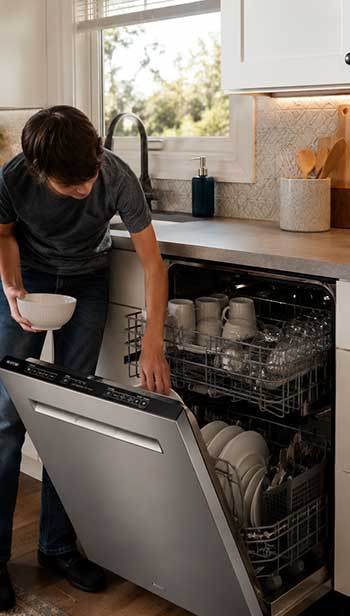
- Strong Cleaning for Messy Households: Maytag is easy to recommend if your dishwasher sees real action. Pots, pans, dried oatmeal bowls, cheesy plates, and sauce-covered utensils are exactly the kind of messes Maytag wants to handle.
- Better Value for Many Buyers: You can often get a capable Maytag for less than a comparable premium Bosch. That price difference matters if you are replacing multiple appliances or trying to stay under budget.
- Familiar Heated Drying: Some people prefer traditional heated drying because it feels direct and predictable. Maytag gives you that familiar dry-dish experience, especially on models with enhanced drying options.
- Useful Capacity: Maytag’s larger tub designs and third-rack options make it friendly for families, meal preppers, and anyone who seems to create dishes by simply existing near the kitchen.
- Simple, Practical Controls: Maytag does not usually overcomplicate the experience. You choose a cycle, press start, and let it work. I respect that.
Cons of Maytag Dishwashers
- Not as Quiet as Bosch: Maytag can be quiet, but Bosch usually wins the sound battle. If quietness is your top priority, Maytag may feel a step behind.
- Less Premium Interior Feel: Maytag interiors are practical, but they may not feel as polished as Bosch racks and tubs. If you care about glide, finish, and small design details, Bosch feels more elevated.
- Drying Can Vary by Model: Maytag drying is generally strong when you choose the right model and settings, but lower-end models may not impress as much. You need to compare features carefully.
- Fewer High-End Refinements: Maytag is more about function than finesse. If you want whisper-quiet cycles, sleek controls, advanced drying technology, and a luxury feel, Maytag may not scratch that itch.
Key Features of Bosch Dishwashers
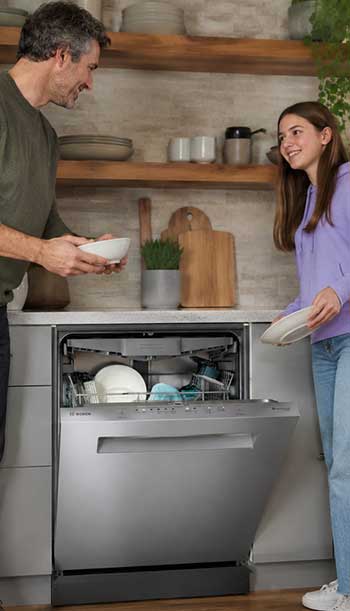
- PrecisionWash: Bosch’s PrecisionWash system uses sensors and targeted spray to clean dishes efficiently. I like this approach because it feels less brute force and more carefully managed. It is ideal if you want excellent cleaning without wasting energy or water.
- CrystalDry: CrystalDry is one of Bosch’s strongest advantages, especially on 800 Series models. It is designed to help dry dishes more thoroughly, including plastics. Bosch lists CrystalDry as a top feature on certain 800 Series dishwashers.
- Ultra-Quiet Operation: Bosch is famous for quiet dishwashers. If your kitchen connects to your living room, this matters every single day. A quiet dishwasher changes your routine because you can run it during dinner, after guests leave, or while watching TV without feeling annoyed.
- Flexible Third Rack: Bosch third racks often feel more refined than basic utensil trays. They are useful for flatware, cooking tools, ramekins, lids, and oddly shaped small items. The loading experience feels more premium.
- Stainless-Steel Interior and Sleek Design: Bosch dishwashers usually look and feel upscale. The interiors are clean, quiet, and polished. If design matters to you, Bosch has a strong advantage.
- Smart Connectivity on Select Models: Some Bosch models include Home Connect, which lets you monitor or control the dishwasher through an app. I do not think smart controls are essential for everyone, but they are convenient if you like remote alerts or cycle customization.
Also Read: Differences Between Finish Ultimate And Cascade Platinum Plus Dishwasher Pods.
Pros of Bosch Dishwashers
- Excellent Quiet Performance: Bosch is the brand I think of when someone says, “I want to run the dishwasher and forget it exists.” That quiet operation is a daily luxury, not just a spec-sheet brag.
- Premium Cleaning and Drying Technology: PrecisionWash and CrystalDry make Bosch feel advanced without being gimmicky. These features solve real problems: dirty dishes and wet dishes.
- Flexible Loading: Bosch racks are usually excellent. You get smart spacing, useful third racks, and adjustable layouts that make awkward items less annoying.
- Sleek Design: Bosch dishwashers look modern and refined. If you are building a kitchen that feels clean, minimal, and upscale, Bosch fits beautifully.
- Strong Reliability Reputation: Bosch is frequently named among reliable dishwasher brands by appliance reviewers and repair-focused sources. Recent reliability roundups have placed Bosch among top-performing dishwasher brands.
Cons of Bosch Dishwashers
- Higher Price: Bosch can get expensive quickly. The best features often live in the upper series, especially if you want CrystalDry and the quietest operation.
- Some Models Have Learning Curves: Bosch loading can feel different at first. The racks are clever, but you may need a few runs before you find your perfect layout.
- Repairs Can Be Costlier: Premium appliances can come with premium repair costs. Bosch is respected, but parts and service may cost more depending on your area.
- Not Always the Best Budget Pick: If you mainly want strong cleaning at a lower price, Bosch may be more dishwasher than you need. That is not a flaw; it is just a buying reality.
Which One Should You Choose?
I would choose Maytag if you want strong cleaning, roomy loading, heated drying, and better value. It is the better fit for busy families, heavy home cooks, rental properties, and anyone who wants a tough appliance without paying luxury prices.
I would choose Bosch if you want quiet operation, premium racks, sleek design, advanced drying, and a more refined daily experience. It is the better choice for open kitchens, design-focused homes, and buyers who care about sound level as much as cleaning power.
For me, the decision comes down to personality. Maytag feels like the dependable friend who shows up with work gloves.
Bosch feels like the quiet perfectionist who already organized the silverware drawer. You can be happy with either, but you should match the machine to your kitchen habits.
Also Read: Differences Between Finish Powerball And Cascade Platinum Dishwasher Pods.
Frequently Asked Questions (FAQ)
Bosch is often considered one of the most reliable dishwasher brands, with KitchenAid, Whirlpool, and Miele also appearing frequently in reliability discussions.
I would be cautious with any dishwasher brand or model that has repeated complaints about poor drying, control board failures, leaking, weak service support, or bad rack design.
My top three broad picks would be Bosch 800 Series for premium performance, KitchenAid for strong cleaning and design, and Maytag for heavy-duty value.
Common Maytag dishwasher complaints often involve drainage issues, dishes not drying fully, clogged filters, or problems caused by improper loading or food buildup.
Final Thoughts
When I look at Maytag vs. Bosch dishwasher choices from a practical buyer’s view, I do not see one automatic winner. I see two different answers for two different kitchens.
Maytag gives you power, capacity, heated drying, and value. Bosch gives you quietness, polish, flexible racks, and premium drying.
If you want a sturdy workhorse, Maytag makes sense. If you want a quieter, more refined machine, Bosch is hard to beat. The best dishwasher is the one that fits how you cook, how you clean, and how much peace you want in your kitchen.