
When I compare KitchenAid and Bosch dishwasher models, I’m really asking one practical question: which one makes daily cleanup easier without turning into a regret purchase later?
Bosch usually wins for quiet performance, efficiency, and long-term reliability.
KitchenAid stands out for strong cleaning, roomy racks, and better value in many mid-range kitchens. If you want the safest all-around pick, I lean Bosch. If you want big loading flexibility and powerful wash performance for less, KitchenAid deserves your attention.
| Feature | KitchenAid Dishwasher | Bosch Dishwasher |
| Best for | Families, heavy dish loads, flexible loading | Quiet homes, reliability-focused buyers, premium kitchens |
| Cleaning performance | Strong, especially on baked-on messes | Very consistent and efficient |
| Drying performance | Good, often with heated drying options | Excellent on higher-end models with CrystalDry or AutoAir |
| Noise level | Usually quiet, but varies by model | Often among the quietest in its class |
| Rack flexibility | Very good, especially third rack models | Excellent, especially adjustable upper racks |
| Reliability reputation | Strong, but slightly behind Bosch | One of the strongest in the category |
| Design style | Bold handles, pro-style kitchen look | Sleek, minimalist, European-style design |
| Price range | Often strong value under premium pricing | Wider range, with premium models costing more |
| Best value zone | Mid-range models | 300 and 500 Series models |
| Main drawback | Some models can have drying or control issues | Some models cost more and may use condensation drying |
Key Differences Between KitchenAid and Bosch Dishwashers
- Cleaning Style And Wash Power
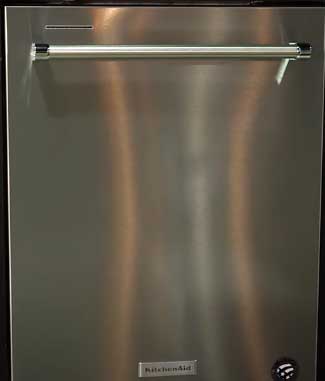
KitchenAid often gives me the impression of raw cleaning strength.
Many models are built around powerful spray arms, targeted wash zones, and sturdy stainless-steel tubs.
If you regularly load casserole dishes, sauce-covered plates, peanut-butter knives, and coffee mugs with dried rings, KitchenAid handles that kind of mess with confidence.
Bosch cleaning feels more controlled and efficient.
It may not always market itself with the same “power wash” energy, but in real use, Bosch dishwashers are known for consistent results.
The water distribution, filtration, and cycle design are carefully balanced. You may not feel like it is blasting your dishes into submission, but the results are usually clean, polished, and dependable.
- Drying Approach
This is one of the biggest differences. KitchenAid often uses more traditional heated drying or fan-assisted drying depending on the model. That can be helpful if you want dishes that feel dry when the cycle ends, especially plastics.
However, heated drying can use more energy and may not be as gentle over time.
Bosch leans heavily into condensation drying, and higher-end Bosch models may include CrystalDry or AutoAir features.
CrystalDry is especially appealing because it helps dry plastics better, which is usually the weak spot for many dishwashers. Lower-end Bosch models may require rinse aid and patience, but the better Bosch drying systems are impressive.
- Noise Level
This is where Bosch usually flexes without saying much. Bosch has built much of its dishwasher reputation around quiet operation. Many Bosch models run at noise levels low enough that you may need a floor light indicator to know the cycle is running.
KitchenAid dishwashers can also be quiet, especially better models, but Bosch tends to be more consistently quiet across the lineup. If you have an open-plan kitchen, a baby sleeping nearby, or you run the dishwasher during movie night, Bosch has the edge.
- Rack Design And Loading Flexibility
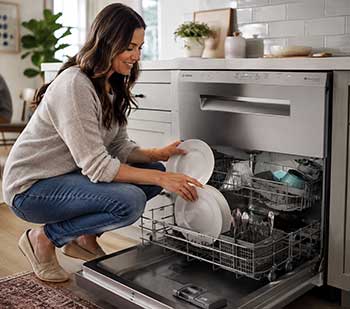
KitchenAid does very well here. I like KitchenAid for big, awkward items because the racks often feel generous.
The third rack models are useful, and some versions give you enough room for mugs, small bowls, utensils, and odd-shaped tools.
If you cook from scratch and your dishwasher sees more than plates and glasses, KitchenAid feels practical.
Bosch racks are more precise.
The adjustable upper rack, fold-down tines, and third rack systems are excellent, especially in the 300, 500, 800, and Benchmark lines. Bosch may require a little more thoughtful loading, but once you learn the layout, it becomes very efficient.
- Reliability And Service Reputation
If I had to choose based on reliability alone, I would choose Bosch. Bosch consistently appears near the top of reliability discussions, and that matters because dishwasher repairs are annoying. A dishwasher failure does not just pause convenience; it clogs your sink, your counter, and your evening.
KitchenAid is still a solid brand. It is not a risky choice by default. But compared with Bosch, it usually lands slightly behind in reliability perception. The upside is that KitchenAid is part of the Whirlpool family, so parts and service can be easier to find in many areas.
- Design And Kitchen Style
KitchenAid has a more substantial, pro-style look. If your kitchen has a bold range, chunky handles, stainless appliances, and a classic American layout, KitchenAid blends in naturally. It looks sturdy and familiar.
Bosch looks sleeker. Its design is cleaner, flatter, and more European. It works beautifully in modern kitchens where you want the appliance to almost disappear into the cabinets.
Key Features of KitchenAid Dishwashers
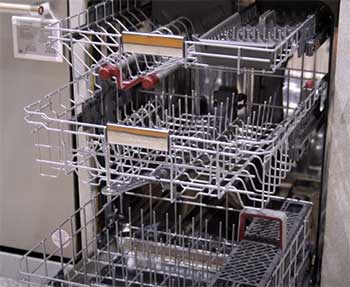
- FreeFlex Third Rack: KitchenAid’s FreeFlex third rack is one of its best features. I like it because it is not just a skinny tray for forks. On many models, it can hold mugs, glasses, bowls, spatulas, and extra utensils. That gives you more usable space below, which is a big deal if you hate playing dishwasher Tetris after dinner.
- ProWash cycle: The ProWash cycle adjusts based on soil level. In simple terms, it tries to decide how hard it needs to work instead of forcing you to guess. I like this for mixed loads where you have lightly used cups sitting beside greasy plates and a pasta pot.
- Durable Stainless-Steel Interior: KitchenAid dishwashers commonly include stainless-steel tubs, which help with durability, drying, odor control, and a more premium feel. I always prefer stainless interiors over plastic tubs when the budget allows.
- Strong Filtration And Spray Coverage: KitchenAid models often focus on strong water movement. The spray arms and filtration systems are designed for serious cleaning. If you are the type who does not want to pre-rinse everything, this matters.
- Heated Drying Options: Some users still prefer traditional heated drying because it can leave dishes feeling more finished at the end of the cycle. KitchenAid often appeals to that crowd. You may still need rinse aid, but the drying system feels familiar and effective.
Pros of KitchenAid Dishwashers
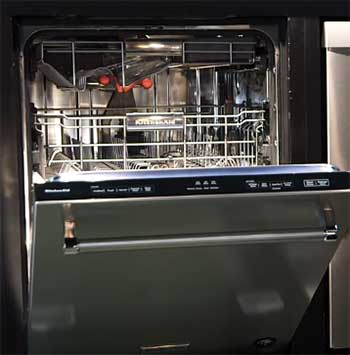
- Excellent Loading Capacity: KitchenAid gives you space that feels designed for real cooking households. Large bowls, serving spoons, measuring cups, and bulky dinnerware are easier to fit than you might expect. If you cook often, this is a major advantage.
- Powerful Cleaning Performance: KitchenAid dishwashers are strong performers on dirty loads. I would feel confident putting in sauce-heavy plates, eggy breakfast dishes, and greasy pans after a normal scrape. You should not abuse any dishwasher, but KitchenAid can handle a serious kitchen mess.
- Great Third Rack Usability: The FreeFlex third rack is more useful than many basic third racks. Instead of feeling like a tiny utensil shelf, it can become everyday storage for cups, small bowls, and tools. That makes the whole dishwasher feel bigger.
- Strong Mid-Range Value: KitchenAid often gives you premium-feeling features without going as expensive as high-end Bosch Benchmark or Miele models. If your budget is under the luxury tier, KitchenAid can be a smart compromise.
- Familiar Service Network: Because KitchenAid is connected to Whirlpool, service access and parts availability can be easier in many regions. That does not guarantee a perfect repair experience, but it can make ownership less stressful.
Cons of KitchenAid Dishwashers
- Not always as quiet as Bosch: KitchenAid has quiet models, but Bosch is the safer bet if silence is your top priority. If your kitchen opens into your living room, I would compare decibel ratings carefully before buying KitchenAid.
- Drying can vary by model: Some KitchenAid models dry very well, while others may leave plastics or deeper items damp. This is not unique to KitchenAid, but it is something I would check before buying. Rinse aid helps, but model choice matters.
- Bulkier design: KitchenAid’s pro-style look is attractive in some kitchens, but it can feel heavy in minimalist spaces. If you want a hidden, sleek, ultra-modern appearance, Bosch may fit better.
- Controls can be a weak point on some units: One common complaint with KitchenAid dishwashers involves control panels, touch controls, or electronic glitches. It does not mean every unit will have trouble, but it is a pattern worth knowing before you buy.
Key Features of Bosch Dishwashers
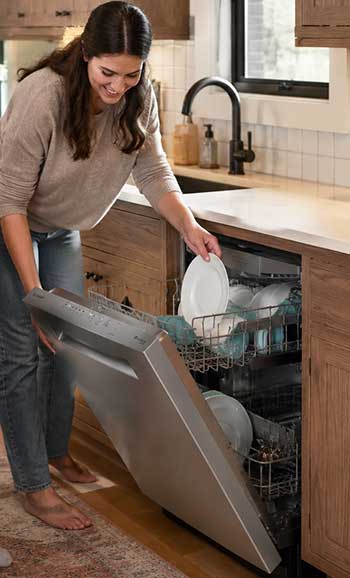
- Quiet Operation: Bosch is famous for quiet dishwashers, and this is not just marketing fluff. Many Bosch models operate so softly that you can hold a normal conversation beside them. In an open kitchen, that can change how you use the appliance. You stop waiting until bedtime and just run it whenever.
- PrecisionWash system: Bosch’s PrecisionWash system uses sensors and targeted spray patterns to clean dishes efficiently. I like that Bosch does not rely only on brute force. It is more about smart water use, good coverage, and consistent cleaning.
- CrystalDry on select models: CrystalDry is one of Bosch’s standout premium features. It helps turn moisture into heat, improving drying performance, especially on plastics. If you have kids’ cups, storage containers, and plastic lids, this can be a real quality-of-life upgrade.
- AutoAir on select models: Some Bosch models pop the door open at the end of the cycle to release moisture and improve drying. It is a simple idea, but it works well. I especially like it for people who run the dishwasher overnight and unload in the morning.
- Flexible third rack and RackMatic system: Bosch’s RackMatic adjustable upper rack is excellent. You can raise or lower it to fit taller glasses, plates, or cookware. The third rack also helps separate utensils and small items, which improves cleaning and frees up basket space below.
Pros of Bosch Dishwashers
- Excellent Reliability Reputation: Bosch is one of the brands I trust most in dishwashers. When people ask me for the safer long-term pick, Bosch is usually the name I mention first. It combines good cleaning, quiet operation, and strong build quality.
- Exceptionally Quiet Performance: This is Bosch’s signature advantage. If noise bothers you, Bosch makes the decision easier. You can run it during dinner, calls, or late-night cleanup without feeling like the kitchen has a tiny airport inside it.
- Strong Drying On Higher-End Models: Bosch models with CrystalDry or AutoAir are especially good choices if drying matters to you. Standard condensation drying may require adjustment, but the upgraded systems are genuinely useful.
- Clean, Premium Design: Bosch dishwashers look refined. They do not scream for attention. If you want your appliance to blend into a modern kitchen, Bosch gets the visual language right.
- Efficient Water And Energy Use: Bosch dishwashers are often designed around efficient operation. You get strong cleaning without wasteful water use, which is good for utility bills and long-term ownership.
Cons of Bosch Dishwashers
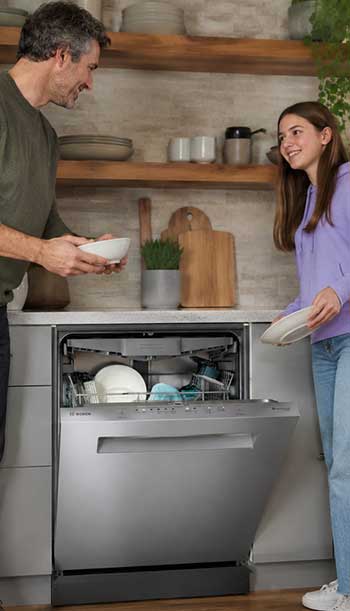
- Premium Models Can Be Expensive: Bosch has affordable options, but the most attractive features often sit in the 500, 800, or Benchmark lines. Once you start chasing CrystalDry, ultra-low noise ratings, and premium racks, the price climbs quickly.
- Condensation Drying May Surprise Some Users: If you are used to heated drying, lower-end Bosch models may feel different. Dishes can come out clean but not bone-dry, especially plastics. Rinse aid is not optional in my view; it is part of the Bosch experience.
- Rack Layout Can Take Adjustment: Bosch racks are clever, but they are not always instantly intuitive. Some users love the layout; others feel their bowls or plates do not fit the way they expected. I recommend looking at the rack design in person if possible.
- Repairs Can Be Pricier: Bosch reliability is strong, but if something does go wrong, parts and labor may cost more than a mainstream Whirlpool-family repair. Local service availability should influence your decision.
Which Cleans Better?
For heavy, messy loads, I give KitchenAid a slight emotional edge because it feels built for big family cooking. It handles volume well, and its rack space makes it easy to load the kind of dishes that pile up after real meals.
For consistent everyday cleaning, I give Bosch the analytical edge. Bosch is measured, efficient, and dependable. It may not feel as aggressive, but the results are excellent.
So here is my practical answer: KitchenAid is better if your dishwasher is constantly packed with bulky, messy cookware. Bosch is better if you want quiet, consistent, low-drama cleaning every day.
Which One Dries Better?
Bosch wins if you buy a model with CrystalDry or AutoAir. Those features make a noticeable difference. Without them, Bosch condensation drying can be good but may leave plastics damp.
KitchenAid can do well with heated drying, and some people prefer that traditional dry feel. Still, drying performance varies by model, so I would not buy KitchenAid blindly for drying alone.
If dry plastics are your pet peeve, I would look hard at Bosch 800 Series models with CrystalDry.
Which One Is Better for Families?
For families, KitchenAid makes a strong case. The racks are roomy, the third rack is highly usable, and the cleaning power fits chaotic daily life. If you are loading lunch containers, cereal bowls, sports bottles, and dinner plates all at once, KitchenAid feels forgiving.
Bosch is also great for families, especially if you value quiet cycles and reliability. But Bosch may require more careful loading, while KitchenAid often feels easier when the dishwasher is packed full.
Which One Would I Buy?
If I were buying for my own kitchen, I would choose Bosch if my budget allowed a 500 or 800 Series model. The quietness, reliability reputation, and drying upgrades make it the safer long-term choice.
But if I found a well-priced KitchenAid with the FreeFlex third rack, stainless tub, low decibel rating, and strong warranty support, I would not hesitate. KitchenAid is not the consolation prize. It is the more muscular, spacious, value-friendly option.
Frequently Asked Questions (FAQ)
Bosch is widely considered one of the most reliable dishwasher brands. Miele is also excellent, but Bosch often gives you a better balance of price, performance, and availability.
Common complaints include control panel issues, drainage problems, and inconsistent drying. Many issues depend on the specific model, installation, and maintenance.
Bosch frequently ranks at or near the top, especially models from the 500, 800, and Benchmark lines. The best choice depends on your budget and drying expectations.
I would stay away from any dishwasher with poor local service support, weak owner reviews, known leak complaints, or hard-to-find replacement parts. Brand matters, but the specific model matters more.
Final Thoughts
After comparing KitchenAid vs. Bosch dishwasher models from a real buyer’s perspective, I see Bosch as the better all-around choice for you if quiet operation, reliability, efficient cleaning, and premium drying are your priorities.
KitchenAid is the better fit if you want strong wash power, generous rack space, and a practical price-to-feature balance.
I would choose Bosch for a quieter, more refined kitchen. I would choose KitchenAid for a busy household that needs space and muscle. Either can be a smart buy, but the right one depends on how you actually load, run, and live with your dishwasher every day.